Chef Elsa
Bratlfettbrot
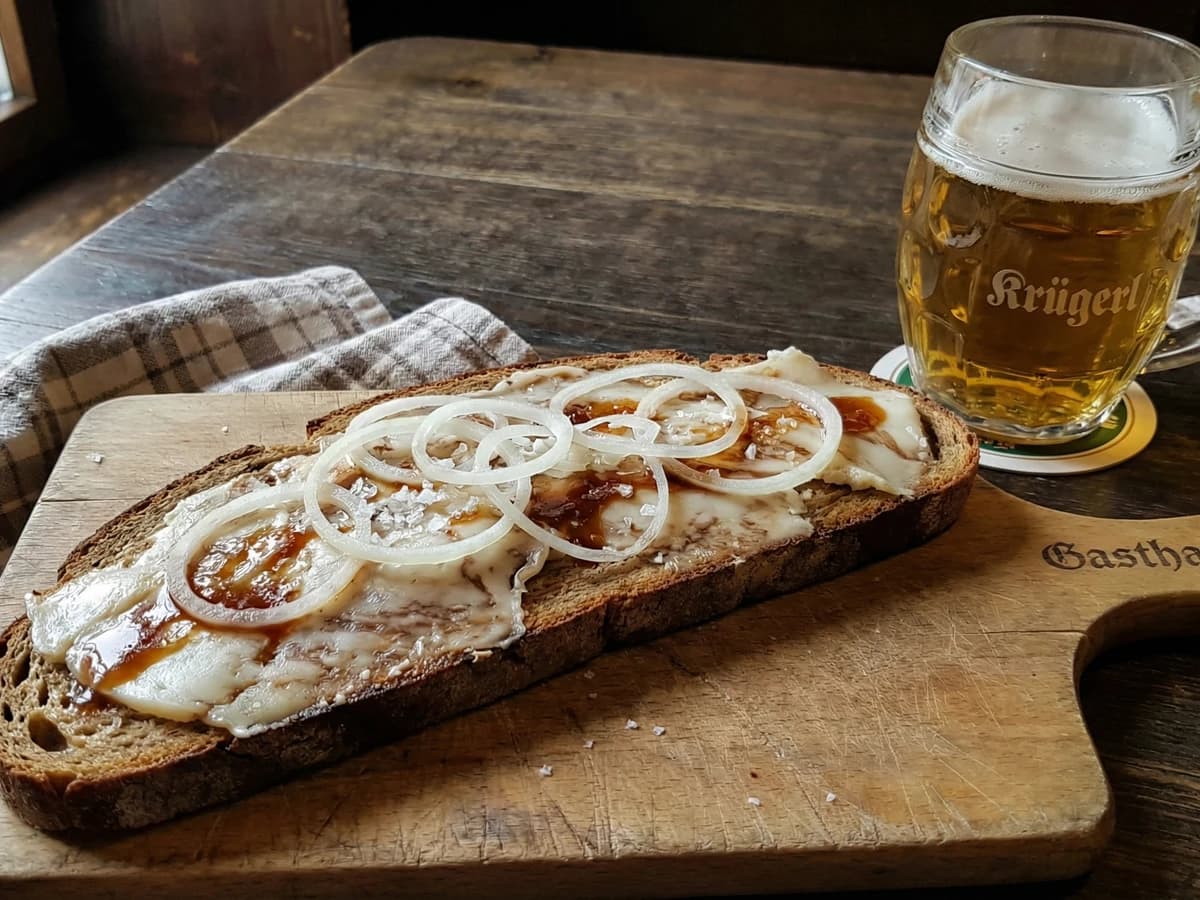
Cold roast pork drippings spread thick on dark farmhouse bread with raw onion rings and coarse salt. The best thing Austrians eat standing up, and they know it.
A cooking platform built around craft, culture, and the stories behind what we eat.
Created by
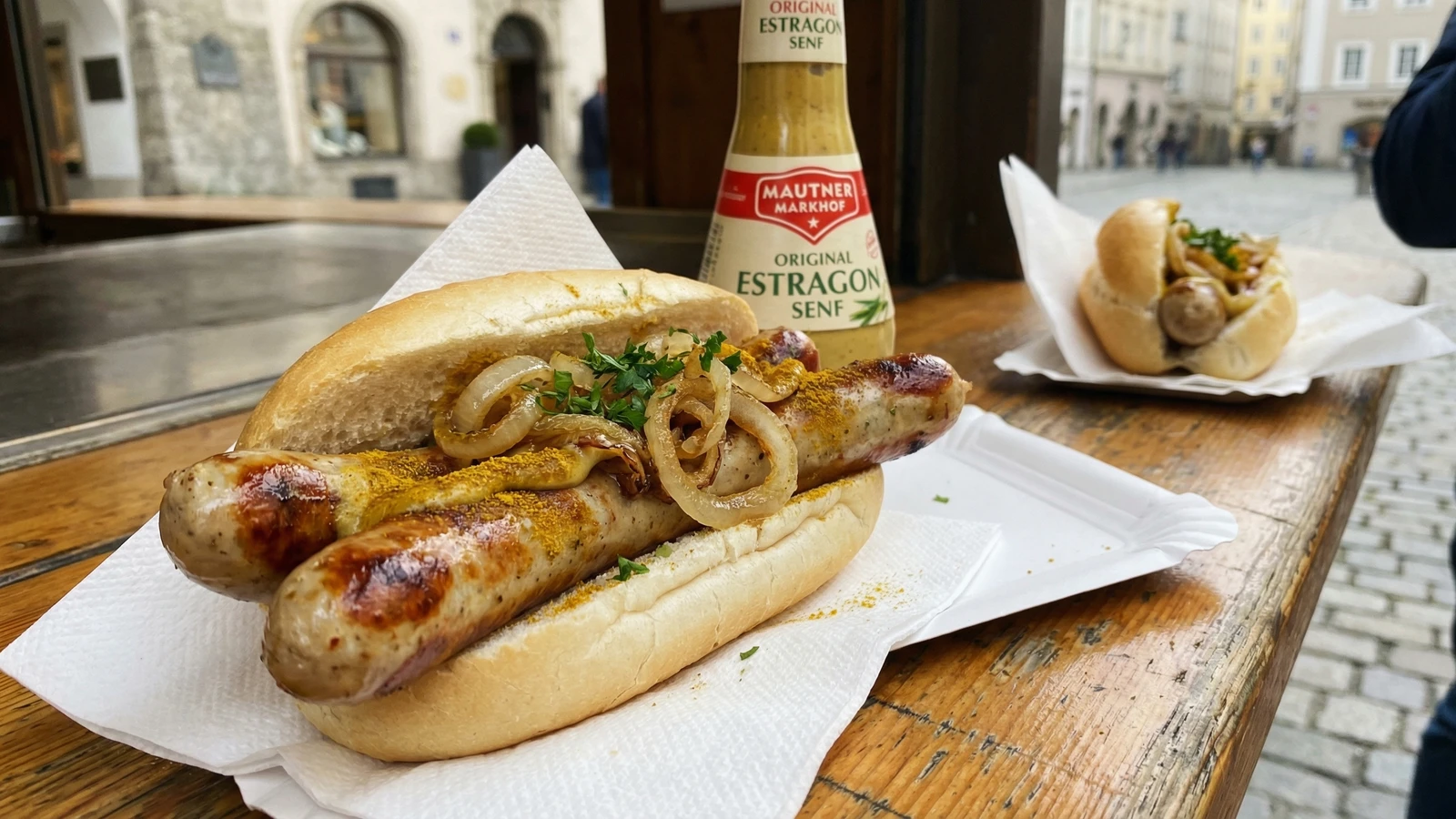
Salzburg's legendary spiced sausage roll, two Bratwürstel tucked into a sliced white roll with fried onions, curry mustard, and a spice mix that every Würstelstand in town guards like a state secret.
Walk through the Altstadt in Salzburg on any given evening and you'll smell it before you see it. Fried onions, curry, pork fat hitting a hot grill. That's a Bosna stand. The queue will be long. Nobody minds. You stand there with your hands in your pockets and wait because the thing at the end of that line is worth it.
A Bosna is two thin Bratwürstel grilled until the casings blister and split, then tucked side by side into a Weißbrotgebäck, a white bread roll that's been sliced open lengthwise but not all the way through. Fried onions go on top. Then a stripe of mustard, a dusting of curry powder, and chopped parsley if the stand owner is feeling generous. Some places have their own Gewürzmischung, a spice mix they've been tinkering with for decades. They'll never tell you what's in it. You learn to stop asking.
I eat Bosna the way everyone in Salzburg eats Bosna: standing up, outside, usually in weather that doesn't entirely cooperate. You hold the roll with both hands because the onions will slide and the mustard will find your sleeve if you get careless. It's not elegant food. It's not trying to be. It's the thing you eat after a long day at the Grünmarkt or walking through the Mirabell gardens, and it tastes better standing in the cold than most things taste sitting down in a warm restaurant.
Gretel always said that simple food done well is harder to pull off than complicated food done adequately. The Bosna proves her right. There are four components. Every one of them has to be good.
The Bosna was created in the 1950s by Zanko Todoroff, a Bulgarian immigrant who ran a Würstelstand on the Balkan Grill in Salzburg's Getreidegasse. He combined Austrian Bratwurst with a curry-spiced seasoning that reflected the broader post-war taste for exotic spices arriving in Central Europe. The name likely references the Balkans or Bosnia, though the exact origin is debated. What's not debated is that the Bosna belongs to Salzburg the way the Würstelstand belongs to Vienna: it's the city's signature street food, copied elsewhere but never quite the same.
Quantity
8 (about 80g each)
Quantity
4
long and soft-crusted
Quantity
2 medium
peeled and thinly sliced into rings
Quantity
2 tablespoons
for frying
Quantity
4 teaspoons
Quantity
1 teaspoon
Quantity
1/2 teaspoon
Quantity
pinch
Quantity
to taste
Quantity
small bunch
roughly chopped
Quantity
to taste
| Ingredient | Quantity |
|---|---|
| thin pork Bratwürstel | 8 (about 80g each) |
| white bread rolls (Weißbrotgebäck)long and soft-crusted | 4 |
| onionspeeled and thinly sliced into rings | 2 medium |
| neutral oil or lardfor frying | 2 tablespoons |
| mild curry powder | 4 teaspoons |
| sweet paprika | 1 teaspoon |
| ground white pepper | 1/2 teaspoon |
| cayenne pepper (optional) | pinch |
| Austrian or German mustard (medium-hot) | to taste |
| fresh flat-leaf parsleyroughly chopped | small bunch |
| salt | to taste |
Combine the curry powder, sweet paprika, white pepper, and cayenne (if using) in a small bowl. This is your Gewürzmischung. Every Bosna stand in Salzburg has their own version and guards it fiercely. This one is a good honest starting point. Taste it on the tip of your finger. It should be warm and fragrant, not sharp. Adjust the cayenne up or down depending on how much heat you want.
Heat a tablespoon of oil or lard in a wide pan over medium heat. Add the sliced onions and a pinch of salt. Cook them slowly, stirring now and then, until they soften and turn golden, about eight to ten minutes. You're not caramelizing them dark, you're cooking them until they're sweet and limp and just starting to color at the edges. Push them to one side of the pan or transfer to a bowl and keep warm.
Heat a grill pan, outdoor grill, or heavy skillet over medium-high heat. Add the remaining oil. Lay the Bratwürstel in and cook them, turning occasionally, until the casings are blistered and golden brown all over, about six to eight minutes total. Don't prick them. The casing holds the juices in and if you stab holes in it, the fat runs out and you end up with dry sausages. Let them blister and split naturally. That's what you want.
Slice each roll lengthwise along the top, cutting about three quarters of the way through. You want a hinge at the bottom so the roll opens like a book but stays in one piece. If you cut all the way through, everything falls apart in your hands and the experience suffers. Press the roll open gently to make room for the sausages. If you like, you can warm the rolls on the grill or in a dry pan for thirty seconds, cut side down. A little toast on the inside helps the bread hold up against the onions and mustard.
Nestle two Bratwürstel side by side into each roll. Spoon the fried onions over the top. Squeeze a generous line of mustard along the length. Dust the whole thing with the spice mix, about a teaspoon per Bosna, letting the curry powder settle into the onions and onto the sausage casings. Scatter chopped parsley over the top. Serve immediately. No plate required. Mahlzeit!
1 serving (about 280g)
Culinary guides, cultural storytelling, and the editorial depth that makes cooking meaningful.
Discover Culinary ExplorerChef Elsa
Cold roast pork drippings spread thick on dark farmhouse bread with raw onion rings and coarse salt. The best thing Austrians eat standing up, and they know it.
Chef Elsa
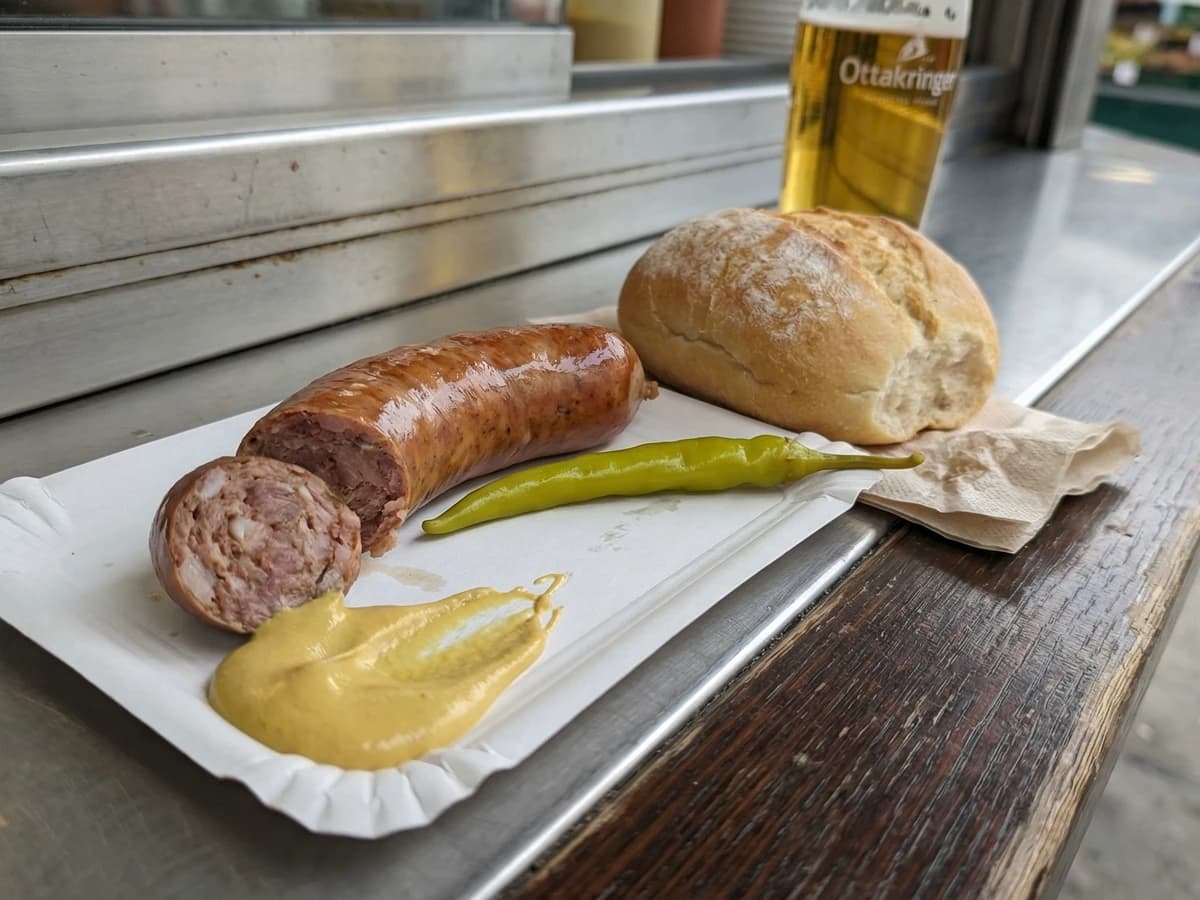
The Würstelstand's coarse, snappy pork sausage served the proper Viennese way: gently heated (never boiled), with sharp mustard, a fresh Semmel, and a Pfefferoni on the side.

Chef Elsa
The Würstelstand classic: bright red paprika sausage, scored and seared golden, served with sharp mustard, freshly grated Kren, and a warm Semmel the way Austrians have been eating it for generations.

Chef Elsa
Pork and beef patties with soaked bread, golden onions, and dried marjoram, pan-fried in butter until they crackle, then pressed into a Kaisersemmel with a stripe of sharp Austrian mustard.