
Chef Elsa
Bosna (Salzburg Spiced Sausage Roll)
Salzburg's legendary spiced sausage roll, two Bratwürstel tucked into a sliced white roll with fried onions, curry mustard, and a spice mix that every Würstelstand in town guards like a state secret.
A cooking platform built around craft, culture, and the stories behind what we eat.

Created by
The Würstelstand classic: bright red paprika sausage, scored and seared golden, served with sharp mustard, freshly grated Kren, and a warm Semmel the way Austrians have been eating it for generations.
Every Austrian city has its Würstelstände, those small sausage stands that appear on street corners and stay open late into the night. I remember standing at one in Vienna with Gretel and my grandmother Eva on a November evening, all three of us in winter coats, eating Debreziner from paper plates with mustard on our fingers. The sausage was bright red from paprika, the casing blistered from the grill, and Gretel was explaining between bites that this was Hungarian food that had become completely Austrian over the past two hundred years. That's the Habsburg empire for you. It swallowed cuisines the way it swallowed countries, and what came out the other side was something new.
A good Debreziner is a coarsely ground pork sausage seasoned with sweet and hot paprika, garlic, and marjoram, then lightly smoked until the casing turns that unmistakable brick red. It's not a delicate sausage. It's assertive, faintly smoky, with a warmth from the paprika that sits in the back of your throat. You bite through the snap of the natural casing into coarse, juicy meat that tastes the way a cold evening in Salzburg smells when you walk past a Würstelstand and your feet slow down before your brain catches up.
The way you eat a Debreziner matters as much as the sausage itself. Sharp mustard, not ketchup. Freshly grated Kren (horseradish) if you want heat that clears your sinuses. A Pfefferoni on the side for anyone who thinks paprika wasn't enough. And always a Semmel or a piece of Schwarzbrot to hold it all together. This is street food with a two-hundred-year pedigree, and it deserves to be done right even when you're making it at home on a Tuesday night.
The Debreziner takes its name from Debrecen (Debrezin in German), Hungary's second-largest city and a historic center of meat processing and paprika cultivation. The sausage traveled west into Austrian kitchens during the centuries when Hungary and Austria shared an empire, becoming so thoroughly adopted that most Austrians consider it their own. Vienna's Würstelstände were formally licensed by the city in 1928, but street sausage vendors had been feeding late-night crowds from mobile carts long before that, and the Debreziner was already a fixture alongside the Frankfurter and Burenwurst.
Quantity
4 (about 150g each)
Quantity
1 tablespoon
Quantity
4
Quantity
for serving
Quantity
for serving
Quantity
5cm piece
Quantity
1 teaspoon
Quantity
pinch
Quantity
pinch
Quantity
4
| Ingredient | Quantity |
|---|---|
| Debreziner sausages | 4 (about 150g each) |
| lard or sunflower oil | 1 tablespoon |
| Semmel (Austrian bread rolls) | 4 |
| Scharfer Senf (sharp mustard) | for serving |
| Süßer Senf (sweet mustard) | for serving |
| fresh horseradish root (Kren) | 5cm piece |
| white wine vinegar | 1 teaspoon |
| salt | pinch |
| sugar | pinch |
| Pfefferoni (pickled hot peppers) (optional) | 4 |
Lay the sausages on a board and make three or four shallow diagonal cuts along each one, just through the casing, not deep into the meat. Turn them and score the other side so you get a crosshatch pattern. This isn't decoration. The cuts let heat reach the center evenly, and when the sausage hits a hot pan later, those scored edges will blister and curl open, giving you more crisp surface area. A Debreziner with a smooth, unbroken casing is a missed opportunity.
Bring a wide pan of water to a gentle simmer. Not a boil. A simmer, where a few lazy bubbles break the surface every couple of seconds. Slide the scored Debreziner in and let them heat through for eight to ten minutes. The sausages are already smoked and cooked, so you're warming them to the center, not cooking them raw. If you let the water boil, the casings will burst, the fat will render out, and you'll lose exactly the juiciness that makes a good Debreziner worth eating.
Lift the sausages out of the water and pat them dry with a clean cloth. Heat the lard or oil in a heavy pan over medium-high heat. When the fat shimmers, lay the Debreziner in and let them sear without moving for about two minutes per side. You want the scored edges to blister and brown, the paprika in the casing darkening to a deep, almost coppery red. The kitchen will smell like a Würstelstand at eleven o'clock on a Friday night. That's exactly right.
Peel the horseradish root and grate it finely on the smallest holes of a box grater or a Microplane. Work quickly. Fresh horseradish is fierce the moment you grate it and loses its bite within the hour. Toss the shreds immediately with the white wine vinegar, a pinch of salt, and a pinch of sugar. The vinegar stabilizes the heat so it doesn't fade before it reaches the table. Your eyes will water. That's how you know it's fresh.
Split the Semmel in half and warm them briefly in the oven or in the pan you just used for the sausages. You want them warm and slightly crisp on the cut side, not toasted hard. A Semmel should still give when you press it. If you can't find proper Semmel, use the best crusty white rolls your bakery sells. What you're after is a roll with a thin crust and a soft, open crumb that can soak up mustard and sausage fat without falling apart.
Set out the seared Debreziner on a board or plate. Put both mustards in small dishes alongside. Pile the fresh Kren in its own bowl. Lay the Pfefferoni out where people can reach them. Set the warm Semmel in a basket or on the board. This is not a composed plate. This is a spread. Everyone reaches, tears bread, dips in mustard, takes a bite of sausage, follows it with a smear of Kren if they're brave. The sharp mustard goes with the paprika. The sweet mustard softens everything. The Kren makes your eyes water and the Pfefferoni finishes the job. Mahlzeit!
1 serving (about 265g)
Culinary guides, cultural storytelling, and the editorial depth that makes cooking meaningful.
Discover Culinary ExplorerChef Elsa
Salzburg's legendary spiced sausage roll, two Bratwürstel tucked into a sliced white roll with fried onions, curry mustard, and a spice mix that every Würstelstand in town guards like a state secret.
Chef Elsa
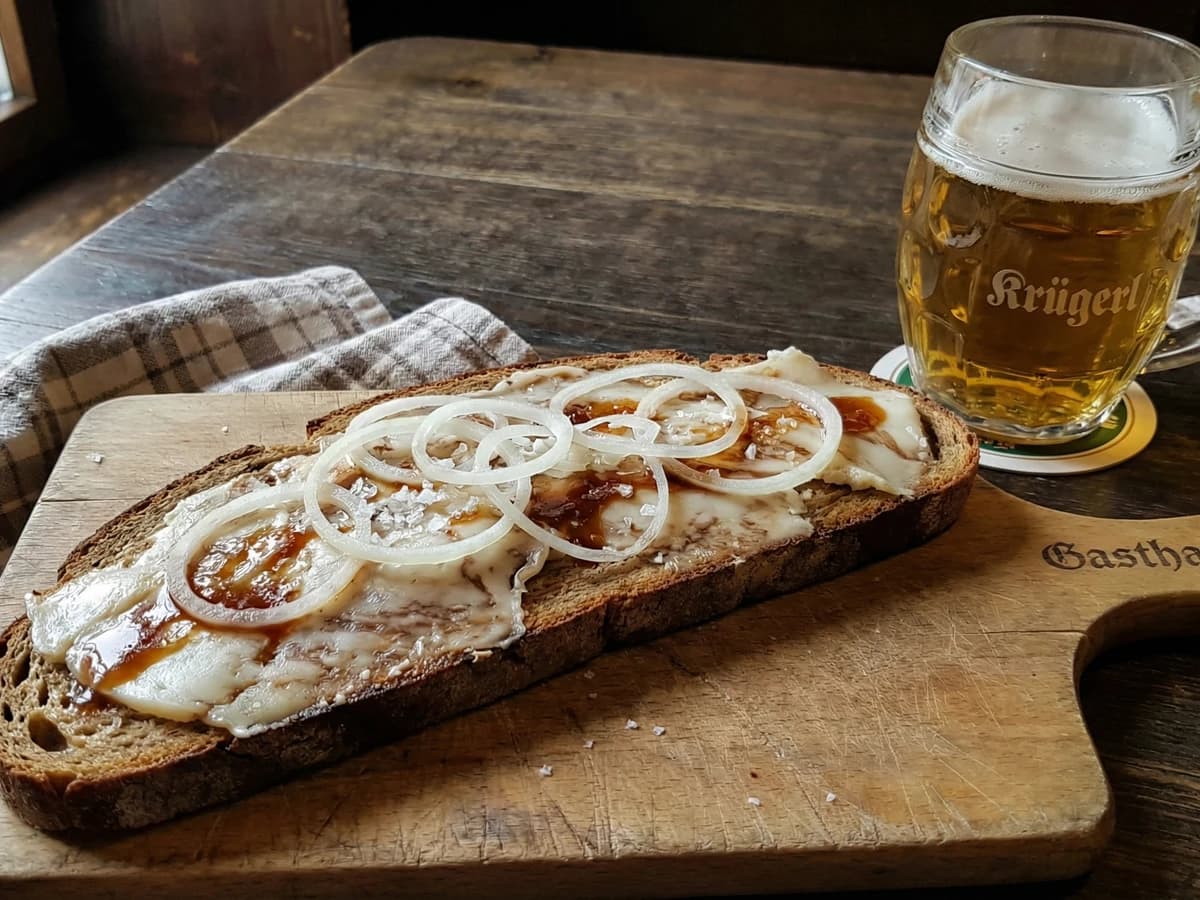
Cold roast pork drippings spread thick on dark farmhouse bread with raw onion rings and coarse salt. The best thing Austrians eat standing up, and they know it.
Chef Elsa
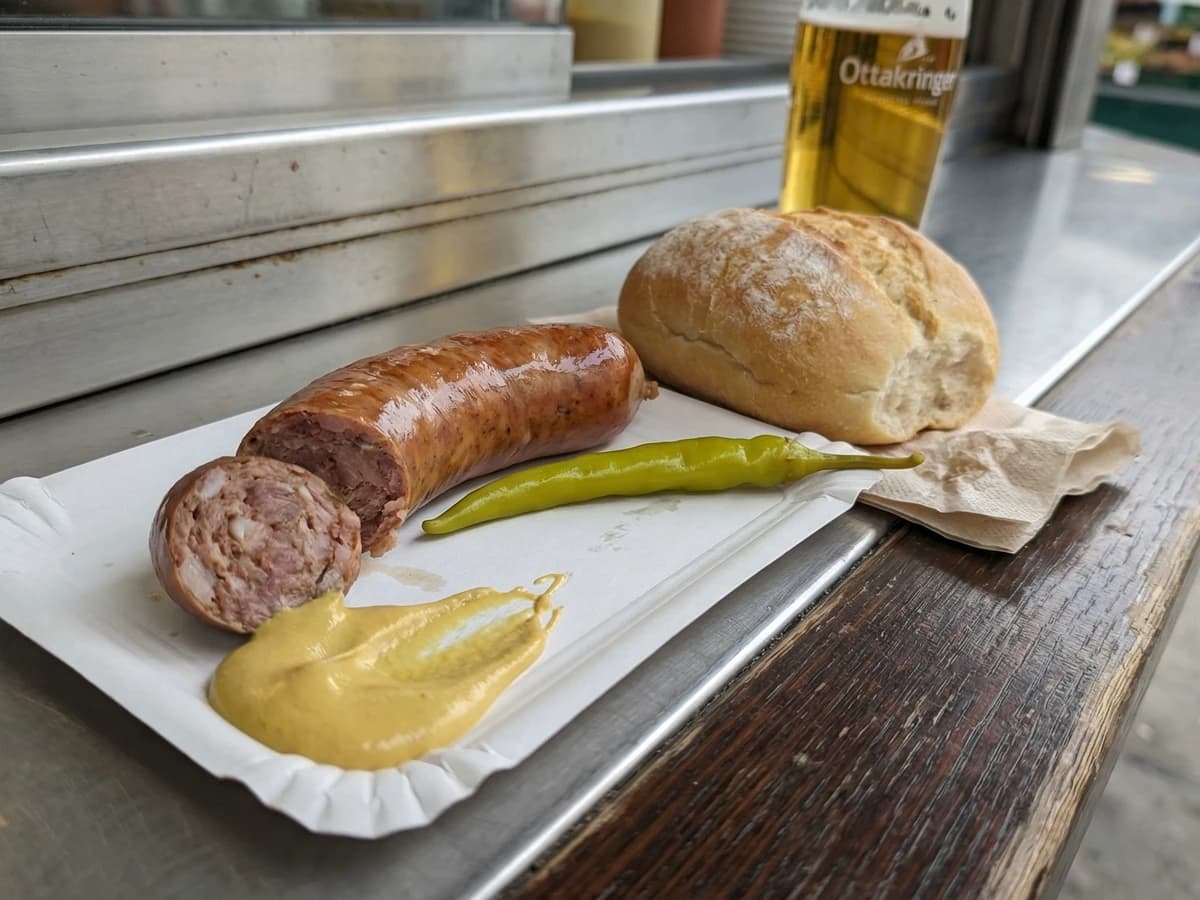
The Würstelstand's coarse, snappy pork sausage served the proper Viennese way: gently heated (never boiled), with sharp mustard, a fresh Semmel, and a Pfefferoni on the side.

Chef Elsa
Pork and beef patties with soaked bread, golden onions, and dried marjoram, pan-fried in butter until they crackle, then pressed into a Kaisersemmel with a stripe of sharp Austrian mustard.