
Chef Isabel
Almussafes Valenciano
Almussafes is Valencian bar-counter food: a crusty roll filled with sobrasada, cheese, and onion, then pressed on the plancha until the bread crisps and the filling runs together.
A cooking platform built around craft, culture, and the stories behind what we eat.
Created by
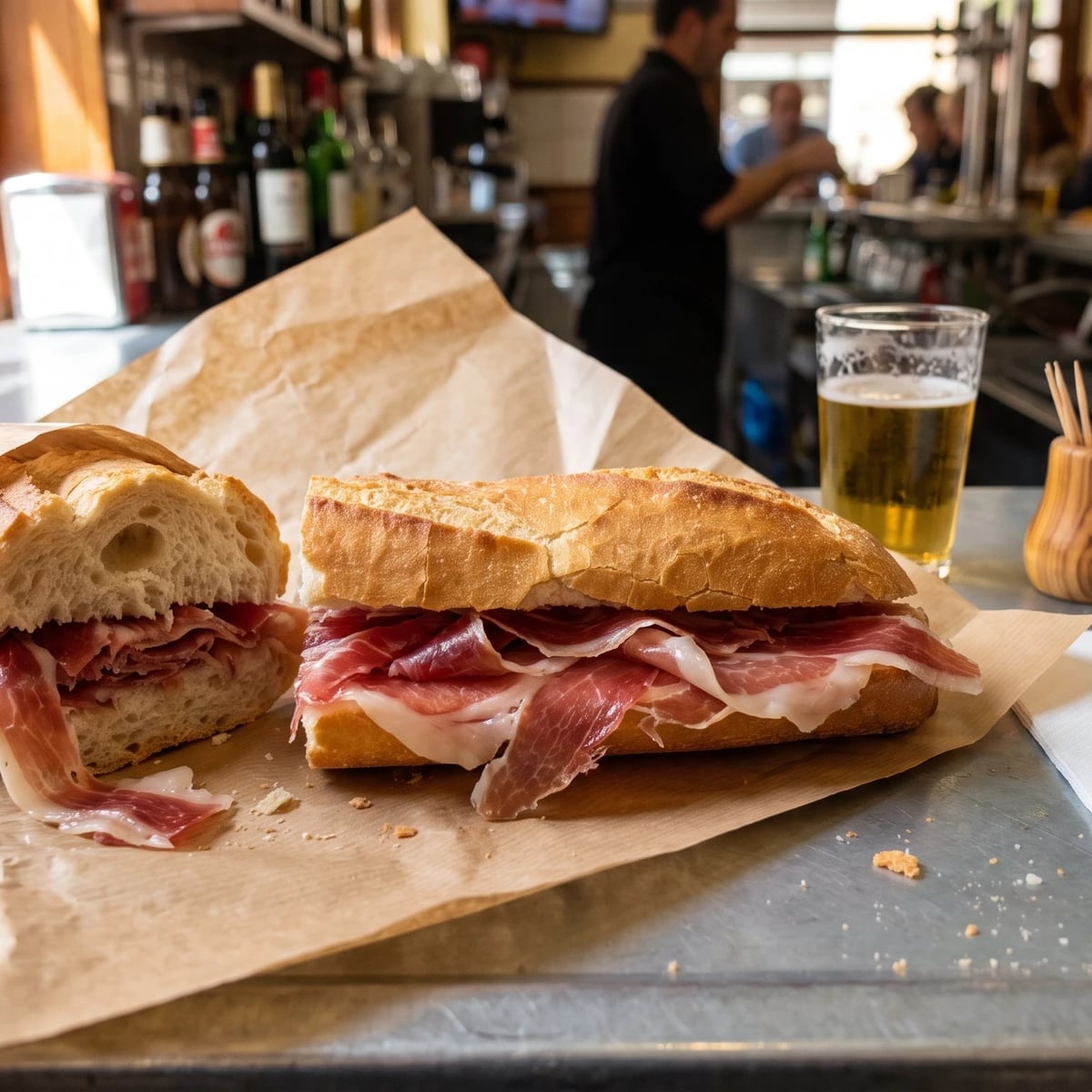
The bocadillo de jamón of Madrid is bread, cured ham, and restraint. Buy the best jamón you can, cut it thin, and don't bury it under things it never asked for.
Bocadillo de jamón Madrileño is Madrid's plain cured-ham roll, the one you eat standing at a bar, wrapped for a train, or carried to a picnic with no ceremony at all. Fresh barra, thin slices of jamón serrano or ibérico, and perhaps a thread of olive oil if the bread is dry. That is the dish. Not a sandwich built by committee.
The method that decides it is not cooking. It is sourcing and cutting. The ham must be thin enough to fold and warm slightly against the bread, not stacked in cold thick slabs that pull out in one piece when you bite. Good jamón gives salt, fat, sweetness, and chew. Bad jamón gives you a leather lesson, and nobody needs lunch to scold them.
If you're far from Spain, buy the best dry-cured Spanish ham you can find, serrano first, ibérico if your budget allows. If you can't get either, prosciutto works as a substitute, but it is softer and sweeter, so use a little less oil and don't pretend it tastes the same. For bread, use a crisp white roll or small baguette with a tender inside. No hace falta haber pisado España. Pésalo, no lo adivines, and keep it plain. Siempre sale, si lo sigues.
The bocadillo de jamón belongs to the everyday bar and travel food of Madrid and Castile, where a simple white barra made a practical carrier for the cured hams of the interior. Jamón serrano came from mountain and dryland curing traditions that preserved pork through salt, air, and time, turning the household pig into food that could travel without a kitchen. In Catalonia the related habit is often bread rubbed with ripe tomato, pa amb tomàquet, but the Madrid bocadillo is usually plainer: bread and ham, with restraint doing the work.
Quantity
2 (about 120g each)
Quantity
120g
Quantity
2 teaspoons
Quantity
1
cut in half
Quantity
a pinch
| Ingredient | Quantity |
|---|---|
| small barras or crisp white rolls | 2 (about 120g each) |
| thinly sliced jamón serrano or jamón ibérico | 120g |
| extra virgin olive oil (optional) | 2 teaspoons |
| ripe tomato (optional)cut in half | 1 |
| flaky salt (optional) | a pinch |
Use bread baked the same day: a small barra or crisp white roll with a thin crust and a soft, open middle. Split it lengthwise without cutting all the way through, so it opens like a book and holds the ham neatly.
Separate the slices of jamón and let them sit at room temperature for five minutes if they came straight from the fridge. The fat should soften and shine a little. That small rest is what wakes the flavour; cold cured ham tastes flat and tight.
For the Madrid version, leave good fresh bread plain, or add only 1 teaspoon of olive oil to each roll if it feels dry. If you choose the Catalan habit, rub the cut side lightly with ripe tomato, add a few drops of oil, and one tiny pinch of salt. Do not soak it. Wet bread is not generosity.
Divide the jamón between the two rolls, folding the slices loosely instead of pressing them flat. You want air between the folds so the fat, salt, and bread meet in the bite. Close the bocadillos gently and eat at once, or wrap tightly for a picnic within a few hours.
1 serving (about 205g)
Culinary guides, cultural storytelling, and the editorial depth that makes cooking meaningful.
Discover Culinary Explorer
Chef Isabel
Almussafes is Valencian bar-counter food: a crusty roll filled with sobrasada, cheese, and onion, then pressed on the plancha until the bread crisps and the filling runs together.

Chef Isabel
The Barcelona bikini is Catalan bar food at its plainest: white bread, jamón dulce, melting cheese, butter, and gentle heat until the crust crisps and the middle runs.

Chef Isabel
This is the bocadillo of the northern pantry: good tuna in olive oil, sweet piquillo peppers from Navarra, and a crusty barra that stays clean if you drain the tin properly.

Chef Isabel
This Basque bocadillo lives on the tin: good bonito del Norte in olive oil, salty Cantabrian anchovies, pickled piparras, and a crusty roll that can hold them.