
Chef Isabel
Almussafes Valenciano
Almussafes is Valencian bar-counter food: a crusty roll filled with sobrasada, cheese, and onion, then pressed on the plancha until the bread crisps and the filling runs together.
A cooking platform built around craft, culture, and the stories behind what we eat.
Created by
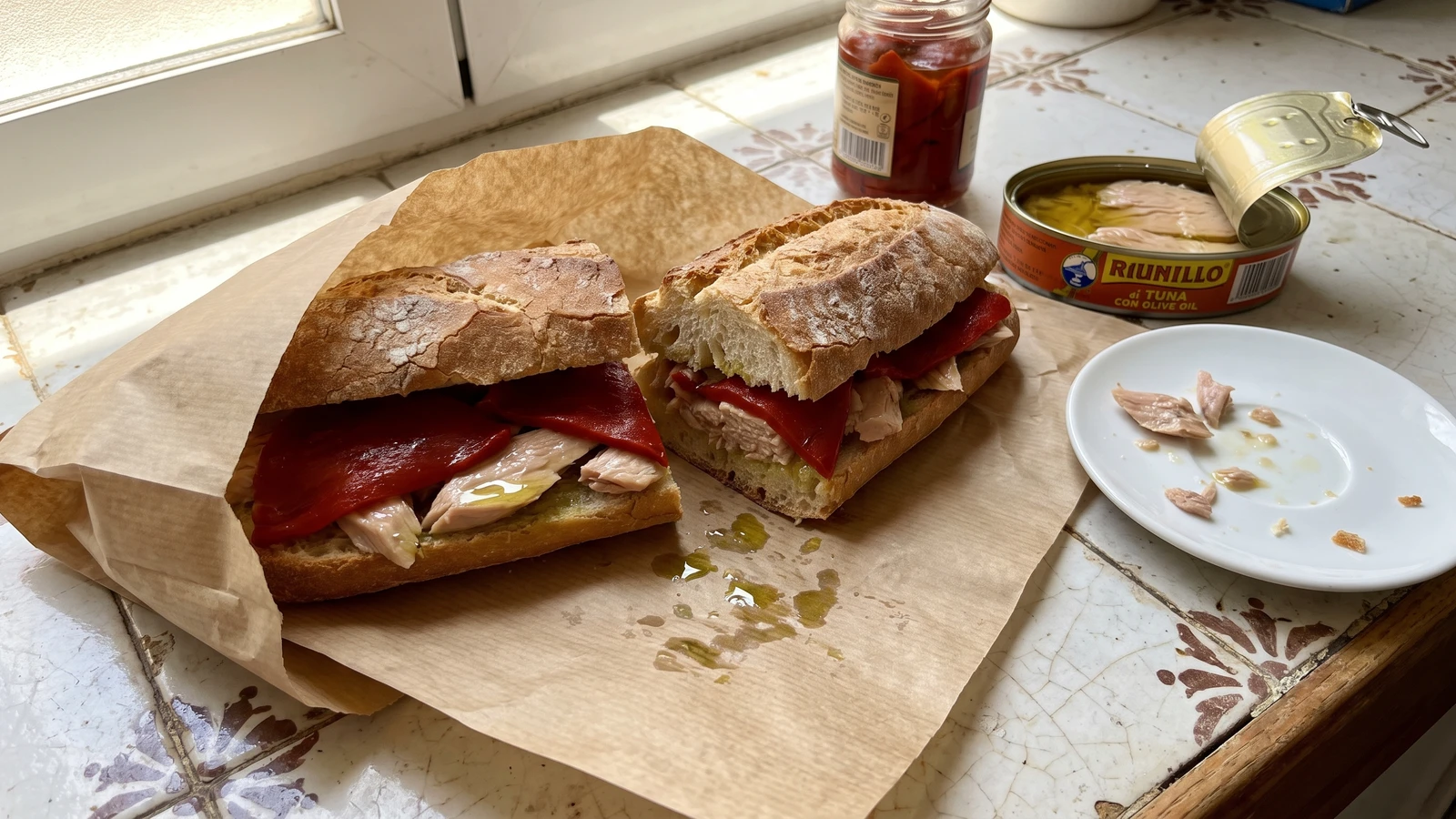
This is the bocadillo of the northern pantry: good tuna in olive oil, sweet piquillo peppers from Navarra, and a crusty barra that stays clean if you drain the tin properly.
Bocadillo de atún con pimientos del piquillo is northern in its pantry: tuna or bonito in olive oil from the Cantabrian habit, sweet red piquillos from Navarra, and a crusty barra to hold it. It isn't a dressed-up sandwich. It is what you make when the cupboard is honest and lunch has to happen now.
The one method that decides it is draining. Drain the tuna until it flakes instead of leaks, and blot the peppers so their sweet red oil does not soak the bread before you take the first bite. A bocadillo should soften a little where the filling touches it, yes, but it should not collapse in your hand. That is not generosity. That is bad assembly.
If you can't find pimientos del piquillo, use good jarred roasted red peppers and cut them into wide strips. They will be less delicate and a little less sweet, but they will do the work. If the bread where you live is soft, split it and toast the cut sides lightly. No hace falta haber pisado España. Pésalo, no lo adivines where it matters, drain it well, and siempre sale, si lo sigues.
The bocadillo belongs to everyday Spanish eating rather than to the formal table, carried to work, school, the train, or a long morning outside. This version is rooted in the northern preserving pantry: tuna and bonito packed in olive oil along the Cantabrian coast, paired with the small red piquillo pepper most closely tied to Lodosa in Navarra. The habit is practical and old-fashioned in the best way, bread plus preserved fish plus preserved peppers, a meal made from the larder without pretending to be anything grand.
Quantity
2 (about 120g each)
Quantity
180g drained weight
well drained
Quantity
100g
drained, blotted dry, cut into wide strips
Quantity
2 tablespoons, plus more if needed
Quantity
1 teaspoon
Quantity
1 small clove
peeled and halved
Quantity
1/4 teaspoon, plus more to taste
Quantity
to taste
| Ingredient | Quantity |
|---|---|
| crusty Spanish-style barra rolls or small baguette pieces | 2 (about 120g each) |
| tuna or bonito in olive oilwell drained | 180g drained weight |
| pimientos del piquillo or roasted red peppersdrained, blotted dry, cut into wide strips | 100g |
| extra virgin olive oil | 2 tablespoons, plus more if needed |
| vinagre de Jerez (sherry vinegar) | 1 teaspoon |
| garlic (optional)peeled and halved | 1 small clove |
| fine salt | 1/4 teaspoon, plus more to taste |
| freshly ground black pepper (optional) | to taste |
Put the tuna in a sieve for a minute, then press it gently with the back of a spoon until it flakes cleanly and no longer drips. Lay the piquillo peppers on kitchen paper and blot both sides. This is the step that decides the bocadillo: wet filling makes soggy bread before you have even sat down.
Flake the drained tuna into a bowl. Add the olive oil, sherry vinegar, salt, and a little black pepper. Fold it gently, keeping some flakes large. Taste it now. It should be savoury, glossy, and lightly sharp, not mashed into a paste.
Split the rolls lengthwise, leaving a hinge if you like. If the crust is sturdy and fresh, leave it alone. If your bread is soft, toast the cut sides lightly until they feel dry to the touch. Rub the cut face once with the halved garlic if you want that old bar-counter edge, but do not make it harsh.
Spread the tuna evenly over the bottom halves of the bread, about 90g drained tuna per bocadillo. Lay the piquillo strips over the tuna in one even layer, glossy red against the pale fish. Close the bread and press gently with your palm so the filling settles without squeezing out the oil.
Let the bocadillos sit for five minutes before eating, just enough for the bread to take a little oil and pepper sweetness without turning limp. Cut each one in half on the diagonal if you are packing it. Wrap in paper, not plastic, if it has to travel.
1 serving (about 280g)
Culinary guides, cultural storytelling, and the editorial depth that makes cooking meaningful.
Discover Culinary ExplorerChef Isabel
Almussafes is Valencian bar-counter food: a crusty roll filled with sobrasada, cheese, and onion, then pressed on the plancha until the bread crisps and the filling runs together.

Chef Isabel
The Murcian bicicleta is the anchovy-free cousin of the marinera: ensaladilla rusa mounded on a crisp rosquilla de pan. Keep the salad cold and the bread dry until the last minute.

Chef Isabel
The Barcelona bikini is Catalan bar food at its plainest: white bread, jamón dulce, melting cheese, butter, and gentle heat until the crust crisps and the middle runs.

Chef Isabel
This Basque bocadillo lives on the tin: good bonito del Norte in olive oil, salty Cantabrian anchovies, pickled piparras, and a crusty roll that can hold them.