
Chef Isabel
Almussafes Valenciano
Almussafes is Valencian bar-counter food: a crusty roll filled with sobrasada, cheese, and onion, then pressed on the plancha until the bread crisps and the filling runs together.
A cooking platform built around craft, culture, and the stories behind what we eat.
Created by
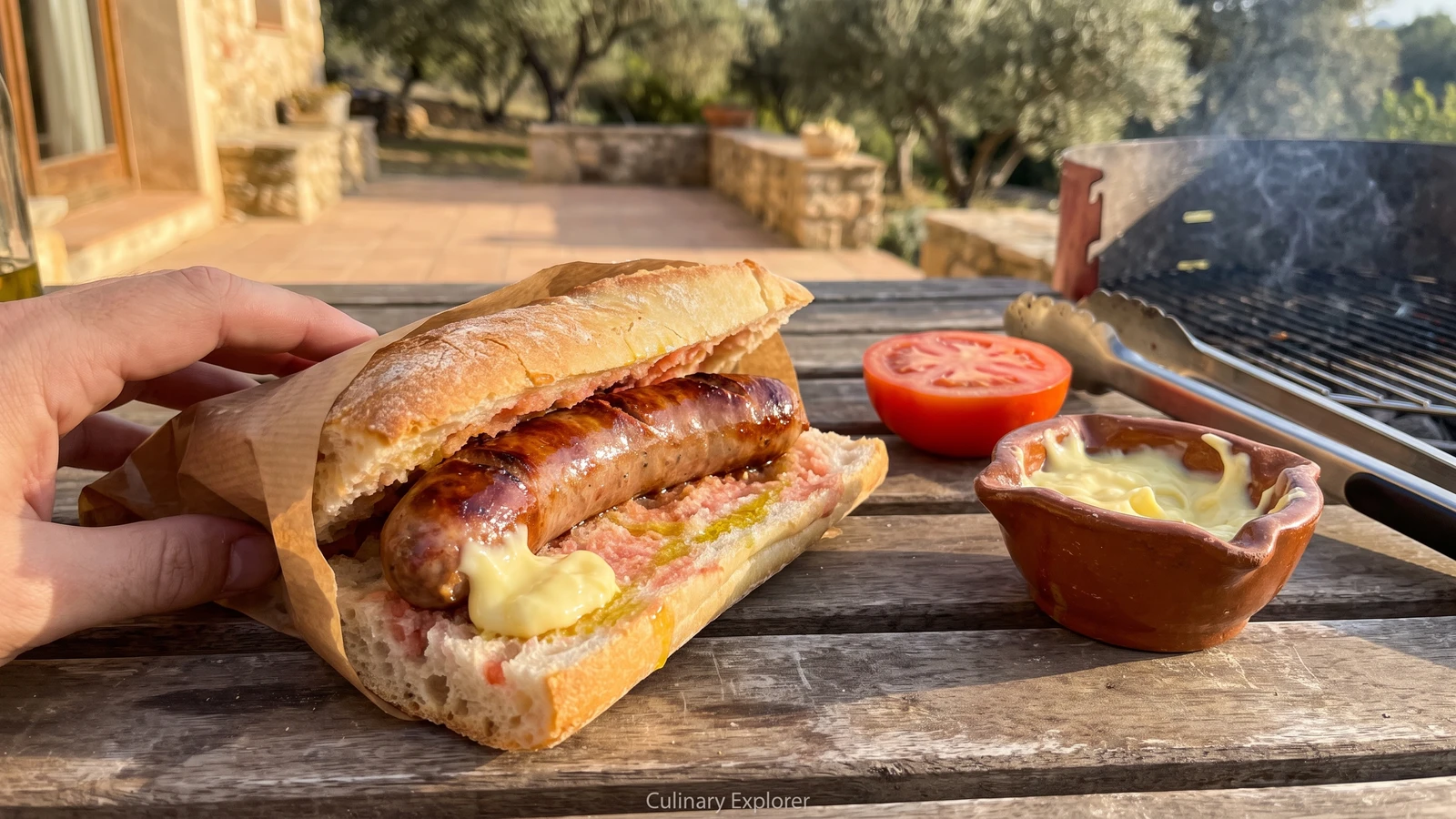
Catalonia's botifarra sandwich is plain on purpose: fresh pork sausage, good bread, allioli, and tomato if the season gives it. Grill the sausage slowly so the skin browns before the juices run.
Bocadillo de botifarra is Catalan, or entrepà de botifarra if you name it where it lives: fresh botifarra crua, crusty bread, allioli, and often a rub of ripe tomato on the bread. What makes it Catalan is not a pile of fillings. It is the sausage, coarse and porky, cooked over embers or a hot plancha, then carried by bread that can hold the juices without turning soft.
The method that decides it is the heat. Botifarra wants moderate heat, not a furnace. If you blast it, the casing splits early and the fat runs out; cook it more slowly, turn it often, and the skin browns just as the centre reaches 71°C. Do not prick it. A pierced sausage dries itself out, and then what have we learned.
Far from Catalonia, ask for longaniza fresca if a Spanish butcher has it. If not, choose a fresh mild pork sausage in a natural casing, coarse-ground if possible, with no fennel, sage, smoke, sugar, or chilli. It will taste less clean and more spiced than botifarra, but it will behave properly on the grill. No hace falta haber pisado España. Use good bread, make the allioli before the sausage touches the fire, and it comes together.
In the Margin beside this one I wrote only: no pinchar, don't pierce. That is the whole warning. Siempre sale, si lo sigues: moderate heat, good bread, and the sandwich eaten while the sausage is still glossy from the grill.
The entrepà de botifarra belongs to Catalonia's pork larder, where fresh botifarra came from the matança, the household pig slaughter that filled the pantry with both fresh sausages and cured meats. At village grillades, markets, and outdoor meals, botifarra is cooked over embers and served in bread because the bread carries the juices and the allioli without needing a plate. Pa amb tomàquet, bread rubbed with ripe tomato and olive oil, is the Catalan table habit that gives the bocadillo its place without loading it with extras.
Quantity
4 (about 150g each)
Quantity
4 (about 100g each)
Quantity
2 (about 250g total)
halved
Quantity
2 tablespoons
for the bread
Quantity
1 tablespoon
for an indoor grill pan if needed
Quantity
2
peeled
Quantity
1/2 teaspoon
Quantity
1
room temperature
Quantity
150ml
for allioli
Quantity
1 teaspoon
| Ingredient | Quantity |
|---|---|
| fresh botifarres crues | 4 (about 150g each) |
| crusty rolls or pieces of barra de pan | 4 (about 100g each) |
| ripe tomatoes (optional)halved | 2 (about 250g total) |
| extra virgin olive oilfor the bread | 2 tablespoons |
| olive oil (optional)for an indoor grill pan if needed | 1 tablespoon |
| garlic clovespeeled | 2 |
| fine sea salt | 1/2 teaspoon |
| large egg yolk (optional)room temperature | 1 |
| mild extra virgin olive oilfor allioli | 150ml |
| lemon juice or cool water (optional) | 1 teaspoon |
Pound the garlic and salt in a mortar until completely smooth; leave no hard bits, or the sauce tastes raw in patches. Work in the egg yolk if using it, then add the 150ml olive oil first by drops and then in a thin thread, turning the pestle or whisk without rushing, until thick and glossy. A few drops of lemon juice or cool water loosen it if it tastes too fierce.
Split the rolls lengthwise, leaving a hinge if you like. If the tomatoes are ripe enough to eat raw, rub the cut sides over the bread until the pulp catches in the crumb, then add the 2 tablespoons olive oil and a pinch of salt. If the tomatoes are pale and hard, leave them out; bad tomato is not Catalan, it is just wet bread.
Heat a charcoal grill, gas grill, plancha, or heavy grill pan to medium. Lay on the botifarres and cook for 14 to 18 minutes, turning every 2 to 3 minutes, until the casings are browned, taut, and just beginning to split in places. Do not prick them. They are done when the centre reaches 71°C, and the outside is glossy with its own fat.
Move the sausages to a board and let them rest for 3 minutes. Toast the bread cut-side down on the grill or plancha for 1 to 2 minutes, just enough to crisp the surface while the inside stays able to drink in the juices. Resting is not fussiness; it keeps the first bite from spilling everything the grill worked to keep.
Spread each roll with a spoonful of allioli. Lay in one botifarra, whole if the bread fits it or split lengthwise after resting if the roll is narrow. Close the bread around it and eat at once, while the casing still has a little snap under your teeth and the allioli is catching the sausage juices.
1 serving (about 325g)
Culinary guides, cultural storytelling, and the editorial depth that makes cooking meaningful.
Discover Culinary ExplorerChef Isabel
Almussafes is Valencian bar-counter food: a crusty roll filled with sobrasada, cheese, and onion, then pressed on the plancha until the bread crisps and the filling runs together.

Chef Isabel
The Murcian bicicleta is the anchovy-free cousin of the marinera: ensaladilla rusa mounded on a crisp rosquilla de pan. Keep the salad cold and the bread dry until the last minute.

Chef Isabel
The Barcelona bikini is Catalan bar food at its plainest: white bread, jamón dulce, melting cheese, butter, and gentle heat until the crust crisps and the middle runs.

Chef Isabel
This is the bocadillo of the northern pantry: good tuna in olive oil, sweet piquillo peppers from Navarra, and a crusty barra that stays clean if you drain the tin properly.