Culinary Explorer

A cooking platform built around craft, culture, and the stories behind what we eat.
Discover Culinary Explorer
Blackened Shrimp Bruschetta

Blackened Shrimp Bruschetta

Created by Chef Remy

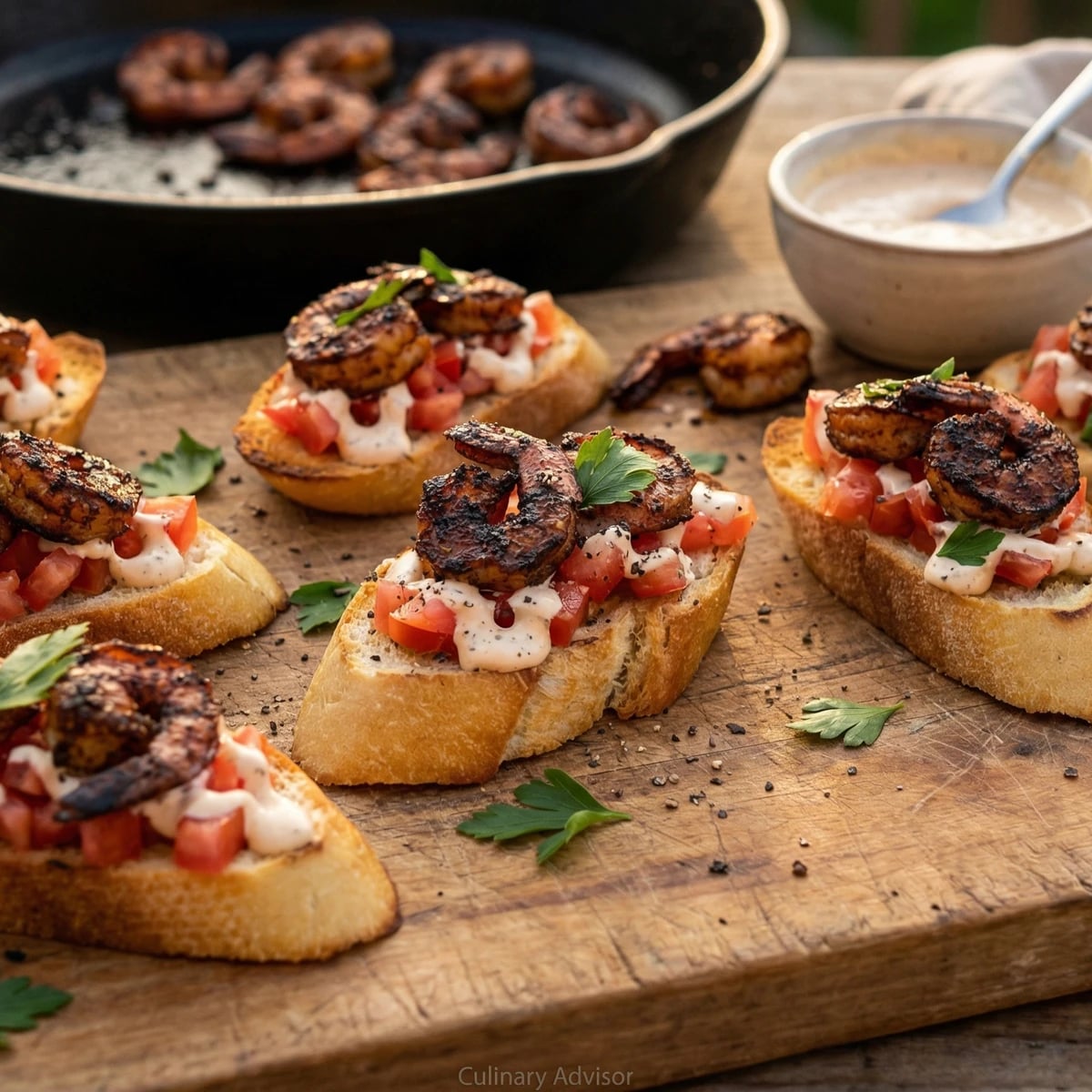
Gulf shrimp kissed by fire and Cajun spices, laid on crusty bread with ripe Creole tomatoes and a cool swipe of homemade remoulade, the kind of appetizer that makes guests lean in and reach for seconds before you've finished plating.

Appetizers & Snacks
Cajun
Dinner Party
Date Night
Special Occasion
35 min
Active Time
15 min cook50 min total
Yield24 pieces (serves 8 as an appetizer)

Blackening is one of the great gifts Louisiana gave to American cooking. The technique is simple: you get cast iron screaming hot, you coat your protein in butter and spice, and you let the fire do its work. The spices bloom and char, the butter sizzles and smokes, and in ninety seconds you have flavor that takes other cuisines hours to build. That's the bayou way.

At Lagniappe, we serve a version of this as our signature appetizer, and it disappears faster than I can get it out of the kitchen. The contrast is what makes it sing: hot, spicy shrimp against cool remoulade, the crunch of toasted bread, the bright pop of fresh tomatoes. Every bite gives you something different.

Now here's what most folks get wrong with blackening: they don't get the pan hot enough. You want that cast iron shimmering, almost white-hot. Your smoke detector might have opinions about this. Open the windows, turn on the fan, and don't apologize. Good food sometimes makes noise. The char is not burning; it's the Maillard reaction working overtime, building complexity in seconds that no other technique can match.

The remoulade is pure Louisiana, tangy and bold with Creole mustard and a little horseradish heat. Make it ahead if you can. Like most sauces in our tradition, it gets better as the flavors marry. My grandmother Evangeline always said the best cooks work ahead so they can enjoy their own parties. She was right about most things.

The technique, the tradition, and the story behind every dish.

Discover Culinary Explorer

Ingredients

large Gulf shrimp (21-25 count)

Quantity

1 1/2 pounds

peeled and deveined

unsalted butter

Quantity

4 tablespoons

melted

paprika

Quantity

2 tablespoons

garlic powder

Quantity

1 tablespoon

onion powder

Quantity

1 tablespoon

cayenne pepper

Quantity

1 teaspoon

dried thyme

Quantity

1 teaspoon

dried oregano

Quantity

1 teaspoon

black pepper

Quantity

1 teaspoon

freshly ground

white pepper

Quantity

1/2 teaspoon

kosher salt (for spice blend)

Quantity

1 teaspoon

French baguette

Quantity

1

cut into 24 slices (1/2-inch thick)

extra-virgin olive oil

Quantity

3 tablespoons

Creole or vine-ripened tomatoes

Quantity

3 large

seeded and diced small

fresh basil

Quantity

2 tablespoons

chiffonade

garlic (for tomatoes)

Quantity

1 clove

minced fine

kosher salt (for tomatoes)

Quantity

1/2 teaspoon

black pepper (for tomatoes)

Quantity

1/4 teaspoon

freshly ground

mayonnaise

Quantity

1/2 cup

Creole mustard

Quantity

2 tablespoons

prepared horseradish

Quantity

1 tablespoon

fresh lemon juice

Quantity

1 tablespoon

green onion

Quantity

1

minced fine

garlic (for remoulade)

Quantity

1 clove

minced fine

capers

Quantity

1 teaspoon

minced

hot sauce

Quantity

1/2 teaspoon

smoked paprika

Quantity

1/4 teaspoon

fresh parsley (optional)

Quantity

for garnish

Equipment Needed

  • 12-inch cast iron skillet
  • Rimmed baking sheet
  • Wire cooling rack
  • Shallow bowl for dredging

Instructions

  1. 1

    Make the remoulade

    Whisk together the mayonnaise, Creole mustard, horseradish, lemon juice, green onion, garlic, capers, hot sauce, and smoked paprika in a small bowl. Taste it. The mustard should sing, the horseradish should whisper, and the whole thing should make you want to dip your finger back in. Adjust the heat and tang to your liking. Cover and refrigerate while you prepare everything else.

    Creole mustard is different from Dijon. It's coarser, tangier, and more complex. If you can't find it, use whole-grain mustard with a splash of vinegar.
  2. 2

    Build the blackening spice

    Combine the paprika, garlic powder, onion powder, cayenne, thyme, oregano, black pepper, white pepper, and salt in a shallow bowl. Mix well with your fingers, breaking up any clumps. This blend has heat, but it's balanced. If you're cooking for folks who run from spice, cut the cayenne in half. You can always add heat; you can't take it away.

  3. 3

    Prepare the tomato topping

    Toss the diced tomatoes with the basil, minced garlic, salt, and pepper. Let this sit at room temperature while you work. The salt draws out moisture and concentrates flavor. Fresh Creole tomatoes from the garden are ideal, but any ripe, flavorful tomato will do. Never use those pale, mealy things from the supermarket in winter. Wait for summer, or use good canned San Marzanos.

  4. 4

    Toast the bread

    Preheat your oven to 400 degrees. Arrange the baguette slices on a baking sheet and brush both sides lightly with olive oil. Toast until golden and crisp, about 8 to 10 minutes, flipping halfway through. You want crunch that holds up to the toppings without shattering into a thousand pieces. Let them cool slightly on a wire rack.

    Day-old bread works better than fresh here. It has less moisture and crisps up without getting tough.
  5. 5

    Season the shrimp

    Pat the shrimp completely dry with paper towels. This is not optional. Wet shrimp steam instead of sear, and we're not steaming anything today. Dip each shrimp in melted butter, then dredge through the spice blend, coating all sides. The butter helps the spices adhere and promotes that gorgeous char. Work in batches to keep things organized.

  6. 6

    Get the skillet screaming hot

    Set your cast iron skillet over high heat for a full 5 minutes. I mean it. Walk away, come back, and let that iron get hot enough to make you nervous. You'll know it's ready when you hold your hand 6 inches above the surface and feel serious heat radiating up. A drop of water should vaporize instantly on contact.

  7. 7

    Blacken the shrimp

    Work in batches so you don't crowd the pan. Add the seasoned shrimp to the dry, screaming-hot skillet in a single layer. You'll see smoke, you'll hear sizzle, and the spices will char almost immediately. Cook 60 to 90 seconds per side until the coating is blackened and the shrimp are just cooked through, curled but not tight. Transfer to a plate. Add a pat of butter between batches if needed.

    Open windows and turn on your exhaust fan before you start. This technique produces serious smoke, and that's exactly what you want. The char is flavor.
  8. 8

    Assemble the bruschetta

    Work quickly while the shrimp are still warm. Spread a generous smear of remoulade on each toasted bread slice. Spoon a small mound of the tomato mixture on top. Crown each with a blackened shrimp, slightly angled. Scatter fresh parsley over the platter. Serve immediately while the contrast of temperatures is at its peak: warm, spicy shrimp against cool, creamy sauce.

Chef Tips

  • Gulf shrimp are sweeter and more tender than imported varieties. Ask your fishmonger where they came from. If they can't tell you, find a new fishmonger.
  • The remoulade improves overnight. Make it the day before your party, and you'll have one less thing to worry about. At Lagniappe, we always make our sauces ahead.
  • Don't even think about using a nonstick pan for blackening. Cast iron holds heat and creates that essential char. A well-seasoned skillet is your best friend here.
  • If the smoke becomes overwhelming, work in smaller batches with a minute of rest between. The pan cools slightly, reducing smoke, but will heat back up quickly.
  • Leftovers happen rarely, but if they do, the shrimp and remoulade make an excellent po'boy the next day. Just toast fresh bread.

Advance Preparation

  • Remoulade can be made up to 4 days ahead and stored refrigerated. The flavors marry and improve with time.
  • Blackening spice blend keeps in an airtight container for up to 3 months. Make a double batch and you're set for spontaneous Cajun cooking.
  • Tomato topping can be prepared up to 4 hours ahead, covered, and held at room temperature.
  • Bread can be sliced and stored in an airtight bag the day before. Toast just before serving.

Frequently Asked Questions

Nutrition Information

1 serving (about 160g)

Calories
380 calories
Total Fat
22 g
Saturated Fat
6 g
Trans Fat
0 g
Unsaturated Fat
15 g
Cholesterol
182 mg
Sodium
605 mg
Total Carbohydrates
20 g
Dietary Fiber
1 g
Sugars
2 g
Protein
24 g

Note: Chef personas and recipes are created with AI assistance. Cook with care: follow safe food-handling practices, check doneness with a thermometer when needed, and adapt for allergies and your kitchen.

Where cooking meets culture.

Culinary guides, cultural storytelling, and the editorial depth that makes cooking meaningful.

Discover Culinary Explorer

More from Chef Remy's Appetizers and Snacks

Browse the full collection