
Chef Lupita
Burrito de Chicharrón Sonorense
Sonora's working morning burrito: chicharrón de cáscara stewed in chile colorado with diced potato, rolled tight in a paper-thin tortilla sobaquera and eaten standing up at the carreta.
A cooking platform built around craft, culture, and the stories behind what we eat.
Created by
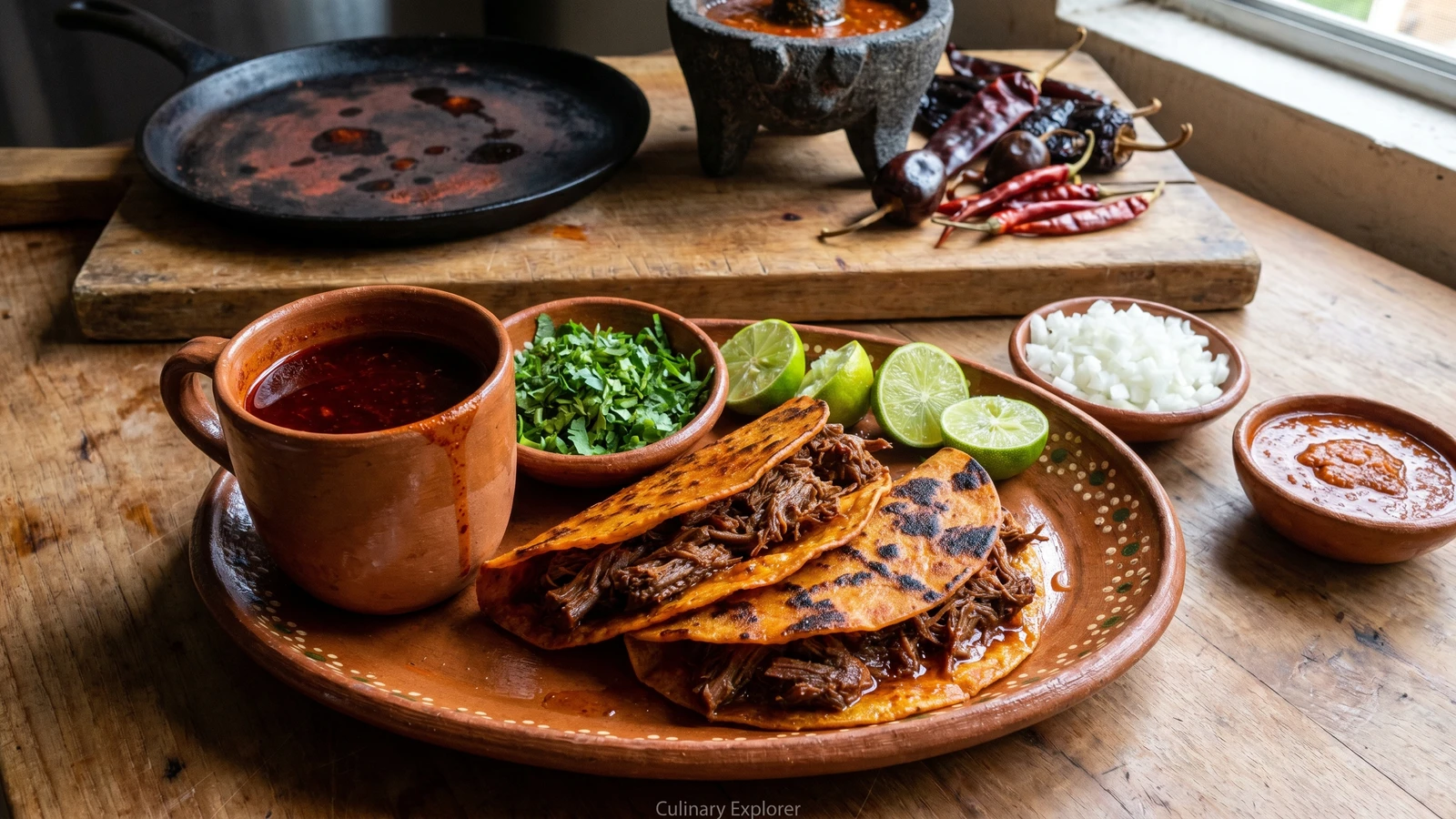
Jalisco's goat birria, born around Cocula and carried into Guadalajara's markets, slow-braised in ancho, guajillo, cascabel, and chile de arbol, then tucked into corn tortillas crisped in its own red fat.
Jalisco owns this pot, and Cocula is where you start. Birria de chivo moved from those western towns into Guadalajara's birrierias, into the mercados, into the Sunday tables where the consome arrives in clay cups and the tortillas come hot from the comal. This is not food from a single Mexico. This is Jalisco speaking in chile, vinegar, goat, and patience.
The chiles tell you where you are: guajillo for clean red color, ancho for sweetness, cascabel for that round toasted nuttiness, and chile de arbol for a sharp line of heat. Not a handful of anonymous dried chiles. Name them. Toast them. Soak them correctly. The women who perfected this dish did not write 'add chili powder' in a notebook and call it cooking.
In the old way, the goat was rubbed with adobo, tucked into a pot with maguey, sealed, and cooked until the meat surrendered into its own broth. The taco dipped in red fat and crisped on the comal is the taqueria face of birria, not the whole story, but it is a good one when the consome is serious and the tortillas are corn. Flour tortillas belong to other regions. Cada estado, su propia cocina.
I learned birria from a señora in the Mercado Libertad in Guadalajara who slapped my hand away when I reached for the meat too early. 'Todavia no,' she told me. Not yet. That is the lesson. Birria is not difficult because it is fancy. It is difficult because you have to wait until the pot tells you it is ready. Saber cocinar es saber vivir.
Birria is strongly associated with Jalisco, especially Cocula and Guadalajara, and emerged after the Spanish introduced goats to western Mexico in the 16th century. Goat meat was considered difficult by colonial tastes, so regional cooks built an adobo of dried chiles, vinegar, herbs, and warm spices to tame and transform it into a ceremonial dish for weddings, baptisms, and market Sundays. The red-fat dipped taco with consome became widely visible in late 20th and early 21st century taquerias, but the foundation remains the older birria de chivo of Jalisco.
Quantity
5 pounds
cut into 3-inch pieces
Quantity
1 tablespoon, plus more to taste
Quantity
10
stemmed and seeded
Quantity
4
stemmed and seeded
Quantity
4
stemmed and seeded
Quantity
3
stemmed
Quantity
6
unpeeled
Quantity
1 medium
quartered
Quantity
3
halved
Quantity
1/2 cup
Quantity
1 tablespoon
Quantity
1 teaspoon
Quantity
1 teaspoon
Quantity
1 teaspoon
Quantity
6
Quantity
6
Quantity
1 2-inch piece
Quantity
1 teaspoon
Quantity
3
Quantity
2 tablespoons, plus more if needed
Quantity
6 cups, plus more as needed
Quantity
2 large leaves or 2 small pieces
Quantity
24
Quantity
1 cup
Quantity
1 cup
Quantity
for serving
Quantity
for serving
| Ingredient | Quantity |
|---|---|
| bone-in goat shoulder, leg, or ribscut into 3-inch pieces | 5 pounds |
| kosher salt | 1 tablespoon, plus more to taste |
| dried chile guajillostemmed and seeded | 10 |
| dried chile anchostemmed and seeded | 4 |
| dried chile cascabelstemmed and seeded | 4 |
| dried chile de arbolstemmed | 3 |
| garlic clovesunpeeled | 6 |
| white onionquartered | 1 medium |
| roma tomatoeshalved | 3 |
| apple cider vinegar | 1/2 cup |
| dried Mexican oregano | 1 tablespoon |
| dried thyme | 1 teaspoon |
| dried marjoram | 1 teaspoon |
| ground cumin | 1 teaspoon |
| whole cloves | 6 |
| whole allspice berries | 6 |
| Mexican cinnamon | 1 2-inch piece |
| black peppercorns | 1 teaspoon |
| bay leaves | 3 |
| manteca de cerdo | 2 tablespoons, plus more if needed |
| beef or goat stock | 6 cups, plus more as needed |
| avocado leaves or roasted maguey leaf (optional) | 2 large leaves or 2 small pieces |
| small corn tortillas | 24 |
| finely diced raw white onion (optional) | 1 cup |
| chopped fresh cilantro (optional) | 1 cup |
| lime wedges (optional) | for serving |
| salsa de chile de arbol (optional) | for serving |
Pat the goat dry and season it all over with the tablespoon of kosher salt. Put it in a deep bowl or clay cazuela while you make the adobo. Goat is the meat of birria jalisciense. Beef birria exists now, especially in taquerias, but the old Cocula pot starts with chivo.
Heat a dry comal over medium. Toast the guajillo, ancho, cascabel, and chile de arbol separately, 15 to 30 seconds per side, just until the skins darken slightly and smell deep. Do not walk away. Guajillo can take a little time, ancho burns faster, chile de arbol goes bitter if you try to be clever. Burned chile ruins the pot. No me vengas con atajos.
Put the toasted chiles in a bowl and cover with hot water, not boiling water. Let them soften for 20 minutes. Hot water relaxes the flesh. Boiling water toughens the skins and pulls out bitterness. Drain them, saving 1 cup of the soaking liquid only if it tastes clean and not harsh.
On the same comal, roast the unpeeled garlic, onion quarters, and tomato halves until they soften and pick up dark spots. Peel the garlic. The tomato is not there to make this a tomato stew. It rounds the chile and gives body to the consome.
In a blender, combine the soaked chiles, peeled garlic, onion, tomatoes, vinegar, oregano, thyme, marjoram, cumin, cloves, allspice, cinnamon, black peppercorns, and 1 cup of stock. Blend until completely smooth, longer than you think. Strain through a fine-mesh sieve into a bowl, pressing hard on the solids. Birria adobo should be smooth enough to coat the meat, not gritty like wet sand.
Pour the strained adobo over the salted goat and rub it into every piece. Cover and refrigerate at least 8 hours, preferably overnight. The vinegar and chile need time to enter the meat. This is where the flavor settles. A rushed birria tastes like meat with sauce poured on top.
Melt the manteca de cerdo in a heavy Dutch oven or deep clay cazuela over medium heat. Lift the goat from the marinade, letting excess adobo drip back into the bowl, and brown the pieces in batches. Add the remaining adobo to the pot and fry it for 6 to 8 minutes, stirring until it darkens and the fat begins to separate at the edges. La manteca es el sabor. This step wakes up the chile.
Return all the goat to the pot. Add the bay leaves, avocado leaves or maguey if using, and enough stock to come two-thirds of the way up the meat. Bring to a gentle simmer, cover tightly, and cook 3 to 3 1/2 hours, turning the meat once or twice, until it pulls cleanly from the bone. If the liquid drops too low, add more stock. You want a concentrated consome, not a dry roast.
Transfer the meat to a tray. Discard the bay leaves and avocado or maguey leaves. Let the meat cool just enough to handle, then pull it from the bones in rough shreds. Strain the cooking liquid into a pot and skim some of the red fat from the surface into a shallow bowl. Keep that fat. That is what stains and crisps the tortillas.
Taste the strained consome and season with salt until the chile, vinegar, and goat taste balanced. If it is too intense, add a splash of stock. If it is thin, simmer it uncovered for 10 to 15 minutes. A proper consome should be chile-red, glossy at the surface, and strong enough to stand beside the taco without disappearing.
Heat a comal or cast iron skillet over medium. Brush one side of each corn tortilla with the skimmed red birria fat, adding a little melted manteca if the pot did not give you enough. Lay the tortilla fat-side down, fill with shredded goat, fold, and cook until the tortilla is crisp in spots and the edges turn brick red. Do not use flour tortillas here. This is Jalisco, not the northern border.
Serve the tacos immediately with small cups of hot consome, diced raw white onion, cilantro, lime wedges, and salsa de chile de arbol. Dip the taco, bite, then spoon a little onion and cilantro into the cup if you want. The table should have clay bowls, lime halves, and chile-stained fingers. Así se hace y punto.
1 serving (about 400g)
Culinary guides, cultural storytelling, and the editorial depth that makes cooking meaningful.
Discover Culinary ExplorerChef Lupita
Sonora's working morning burrito: chicharrón de cáscara stewed in chile colorado with diced potato, rolled tight in a paper-thin tortilla sobaquera and eaten standing up at the carreta.

Chef Lupita
Mocorito's pork chilorio, shredded and confited in lard with chile ancho and pasilla, rolled into a thin handmade flour tortilla. The burrito Sinaloa sends out into the world.

Chef Lupita
Sonora's morning burrito of mashed pinto frijoles puercos and melted queso asadero, wrapped in a paper-thin sobaquera and seared on the comal until the cheese pulls in long strings.

Chef Lupita
Baja California Sur's smoked marlin burrito, sauteed with white onion, tomato, green olives, and capers, then rolled in a paper-thin flour tortilla. The beach lunch of La Paz and Cabo, served on the sand with a cold Pacifico.