
Chef Dimitra
Aegean Island Chtapodi me Kritharaki (Χταπόδι με Κριθαράκι)
Aegean island octopus, tomato, red wine, and toasted kritharaki share one pot, so the pasta drinks the briny sauce and stays glossy instead of turning heavy.
A cooking platform built around craft, culture, and the stories behind what we eat.
Created by
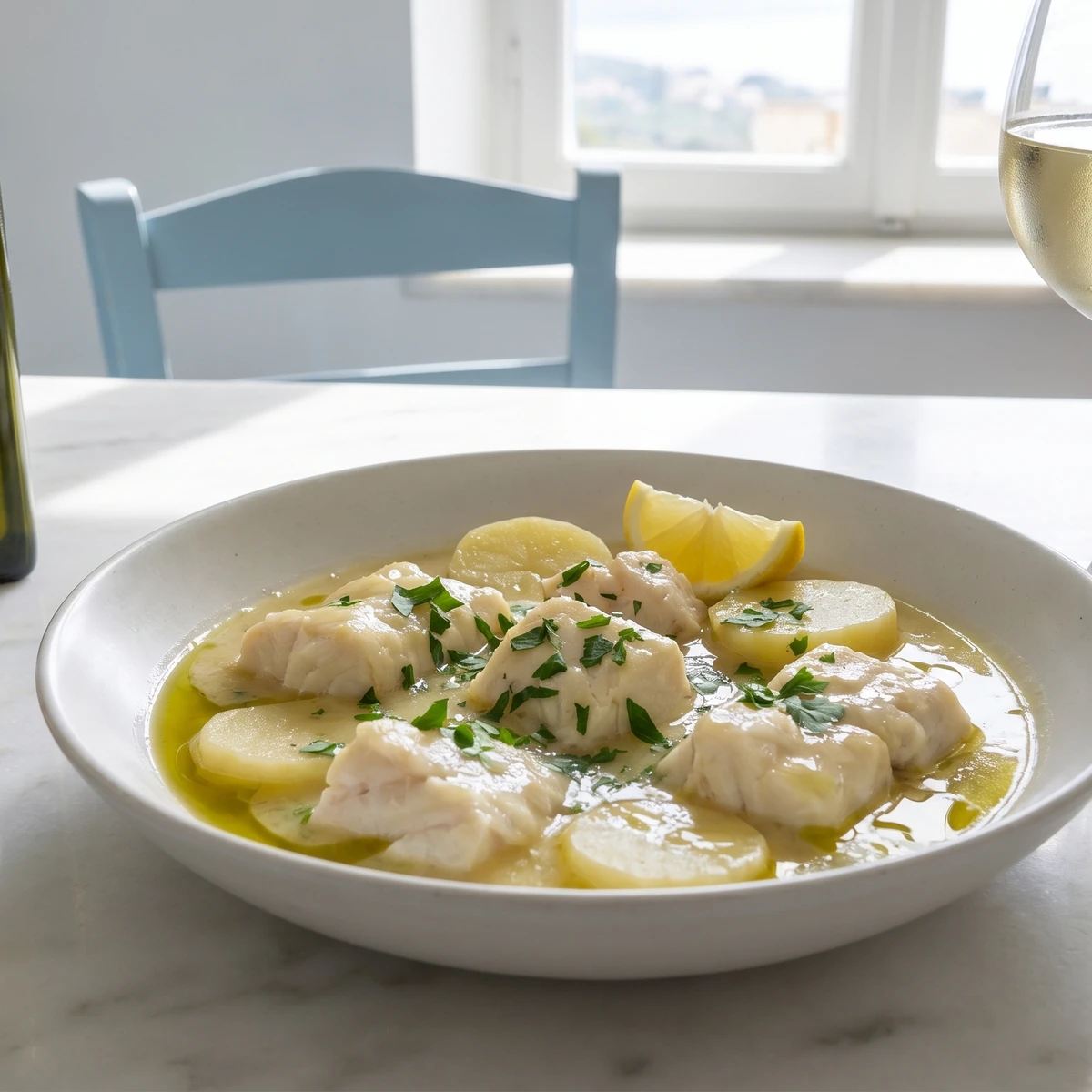
Corfu's bianco is fish, potatoes, garlic, olive oil and lemon, kept pale on purpose. No tomato, no flourish, just the Ionian pot doing its work.
Bianco Kerkyras is Corfu's white fish stew, and the region is the dish's surname. It is not red, not spiced, not crowded with vegetables. Fish, potatoes, garlic, olive oil and lemon are enough, with wine in the pot and a sauce that stays pale because that is the whole point.
The method that decides it is gentleness. You cook the potatoes first until they almost give, then lay the fish on top and shake the pot instead of stirring. The potato starch, olive oil and lemon make the sauce cloudy and glossy on their own. If you stir with a spoon, you get broken fish and mashed potatoes. Still good to eat, yes, but not bianco.
Use the firmest white fish you can buy that day. Corfiot cooks have made this with scorpionfish, cod, grouper, hake, whatever the boats and the market allowed. Λίγα και καλά: a few good things, and good ones. I don't invent it. I find it, I test it, I write it down, so the next cook can make the same pale, sharp, comforting pot without guessing.
Bianco belongs to Corfu and the Ionian Islands, where Venetian rule from 1386 to 1797 left Italian names and techniques inside Greek kitchens. Its name comes from the Italian bianco, white, marking the absence of tomato and the pale lemon-garlic sauce that sets it apart from the red fish stews of other Greek regions. Older Corfiot versions often used fish from the rocky Ionian coast, especially scorpionfish or cod, with potatoes added to turn the pot into a full family meal.
Quantity
900g
cut into large pieces
Quantity
800g
peeled and sliced into 1cm rounds
Quantity
120ml
Quantity
8
thinly sliced
Quantity
180ml
Quantity
240ml
Quantity
80ml
Quantity
2
Quantity
1 teaspoon
plus more for the fish
Quantity
1/2 teaspoon
Quantity
2 tablespoons
chopped, for finishing
Quantity
4
for serving
| Ingredient | Quantity |
|---|---|
| firm white fishcut into large pieces | 900g |
| waxy potatoespeeled and sliced into 1cm rounds | 800g |
| extra virgin olive oil | 120ml |
| garlic clovesthinly sliced | 8 |
| dry white wine | 180ml |
| water or light fish stock | 240ml |
| fresh lemon juice | 80ml |
| bay leaves | 2 |
| fine sea saltplus more for the fish | 1 teaspoon |
| freshly ground black pepper | 1/2 teaspoon |
| flat-leaf parsleychopped, for finishing | 2 tablespoons |
| lemon wedges (optional)for serving | 4 |
Pat the fish dry and season it lightly with salt. Set it aside while you start the potatoes. Big pieces matter here, because small pieces break before the potatoes are tender.
Choose a wide, shallow pot with a lid. Add the olive oil, sliced garlic, potatoes, bay leaves, salt and pepper. Turn the potatoes gently so they are slicked with oil, then pour in the wine and water or fish stock.
Bring the pot to a steady simmer, cover, and cook for 18 to 22 minutes, until the potatoes are almost tender but not collapsing. Shake the pot now and then instead of stirring. The starch from the potatoes is what thickens the bianco, and a spoon will break the slices before the sauce has body.
Lay the fish pieces over the potatoes in one layer. Spoon a little liquid over them, cover again, and cook for 8 to 10 minutes, depending on thickness, until the fish flakes cleanly but still holds its shape.
Take the pot off the heat. Pour in the lemon juice and tilt the pot in slow circles so the oil, lemon and potato starch make a pale, glossy sauce. Taste for salt. Let it rest 5 minutes, then finish with parsley and serve with lemon wedges.
1 serving (about 500g)
Culinary guides, cultural storytelling, and the editorial depth that makes cooking meaningful.
Discover Culinary Explorer
Chef Dimitra
Aegean island octopus, tomato, red wine, and toasted kritharaki share one pot, so the pasta drinks the briny sauce and stays glossy instead of turning heavy.

Chef Dimitra
Aegean coast psari plaki is the quiet whole-fish bake: onions and tomato softened first, fish laid on top, and olive oil doing its slow work until the bones release cleanly.

Chef Dimitra
Astakomakaronada is the Aegean islands' celebration pasta: spiny lobster, tomato, olive oil, and long noodles cooked in the shell broth, never drowned in cream or cheese.

Chef Dimitra
Aegean island octopus, simmered tender in its own juices, then marked hard on the grill and finished with oil, vinegar, oregano, and lemon.