
Chef Dean
Antipasto Skewers
The abundance of an Italian antipasto platter captured on a single pick: folded salami, sharp provolone, briny olives, and tender artichoke hearts, finished with fresh basil and a bright olive oil drizzle.
A cooking platform built around craft, culture, and the stories behind what we eat.

Created by
A warm Piedmontese bath of melted garlic, butter, and anchovies for dipping whatever the market offers today. Communal, primal, and impossible to stop eating.
Start with the anchovies. Not the cheap ones packed in vegetable oil that taste of tin and regret, but the salt-packed fillets you rinse and separate yourself, the ones that smell like clean ocean and dissolve into warm butter like they were always meant to be there. This is bagna cauda: the warm bath.
In Piedmont, this dish belongs to the harvest season, when farmers would gather after bringing in the cardoons and dip the raw stalks into a communal pot kept warm over coals. The vegetables have changed with the seasons and the century, but the ritual remains. You gather. You dip. You talk. The sauce stays warm.
The technique could not be simpler. Melt garlic in butter and oil until it surrenders completely, then dissolve anchovies into the fat until everything becomes one silky, golden, intensely savory sauce. Your job is to find beautiful vegetables and get out of the way.
Every meal is a meaningful choice. The carrots with their tops still attached, the radishes that were in the ground this morning, the fennel from the farmer who grows only three things but grows them well. These choices shape the dish far more than any technique ever could.
Quantity
8
rinsed and filleted, or 16 oil-packed fillets
Quantity
10
peeled and thinly sliced
Quantity
1/2 cup (1 stick/113g)
Quantity
1/2 cup
Quantity
1 pound
halved if large
Quantity
1 bunch
scrubbed and halved lengthwise
Quantity
1 head
quartered through the core
Quantity
1
cut into wedges through the core
Quantity
1 bunch
separated into stalks
Quantity
1 bunch
trimmed
Quantity
for serving
| Ingredient | Quantity |
|---|---|
| salt-packed anchoviesrinsed and filleted, or 16 oil-packed fillets | 8 |
| garlic clovespeeled and thinly sliced | 10 |
| unsalted butter | 1/2 cup (1 stick/113g) |
| extra-virgin olive oil | 1/2 cup |
| radishes with topshalved if large | 1 pound |
| carrots with topsscrubbed and halved lengthwise | 1 bunch |
| radicchioquartered through the core | 1 head |
| fennel bulbcut into wedges through the core | 1 |
| celery hearts with leavesseparated into stalks | 1 bunch |
| scallionstrimmed | 1 bunch |
| crusty bread | for serving |
If using salt-packed anchovies, rinse them under cool water and use your fingers to gently separate the fillets from the spine. Pat dry. Salt-packed anchovies have more depth and less of that tinny quality. They are worth seeking out. If using oil-packed, drain them well and blot on a paper towel.
Combine the butter and olive oil in a small heavy saucepan or fondue pot over the lowest possible heat. Add the sliced garlic and let it soften completely, stirring occasionally. This takes fifteen to twenty minutes. The garlic should become tender enough to crush against the side of the pan with no resistance. It should never, ever brown.
Add the anchovy fillets to the warm butter. Stir and press with a wooden spoon until they dissolve completely into the fat. The sauce will look murky and rough at first, then come together into something silky and unified. The kitchen will smell intensely of garlic and the sea. This is correct.
While the bagna cauda simmers, arrange your market vegetables on a large platter or wooden board. Leave the radish tops attached if they are fresh and perky. Keep the fennel fronds. The celery leaves stay. These green bits are not waste. They are flavor and beauty. Chill the platter until the sauce is ready.
Transfer the bagna cauda to a small fondue pot, ceramic warmer, or the smallest pot you have set over a candle. It must stay warm but never hot enough to fry. Place it at the center of the table with the vegetable platter alongside. Each person dips, drags through the golden sauce, and eats directly. Bread catches the drips. Conversation flows. This is the whole point.
1 serving (about 350g)
Culinary guides, cultural storytelling, and the editorial depth that makes cooking meaningful.
Discover Culinary ExplorerChef Dean
The abundance of an Italian antipasto platter captured on a single pick: folded salami, sharp provolone, briny olives, and tender artichoke hearts, finished with fresh basil and a bright olive oil drizzle.

Chef Dean
Shattering golden shells give way to creamy risotto and stretchy mozzarella centers, served with a bright, garlicky marinara that cuts through the richness. Sicilian street food elevated to dinner party status.

Chef Dean
Silky slices of raw beef tenderloin dressed in the Venetian style with extra-virgin olive oil, bright lemon, peppery arugula, and snow-white shards of aged Parmesan. This is elegance that requires no cooking at all.
Chef Dean
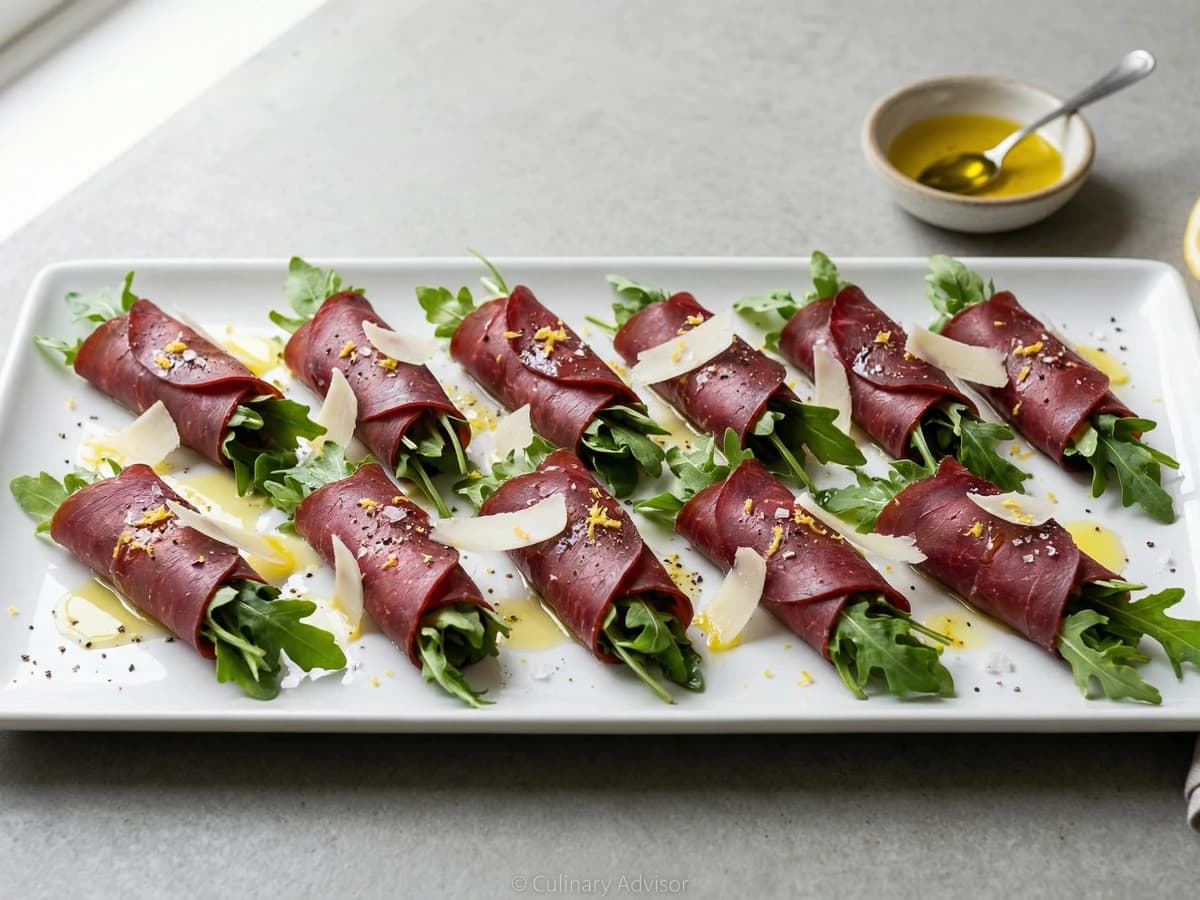
Silky ribbons of air-cured beef embrace wild arugula, crowned with shaved Parmesan and bright lemon. This is the elegant Italian appetizer that requires no cooking, only confidence and quality ingredients.