
Chef Lupita
Aceite de Chiltepin Bajacaliforniano
Baja California's wild chiltepin steeped in olive oil with garlic, orejon, and lime peel, until the oil turns ruby-amber and carries the slow, sneaky burn of the desert coast.
A cooking platform built around craft, culture, and the stories behind what we eat.
Created by
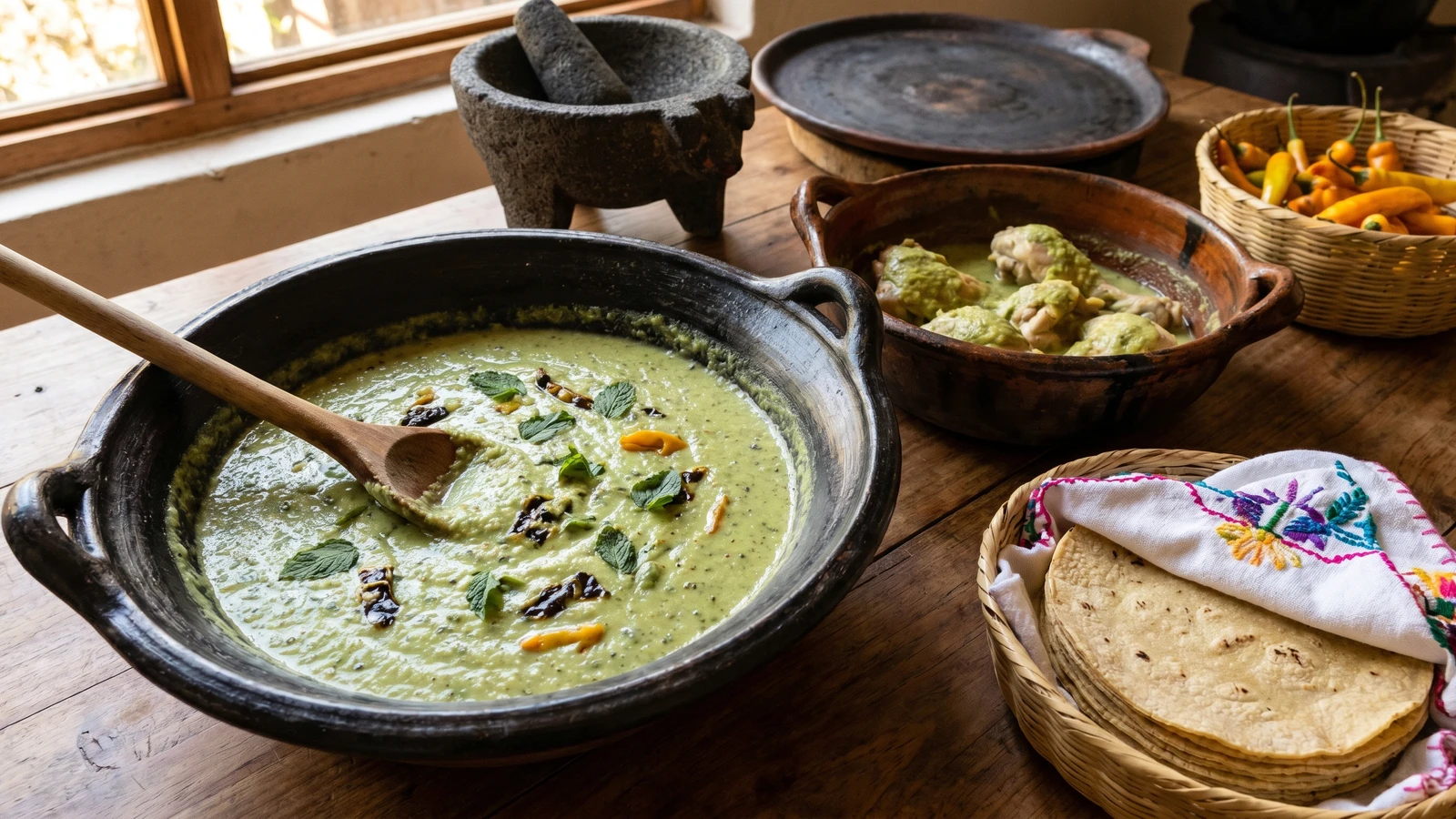
Michoacán's Meseta P'urhépecha sauce of fresh hierbabuena, chile perón, broth, and masa de maíz, pounded in the molcajete and thickened in a clay cazuela until it coats the spoon.
Michoacán, specifically the Meseta P'urhépecha that rises between Pátzcuaro, Uruapan, Paracho, and the pine towns, is where atápakua de hierbabuena belongs. This sauce is green, fragrant, and thick with masa de maíz, not nuts, not bread, not pepita. Do not call it mole verde. Atápakua is its own architecture.
I learned this version from a P'urhépecha cook from Santa Fe de la Laguna who roasted chile perón on a comal blackened by leña and kept her hierbabuena in a damp servilleta so it would not wilt. She pounded garlic, salt, and chile in the molcajete first, then the tomatillo, then the herb. Order matters. The mint should be bruised into the sauce, not turned into green water.
My mother was from Jalisco, so this was not in her notebook. I had to learn it on the road, standing beside women who measured masa by feel and corrected my hand when I made the sauce too thin. The masa is the lesson: it turns broth into something that clings to chicken, pork, beans, hongos, or quelites. Saber cocinar es saber vivir.
Bring it to the table in barro, Capula black burnished clay, Patamban green glaze, a Cocucho cazuela if you have one. That is not decoration. It holds the heat, the family serves from it, and the sauce stays where it belongs: at the center of the table.
Atápakua is a P'urhépecha category from Michoacán's lake and mountain communities, not a mole; its body comes from nixtamalized corn masa dispersed into broth. The method belongs to the same corn-centered cooking system, milpa, nixtamal, metate or molcajete, and wood-fire hearth, that supported Mexico's 2010 UNESCO recognition of Traditional Mexican Cuisine, with Michoacán used as the core community model. Chile perón, a local Capsicum pubescens with black seeds and a floral citrus aroma, remains tied to the orchards and cool highland markets around Uruapan, Pátzcuaro, and the Meseta P'urhépecha.
Quantity
8 ounces
husked and rinsed
Quantity
2
preferably yellow-orange, stemmed and seeded if you want less heat
Quantity
1/2 medium
cut into 2 wedges
Quantity
3
unpeeled
Quantity
2 cups packed, plus 2 tablespoons
washed well, extra chopped for finishing
Quantity
1/3 cup
or 1/4 cup masa harina mixed with 1/4 cup warm water
Quantity
3 cups
divided
Quantity
1 teaspoon, plus more to taste
Quantity
for serving
Quantity
for serving
| Ingredient | Quantity |
|---|---|
| tomatillos milperos or small tomatilloshusked and rinsed | 8 ounces |
| fresh chile perónpreferably yellow-orange, stemmed and seeded if you want less heat | 2 |
| white onioncut into 2 wedges | 1/2 medium |
| garlic clovesunpeeled | 3 |
| fresh hierbabuena leaves and tender stemswashed well, extra chopped for finishing | 2 cups packed, plus 2 tablespoons |
| fresh masa de maíz nixtamalizadoor 1/4 cup masa harina mixed with 1/4 cup warm water | 1/3 cup |
| warm chicken broth, pork broth, or bean brothdivided | 3 cups |
| sea salt | 1 teaspoon, plus more to taste |
| poached chicken, pork, beans, hongos, or quelites (optional) | for serving |
| warm hand-pressed corn tortillas (optional) | for serving |
Heat a dry comal over medium. Roast the tomatillos, chile perón, onion wedges, and unpeeled garlic, turning with tongs until the tomatillos turn olive-green with black spots, the onion softens at the edges, and the chile perón blisters on all sides. Put the chile perón in a covered bowl for 5 minutes, then rub off the loose skin. Leave some skin if you like a stronger roasted taste. Peel the garlic.
Put the salt and peeled garlic in a volcanic stone molcajete and grind to a paste. Add the roasted chile perón and onion. Pound until rough, then add the tomatillos and work them into the base. Add the hierbabuena by handfuls, bruising it into the sauce instead of liquefying it. The texture should be martajada, with small pieces of chile and herb still visible. That stone texture is part of the dish.
Whisk the fresh masa de maíz with 1 cup of the warm broth until completely smooth. If you are using masa harina, let the mixture sit for 10 minutes so the corn hydrates fully, then whisk again. Strain if you see lumps. The masa is the thickener. Not pepita. Not almonds. Not flour. Atápakua is not mole verde.
Set a 2-quart clay cazuela or heavy saucepan over medium-low heat. Add the ground herb base and the remaining 2 cups broth. Bring it to a gentle simmer and cook for 5 minutes, stirring with a wooden spoon. Stir in the masa slurry in a thin stream. Keep stirring as the sauce thickens, 12 to 15 minutes, until the raw corn taste is gone and the atápakua coats the back of the spoon.
Taste for salt. If the sauce is too thick, add warm broth a few tablespoons at a time. If it is too thin, simmer a little longer. It should move like loose atole and cling to chicken, pork, beans, hongos, or quelites without sitting like paste. Fold in the chopped hierbabuena off the heat so the herb stays bright. Así se hace y punto.
Spoon the atápakua over poached chicken, pork, beans, mushrooms, or quelites and bring it to the table in a warm Cocucho cazuela, black burnished Capula clay, or green-glazed Patamban dish. Set warm corn tortillas beside it. This is sauce with a spine, built from corn and herb, not a little green decoration on the plate. Cada estado, su propia cocina.
1 serving (about 160g)
Culinary guides, cultural storytelling, and the editorial depth that makes cooking meaningful.
Discover Culinary ExplorerChef Lupita
Baja California's wild chiltepin steeped in olive oil with garlic, orejon, and lime peel, until the oil turns ruby-amber and carries the slow, sneaky burn of the desert coast.

Chef Lupita
Puebla's Lenten convent adobo, a brick-red vinegar chile paste of ancho, guajillo, garlic, oregano, and comino made to dress fish for the meatless calendar.
Chef Lupita
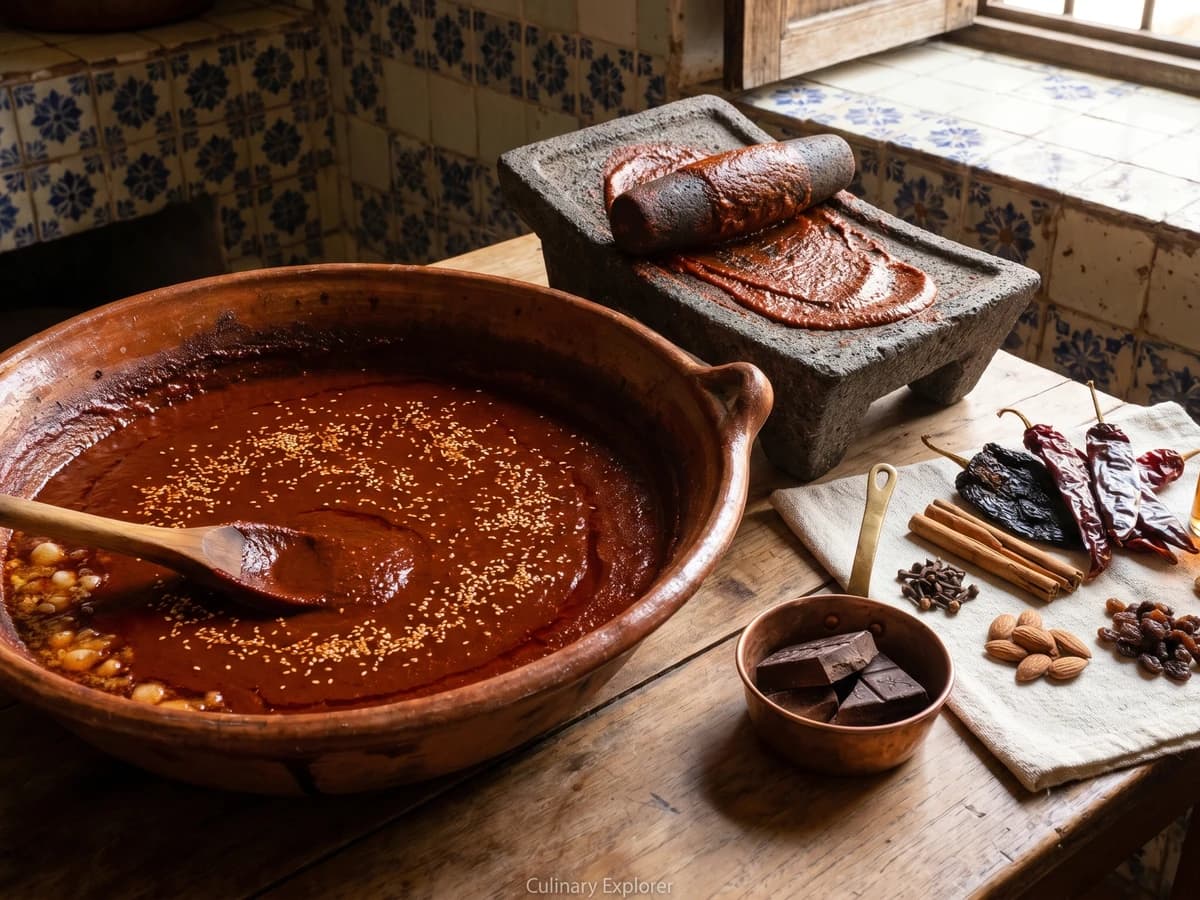
Zacatecas' wedding-table adobo, built from toasted guajillo and ancho, piloncillo, sour orange, chocolate, canela, clavo, almonds, sesame, and lard.

Chef Lupita
Puebla's convent kitchens built this adobo with ancho, guajillo, jerez, almonds, raisins, clove, and lard, a baroque marinade that stains pork loin and finishes as the sauce.