
Chef Lupita
Aceite de Chiltepin Bajacaliforniano
Baja California's wild chiltepin steeped in olive oil with garlic, orejon, and lime peel, until the oil turns ruby-amber and carries the slow, sneaky burn of the desert coast.
A cooking platform built around craft, culture, and the stories behind what we eat.

Created by
Michoacán's white P'urhépecha atápakua is a pale sesame and masa sauce from the Meseta, built in a clay cazuela for fish, chayote, and cooks who know not every Mexican sauce needs chile.
Michoacán, the Meseta P'urhépecha and the lake towns around Pátzcuaro, is where this white atápakua lives. It is pale on purpose: no chile, no tomato, no chocolate, no confusion with mole. The cocineras tradicionales serve it over fish from the lake when there is fish worth buying, or over chayote when the market is full of good chayote. If the mercado gives you chayote today, cook chayote. Pregúntale a las señoras del mercado.
The ajonjolí gives the sauce its aroma, but the masa de maíz gives it its body. That matters. Atápakua is thickened with corn, not with seeds, not with almonds, not with bread. I watched women in the Meseta work it in a molcajete until the sesame turned into a damp paste, then loosen it with broth in a blackened cazuela set near the leña. A blender will make a larger batch behave, but it will smooth away the little roughness that tells you a hand did the work.
My mother did not write this one in her Jalisco notebook. I copied it from a cook near Tzintzuntzan who served it in cream-colored ceramics with fish painted around the rim. She tasted it, added more salt, and said the sauce should cling to the spoon like it knows where it comes from. Cada estado, su propia cocina. This is Michoacán's table, quiet in color and serious in technique.
Atápakua is a P'urhépecha sauce family from Michoacán's Meseta and Lake Pátzcuaro communities, traditionally thickened with nixtamalized corn masa and served with fish, greens, squash, mushrooms, or chayote. In 2010, UNESCO inscribed Traditional Mexican Cuisine on the Representative List of the Intangible Cultural Heritage of Humanity using the Michoacán paradigm: milpa, nixtamal, comal, leña, and cocineras tradicionales. Ajonjolí entered New Spain after the 16th-century conquest through Spanish colonial trade routes; in this white version it adds aroma and oil, while masa de maíz remains the binder.
Quantity
1/2 cup plus 1 tablespoon
divided
Quantity
1/2 cup
preferably from a tortillería
Quantity
4 cups
warmed and divided
Quantity
2 tablespoons
Quantity
1/2 small
finely chopped
Quantity
2
peeled
Quantity
1 teaspoon, plus more to taste
Quantity
for serving
Quantity
for serving
warmed on a comal
| Ingredient | Quantity |
|---|---|
| hulled white sesame seeds (ajonjolí blanco)divided | 1/2 cup plus 1 tablespoon |
| fresh nixtamalized corn masa (masa de maíz)preferably from a tortillería | 1/2 cup |
| light fish broth or chayote cooking brothwarmed and divided | 4 cups |
| manteca de cerdo | 2 tablespoons |
| white onionfinely chopped | 1/2 small |
| garlic clovespeeled | 2 |
| sal de grano or kosher salt | 1 teaspoon, plus more to taste |
| cooked trout, firm white fish, or cooked chayote wedges (optional) | for serving |
| hand-pressed corn tortillas (optional)warmed on a comal | for serving |
Heat a dry comal over medium. Add the sesame seeds and move them constantly with a wooden spoon until they turn pale gold and smell nutty, 3 to 5 minutes. Do not take them dark. Dark sesame turns bitter and this sauce has nowhere to hide that bitterness. Reserve 1 tablespoon of the toasted sesame for finishing.
Put the garlic and salt in a volcanic stone molcajete and grind to a paste. Add the toasted sesame a spoonful at a time and work it until it becomes damp and coarse, adding a few spoonfuls of warm broth only when the paste refuses to move. If you use a blender, blend the sesame, garlic, salt, and 1 cup warm broth until smooth. It works for batches. It does not give the molcajete texture. Know the difference.
In a bowl, knead the fresh masa with 1 cup of warm broth until it loosens into a smooth slurry. Use your fingers first, then a whisk. Strain it if you see hard bits. This step keeps the sauce from forming lumps when it hits the cazuela.
Set a clay cazuela or heavy saucepan over medium-low heat and melt the manteca de cerdo. Add the chopped white onion and cook until translucent, 4 to 5 minutes, without browning. The sauce should stay ivory. If the onion takes on color, lower the heat.
Add the sesame paste to the cazuela and stir for 2 to 3 minutes. It should smell round and toasted, not fried hard. Add 2 cups of warm broth little by little, stirring from the bottom so the paste opens into the liquid. Keep the heat gentle. No me vengas con atajos here; raw sesame paste tastes flat.
Pour in the masa slurry in a thin stream while stirring constantly. Simmer gently for 12 to 15 minutes, scraping the bottom and corners of the cazuela. The sauce is ready when it coats the spoon and falls back in a slow ribbon. If it tightens too much, add more warm broth by the tablespoon. If it tastes dull, it needs salt, not more sesame.
Taste for salt one last time. Ladle the white atápakua over cooked trout, firm white fish, or chayote wedges. Finish with the reserved toasted ajonjolí. No chile goes into this white atápakua. If the table wants heat, put a roasted chile perón salsa on the side and call it a side, not this sauce. Recetas probadas y garantizadas.
1 serving (about 155g)
Culinary guides, cultural storytelling, and the editorial depth that makes cooking meaningful.
Discover Culinary ExplorerChef Lupita
Baja California's wild chiltepin steeped in olive oil with garlic, orejon, and lime peel, until the oil turns ruby-amber and carries the slow, sneaky burn of the desert coast.

Chef Lupita
Puebla's Lenten convent adobo, a brick-red vinegar chile paste of ancho, guajillo, garlic, oregano, and comino made to dress fish for the meatless calendar.
Chef Lupita
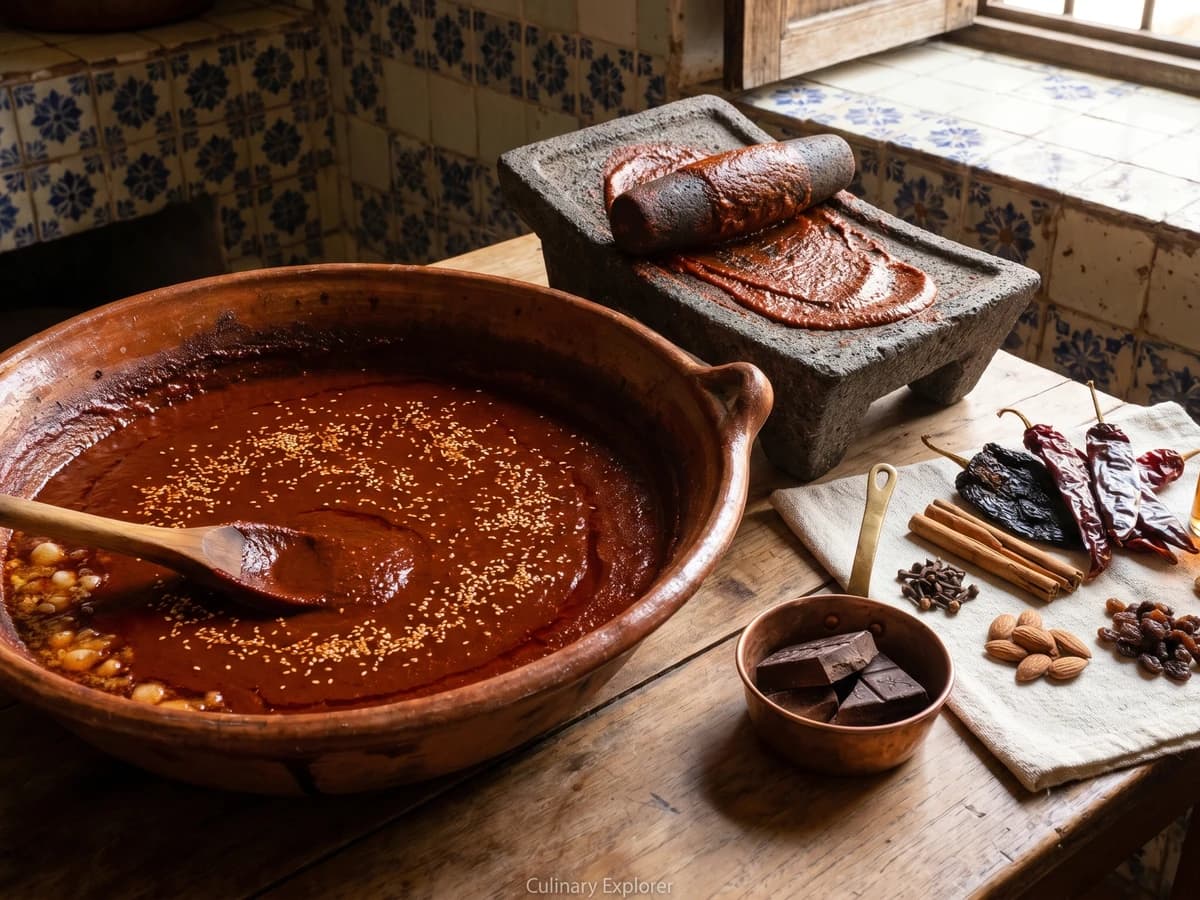
Zacatecas' wedding-table adobo, built from toasted guajillo and ancho, piloncillo, sour orange, chocolate, canela, clavo, almonds, sesame, and lard.

Chef Lupita
Puebla's convent kitchens built this adobo with ancho, guajillo, jerez, almonds, raisins, clove, and lard, a baroque marinade that stains pork loin and finishes as the sauce.