
Chef Margarida
Açorda de Camarão
The peasant bread soup of Alentejo dressed for company, sweet pink prawns swimming in a broth of garlic, coentros, and golden azeite. Humble origins, elegant result. This is who we are.
A cooking platform built around craft, culture, and the stories behind what we eat.
Created by
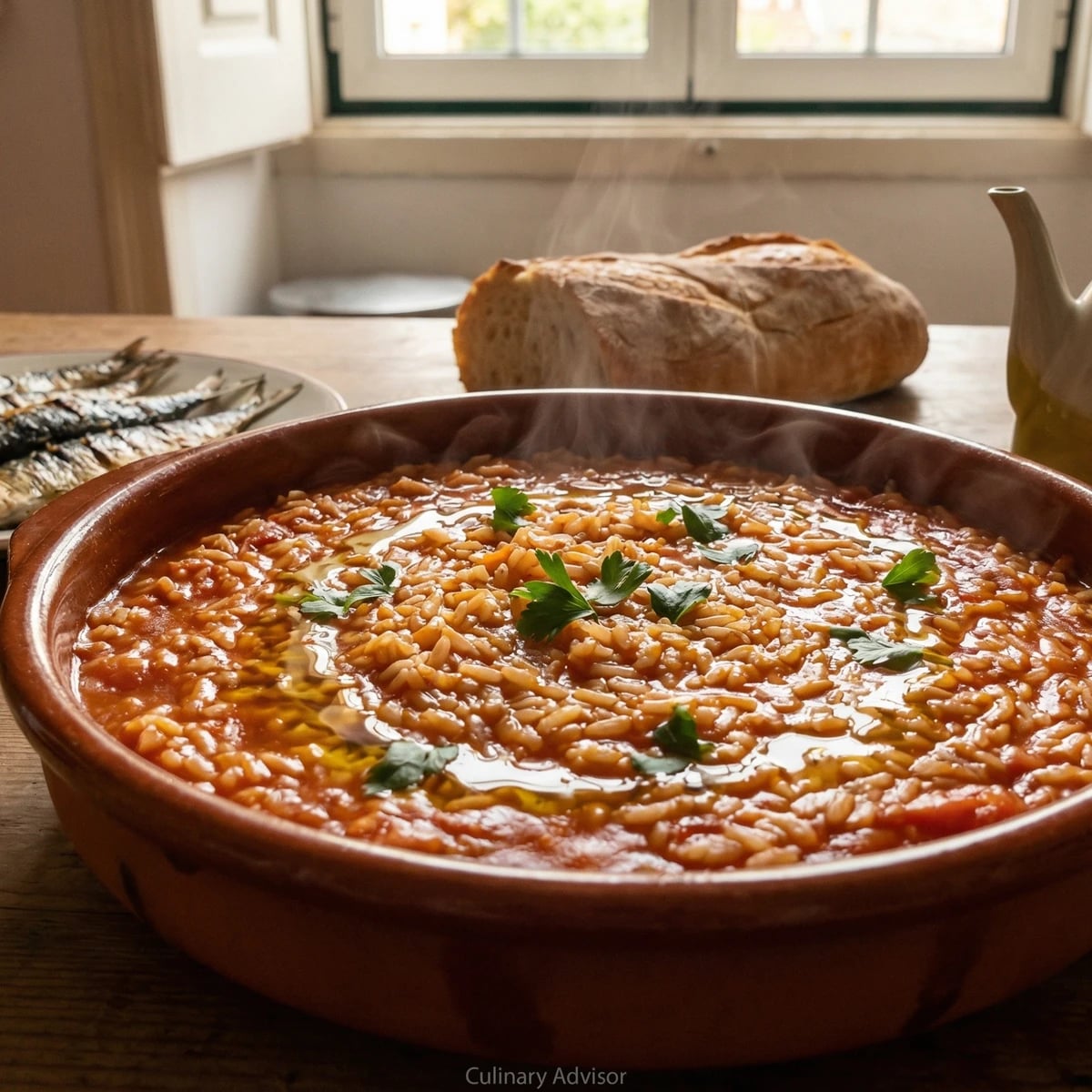
The tomato rice that waits beside every grilled sardine in Portugal, loose and saucy the way it should be, never dry, never fussy, just honest rice doing honest work.
This is the rice that sits next to grilled sardines in every tasca in Portugal. The rice that appears without being ordered, that completes the meal without demanding attention. Arroz de tomate isn't the star. It knows its place. And that's exactly what makes it essential.
Avó Leonor made this rice the same way every time. Onion first, slow and patient. Then tomatoes from the garden, crushed by hand into the pan. Rice goes in, gets coated in all that red, then the water. And here's where most people go wrong: they cook it dry. Portuguese rice isn't dry. It's malandrinho, loose and saucy, somewhere between a risotto and a soup. If your spoon stands up in it, you've overcooked it.
The tomatoes matter. In summer, use the ripest ones you can find, the ones that smell like tomatoes should smell. In winter, good canned tomatoes beat sad fresh ones every time. Avó Leonor kept jars of her own preserved tomatoes in the cellar. I use San Marzano when I can't get Portuguese.
This rice doesn't need anything fancy. It needs time for the refogado, good tomatoes, and the confidence to stop cooking before it looks done. The rice will drink more liquid as it rests. Trust the process. As avós sabem.
Arroz de tomate became a Portuguese staple after tomatoes arrived from the Americas in the 16th century, quickly replacing earlier grain preparations. The dish reflects Portugal's mastery of rice cookery, a technique refined through centuries of trade with Asia. Every region makes it slightly differently: the Ribatejo adds more tomato, the Alentejo more olive oil, but the malandrinho texture remains the constant.
Quantity
3 tablespoons
Quantity
1 medium
finely diced
Quantity
2 cloves
minced
Quantity
500g
peeled and crushed, or 400g canned whole tomatoes
Quantity
1 teaspoon
Quantity
250g
Quantity
600ml
Quantity
1
Quantity
1 teaspoon
Quantity
freshly ground, to taste
Quantity
for serving
chopped
| Ingredient | Quantity |
|---|---|
| extra virgin olive oil (azeite) | 3 tablespoons |
| onionfinely diced | 1 medium |
| garlicminced | 2 cloves |
| ripe tomatoespeeled and crushed, or 400g canned whole tomatoes | 500g |
| tomato paste | 1 teaspoon |
| short-grain rice | 250g |
| hot water or light vegetable broth | 600ml |
| bay leaf | 1 |
| sea salt | 1 teaspoon |
| black pepper | freshly ground, to taste |
| fresh parsley (optional)chopped | for serving |
Heat the azeite in a medium heavy-bottomed pot over medium-low heat. Add the diced onion and cook slowly, stirring occasionally, until soft and translucent, about 8 minutes. Don't rush this. The onion shouldn't brown, just melt into sweetness. Add the garlic in the last minute and stir until fragrant.
Add the crushed tomatoes and tomato paste to the pot. If using canned tomatoes, crush them with your hands as they go in. Let the tomatoes cook down for 5 to 7 minutes, stirring occasionally, until they darken slightly and the mixture becomes thick and jammy. The raw tomato smell should give way to something sweeter, more concentrated.
Add the rice to the pot and stir to coat every grain in the tomato mixture. Let it toast for 1 to 2 minutes, stirring constantly. You'll hear it start to crackle slightly. This step helps the rice absorb flavor and maintain its texture.
Add the hot water or broth, bay leaf, salt, and a few grinds of pepper. Stir once to combine, then bring to a simmer. Reduce heat to low, cover, and cook for 15 to 18 minutes. Here's the secret: check it at 15 minutes. The rice should be cooked through but the dish should still be loose and saucy, not dry. There should be visible liquid around the rice. If it looks too thick, add a splash more hot water.
Remove from heat, discard the bay leaf, and let the rice rest, covered, for 5 minutes. Taste and adjust seasoning. Serve in a warm bowl, drizzled with a little more azeite if you like. Scatter parsley on top if using. Serve alongside grilled fish, roasted pork, or honestly, just with more bread and a salad. It doesn't need much.
1 serving (about 285g)
Culinary guides, cultural storytelling, and the editorial depth that makes cooking meaningful.
Discover Culinary Explorer
Chef Margarida
The peasant bread soup of Alentejo dressed for company, sweet pink prawns swimming in a broth of garlic, coentros, and golden azeite. Humble origins, elegant result. This is who we are.

Chef Margarida
The slow-braised beef of Terceira island, where wine and warm spices transform humble cuts into something sacred. This is festival food, gathering food, the dish that brings the Azorean diaspora home.

Chef Margarida
The sausage that saved lives during the Inquisition, grilled until the casing splits and served with a runny fried egg and golden potatoes. History you eat with your hands.

Chef Margarida
The clam dish that made a poet immortal, nothing but garlic, wine, and coentros meeting the brine of the sea. Ten minutes from pan to table. Bread mandatory.