
Chef Margarida
Açorda de Camarão
The peasant bread soup of Alentejo dressed for company, sweet pink prawns swimming in a broth of garlic, coentros, and golden azeite. Humble origins, elegant result. This is who we are.
A cooking platform built around craft, culture, and the stories behind what we eat.
Created by
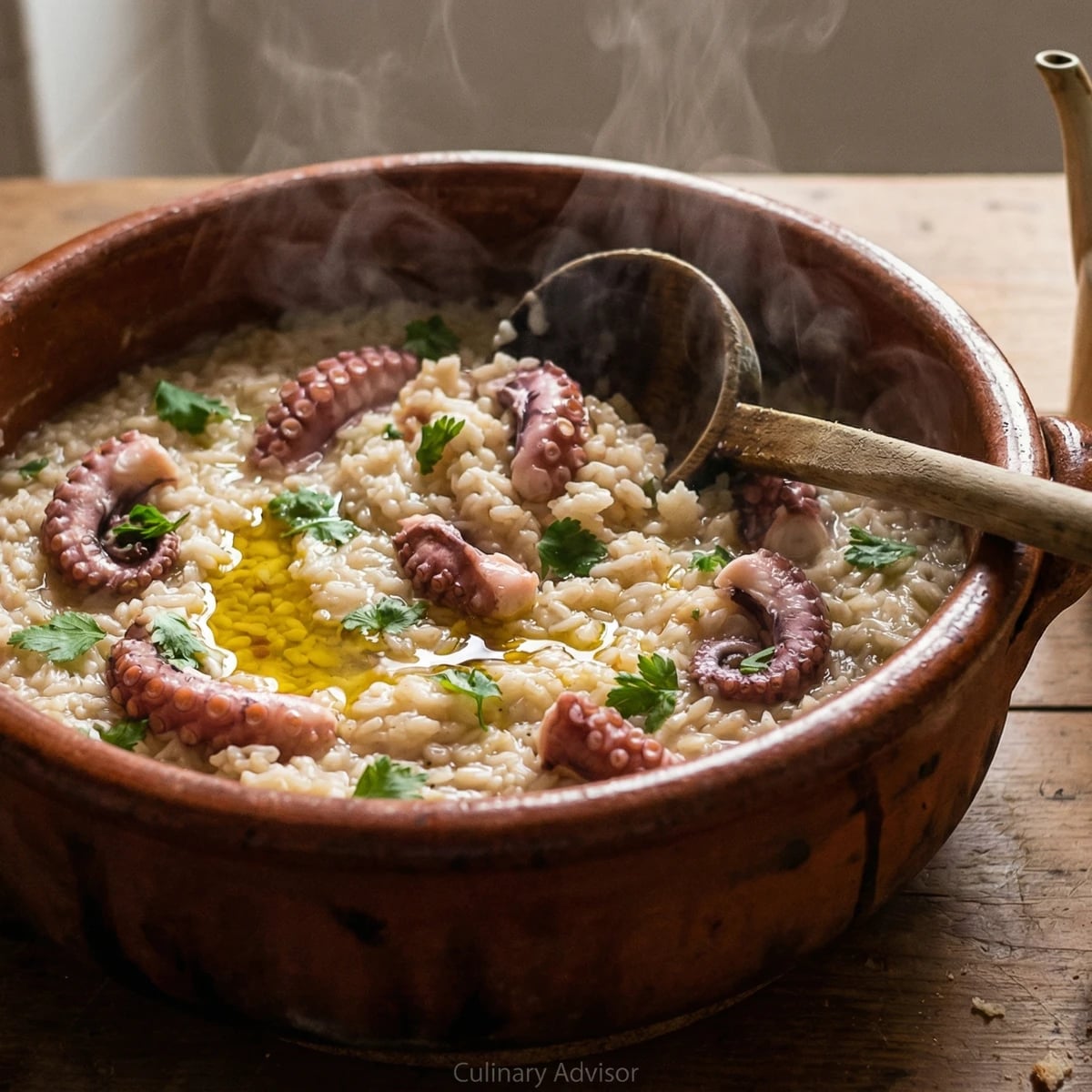
The octopus rice of Portugal's coast, where the sea meets the pot and everything becomes one. Malandrinho style: loose, creamy, and deeply savory with every spoonful tasting of the Atlantic.
This is the dish that makes you understand why the Portuguese have always looked to the sea. Arroz de polvo is comfort food for a maritime nation, the kind of cooking that happens when you have an octopus, some rice, and the good sense to let them become one thing.
Malandrinho. That's the word. It means rogue, rascal, someone who doesn't follow the rules. In cooking, it describes rice that refuses to sit still on the plate. Rice that flows, that slides, that carries its broth with it. This is not risotto, though the technique has echoes. This is not dry rice. This is something in between, something that only makes sense once you've tasted it.
I learned to make arroz de polvo from a grandmother in Setúbal who had been cooking it for sixty years. She laughed when I asked for measurements. "Um bocadinho," she said. A little bit. "Até ficar bem." Until it's right. That's how these dishes work. You learn the technique, you learn the feel, and then you stop measuring.
At Mesa da Avó, we serve this in a clay pot in the center of the table. Everyone shares. Spoons scrape the sides to get the rice that's stuck there, slightly caramelized, impossibly good. The pot empties fast. It always does. A cozinha é memória, and this dish tastes like generations of fishermen coming home.
Arroz de polvo emerged along Portugal's central coast, particularly in the Setúbal and Lisbon regions, where octopus fishing has been practiced since Roman times. The dish represents the meeting of two Portuguese essentials: rice cultivation introduced during the Moorish period and the Atlantic seafood that has always defined the national diet. Unlike Spain's drier rice preparations, Portuguese rice dishes favor the malandrinho style, a liquid generosity that echoes the country's love of sopas and caldos.
Quantity
1 whole (about 1.5 kg)
cleaned
Quantity
1 medium
halved
Quantity
2
Quantity
400g
Quantity
2 medium
finely diced
Quantity
4 cloves
minced
Quantity
1/3 cup, plus more for finishing
Quantity
2 medium
peeled and crushed
Quantity
1/2 cup
Quantity
1 teaspoon
Quantity
1 large bunch
stems and leaves separated, both chopped
Quantity
to taste
Quantity
to taste
freshly ground
| Ingredient | Quantity |
|---|---|
| octopuscleaned | 1 whole (about 1.5 kg) |
| onion for cooking octopushalved | 1 medium |
| bay leaves | 2 |
| short-grain rice (carolino or arborio) | 400g |
| onionsfinely diced | 2 medium |
| garlicminced | 4 cloves |
| extra virgin olive oil (azeite) | 1/3 cup, plus more for finishing |
| ripe tomatoespeeled and crushed | 2 medium |
| dry white wine | 1/2 cup |
| sweet paprika (pimentão doce) | 1 teaspoon |
| fresh cilantro (coentros)stems and leaves separated, both chopped | 1 large bunch |
| flaky sea salt | to taste |
| black pepperfreshly ground | to taste |
Bring a large pot of unsalted water to a rolling boil with the halved onion and one bay leaf. Hold the octopus by the head and dip it into the boiling water three times, letting the tentacles curl between each dip. Then lower it fully into the pot and reduce to a gentle simmer. Cook until a knife slides easily into the thickest part of a tentacle, 45 minutes to 1 hour depending on size. Remove the octopus to a cutting board. Reserve 1.5 liters of the cooking liquid. This is liquid gold.
Once the octopus is cool enough to handle, cut the tentacles into bite-sized pieces, about 2-3 cm thick. Slice the head into strips. Don't discard any part. The head meat is just as good as the tentacles. Set aside.
In a heavy pot or deep pan, heat the olive oil over medium-low heat. Add the diced onions and cook slowly, stirring occasionally, until completely soft and turning golden, about 15 minutes. Add the garlic and the chopped coentros stems (save the leaves for later) and cook another 2 minutes until fragrant. Não tenhas pressa. The refogado is the soul of this dish.
Stir in the crushed tomatoes and paprika. Let this cook for 5 minutes, stirring often, until the tomato darkens slightly and the oil begins to separate around the edges. You're building layers of flavor here. Pour in the white wine and let it bubble for 2 minutes, scraping up any bits from the bottom.
Add the rice to the pot and stir to coat every grain with the refogado. Toast it for 1 minute. Add 1.2 liters of the reserved octopus cooking liquid and the remaining bay leaf. Bring to a simmer, then reduce heat to medium-low. Cook uncovered, stirring occasionally, for about 15 minutes. The rice will absorb the broth slowly. Add more cooking liquid as needed, a ladle at a time. The rice should never be dry. You're not making pilaf. You're making malandrinho: loose, creamy, almost soupy.
When the rice is nearly tender but still has a slight bite, fold in the octopus pieces. The octopus is already cooked; you're just warming it through and letting it marry with the rice. Cook together for 3-4 minutes. Taste and adjust salt. The octopus cooking liquid is unsalted, so you'll likely need a generous hand.
Remove from heat. Stir in most of the chopped coentros leaves. Let the pot rest, covered, for 5 minutes. The rice will continue absorbing liquid but should still be loose when you serve. Ladle into warm bowls. Scatter the remaining coentros on top. Drizzle with your best olive oil. Grind black pepper over each serving. Serve immediately, with bread to soak up every last drop.
1 serving (about 400g)
Culinary guides, cultural storytelling, and the editorial depth that makes cooking meaningful.
Discover Culinary Explorer
Chef Margarida
The peasant bread soup of Alentejo dressed for company, sweet pink prawns swimming in a broth of garlic, coentros, and golden azeite. Humble origins, elegant result. This is who we are.

Chef Margarida
The slow-braised beef of Terceira island, where wine and warm spices transform humble cuts into something sacred. This is festival food, gathering food, the dish that brings the Azorean diaspora home.

Chef Margarida
The sausage that saved lives during the Inquisition, grilled until the casing splits and served with a runny fried egg and golden potatoes. History you eat with your hands.

Chef Margarida
The clam dish that made a poet immortal, nothing but garlic, wine, and coentros meeting the brine of the sea. Ten minutes from pan to table. Bread mandatory.