
Chef Ally
Butterscotch Pots de Crème
A custard of browned butter and dark sugar, baked until barely trembling and chilled until impossibly silky. The kind of dessert that makes a room go quiet, spoons scraping ramekins for every last bit.
A cooking platform built around craft, culture, and the stories behind what we eat.
Created by
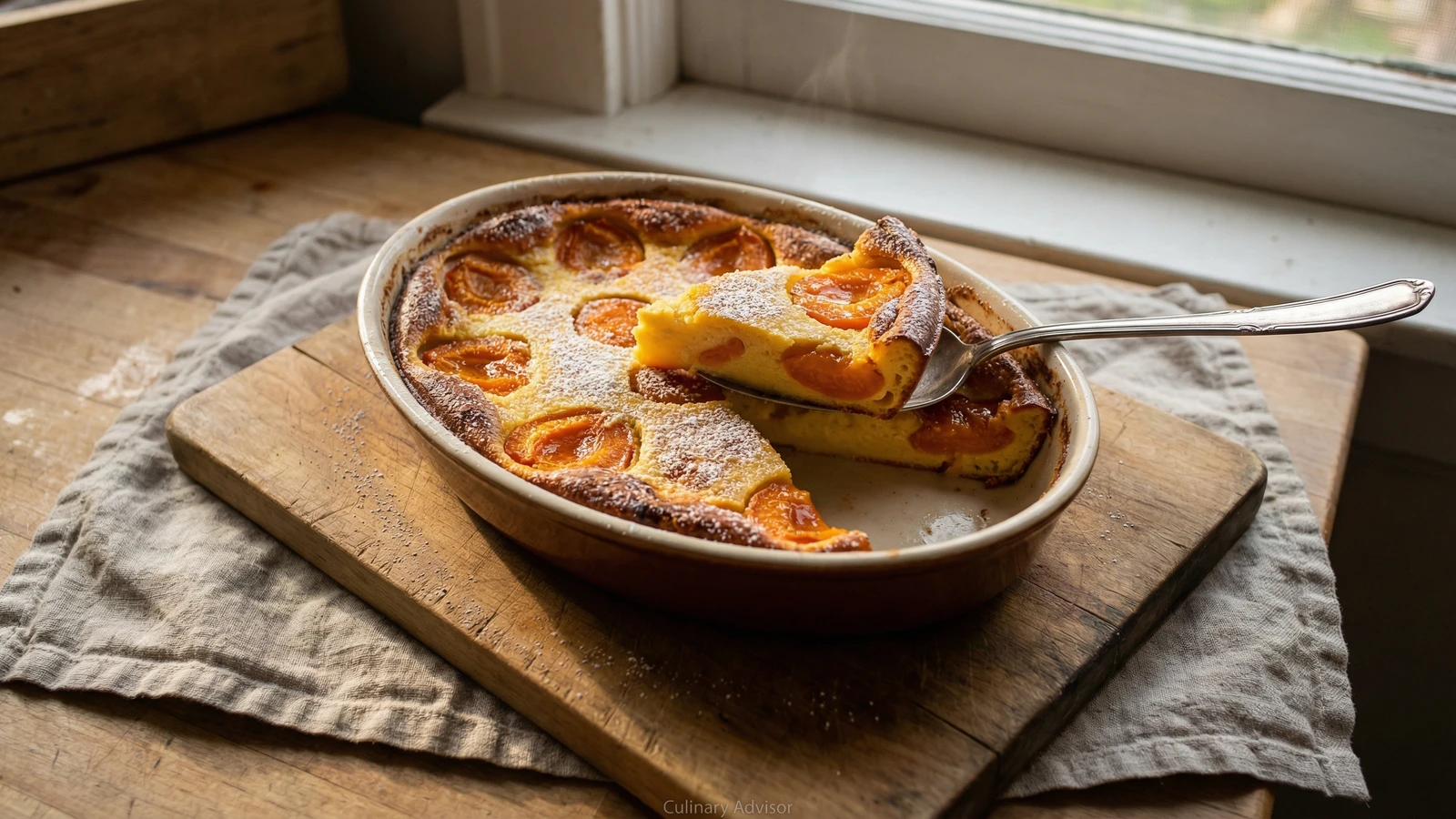
A golden custard that puffs and billows around halved summer apricots, then settles into something tender and barely sweet, the kind of dessert that reminds you fruit is the point.
The French have two names for the same baked custard. Clafoutis holds cherries. Flaugnarde holds everything else: plums, pears, apples, grapes, and in the best weeks of summer, apricots.
I learned this dessert in the Limousin region where it was born. The farmers there would not dream of using fruit that traveled more than a few miles or waited more than a day. That is the standard. Your apricots should be so ripe they threaten to bruise if you look at them wrong. Heavy in the hand. Perfumed. Alive.
The batter itself is almost nothing: eggs, flour, milk, cream, a little sugar. It exists to carry the fruit, not compete with it. You pour it over the apricots and bake until the whole thing puffs like a soufflé, turns golden, and fills your kitchen with a smell that will bring people to the table without being called.
This is getting out of the way. The technique serves the ingredient. If your apricots are truly ripe, you have already done the hard work.
Quantity
1 1/2 pounds (about 8-10 medium)
Quantity
3
at room temperature
Quantity
1/2 cup (100g), plus 1 tablespoon for the dish
Quantity
1/2 cup (60g)
Quantity
1 cup
Quantity
1/2 cup
Quantity
1 teaspoon
Quantity
1/4 teaspoon
Quantity
1 tablespoon
for the dish
Quantity
for dusting
| Ingredient | Quantity |
|---|---|
| ripe apricots | 1 1/2 pounds (about 8-10 medium) |
| large eggsat room temperature | 3 |
| granulated sugar | 1/2 cup (100g), plus 1 tablespoon for the dish |
| all-purpose flour | 1/2 cup (60g) |
| whole milk | 1 cup |
| heavy cream | 1/2 cup |
| pure vanilla extract | 1 teaspoon |
| fine sea salt | 1/4 teaspoon |
| unsalted butterfor the dish | 1 tablespoon |
| powdered sugar | for dusting |
Start with the fruit. Your apricots should give slightly when pressed near the stem and smell like apricots, sweet and faintly floral, before you cut them. If they are hard and scentless, wait. This dessert depends on ripeness more than any technique you bring to it. Halve the fruit along the seam and twist gently to separate. Remove the pits.
Position a rack in the center of your oven and heat to 375F. Rub a 10-inch ceramic baking dish or cast iron skillet generously with butter, reaching every corner. Sprinkle one tablespoon of sugar across the bottom and swirl to coat. This creates a delicate crust beneath the custard.
Whisk the eggs and half cup of sugar together in a large bowl until the mixture lightens and thickens slightly, about two minutes by hand. Sift in the flour and whisk until smooth, no lumps hiding. Pour in the milk and cream in a steady stream, whisking constantly. Add vanilla and salt. The batter should be thin and pourable, like heavy cream.
Place the apricot halves cut-side up in the prepared dish, nestling them close but not crowded. Some can overlap. They will sink into the batter as it bakes, then rise again as the custard puffs around them.
Pour the batter slowly over and around the apricots, filling the dish to about three-quarters. Some fruit will peek above the surface. Transfer carefully to the oven. Bake until the custard puffs dramatically at the edges, turns golden brown on top, and jiggles only slightly in the center when you shake the pan. This takes 35 to 40 minutes. A knife inserted near the center should come out clean.
Remove from the oven and let it settle for five to ten minutes. The flaugnarde will deflate as it cools. This is correct. Do not mourn the loss of the puff. Dust generously with powdered sugar through a fine sieve just before serving. Bring the whole dish to the table while it is still warm.
1 serving (about 170g)
Culinary guides, cultural storytelling, and the editorial depth that makes cooking meaningful.
Discover Culinary ExplorerChef Ally
A custard of browned butter and dark sugar, baked until barely trembling and chilled until impossibly silky. The kind of dessert that makes a room go quiet, spoons scraping ramekins for every last bit.

Chef Ally
Winter citrus transformed into glistening confections, the bitter pith turned sweet through patience, then kissed with dark chocolate. A recipe that proves the best parts of the fruit are the ones most people throw away.

Chef Dean
Impossibly silky French chocolate custard that trembles on the spoon, deeply flavored and unapologetically rich, requiring nothing more than good chocolate, fresh cream, and a little patience to master.

Chef Dean
Billowing clouds of pure chocolate, impossibly light yet deeply satisfying, made with nothing more than chocolate, eggs, cream, and the patience to fold properly. This is the dessert that proves French technique belongs in every American kitchen.