
Chef Juliette
Smelt (Éperlans)
Tiny éperlans, lightly floured and fried until their tails stand crisp, arrive in a generous heap on a napkin with fried parsley and grooved lemon, a weeknight lesson in heat and restraint.
A cooking platform built around craft, culture, and the stories behind what we eat.
Created by Chef Juliette
Based on No. 957, Mousse de Homard Moulée, from Le Guide Culinaire (1907) by Auguste Escoffier
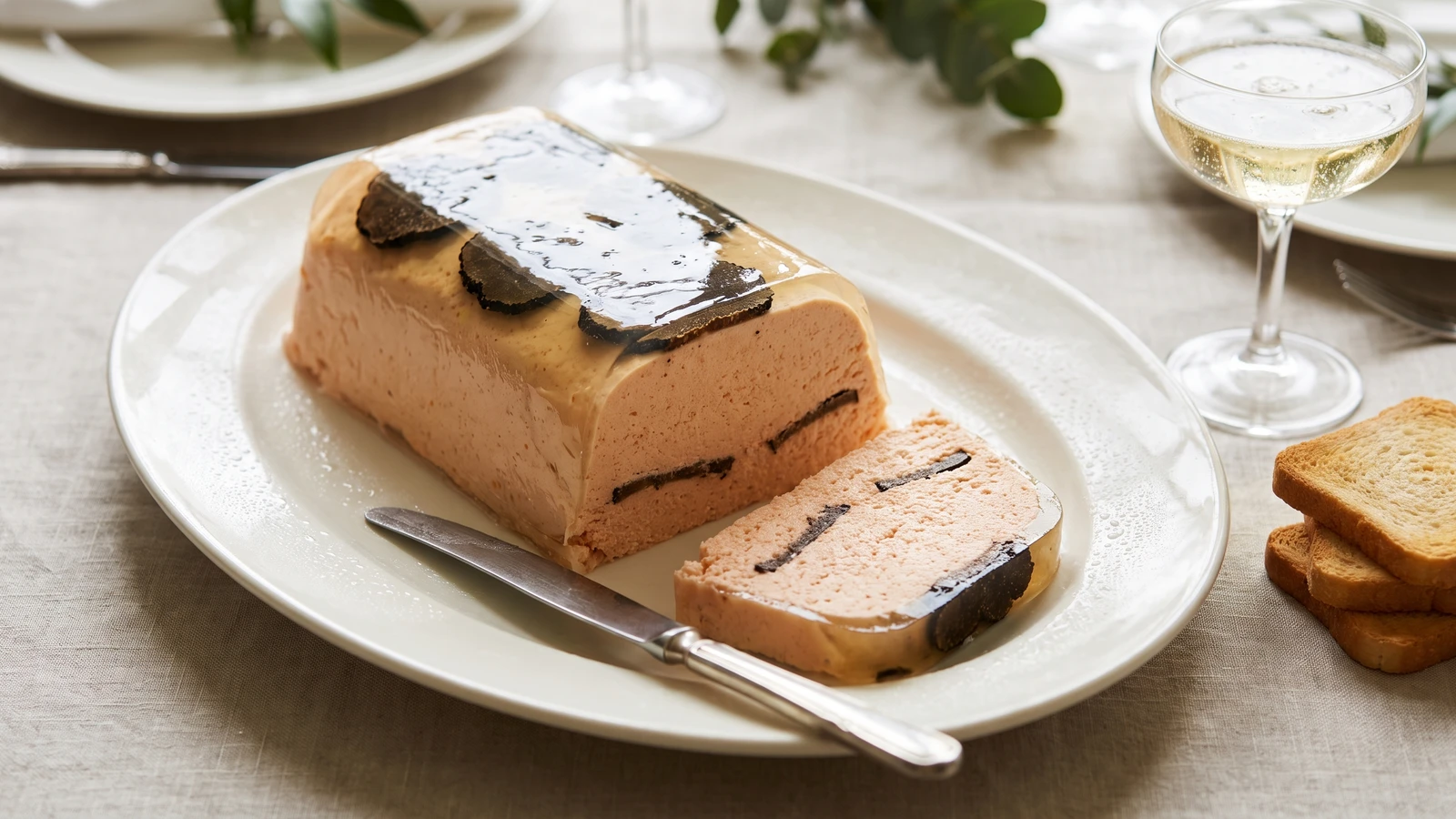
A chilled Mousse de Homard Moulée, cloaked in transparent fish jelly and set with black truffle: the cold mould that teaches temperature, timing, and the quiet nerve of a clean turn-out.
Mousse de Homard Moulée (moulded lobster mousse) teaches temperature before decoration. The one true thing is this: the fish jelly must be fluid enough to travel and cool enough to set where you send it. Too warm and it slips from the mould; too cold and it hardens in ridges. Control that narrow moment and the rest is patient assembly.
The grand cold kitchen assumed a garde-manger beside an ice chest, fish jelly made from stock never off the fire, and a banquet mould large enough for a procession. Your honest equivalents are prepared clear fish jelly, a bowl of ice water, a household refrigerator, and one 3-cup mould serving four. The brigade-scale ornament has gone because it was scaffolding; chemiser le moule (clothing the mould) remains because that transparent jelly skin is the dish. One cook, one stove, one evening.
Turned out properly, the mousse is cool and silken beneath a glass-clear film, with black truffle rounds showing through like dark coins. Rock the mould steadily over ice until the jelly catches in one thin, even coat. That is the step that matters most.
Mousse de Homard Moulée belongs to the cold-kitchen repertory of the grand Parisian table, where fish Mousses and aspics were shaped in metal moulds for formal service. Moulée means the shape is part of the presentation, while the transparent fish jelly protects the mousse and displays its truffle decoration. The dish passed naturally into bourgeois celebration cooking once household refrigeration could perform the work of the ice pantry, but its defining gesture remains clothing the mould, not ornament for ornament's sake.
Quantity
2½ cups (590 ml / 565 g)
chilled but spoonable
Quantity
1 cup (240 ml / 240 g), as used in Another Method of Preparing Aspics de Filets de Soles (No. 916)
Quantity
1 small (about 1 oz / 28 g)
wiped clean and cut into large thin rounds
Quantity
6 cups (1.4 L / 1.3 kg)
for clothing the mould
Quantity
2 cups (475 ml / 475 g)
for the ice bath
| Ingredient | Quantity |
|---|---|
| prepared Mousse de Homard from the preceding recipechilled but spoonable | 2½ cups (590 ml / 565 g) |
| clear fish jelly, prepared and fully set | 1 cup (240 ml / 240 g), as used in Another Method of Preparing Aspics de Filets de Soles (No. 916) |
| very black trufflewiped clean and cut into large thin rounds | 1 small (about 1 oz / 28 g) |
| icefor clothing the mould | 6 cups (1.4 L / 1.3 kg) |
| cold waterfor the ice bath | 2 cups (475 ml / 475 g) |
Set a clean 3-cup metal mould in the refrigerator with its serving platter. Fill a wide bowl with the ice and cold water, keeping the water level below the rim of the mould when it is nested inside. Keep the prepared Mousse de Homard cold but spoonable, and slice the truffle into broad, even rounds that will show clearly through the jelly.
Reach for the clear fish jelly used in Another Method of Preparing Aspics de Filets de Soles (No. 916). Melt it in a small saucepan over the lowest heat, stopping as soon as it becomes fluid and clear. It should feel barely warm, about 90 to 100°F (32 to 38°C), never hot. If it becomes too warm, set the saucepan over the ice bath and stir until the jelly grows lightly syrupy; if it sets before you use it, warm it gently again. Ça se rattrape.
Pour about ⅓ cup (80 ml / 80 g) of the melted jelly into the chilled mould. Nest the mould over the ice and rock it continuously, turning it so the jelly travels across the bottom and up every side. Continue until a transparent film about 1 to 2 mm thick has set evenly. This is chemiser le moule, and it cannot be replaced by greasing or lining. If the jelly pools thickly or freezes into ridges, stand the mould briefly in lukewarm water, pour the loosened jelly back into the saucepan, chill the mould, and begin again.
Dip each truffle round into the remaining melted jelly and press it flat against the clothed sides of the mould. Work with deliberate spacing rather than crowding the surface. If a slice slides, the mould or jelly is too warm; return the mould to the ice for a minute, then dip and fix the slice again. Brush or spoon a little more jelly over the decoration and refrigerate for 5 minutes, just until everything is firmly caught.
Spoon one-third of the prepared Mousse de Homard into the mould, pressing it gently against the jelly-coated surface so no air pockets remain around the truffle. Add the rest in two portions, tapping the mould softly against a folded towel after each addition. Smooth the top level with the rim. Do not beat or stir the mousse while filling; its light texture has already been built, and rough handling spends that work.
Cover the mould without touching the mousse and refrigerate for at least 6 hours, preferably overnight. The centre must feel firm and uniformly cold before turning out. If it still yields loosely, leave it where it is and give it more time; forcing an early turn-out tears the jelly coat. Do not freeze it, because freezing clouds the jelly and damages the mousse's texture.
Follow the aspic turning-out principle from Another Method of Preparing Aspics de Filets de Soles (No. 916). Dip the mould to just below its rim in warm water for 5 seconds, dry the outside, place the chilled platter over it, and invert both together. Hold them firmly and give one short downward motion. If the mousse does not release, repeat with a 2-second dip rather than shaking it. If the outer jelly begins to soften, refrigerate the mould for 15 minutes before trying again. Ça se rattrape.
Keep the turned-out mousse cold until serving. Dip a thin knife in hot water, wipe it dry, and cut generous slices so the transparent coat and truffle decoration remain intact. Serve with plain, crisp toast at the side if you wish, leaving the polished mousse itself unburdened. À table!
1 serving (about 208g)
Culinary guides, cultural storytelling, and the editorial depth that makes cooking meaningful.
Discover Culinary ExplorerChef Juliette
Tiny éperlans, lightly floured and fried until their tails stand crisp, arrive in a generous heap on a napkin with fried parsley and grooved lemon, a weeknight lesson in heat and restraint.

Chef Juliette
Brandade de Morue turns salt cod, warm olive oil, and milk into a pale, silky emulsion: keep everything warm and add the oil slowly, then crown the generous dome with butter-fried bread.

Chef Juliette
Salt cod worked warm with cream, one patient spoonful at a time, until the rough flakes become a glossy Nîmes paste, domed generously and ringed with butter-fried croutons for the table.

Chef Juliette
Wine-poached char packed in its earthenware crock beneath butter gold: a make-ahead first course that turns careful cooling, thorough boning, and one unbroken seal into quiet abundance.