
Chef Juliette
John Dory (St. Pierre)
John Dory has the delicacy of sole and the firmness of turbot. A light flouring, a quick butter sauté, and nut-brown beurre noisette show exactly why looks never mattered.
A cooking platform built around craft, culture, and the stories behind what we eat.
Created by Chef Juliette
Based on No. 879, Filets de Soles à la Hongroise, from Le Guide Culinaire (1907) by Auguste Escoffier
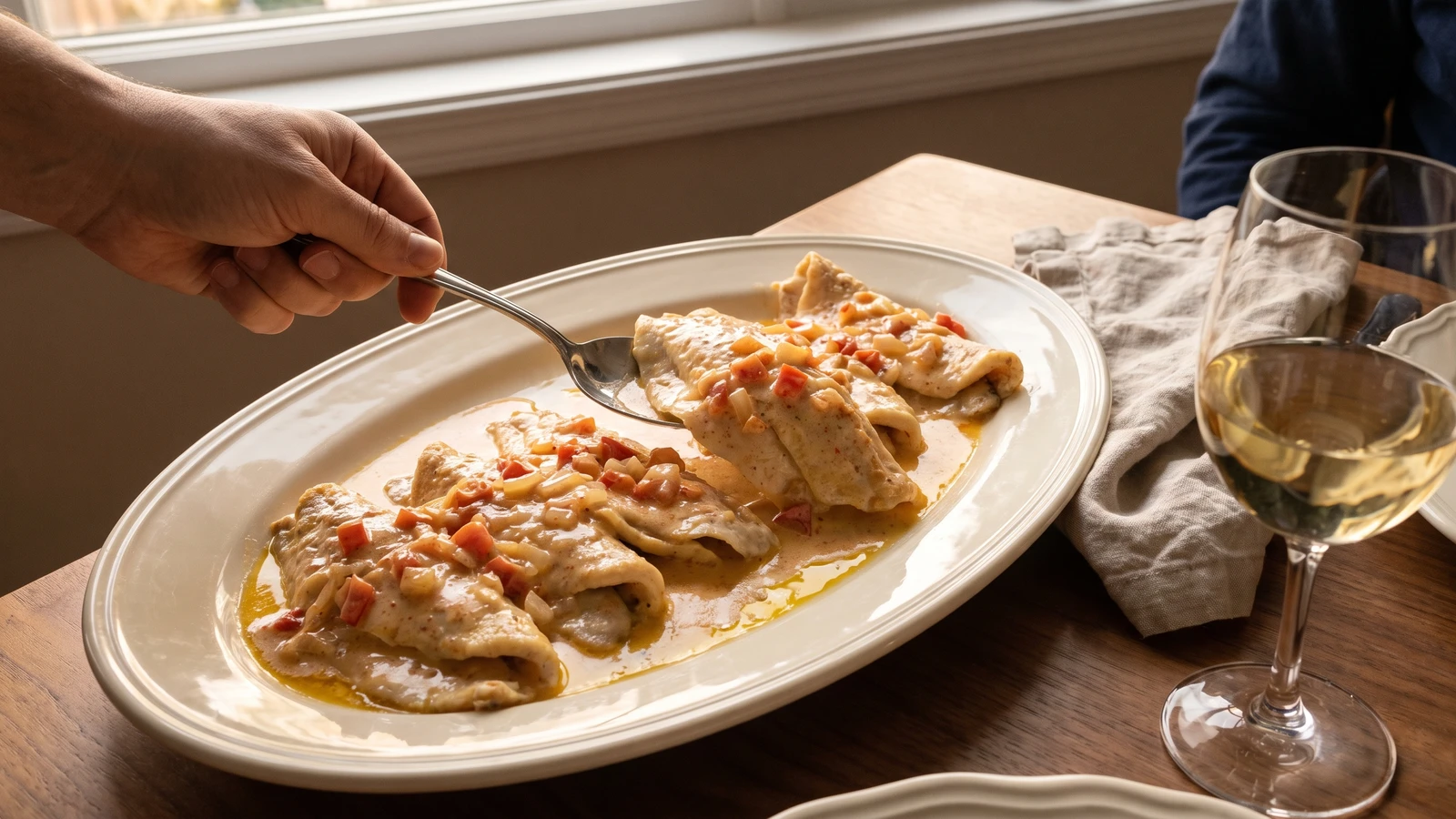
Paprika does not make this dish loud. It warms the poaching liquor, which becomes a glossy cream sauce around tender folded sole, brightened at the last moment with lemon.
Filets de Soles à la Hongroise (folded sole fillets with paprika, tomato, and cream) teaches one essential division of labor: the fish poaches gently, then leaves the pan before its cooking liquor is reduced hard. The liquor becomes the sauce, but the sole must never wait in it while that happens.
The original entry assumed a fish fumet never off the fire, a saucier free to reduce the liquor, and another hand to keep the arranged sole warm. It calls for no salamander, because this sauce is coated, not gratinéed. At home, a small saucepan, a covered skillet, and a warmed platter perform those jobs for four people. The extra hands were brigade scaffolding and can go; the proportions, gentle poach, reduction, and cream finish are the dish and must stay. One cook, one stove, one evening.
The decisive step comes after you lift out the sole: reduce the tomato and onion liquor until it has real body before adding the cream. Stop too soon and the sauce runs watery; leave the fish in while you wait and it turns dry. Separate those two heats and the Hongroise nearly finishes itself.
Filets de Soles à la Hongroise belongs to the Parisian grande cuisine table rather than to a Hungarian coastal tradition. French cooks used à la hongroise to signal onion and paprika, often rounded with tomato and cream, while delicate sole carried the formula into formal fish service. The name records the canon's adoption of Hungarian paprika, but the method remains distinctly French: poach in fumet, reduce the cooking liquor, then finish it with cream and lemon.
Quantity
8 fillets (about 1½ lb / 680 g)
pin bones removed
Quantity
¾ teaspoon (3.75 ml / 4.5 g)
divided
Quantity
2 tablespoons (30 ml / 28 g)
softened and divided
Quantity
1 packed tablespoon (15 ml / 10 g)
very finely chopped
Quantity
⅛ teaspoon (0.6 ml / 0.3 g)
Quantity
3 tablespoons (45 ml / 44 g)
Quantity
⅓ cup plus 1 tablespoon (95 ml / 95 g)
Quantity
2 tomatoes (about ¾ cup / 180 ml / 180 g before peeling)
peeled, squeezed of seeds and excess juice, and roughly chopped
Quantity
¼ cup (60 ml / 60 g)
kept cold
Quantity
¼ teaspoon (1.25 ml / 1.25 g), plus a few drops if needed
| Ingredient | Quantity |
|---|---|
| skinless sole filletspin bones removed | 8 fillets (about 1½ lb / 680 g) |
| fine sea saltdivided | ¾ teaspoon (3.75 ml / 4.5 g) |
| unsalted buttersoftened and divided | 2 tablespoons (30 ml / 28 g) |
| yellow onionvery finely chopped | 1 packed tablespoon (15 ml / 10 g) |
| sweet paprika | ⅛ teaspoon (0.6 ml / 0.3 g) |
| dry white wine | 3 tablespoons (45 ml / 44 g) |
| prepared fish fumet | ⅓ cup plus 1 tablespoon (95 ml / 95 g) |
| small ripe plum tomatoespeeled, squeezed of seeds and excess juice, and roughly chopped | 2 tomatoes (about ¾ cup / 180 ml / 180 g before peeling) |
| heavy creamkept cold | ¼ cup (60 ml / 60 g) |
| fresh lemon juice | ¼ teaspoon (1.25 ml / 1.25 g), plus a few drops if needed |
Pat the fillets thoroughly dry and season them with ½ teaspoon of the salt. Fold the narrow tail of each fillet beneath its thicker half so the parcels have an even thickness. Coat a 12-inch (30 cm) lidded sauté pan with 1 tablespoon of the softened butter, arrange the folded fillets in one snug layer, and keep them cold while you build the poaching liquor.
Melt the remaining tablespoon of butter in a small saucepan over low heat. Add the onion and paprika, then suer, sweating them gently without browning, for 3 to 4 minutes. The onion should soften and turn translucent while the butter becomes evenly paprika-gold. If the onion begins to catch, add a teaspoon of the measured wine and lower the heat. Ça se rattrape. Do not let the paprika darken, because scorched paprika leaves a bitterness reduction only magnifies.
Pour in the remaining white wine and scrape the saucepan clean, then add the fish fumet and chopped tomatoes. Bring the mixture to a gentle simmer and cook uncovered for 7 to 8 minutes, exactly long enough for the tomato to soften and give itself to the liquor without disappearing into a thick sauce. Taste only for balance at this stage; the seasoning will strengthen during reduction.
Pour the hot tomato and fumet preparation evenly over the folded sole. Cover the sauté pan and set it over medium-low heat until the liquid just quivers around the edge, then lower the heat and poach for 5 to 7 minutes. The thickest fold should be pearly opaque and yield beneath a fish spatula. Never let the liquor boil. If it becomes lively, lift the covered pan off the burner for one minute and let the stored heat finish the fish; this arrests the boil before the sole tightens.
Warm an oval serving platter with hot water, dry it, and arrange the fillets in an overlapping circle, folded sides facing inward. Cover them loosely with parchment or foil and keep the platter beside the stove, not over direct heat. Return any liquor that gathers beneath the fish to the sauté pan. The warm platter replaces the extra service hand the original kitchen could spare.
Pour the cooking liquor back into the small saucepan and boil it briskly, stirring often as the tomato and onion concentrate. Reduce until the mixture is thick enough that a spoon drawn across the pan leaves a clear path for a moment. This is the source entry's stiff consistence: not dry, not pasty, but concentrated enough to support the cream. If you reduce too far, loosen it with a teaspoon of hot water. C'est la même grammaire as any pan sauce: concentration first, enrichment second.
Lower the heat and stir in 3 tablespoons of the cold cream. Simmer gently for 1 to 2 minutes, stirring, until the sauce is nappant, thick enough to coat the back of a spoon in a smooth, glossy layer. Remove it from the heat, whisk in the final tablespoon of cream and the measured lemon juice, then taste with the remaining salt and another few drops of lemon if the richness needs lifting. If oily beads appear at the edge, keep the pan off the heat and whisk in the reserved cold cream a little at a time. Ça se rattrape.
Spoon the Hongroise sauce generously over the circle of sole, allowing a little to pool beneath the fillets. Serve immediately, while the fish is tender and the cream sauce still holds its gloss. No decorative greenery is required. The paprika, tomato, butter, and cream have already done the work. À table!
1 serving (about 210g)
Culinary guides, cultural storytelling, and the editorial depth that makes cooking meaningful.
Discover Culinary ExplorerChef Juliette
John Dory has the delicacy of sole and the firmness of turbot. A light flouring, a quick butter sauté, and nut-brown beurre noisette show exactly why looks never mattered.

Chef Juliette
Fresh haddock proves its delicacy in the meunière pan: a fine flour crust, moist pearly flakes, and beurre noisette sharpened with lemon and parsley, ready from one skillet in half an hour.

Chef Juliette
Éperlans à l’Anglaise turns small fish into a lesson in disciplined coating: boned smelts under a close, crisp crumb, pan-fried in clarified butter and finished with bright, half-melted maître d’hôtel butter.

Chef Juliette
Tiny smelts, shallot, mushrooms, white wine, gratin sauce, and fine bread raspings meet a fierce oven, where the fish must turn tender in the same breath the buttered crust bronzes.