
Chef Juliette
John Dory (St. Pierre)
John Dory has the delicacy of sole and the firmness of turbot. A light flouring, a quick butter sauté, and nut-brown beurre noisette show exactly why looks never mattered.
A cooking platform built around craft, culture, and the stories behind what we eat.
Created by Chef Juliette
Based on No. 847, Sole Meunière aux Raisins, from Le Guide Culinaire (1907) by Auguste Escoffier
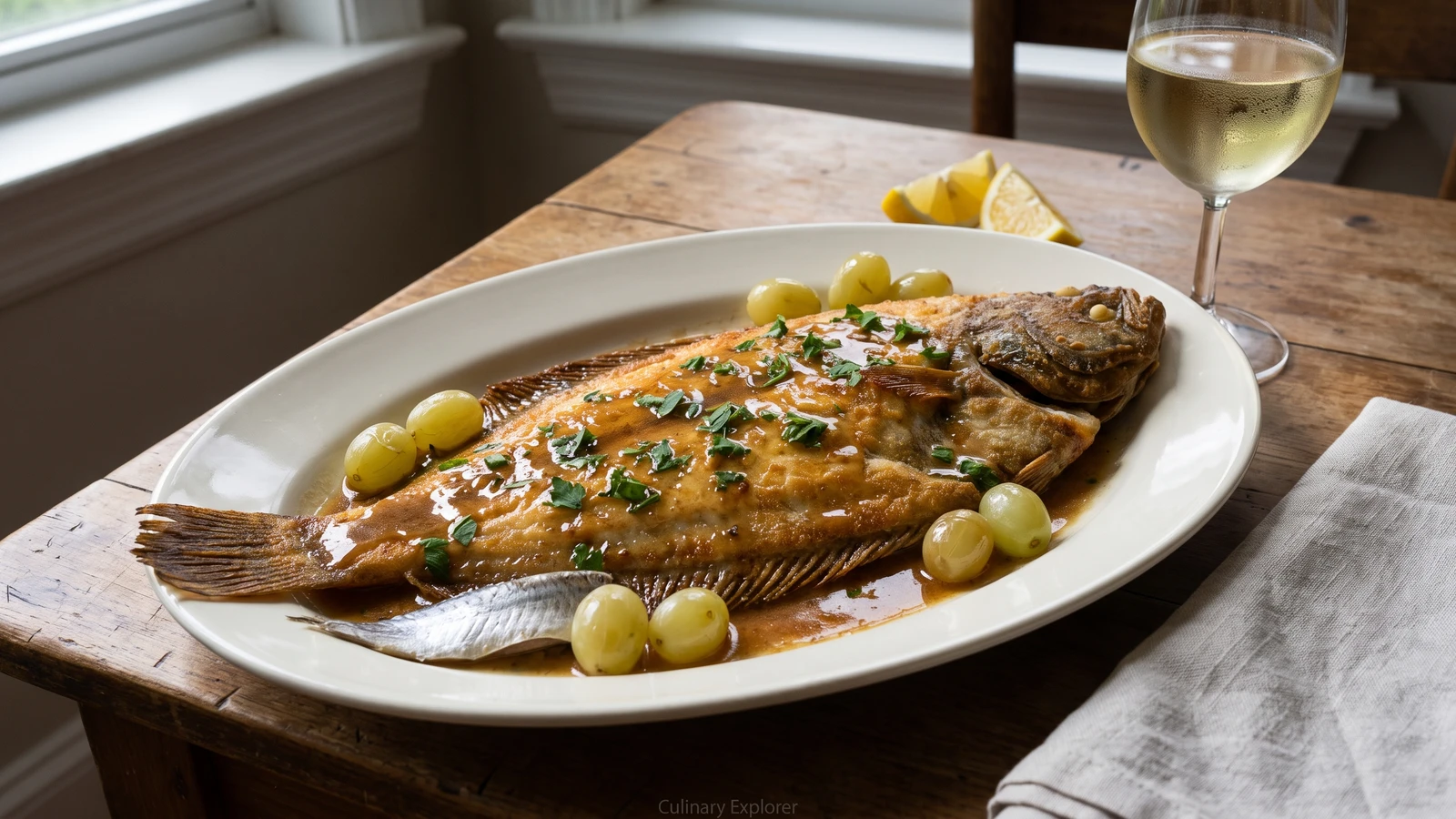
Hot sole in meunière butter, cool skinned Muscadel grapes around the rim, and no clutter between them: a dinner-party fish whose elegance depends on dry flesh, quick timing, and restraint.
Sole Meunière aux Raisins (flour-dusted sole with fresh grapes) teaches one clean principle: contrast must be protected. The sole arrives hot, its thin crust lacquered with beurre noisette (butter cooked to hazelnut color), while the skinned Muscadel grapes stay cool, firm, and fragrant around it. Warm the fruit in the pan and the quiet idea disappears.
The original recipe could assume a fish cook sending each sole à la minute, a saucier on staff watching the butter, a stock never off the fire, and a salamander ready for other finishes. This dish calls on neither stock nor gratin. At home, four small soles pass through one wide skillet, the cooked fish wait briefly on a rack in the gentlest oven, and fresh butter is watched once after the final batch. That is the honest scale: one cook, one stove, one evening.
The brigade choreography is scaffolding and can go. Dry fish, last-minute flour, carefully judged beurre noisette, and cool peeled grapes are the dish itself, so every one stays. Skin and chill the grapes before the first sole is floured; once fish meets butter, the table must be ready.
Sole meunière belongs to northern French fish cookery, particularly the Channel coast, where firm Dover sole traveled from port kitchens to Parisian tables and took its name from the flour coating of the miller's-wife style. The Muscadel variation joined the classical service repertoire as a final fresh garnish, its peeled grapes set around the fish rather than cooked into the butter. It is not sole Véronique: the sole remains meunière, and the fruit arrives cool only after the pan work is complete.
Quantity
4 (about 8 to 10 oz / 225 to 285 g each)
gutted, both skins removed, heads and side fins trimmed
Quantity
1½ cups (360 ml / 225 g; about 36)
stemmed
Quantity
½ cup (120 ml / 60 g)
Quantity
1½ teaspoons (7.5 ml / 9 g)
divided
Quantity
½ teaspoon (2.5 ml / 1 g)
Quantity
6 tablespoons (90 ml / 85 g)
divided
Quantity
6 tablespoons (90 ml / 85 g)
cut into pieces
Quantity
2 tablespoons (30 ml / 30 g)
Quantity
3 tablespoons (45 ml / 12 g)
finely chopped
Quantity
1
cut into 4 wedges
| Ingredient | Quantity |
|---|---|
| whole pan-ready Dover solesgutted, both skins removed, heads and side fins trimmed | 4 (about 8 to 10 oz / 225 to 285 g each) |
| firm seedless fresh Muscadel grapesstemmed | 1½ cups (360 ml / 225 g; about 36) |
| all-purpose flour | ½ cup (120 ml / 60 g) |
| fine sea saltdivided | 1½ teaspoons (7.5 ml / 9 g) |
| freshly ground white pepper | ½ teaspoon (2.5 ml / 1 g) |
| clarified butterdivided | 6 tablespoons (90 ml / 85 g) |
| unsalted buttercut into pieces | 6 tablespoons (90 ml / 85 g) |
| fresh lemon juice | 2 tablespoons (30 ml / 30 g) |
| flat-leaf parsleyfinely chopped | 3 tablespoons (45 ml / 12 g) |
| medium lemoncut into 4 wedges | 1 |
Nick the skin at the stem end of each grape with a small paring knife, then draw it away in strips without crushing the flesh. If the skins cling, dip the grapes in boiling water for no more than five seconds and transfer them immediately to iced water; this loosens the skin but must not cook the fruit. Peel, dry thoroughly, and chill for at least twenty minutes. They should be cool, not icy, when served.
Heat the oven to its gentlest setting, about 170°F (75°C), and set a wire rack over a rimmed baking sheet inside. Blot each sole inside and out until no moisture remains, then season with the salt and white pepper. Put the flour in a wide dish, but coat only the sole going directly into the skillet; shake off every loose veil. Flour applied early absorbs water and turns pasty. If that happens, brush it away, blot the fish again, and recoat it. Ça se rattrape.
Heat about 1½ tablespoons of clarified butter in a wide heavy skillet over medium-high heat until it shimmers. Lay in one sole, former dark-skin side down, and leave it undisturbed until a thin golden crust forms, about three minutes. Turn it carefully with two spatulas, lower the heat slightly, and cook the second side for two to three minutes, spooning the hot butter over the thicker parts. The flesh is ready when it turns opaque beside the backbone, separates readily from the bone, and reaches 145°F (63°C) at its thickest point. Transfer it to the rack in the low oven, uncovered, and repeat with the remaining fish. Cook two together only if they lie flat without touching.
When the last sole is cooked, wipe the skillet clean and add the unsalted butter over medium heat. Swirl as it melts and foams; when the foam begins to fall and the milk solids turn hazelnut-colored, pull the pan from the heat at once. Add the lemon juice carefully, then the parsley, and swirl until the meunière gleams. If the butter is coloring too quickly, pour it immediately into a cool heatproof bowl to stop the cooking. Once it smells acrid or tastes bitter, it has gone too far and must be remade.
Move each hot sole to a warmed plate and spoon the meunière generously over its surface. Arrange about nine cool, dry, skinned Muscadel grapes in a loose ring around each fish, never in the skillet, and add a lemon wedge. Serve immediately, while the fish is hot and the grapes still hold their cool sweetness. À table!
1 serving (about 215g)
Culinary guides, cultural storytelling, and the editorial depth that makes cooking meaningful.
Discover Culinary ExplorerChef Juliette
John Dory has the delicacy of sole and the firmness of turbot. A light flouring, a quick butter sauté, and nut-brown beurre noisette show exactly why looks never mattered.

Chef Juliette
Fresh haddock proves its delicacy in the meunière pan: a fine flour crust, moist pearly flakes, and beurre noisette sharpened with lemon and parsley, ready from one skillet in half an hour.

Chef Juliette
Éperlans à l’Anglaise turns small fish into a lesson in disciplined coating: boned smelts under a close, crisp crumb, pan-fried in clarified butter and finished with bright, half-melted maître d’hôtel butter.

Chef Juliette
Tiny smelts, shallot, mushrooms, white wine, gratin sauce, and fine bread raspings meet a fierce oven, where the fish must turn tender in the same breath the buttered crust bronzes.