
Chef Juliette
John Dory (St. Pierre)
John Dory has the delicacy of sole and the firmness of turbot. A light flouring, a quick butter sauté, and nut-brown beurre noisette show exactly why looks never mattered.
A cooking platform built around craft, culture, and the stories behind what we eat.
Created by Chef Juliette
Based on No. 824, Sole Dorée, from Le Guide Culinaire (1907) by Auguste Escoffier
Sole Dorée teaches the clean edge of pan-frying: dry fish, a veil of flour, clarified butter hot enough to gild, and the nerve to serve it without the final meunière froth.
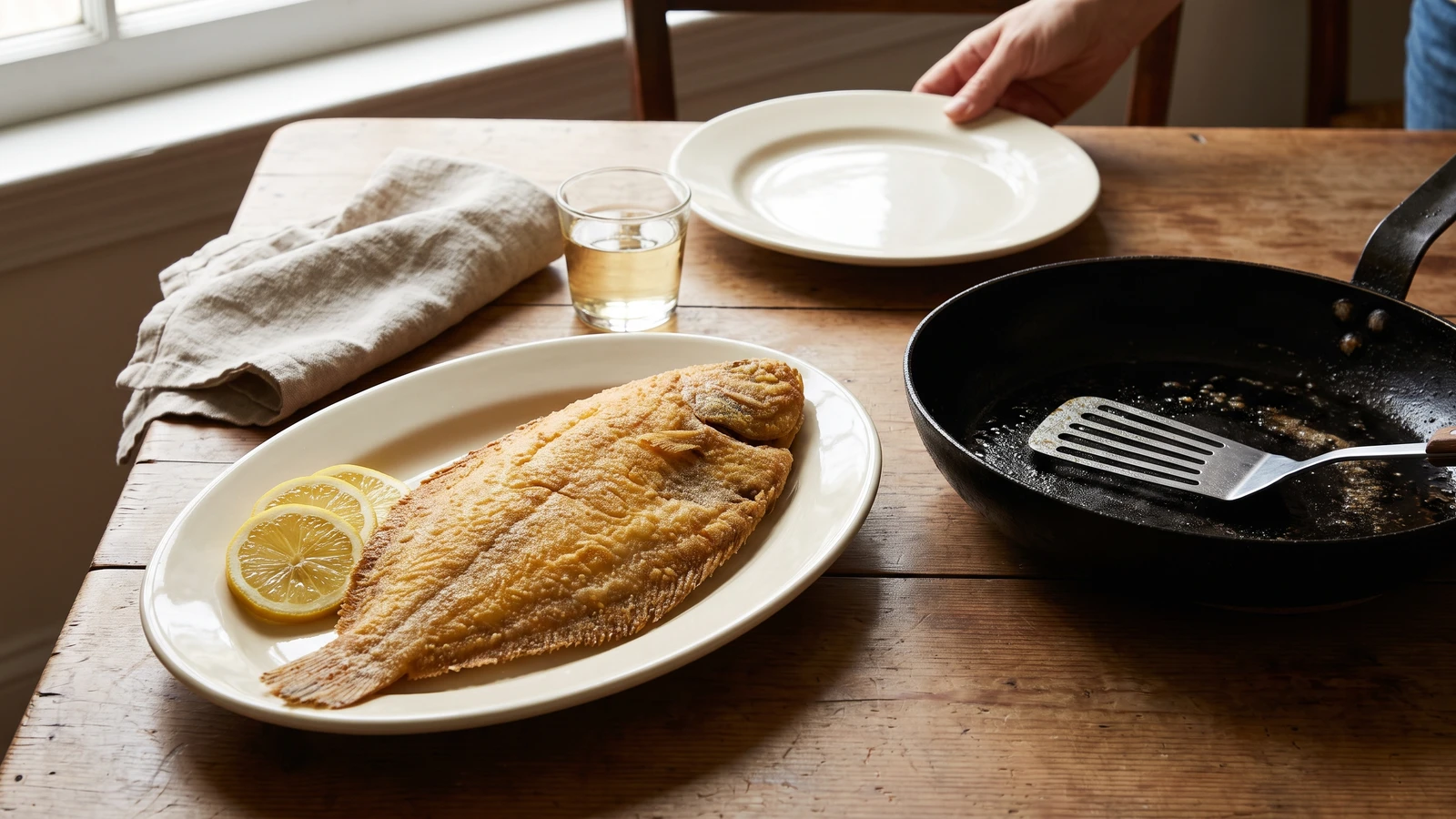
Sole Dorée (gilded sole) teaches one clean principle: colour comes from dryness, not from scorching butter. Pat the fish truly dry, veil it with flour only at the last moment, and clarified butter can gild the surface while the flesh stays pearly beside the bone. That thin golden coat is the dish.
The book's kitchen needed no saucier, stockpot, or salamander here. It did assume trimmed sole, clarified butter ready, several broad pans, and hot platters carried immediately. At home, two wide skillets or one skillet with a very low oven replace that service choreography, and the brigade quantity becomes four small fish. Multiple hands are scaffolding; drying, last-minute flouring, clarified butter, and a single careful turn must stay. One cook, one stove, one evening.
Do not finish Sole Dorée like meunière. It is dished dry with peeled lemon slices, without lemon juice sprinkled over it, parsley, or a last frothing pour of butter. The turn decides everything: wait until the first side is evenly golden and releases cleanly before you move it.
Sole Dorée belongs to the French classical dining room and the cuisine bourgeoise table rather than to one provincial larder, following the pan-frying grammar used for small flatfish across coastal France. It passed readily from professional fish stations to home kitchens because its equipment is only a broad pan, a spatula, and hot butter, while its polish comes from control rather than garnish. Dorée is not another name for meunière: peeled lemon and a dry finish define the former, while parsley and the final frothing butter distinguish the latter.
Quantity
1 application (No. 778)
use as the referenced pan-frying preparation
Quantity
4 (about 8 oz / 225 g each)
cleaned, heads removed, fins trimmed, and both skins removed
Quantity
1/2 cup (120 ml / 60 g)
Quantity
1 1/2 teaspoons (7.5 ml / 9 g)
divided
Quantity
1/4 teaspoon (1.25 ml / 0.6 g)
Quantity
3/4 cup (180 ml / 165 g)
divided
Quantity
2
yellow peel and white pith carefully removed, sliced crosswise, and seeded
| Ingredient | Quantity |
|---|---|
| The Cooking of Fish à la Meunièreuse as the referenced pan-frying preparation | 1 application (No. 778) |
| small whole Dover solecleaned, heads removed, fins trimmed, and both skins removed | 4 (about 8 oz / 225 g each) |
| all-purpose flour | 1/2 cup (120 ml / 60 g) |
| fine sea saltdivided | 1 1/2 teaspoons (7.5 ml / 9 g) |
| finely ground white pepper | 1/4 teaspoon (1.25 ml / 0.6 g) |
| clarified butterdivided | 3/4 cup (180 ml / 165 g) |
| small lemonsyellow peel and white pith carefully removed, sliced crosswise, and seeded | 2 |
If you are working with one skillet, heat the oven to 200°F (95°C) and set a wire rack over a rimmed baking sheet inside; this replaces the brigade's stream of hot platters without trapping moisture against the crust. Cut every trace of yellow peel and bitter white pith from the lemons, slice them crosswise into thin rounds, remove the seeds, and blot the slices dry. Pat both sides and the cavities of the sole very thoroughly with towels. Moisture left on the fish becomes steam in the pan, and steam prevents gilding.
Season the sole on both sides with half the salt and all the white pepper. Spread the flour in a wide dish, lay each fish in it, and turn once to cover it with the thinnest possible veil. Shake off every loose patch. Flour only the fish going directly into the pan; if a coated sole has waited and turned gummy, brush off the damp clumps, blot the exposed fish, and dust it lightly again. Ça se rattrape.
Set one or two 12-inch (30 cm) heavy skillets over medium-high heat. For each fish, add about 3 tablespoons (45 ml / 41 g) clarified butter and heat until it flows freely and shows a lively shimmer without smoking. Clarified butter is essential here because its milk solids have been removed, allowing the flour to colour before the butter burns. If the butter smokes or smells sharp, discard that portion, lower the heat briefly, and begin with fresh clarified butter.
Apply The Cooking of Fish à la Meunière (No. 778) as the governing frying preparation. Lower one sole into each pan, presentation side down and away from you, then leave it undisturbed for 3 to 4 minutes, until the underside is evenly deep gold and releases when nudged. Turn it once with a broad fish spatula, supporting the head end with a second spatula if needed, and cook for another 2 to 3 minutes. The flesh should be opaque beside the backbone and reach 145°F (63°C) at its thickest point. If the fish clings, do not scrape; give the crust another 20 seconds. If the flour darkens too quickly, lift the pan from the heat, lower the burner, and move the fish into clean warm clarified butter.
Lift each sole onto the warm wire rack for a minute so excess butter falls away, then season immediately with the remaining salt. If cooking in batches, hold the first fish uncovered in the low oven for no longer than 8 minutes and replenish the pan with fresh clarified butter before continuing. Never cover the fish, and do not pour the frying butter over it. Sole Dorée is dished dry.
Transfer each sole to a warmed plate and arrange the carefully peeled lemon slices beside it, not over the crust. Add no parsley, no squeeze of lemon, and no final butter froth; those would carry the preparation toward meunière. Serve immediately while the coating is crisp and the flesh still pulls from the bone in moist flakes. À table!
1 serving (about 190g)
Culinary guides, cultural storytelling, and the editorial depth that makes cooking meaningful.
Discover Culinary ExplorerChef Juliette
John Dory has the delicacy of sole and the firmness of turbot. A light flouring, a quick butter sauté, and nut-brown beurre noisette show exactly why looks never mattered.

Chef Juliette
Fresh haddock proves its delicacy in the meunière pan: a fine flour crust, moist pearly flakes, and beurre noisette sharpened with lemon and parsley, ready from one skillet in half an hour.

Chef Juliette
Éperlans à l’Anglaise turns small fish into a lesson in disciplined coating: boned smelts under a close, crisp crumb, pan-fried in clarified butter and finished with bright, half-melted maître d’hôtel butter.

Chef Juliette
Tiny smelts, shallot, mushrooms, white wine, gratin sauce, and fine bread raspings meet a fierce oven, where the fish must turn tender in the same breath the buttered crust bronzes.