
Chef Juliette
John Dory (St. Pierre)
John Dory has the delicacy of sole and the firmness of turbot. A light flouring, a quick butter sauté, and nut-brown beurre noisette show exactly why looks never mattered.
A cooking platform built around craft, culture, and the stories behind what we eat.
Created by Chef Juliette
Based on No. 815, Other Preparations of Trout after the same Recipe, from Le Guide Culinaire (1907) by Auguste Escoffier
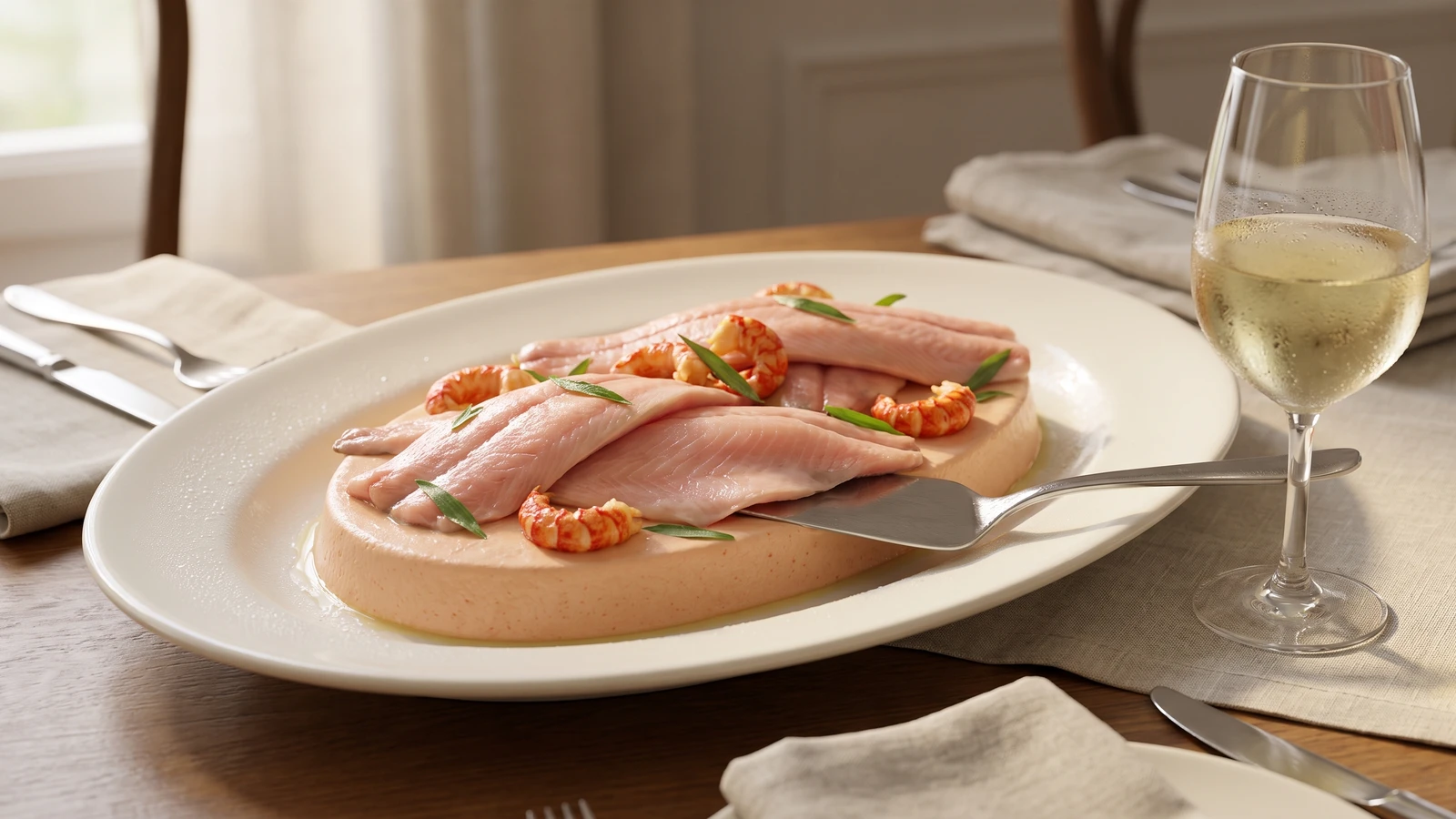
Nine cold trout variations from one classical grammar: a gentle poach, reduced liquor, velouté, and cream set into a silken mousse, then finished with the garnish that names each version.
Truites froides aux mousses variées (cold trout with a choice of molded mousse) teaches the architecture of the cold buffet. The trout is constant; the mousse and its proper garnish change. The one true thing to know before touching a pan is this: the mousse base must be cool enough not to melt the whipped cream, yet loose enough to accept it without setting into threads.
The original assumed a garde-manger to poach and trim the trout, a saucier on staff, a stockpot never off the fire, and cold space for a banquet mold. A salamander had nothing to do with this preparation; its discipline belongs to the cold kitchen. At home, a wide pan, a blender, a fine sieve, and one shallow 1.2-liter mold do the work. The large buffet scale and separate hands are brigade scaffolding, so they go. The gentle poach, reduced cooking liquor, velouté foundation, and molded set are the dish, so they stay. One cook, one stove, one evening.
Choose one mousse, not a parade of all nine. Crayfish and lobster make the grandest platter, early herbs make the freshest, and Volnay or Chambertin give the sauce a deep Burgundian register. Whichever you choose, watch the temperature of the base before folding in the cream. That quiet moment decides the whole dish.
Truites froides aux mousses variées belong to the Parisian grand-kitchen cold buffet, where carefully poached fish was paired with molded, sauce-based mousses and precise garnishes. This entry is a variation table rather than nine unrelated recipes: the tomato mousse of the preceding preparation yields its place to shellfish, peppers, herbs, physalis, or Burgundy wine while the trout and composition remain constant. Here mousse means a chilled molded preparation built on sauce and cream, not a loose froth, and the method traveled from formal buffet service to the bourgeois celebration table.
Quantity
8 fillets (about 1¾ pounds / 800 g total)
Quantity
1½ cups (360 ml / 360 g)
Quantity
4 cups (960 ml / 960 g)
Quantity
1 medium (about 1 cup / 240 ml / 150 g)
thinly sliced
Quantity
1 medium (about ½ cup / 120 ml / 100 g)
thinly sliced
Quantity
6
Quantity
1
Quantity
8
Quantity
1 tablespoon (15 ml / 18 g)
divided
Quantity
2 tablespoons (30 ml / 30 g)
divided
Quantity
1½ cups (360 ml / 370 g)
prepared separately
Quantity
1 tablespoon plus 1 teaspoon (20 ml / 12 g)
Quantity
⅓ cup (80 ml / 80 g)
for blooming the gelatin
Quantity
1 cup (240 ml / 240 g)
kept cold
Quantity
2 cups (480 ml / 280 g)
reserve 8 whole tails
Quantity
2 cups (480 ml / 280 g)
reserve 8 thin slices and any coral
Quantity
2 cups (480 ml / 280 g)
Quantity
8 tails (about ¼ cup / 60 ml / 50 g)
for the Mousse de Crevettes garnish
Quantity
3 large (about 2 cups / 480 ml / 300 g)
peeled, with several strips reserved
Quantity
2 cups (480 ml / 300 g)
husked except for 6 small bunches reserved
Quantity
3 large (about 2 cups / 480 ml / 300 g)
peeled, with several strips reserved
Quantity
1 packed cup (240 ml / 30 g)
chervil, parsley, tarragon, and chives
Quantity
2
finely chopped
Quantity
¼ cup (60 ml / 15 g)
chopped
Quantity
2 cups (480 ml / 480 g)
choose the wine named by the mousse
Quantity
½ cup (120 ml / 120 g) Brown Game Stock (No. 8)
prepared as its own finished component; only for Mousse au Volnay or Mousse au Chambertin
Quantity
8
drained
Quantity
¼ cup (60 ml / 35 g)
drained
Quantity
½ cup (120 ml / 75 g)
pitted
Quantity
2 tablespoons (30 ml / 4 g)
Quantity
¼ cup (60 ml / 10 g)
Quantity
to taste
| Ingredient | Quantity |
|---|---|
| skinless, pin-boned trout fillets | 8 fillets (about 1¾ pounds / 800 g total) |
| dry white wine | 1½ cups (360 ml / 360 g) |
| water | 4 cups (960 ml / 960 g) |
| yellow onionthinly sliced | 1 medium (about 1 cup / 240 ml / 150 g) |
| carrotthinly sliced | 1 medium (about ½ cup / 120 ml / 100 g) |
| parsley stems | 6 |
| bay leaf | 1 |
| black peppercorns | 8 |
| fine sea saltdivided | 1 tablespoon (15 ml / 18 g) |
| fresh lemon juicedivided | 2 tablespoons (30 ml / 30 g) |
| finished cleared veloutéprepared separately | 1½ cups (360 ml / 370 g) |
| powdered gelatin | 1 tablespoon plus 1 teaspoon (20 ml / 12 g) |
| cold waterfor blooming the gelatin | ⅓ cup (80 ml / 80 g) |
| heavy creamkept cold | 1 cup (240 ml / 240 g) |
| cooked crayfish meat (optional)reserve 8 whole tails | 2 cups (480 ml / 280 g) |
| cooked lobster meat (optional)reserve 8 thin slices and any coral | 2 cups (480 ml / 280 g) |
| cooked peeled shrimp (optional) | 2 cups (480 ml / 280 g) |
| cooked crayfish tails (optional)for the Mousse de Crevettes garnish | 8 tails (about ¼ cup / 60 ml / 50 g) |
| roasted red capsicums (optional)peeled, with several strips reserved | 3 large (about 2 cups / 480 ml / 300 g) |
| ripe physalis (optional)husked except for 6 small bunches reserved | 2 cups (480 ml / 300 g) |
| roasted mild green pimentos (optional)peeled, with several strips reserved | 3 large (about 2 cups / 480 ml / 300 g) |
| mixed early-season herbs (optional)chervil, parsley, tarragon, and chives | 1 packed cup (240 ml / 30 g) |
| hard-boiled eggs (optional)finely chopped | 2 |
| flat-leaf parsley (optional)chopped | ¼ cup (60 ml / 15 g) |
| Volnay or Chambertin (optional)choose the wine named by the mousse | 2 cups (480 ml / 480 g) |
| Brown Game Stock (optional)prepared as its own finished component; only for Mousse au Volnay or Mousse au Chambertin | ½ cup (120 ml / 120 g) Brown Game Stock (No. 8) |
| anchovy fillets (optional)drained | 8 |
| capers (optional)drained | ¼ cup (60 ml / 35 g) |
| small black olives (optional)pitted | ½ cup (120 ml / 75 g) |
| small tarragon leaves (optional) | 2 tablespoons (30 ml / 4 g) |
| chervil sprigs (optional) | ¼ cup (60 ml / 10 g) |
| freshly ground white pepper | to taste |
Combine the white wine, water, onion, carrot, parsley stems, bay leaf, peppercorns, 2 teaspoons of the salt, and 1 tablespoon of the lemon juice in a wide pan. Bring it slowly to a bare simmer and let the aromatics give themselves to the liquid for 20 minutes. Strain, pressing lightly on the vegetables, then return the court-bouillon to the clean pan.
Bring the court-bouillon back to the faintest tremble. Lay in the trout in a single layer, working in two batches if necessary, cover with a round of parchment, and poach for 5 to 7 minutes. The flesh should turn opaque and separate in moist flakes, reaching 145°F (63°C) at its thickest point. A hard boil tightens the fish and breaks its surface; if the liquid begins rolling, pull the pan from the heat at once and finish in the retained warmth. Lift the fillets onto a tray, strain and reserve the cooking liquor, then chill the trout promptly until completely cold.
Choose one mousse and prepare only its flavoring. For the shellfish, pepper, physalis, and herb versions, reduce 1 cup (240 ml / 240 g) of the strained trout liquor to ½ cup (120 ml / 120 g) and cool it before blending. For either Burgundy wine version, follow its separate reduction below. Each flavor must be smooth enough to join the velouté without breaking the molded texture.
Sprinkle the gelatin evenly over the cold water and leave it for 5 minutes, until every grain has swollen. Warm about one quarter of the cleared velouté over gentle heat, remove it from the stove, and whisk in the bloomed gelatin until completely dissolved. Whisk this back into the remaining velouté, then add the chosen shellfish purée, vegetable purée, herb purée, or Burgundy reduction. Season with white pepper and only as much of the remaining salt as it needs. If gelatin threads appear, set the bowl briefly over gently hot water and whisk until smooth. Ça se rattrape. Never let the mixture boil.
Whip the cold cream until it forms soft folds, not stiff peaks. Set the mousse base over an ice bath and stir until it cools to about 64 to 68°F (18 to 20°C) and lightly coats the spoon. Fold in one third of the cream to loosen the base, then fold in the rest with broad strokes. If the base is warm, wait or it will melt the cream; if it begins setting into lumps, warm the bowl for a few seconds, whisk it smooth, cool it again, and continue. This temperature bridge is the step that decides the dish.
Rinse a shallow 1¼-quart (1.2-liter) oval mold with cold water and leave it lightly wet. Pour in the mousse, tap the mold once against a folded towel to release large air pockets, smooth the surface, and cover. Chill for at least 4 hours, or overnight, until set through but still tender under a spoon. The book's large buffet mold has simply become one that fits a home refrigerator; the molded texture remains.
Set the serving platter over the mold and invert both together. Wrap the mold for 5 seconds in a towel wrung from warm water, then lift it away. If the mousse clings, repeat for another few seconds rather than tugging at it. Pat the chilled trout fillets dry and arrange them in slightly overlapping pairs across the mousse, keeping their delicate shape intact.
Give each mousse its proper finish. Garnish Mousse d'Écrevisses with crayfish tails and tarragon leaves; Mousse de Homard with lobster slices, coral, and chervil; Mousse de Crevettes with crayfish tails and capers; Capsicum Mousse with grilled red strips; Physalia Mousse with chervil, tarragon, and bunches of physalis; Green Pimentos Mousse with green strips; Early-season Herb Mousse with chopped hard-boiled egg and parsley; and either Burgundy wine mousse with anchovy fillets, capers, and olives. Keep the platter cold until serving and return leftovers to the refrigerator within 2 hours. À table!
1 serving (about 350g)
Culinary guides, cultural storytelling, and the editorial depth that makes cooking meaningful.
Discover Culinary ExplorerChef Juliette
John Dory has the delicacy of sole and the firmness of turbot. A light flouring, a quick butter sauté, and nut-brown beurre noisette show exactly why looks never mattered.

Chef Juliette
Fresh haddock proves its delicacy in the meunière pan: a fine flour crust, moist pearly flakes, and beurre noisette sharpened with lemon and parsley, ready from one skillet in half an hour.

Chef Juliette
Éperlans à l’Anglaise turns small fish into a lesson in disciplined coating: boned smelts under a close, crisp crumb, pan-fried in clarified butter and finished with bright, half-melted maître d’hôtel butter.

Chef Juliette
Tiny smelts, shallot, mushrooms, white wine, gratin sauce, and fine bread raspings meet a fierce oven, where the fish must turn tender in the same breath the buttered crust bronzes.