Chef Juliette
Bouillabaisse à la Marseillaise
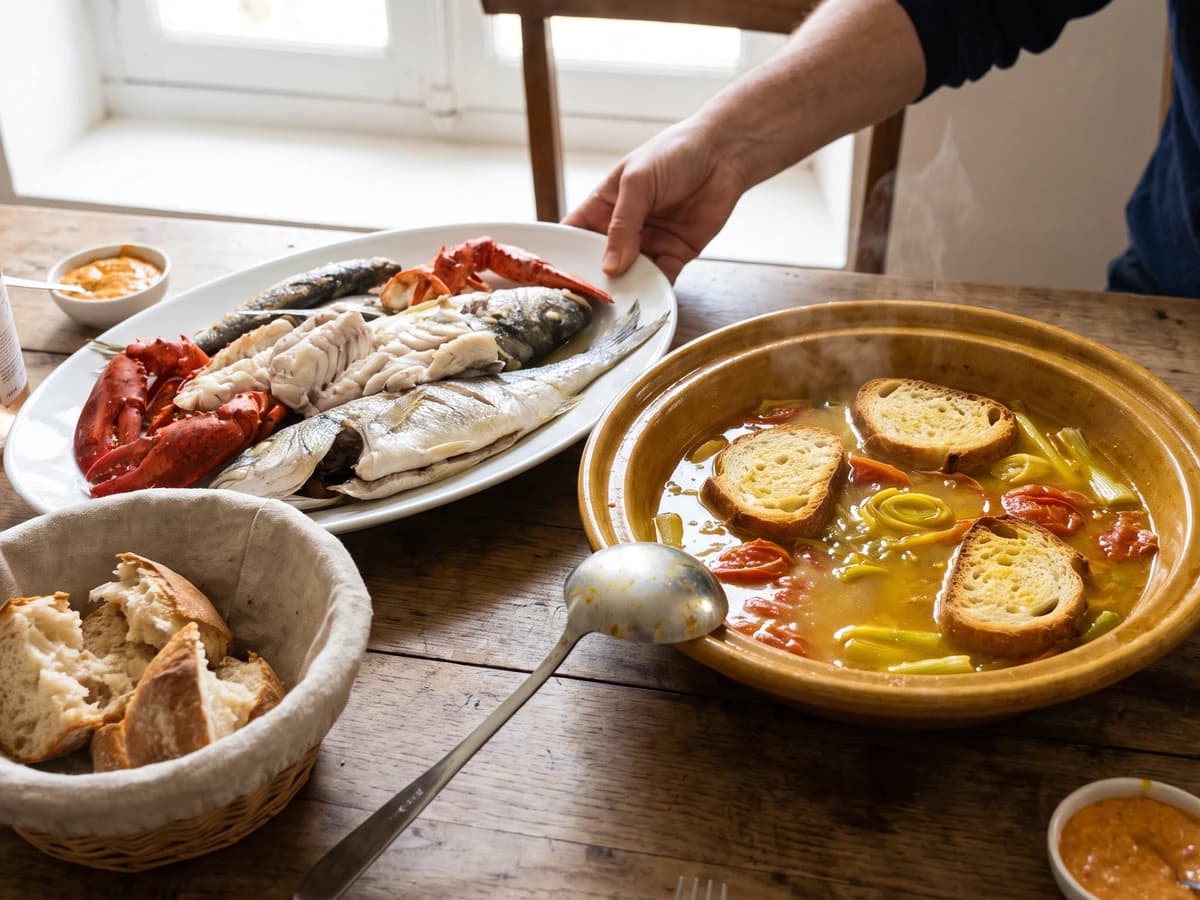
Marseille's great fish stew, saffron-gold and garlic-scented, proves that a hard boil can be the careful choice: it binds olive oil into broth before the whole pot meets bread.
A cooking platform built around craft, culture, and the stories behind what we eat.
Created by Chef Juliette
Based on No. 740, Potage Windsor, from Le Guide Culinaire (1907) by Auguste Escoffier
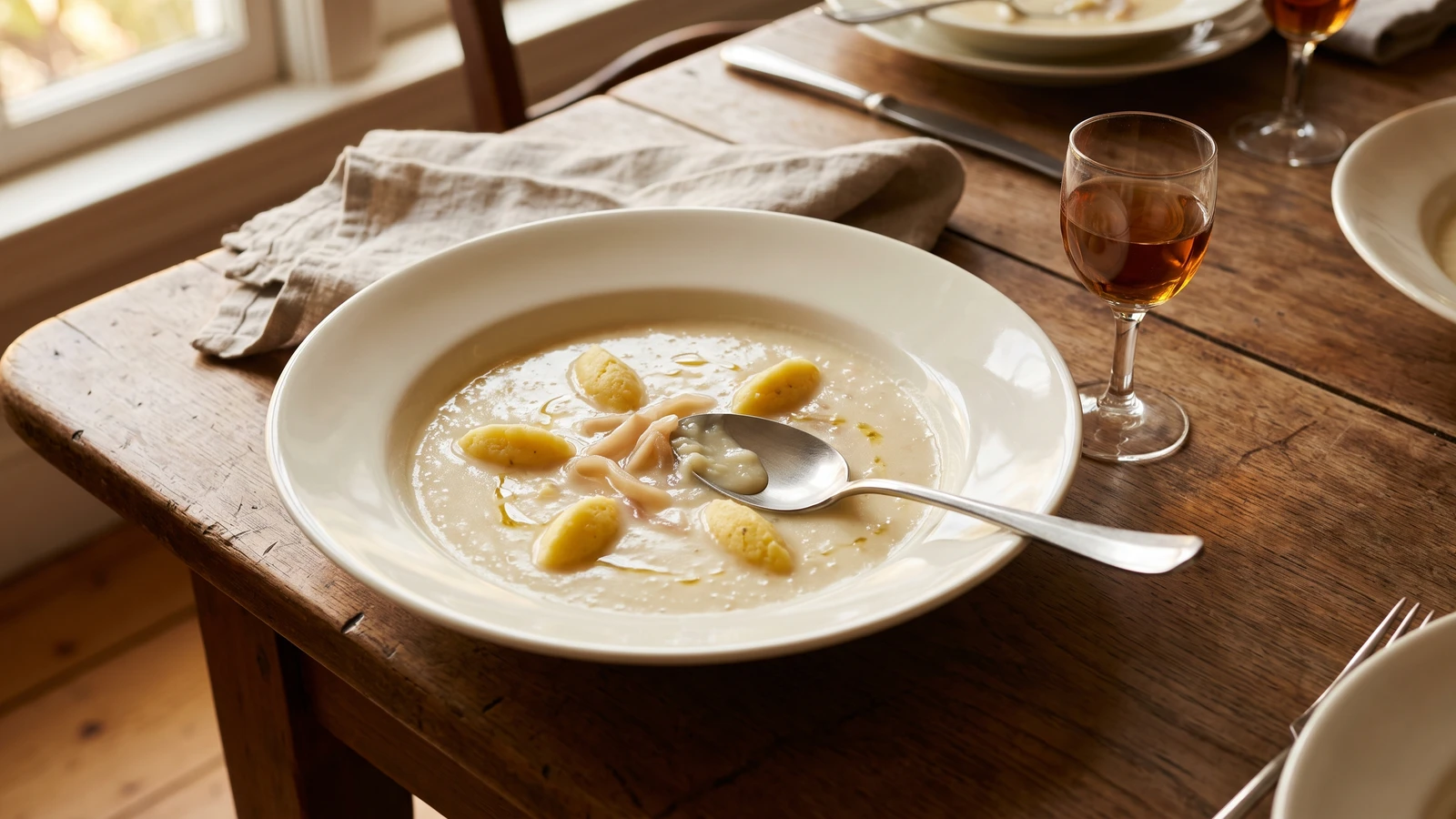
Potage Windsor layers crème de riz, gelatinous calf’s-foot liquor, turtle herbs, and tiny egg-yolk quenelles into a stately soup, scaled for one attentive cook and a generous table.
Potage Windsor (Windsor cream soup) teaches that a cream soup’s body must be built before it is enriched. Here the calf’s-foot liquor supplies gelatin, the rice supplies velvet, and the ordinary liaison (egg yolks and cream) gives the final polish. Ask the liaison to create the thickness and the soup becomes stodgy. C’est la même grammaire as every careful sauce: foundation first, finish last.
The original kitchen assumed a saucier on staff, a white stock never off the fire, a blanched foot waiting at one station, and a garde-manger shaping twenty quenelles at another. At home, a damp cloth in a fine sieve replaces the muslin and tammy, two small spoons replace practiced brigade hands, and the cooking liquor is measured to a dependable home yield. The brigade handoffs are scaffolding and can go. The calf’s-foot extraction, the two-to-one ratio of yolk purée to chicken forcemeat, the faint herbes à tortue (turtle-soup herbs), and the last-minute liaison are the dish and must stay. One cook, one stove, one evening.
Finished properly, Potage Windsor is pale ivory and quietly glossy, with tender julienne of calf’s foot and little butter-yellow quenelles beneath the surface. The herb perfume should remain elusive, never medicinal. The one step that decides everything comes when the liaison enters: keep the soup below a simmer, because boiling turns silk into curds.
Potage Windsor takes its name from Windsor in Berkshire, yet its real setting is the Franco-English grand-house table, where French cooks recast English turtle and mock-turtle seasonings in the grammar of potage crème. It traveled into the French classical repertoire as a pale rice cream enriched with calf’s-foot liquor and liaison, not as the beefy brown soup often sold under the Windsor name. Its yolk-and-chicken quenelles preserve the grand-kitchen habit of placing a second piece of careful work inside the first.
Quantity
1 (about 1¼ lb / 570 g), prepared and cooled through Blanchings (No. 273)
Quantity
1½ cups (360 ml / 240 g) Mirepoix (No. 228)
Quantity
1¼ cups (300 ml / 300 g)
Quantity
5 cups (1.18 L / 1.18 kg)
Quantity
3½ cups (830 ml / 845 g) Crème de Riz (No. 711)
Quantity
1½ tablespoons (22 ml / 22 g), made by steeping ¾ teaspoon (3.75 ml / 0.6 g) equal parts dried basil, marjoram, rosemary, sage, savory, and thyme in ¼ cup (60 ml / 60 g) boiling water
Quantity
4 (about ¼ cup / 60 ml / 68 g)
Quantity
¾ cup (180 ml / 180 g)
divided
Quantity
3 tablespoons (45 ml / 43 g)
chilled and cubed
Quantity
4 (about ¼ cup / 60 ml / 64 g)
pressed through a fine sieve
Quantity
2 tablespoons (30 ml / 32 g)
well chilled
Quantity
4 cups (950 ml / 950 g)
Quantity
1½ teaspoons (7.5 ml / 9 g), divided, plus more only if needed
Quantity
¼ teaspoon (1.25 ml / 0.5 g)
| Ingredient | Quantity |
|---|---|
| small boned calf’s foot | 1 (about 1¼ lb / 570 g), prepared and cooled through Blanchings (No. 273) |
| prepared mirepoix | 1½ cups (360 ml / 240 g) Mirepoix (No. 228) |
| dry white wine | 1¼ cups (300 ml / 300 g) |
| unsalted light chicken or veal stock | 5 cups (1.18 L / 1.18 kg) |
| prepared rice cream | 3½ cups (830 ml / 845 g) Crème de Riz (No. 711) |
| slight herbes à tortue infusion | 1½ tablespoons (22 ml / 22 g), made by steeping ¾ teaspoon (3.75 ml / 0.6 g) equal parts dried basil, marjoram, rosemary, sage, savory, and thyme in ¼ cup (60 ml / 60 g) boiling water |
| large egg yolks for the liaison | 4 (about ¼ cup / 60 ml / 68 g) |
| heavy creamdivided | ¾ cup (180 ml / 180 g) |
| unsalted butterchilled and cubed | 3 tablespoons (45 ml / 43 g) |
| hard-boiled egg yolkspressed through a fine sieve | 4 (about ¼ cup / 60 ml / 64 g) |
| prepared plain chicken forcemeatwell chilled | 2 tablespoons (30 ml / 32 g) |
| water for poaching | 4 cups (950 ml / 950 g) |
| fine sea salt | 1½ teaspoons (7.5 ml / 9 g), divided, plus more only if needed |
| ground white pepper | ¼ teaspoon (1.25 ml / 0.5 g) |
Spread the Mirepoix (No. 228) in a heavy 6-quart saucepan and add the white wine. Simmer gently for 3 minutes, then settle in the calf’s foot already prepared through Blanchings (No. 273). Add the stock, which should cover the foot narrowly, and bring it slowly to the barest tremble. Cover partly and cook for 2½ to 3 hours, turning the foot occasionally, until its skin and cartilage yield easily to a small knife. Never let the liquid pound at a boil, which clouds the liquor and tightens the outer flesh. If it does boil, pull the pan from the heat, skim the surface, and resume gently. Ça se rattrape.
While the foot cooks, combine equal parts dried basil, marjoram, rosemary, sage, savory, and thyme. Steep the measured mixture in the boiling water for 5 minutes, then strain without pressing. Measure exactly 1½ tablespoons of the infusion. It should smell gently green and savory, not bitter or medicinal; if it is too forceful, dilute it with boiling water until the edges soften, then measure again.
Work the sieved hard-boiled yolks and chilled chicken forcemeat together until smooth and tacky, preserving the source’s exact proportion of two parts yolk purée to one part forcemeat by weight. Season with a small pinch of the salt and white pepper. Bring the poaching water to 175°F to 180°F (79°C to 82°C), where it barely quivers. Using two damp demitasse spoons, shape 20 tiny oval quenelles and poach them for 4 to 5 minutes, until firm and cooked through to 165°F (74°C). Lift them out with a slotted spoon. If the first quenelle feathers apart, the water is too hot or the mixture too warm. Lower the heat and chill the paste for 10 minutes before continuing.
Lift the tender calf’s foot onto a tray. Line a fine-mesh sieve with damp cheesecloth and strain the cooking liquor into a clean saucepan without pressing the Mirepoix, since pressure pushes cloudiness through the cloth. Skim away the surface fat and measure 3½ cups. If there is more, reduce it gently; if there is less, add enough light stock to reach the measure. Chill a spoonful on a small plate: it should set softly from the natural gelatin, not turn rubbery.
When the calf’s foot is cool enough to handle, divide it in half. Cut one half in julienne, match-shaped rods about 1 inch long and ⅛ inch wide, discarding any hard gristle the knife resists. Moisten the julienne with a spoonful of the strained liquor and cover it so it stays supple. Chill the remaining half for another use.
Warm the Crème de Riz (No. 711) over medium-low heat. Whisk in the measured calf’s-foot liquor gradually so the rice cream remains perfectly smooth, then hold the soup at a bare simmer for 5 minutes. Judge the body now, before the liaison enters: it should coat a spoon lightly and flow back into the pan in a broad ribbon. If it is too thick, loosen it with hot stock; if it is thin, simmer a little longer. The liaison finishes the texture but must not be asked to repair it.
Reserve 2 tablespoons of the cold cream, then whisk the remaining cream with the raw egg yolks. Temper the liaison by whisking in about 2 cups of hot soup, one ladleful at a time. Remove the soup pot from the heat, whisk the tempered liaison back into it, and return it to the lowest heat. Stir constantly until the soup reaches 175°F (80°C) and gains a satin gloss, but never let it boil. Whisk in the measured herbes à tortue infusion, then monter au beurre, whisk in the cold butter piece by piece to finish. If tiny grains appear, stop heating at once, whisk in the reserved cold cream, and pass the soup through a clean fine sieve. Ça se rattrape. Season carefully with the remaining salt and white pepper.
Warm the calf’s-foot julienne and quenelles in a ladleful of finished soup over very low heat. Divide them among warmed soup plates, allowing two or three quenelles per serving, then ladle the Potage Windsor over them. Serve immediately, with no stray herbs or decorative fuss. The pale surface, the tender garnish, and the quiet scent of herbes à tortue are decoration enough. À table!
1 serving (about 245g)
Culinary guides, cultural storytelling, and the editorial depth that makes cooking meaningful.
Discover Culinary ExplorerChef Juliette
Marseille's great fish stew, saffron-gold and garlic-scented, proves that a hard boil can be the careful choice: it binds olive oil into broth before the whole pot meets bread.
Chef Juliette
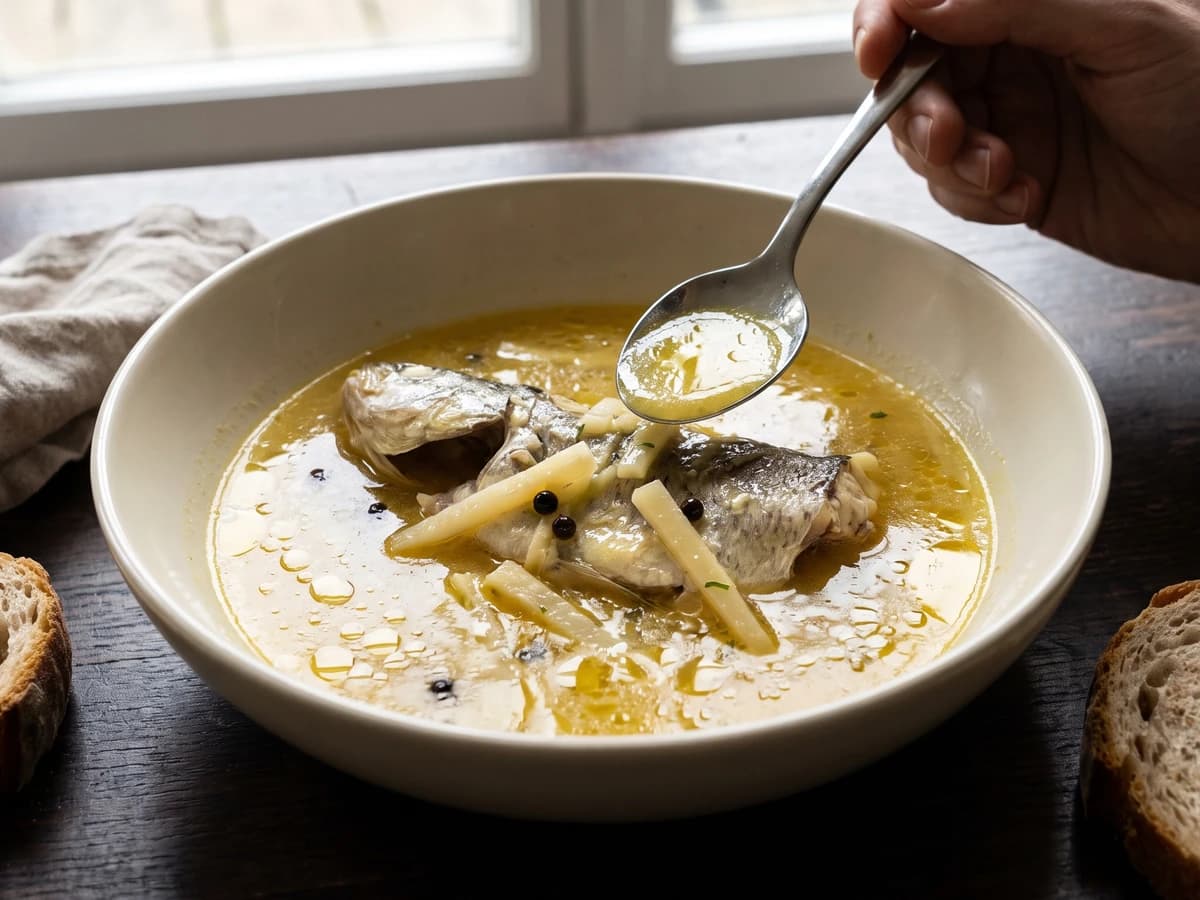
Waterzoi asks fresh, bone-in river fish to thicken its own buttery broth, with parsley root and pepper for company. No flour, no stockpot, just a brisk simmer watched closely.
Chef Juliette
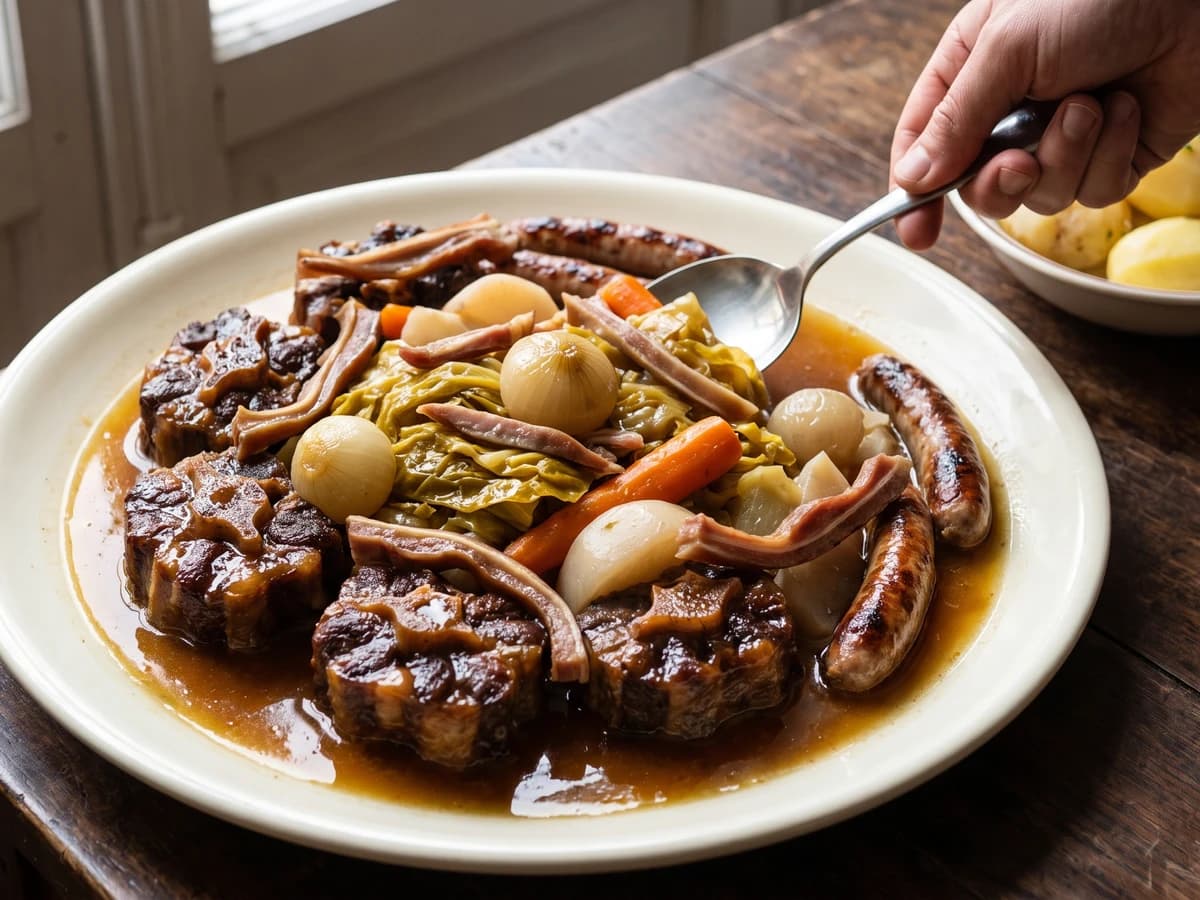
Queue de Bœuf en Hochepot gathers oxtail, pig's trotter and ear, cabbage, roots, and grilled chipolatas around a clear, gelatin-rich broth whose quiet simmer keeps every piece tender and distinct.
Chef Juliette
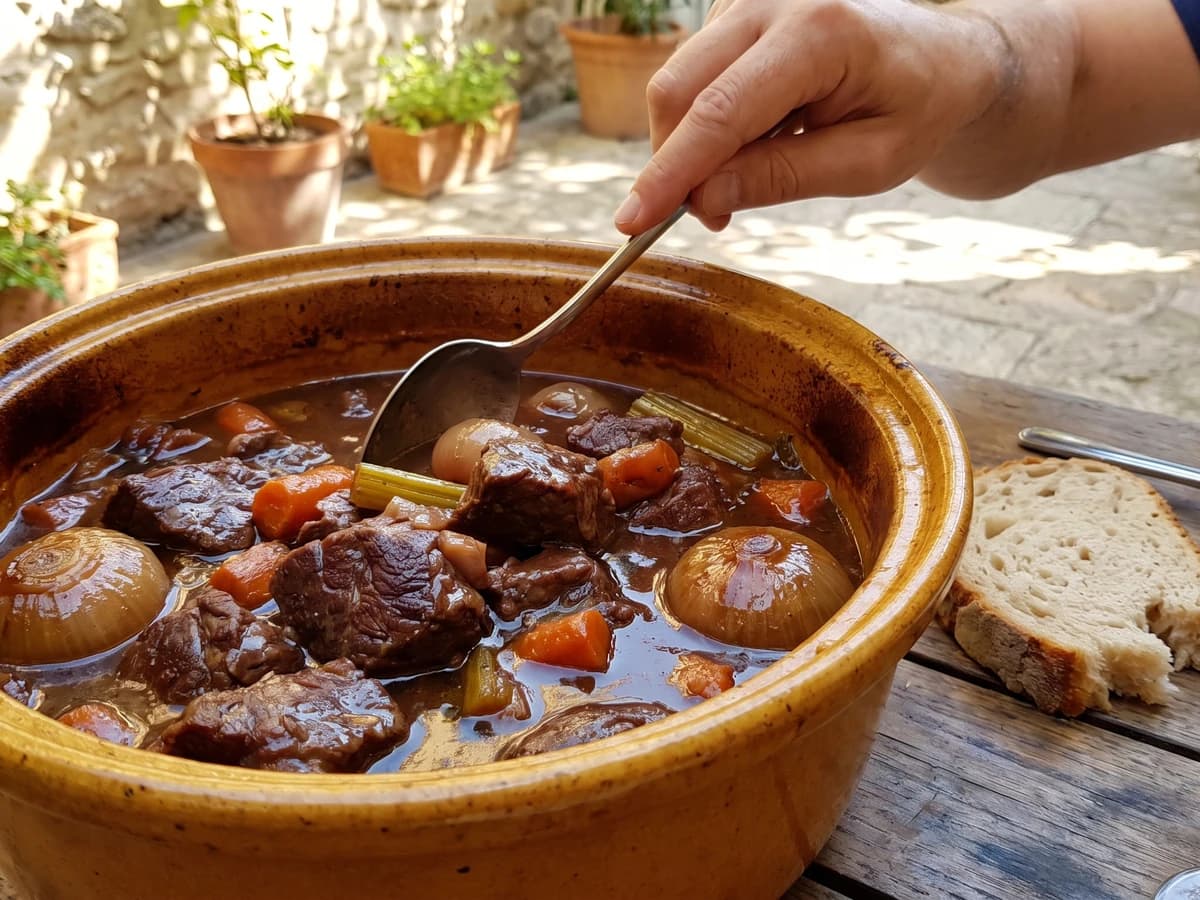
Beef shoulder larded with bacon, sharpened by red wine and vinegar, then sealed with garlic, vegetables, and dry lemon peel until the low oven turns it yielding and the gravy darkly glossy.