Chef Juliette
Bouillabaisse à la Marseillaise
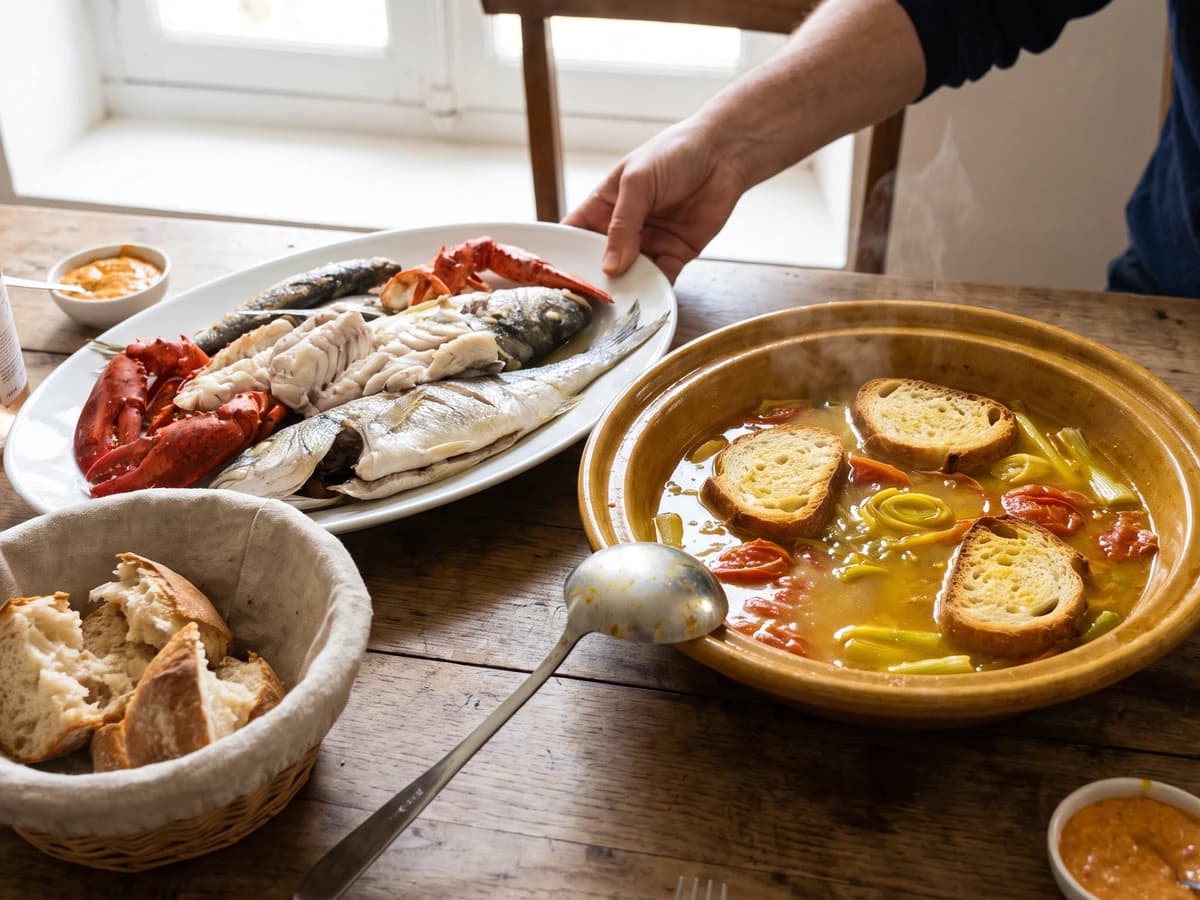
Marseille's great fish stew, saffron-gold and garlic-scented, proves that a hard boil can be the careful choice: it binds olive oil into broth before the whole pot meets bread.
A cooking platform built around craft, culture, and the stories behind what we eat.
Created by Chef Juliette
Based on No. 735, Potage Rossolnik, from Le Guide Culinaire (1907) by Auguste Escoffier
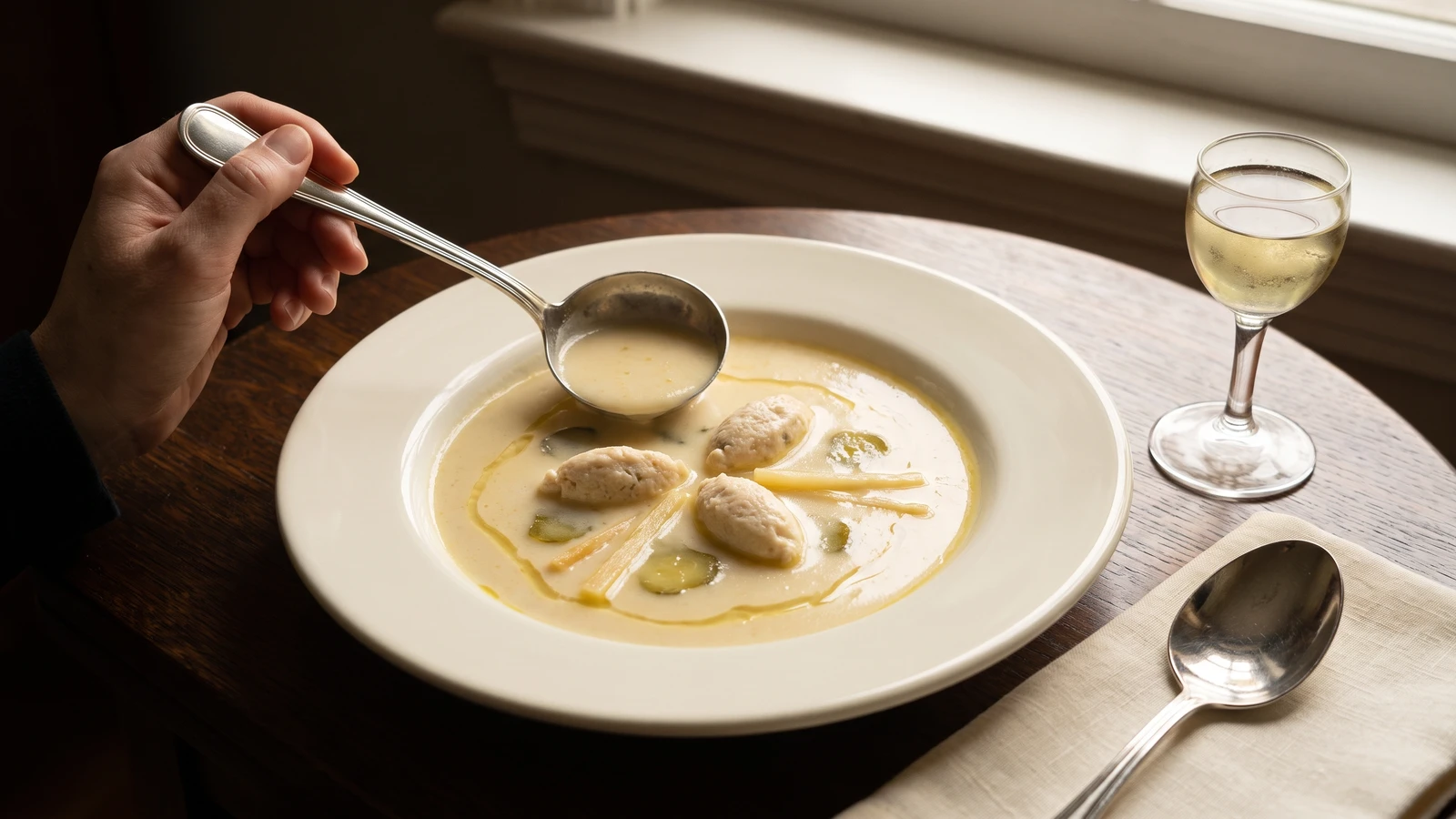
Potage Rossolnik sets a tart, clean cucumber edge against ivory poultry velouté, with tender root batons, salted cucumber lozenges, and small chicken quenelles, a composed soup for a generous first course.
Potage Rossolnik (light poultry velouté sharpened with salted cucumber juice) teaches restraint with acid. The one true thing to know before touching a pan is that the brine must sharpen the poultry and cream, never swamp them; the soup should finish tart and clean, not aggressively pickled. Stock gives it depth, roux gives it body, and cucumber juice draws the bright line through both.
The grand-kitchen formula assumed a saucier tending a stock never off the fire, a commis turning dozens of roots, and a mortar and sieve for the chicken forcemeat. Here the source's one-quart formula becomes about two quarts for a dinner-party pot, with every stated garnish count and finishing spoonful doubled. A food processor replaces the mortar, while evenly tapered root pieces with their little cross-cut replace wasteful hand-turning. Those shapes were brigade scaffolding. The light velouté, two-stage cucumber juice, forty-minute gentle cooking, and final liaison are the dish, so they stay. One cook, one stove, one evening.
When it is right, the potage is ivory and lightly glossy, with little white quenelles, tender roots, and olive-green cucumber lozenges appearing under the spoon. The step that decides it is the liaison ordinaire (ordinary egg-yolk-and-cream enrichment): once it enters, keep the pot below a simmer. If the yolks fleck, ça se rattrape, and the method gives you the way back.
Potage Rossolnik is the French classical kitchen's reading of Russian rassolnik, a family of soups whose defining seasoning is rassol, the brine from salted cucumbers. As the idea passed between Russian court tables and Parisian grand kitchens, the broth became a light poultry velouté, while hearty garnishes gave way to turned roots and chicken quenelles. The common misconception is that the cucumber pieces make the soup tart; here they remain a garnish, while their strained brine carries the clean, sour line.
Quantity
6 tablespoons (90 ml / 85 g)
Quantity
3/4 cup (180 ml / 90 g)
Quantity
7 1/2 cups (1.78 L / 1.78 kg)
divided and kept cool
Quantity
3/4 cup plus 3 tablespoons (225 ml / 225 g)
divided
Quantity
2 medium (8 oz / 225 g total)
peeled
Quantity
1/2 small (8 oz / 225 g trimmed)
peeled
Quantity
2 medium (8 oz / 225 g drained)
trimmed
Quantity
4 quarts (3.8 L / 3.8 kg)
divided, for parboiling and poaching
Quantity
8 oz (225 g)
trimmed, diced, and thoroughly chilled
Quantity
1
Quantity
6
Quantity
1 1/2 cups (360 ml / 360 g)
divided and kept very cold
Quantity
1/2 teaspoon (2.5 ml / 3 g)
Quantity
1/8 teaspoon (0.6 ml / 0.3 g)
Quantity
1/4 teaspoon (1.25 ml / 0.5 g)
| Ingredient | Quantity |
|---|---|
| unsalted butter | 6 tablespoons (90 ml / 85 g) |
| all-purpose flour | 3/4 cup (180 ml / 90 g) |
| light unsalted chicken stockdivided and kept cool | 7 1/2 cups (1.78 L / 1.78 kg) |
| strained cucumber juice, the brine from naturally fermented salted cucumbersdivided | 3/4 cup plus 3 tablespoons (225 ml / 225 g) |
| parsley rootspeeled | 2 medium (8 oz / 225 g total) |
| celery rootpeeled | 1/2 small (8 oz / 225 g trimmed) |
| naturally fermented salted cucumberstrimmed | 2 medium (8 oz / 225 g drained) |
| waterdivided, for parboiling and poaching | 4 quarts (3.8 L / 3.8 kg) |
| boneless, skinless chicken breasttrimmed, diced, and thoroughly chilled | 8 oz (225 g) |
| large egg white | 1 |
| large egg yolks | 6 |
| heavy creamdivided and kept very cold | 1 1/2 cups (360 ml / 360 g) |
| fine sea salt | 1/2 teaspoon (2.5 ml / 3 g) |
| finely ground white pepper, for the quenelles | 1/8 teaspoon (0.6 ml / 0.3 g) |
| finely ground white pepper, for the potage | 1/4 teaspoon (1.25 ml / 0.5 g) |
Chill the food-processor bowl and blade for 10 minutes. Process the very cold chicken with the salt and 1/8 teaspoon white pepper until the meat becomes smooth and tacky. Add the egg white and process again, then pour in 1/2 cup of the cold cream in four small additions, stopping to scrape the bowl and check its temperature. The forcemeat must remain cold enough to feel firm, never warm or greasy. Scrape it into a bowl, cover, and chill for 20 minutes. If it turns grainy or begins shedding fat, stop immediately, chill it for 15 minutes, then process briefly with one spoonful of cold cream. Ça se rattrape.
Heat 2 quarts of the water to 175 to 180°F (79 to 82°C), a bare tremble with no rolling bubbles. Dip two teaspoons in the water, scoop up the forcemeat, and pass it between the spoons to form 24 small ovals. Poach them in batches for 6 to 8 minutes, turning once, until firm and 165°F (74°C) at the centre. A hard boil roughens the surface and tightens the chicken, so lower the heat if the water becomes lively. Lift the quenelles out with a slotted spoon, cover, and keep chilled if the soup will not be finished within 30 minutes.
Cut the parsley root into 20 tapered pieces and the celery root into another 20, each about 1 1/4 inches (3 cm) long and 3/8 inch (1 cm) thick. Make a shallow cross-cut in the thicker base of every piece, preserving the source's little new-carrot shape without wasting half the root through formal turning. Slice the salted cucumbers diagonally into 40 small lozenges. Bring the remaining 2 quarts water to a gentle boil, add all the roots and cucumber lozenges, and parboil them together for 15 minutes. Drain thoroughly.
Melt the butter in a heavy 4-quart saucepan over medium-low heat. Add the flour and stir for 3 minutes to make a roux blanc (white roux), cooking away the raw flour taste without allowing it to colour. Gradually whisk in 7 1/4 cups of the cool chicken stock, beginning with small additions so the roux opens smoothly. Bring it slowly to a bare simmer and skim off the pale foam. If lumps remain, blend the velouté briefly and pass it through a fine sieve now, before the garnish enters. Nothing is lost.
Stir 3/4 cup of the cucumber juice into the velouté, then add the drained parsley root, celery root, and cucumber lozenges. Hold the pot at the gentlest simmer for 40 minutes, skimming the surface whenever foam gathers. The velouté should lightly coat a spoon while the root pieces become completely tender. If it tightens too far, loosen it with the reserved 1/4 cup stock; if it remains thin, let it simmer uncovered a few minutes longer. Add the poached quenelles for the final 5 minutes so they warm through without toughening.
Whisk the egg yolks with the remaining 1 cup cream to make the liaison ordinaire (ordinary egg-yolk-and-cream enrichment). When the 40-minute simmer is complete, reduce the heat to its lowest setting and stir the reserved 3 tablespoons cucumber juice into the pot. Whisk two ladles of hot velouté gradually into the liaison, remove the saucepan from the heat, and stir the tempered liaison back into the soup. Return it to the lowest heat only long enough to reach 170 to 175°F (77 to 79°C). Never let it boil. If grainy yolk flecks appear, pull the pot off the heat, lift out the solid garnishes, blend the liquid briefly, and pass it through a fine sieve into a clean saucepan before returning the garnish. Ça se rattrape.
Stir in the remaining 1/4 teaspoon white pepper and taste for balance. The first impression should be light poultry and cream, followed immediately by a bright, clean cucumber tang. Ladle the potage into warmed soup plates, giving each serving three or four quenelles and a fair share of the roots and cucumber lozenges. Serve at once. À table!
1 serving (about 250g)
Culinary guides, cultural storytelling, and the editorial depth that makes cooking meaningful.
Discover Culinary ExplorerChef Juliette
Marseille's great fish stew, saffron-gold and garlic-scented, proves that a hard boil can be the careful choice: it binds olive oil into broth before the whole pot meets bread.
Chef Juliette
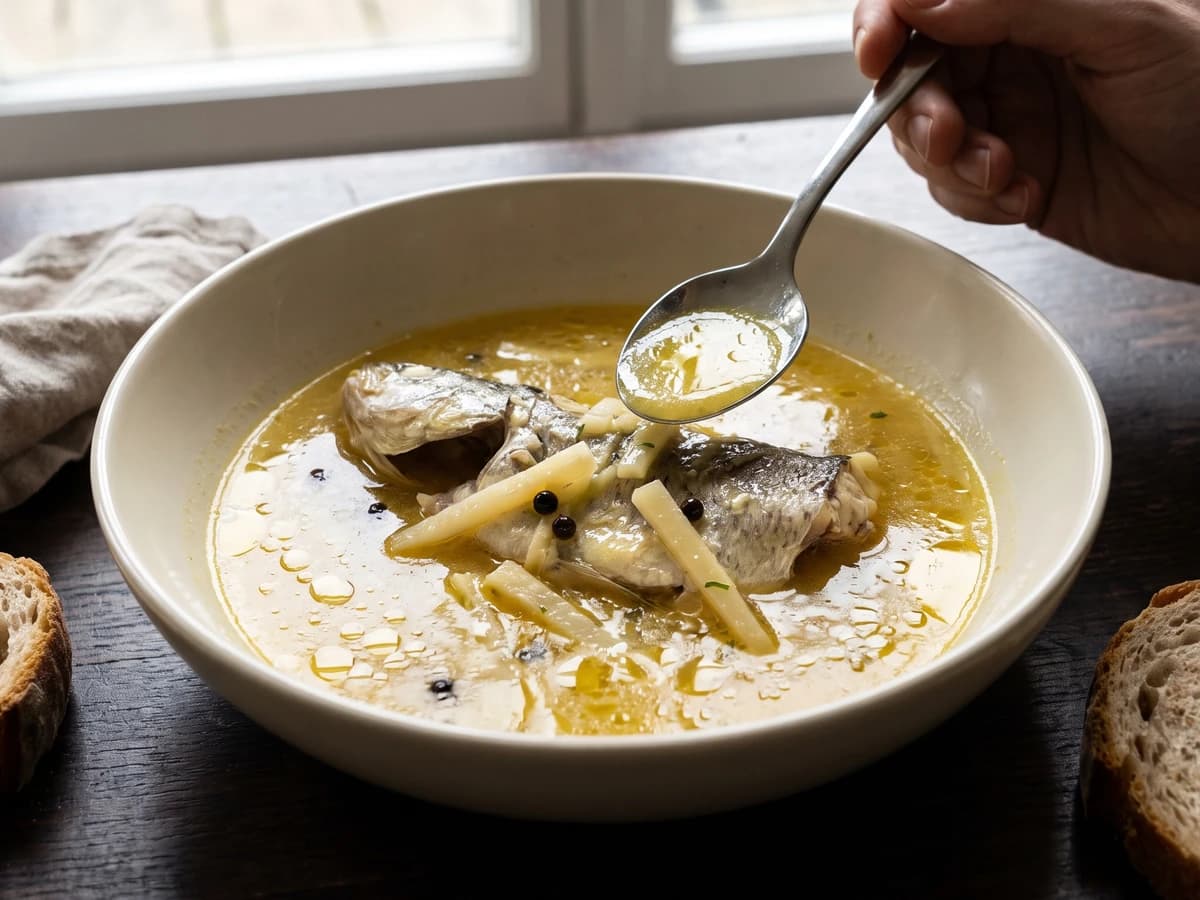
Waterzoi asks fresh, bone-in river fish to thicken its own buttery broth, with parsley root and pepper for company. No flour, no stockpot, just a brisk simmer watched closely.
Chef Juliette
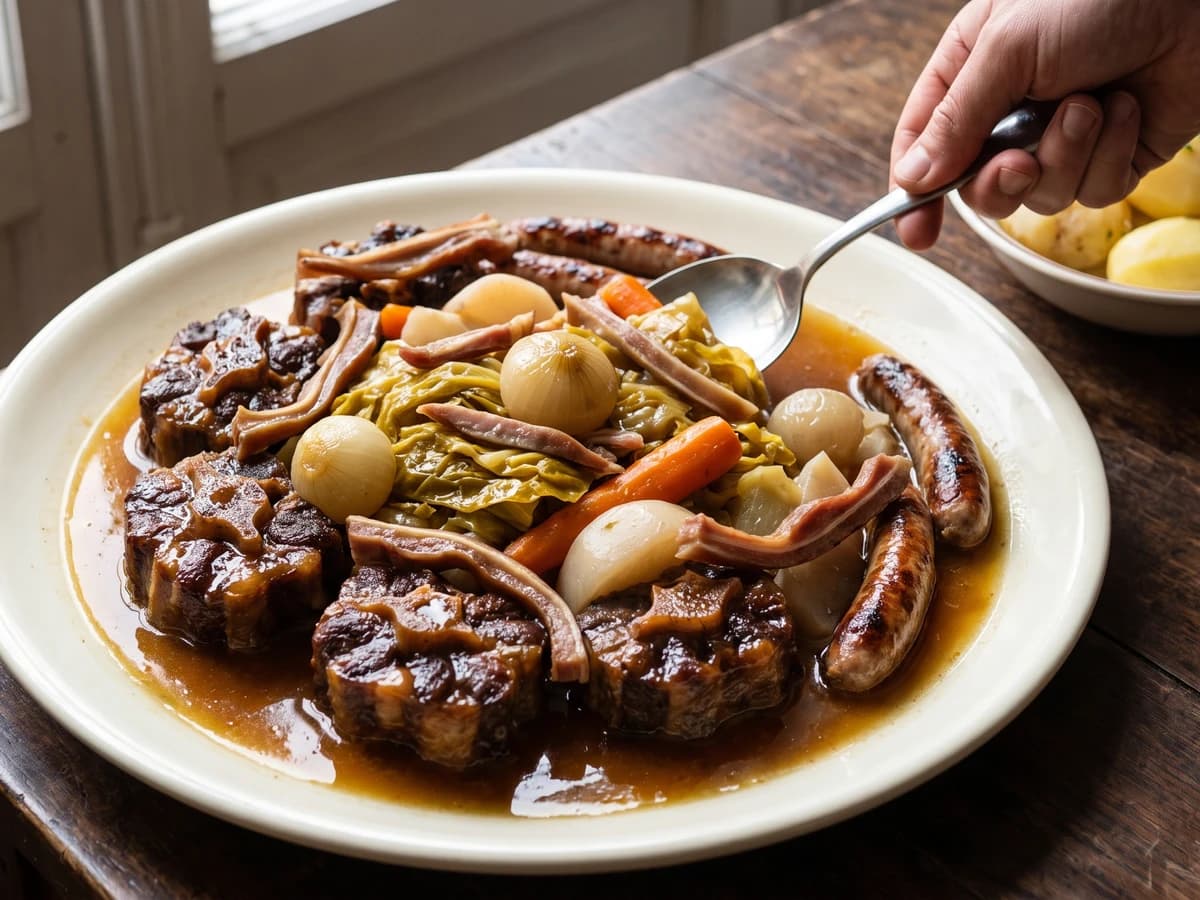
Queue de Bœuf en Hochepot gathers oxtail, pig's trotter and ear, cabbage, roots, and grilled chipolatas around a clear, gelatin-rich broth whose quiet simmer keeps every piece tender and distinct.
Chef Juliette
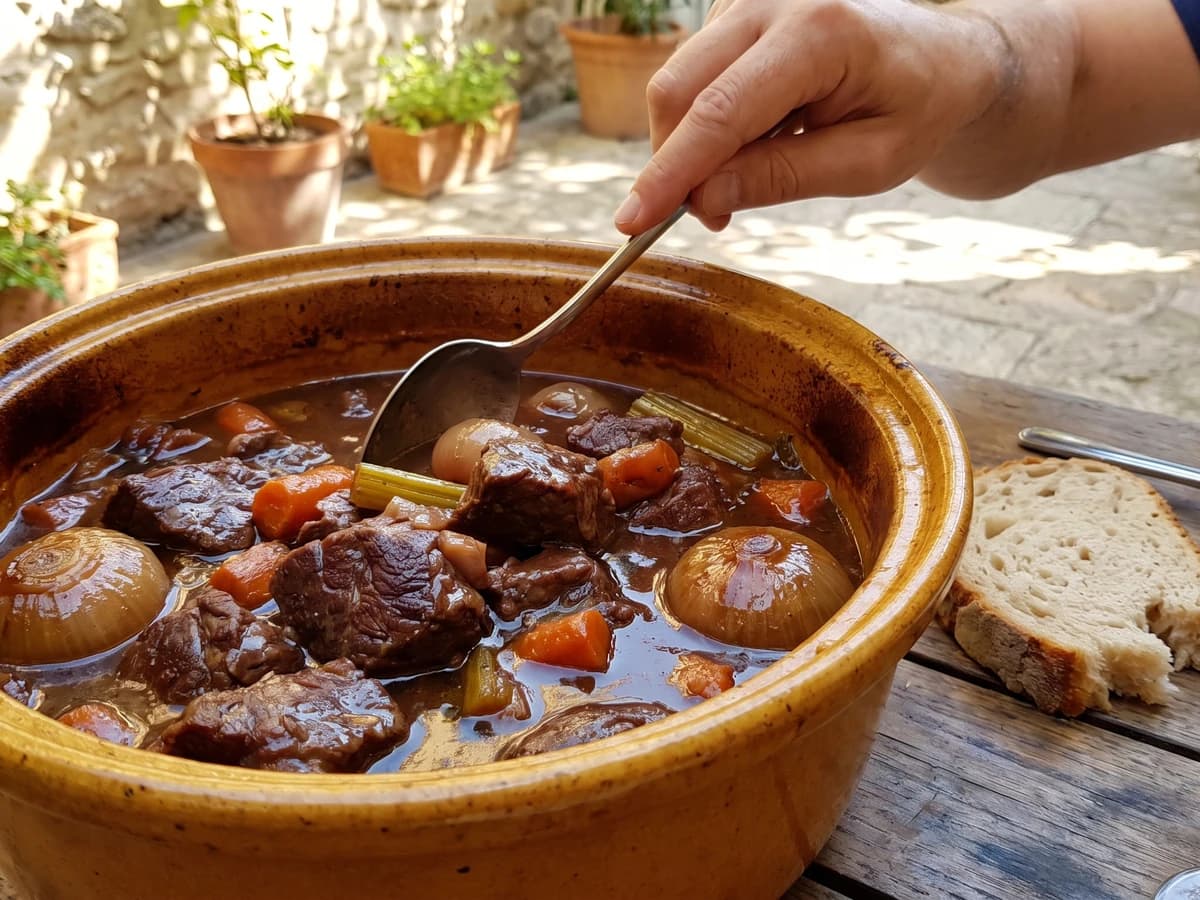
Beef shoulder larded with bacon, sharpened by red wine and vinegar, then sealed with garlic, vegetables, and dry lemon peel until the low oven turns it yielding and the gravy darkly glossy.