Chef Juliette
Bouillabaisse à la Marseillaise
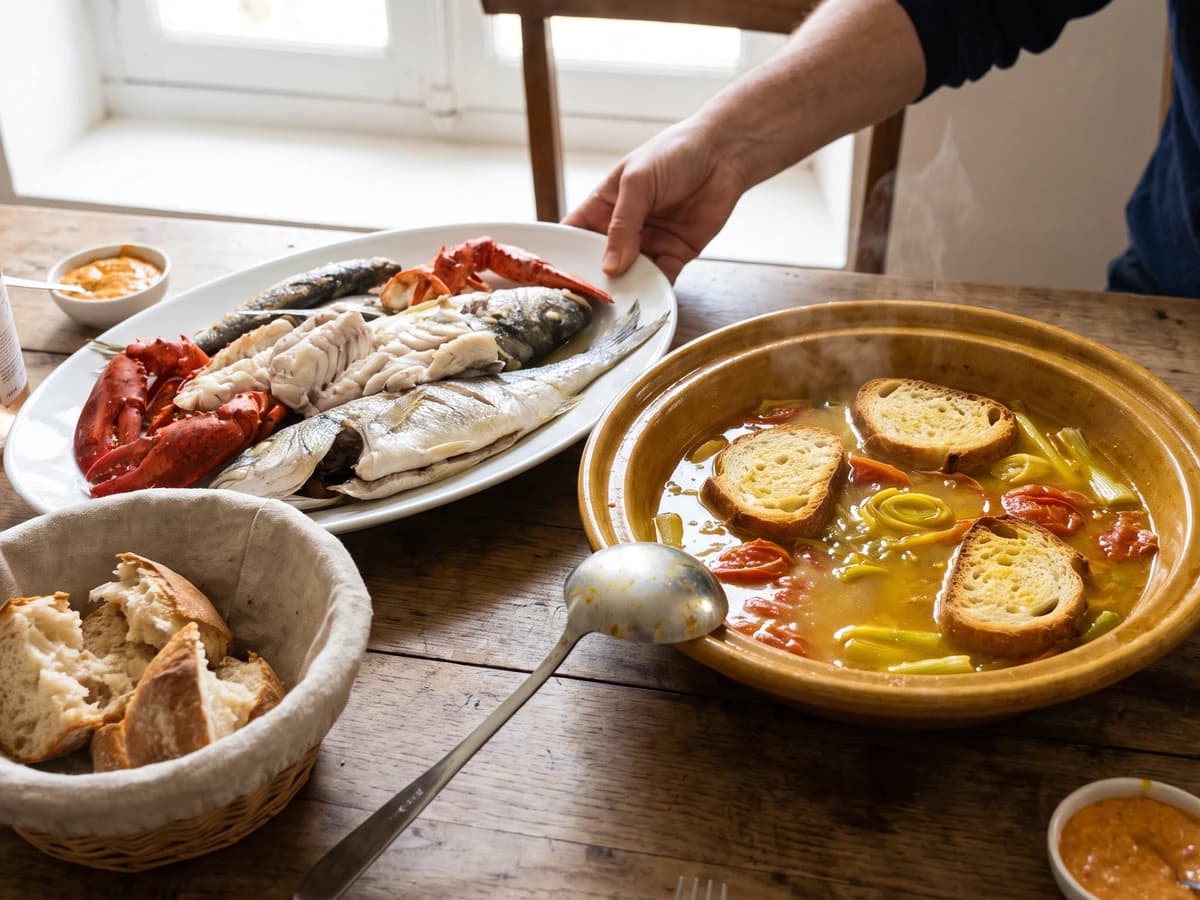
Marseille's great fish stew, saffron-gold and garlic-scented, proves that a hard boil can be the careful choice: it binds olive oil into broth before the whole pot meets bread.
A cooking platform built around craft, culture, and the stories behind what we eat.

Created by Chef Juliette
Based on No. 726, Potage Jubilee, otherwise Balvet, from Le Guide Culinaire (1907) by Auguste Escoffier
Sweet fresh peas meet the meaty clarity of Petite Marmite consommé, then cold butter draws them into one satin soup. Keep the three-to-one proportion and the old canon fits one saucepan beautifully.
Potage Jubilé, autrement Balvet (fresh-pea purée with Petite Marmite broth), teaches the discipline of dilution. Its one governing truth is proportion: three parts sweet pea purée to one part clear, meaty consommé. The broth should brace the peas and temper their sweetness without thinning away their character.
The original assumed a saucier, a stockpot never off the fire, and two finished preparations waiting at service. This version doubles the book's two-pint assembly to the requested home soup yield of about two quarts while preserving its exact three-to-one ratio. The source leaves the quantity of vegetable garnish to the cook, so three-quarters cup gives every bowl a generous spoonful without turning the potage into a stew. Separate hands and holding pans are brigade scaffolding and can go; the Purée de Pois Frais, Otherwise Saint-Germain (No. 648), the Marmite consommé, the brief boil, and the last-minute butter finish are the dish and stay. One cook, one stove, one evening.
When it is right, the soup pours in a thick green ribbon, with the clear savor of the Marmite beneath the peas and neat pieces of its vegetables appearing in every spoonful. The one step that matters most comes before the flame: measure three parts purée to one part consommé, because no amount of butter can restore a soup the broth has already thinned.
Potage Jubilé, also catalogued as Balvet, belongs to the named potages of the Parisian grand-kitchen table, where familiar preparations were given new identities through the stock and garnish joined to them. Purée de Pois Frais, Otherwise Saint-Germain (No. 648) is let down with the consommé and vegetables of La Petite Marmite, carrying a market-season pea purée and a bourgeois household broth into a formal first course. Balvet is not a separate regional soup, and despite the potage's satin body, cream plays no part; peas provide the body and butter supplies the final polish.
Quantity
6 cups (1.42 L / about 1.45 kg) Purée de Pois Frais, Otherwise Saint-Germain (No. 648)
finished according to its own entry
Quantity
2 cups (475 ml / about 475 g)
Quantity
3/4 cup (180 ml / about 120 g)
prepared as for Croûte au Pot
Quantity
1/2 cup (120 ml / 113 g)
cut into small cubes
| Ingredient | Quantity |
|---|---|
| Purée de Pois Frais, Otherwise Saint-Germainfinished according to its own entry | 6 cups (1.42 L / about 1.45 kg) Purée de Pois Frais, Otherwise Saint-Germain (No. 648) |
| consommé of La Petite Marmite | 2 cups (475 ml / about 475 g) |
| cooked vegetables from La Petite Marmiteprepared as for Croûte au Pot | 3/4 cup (180 ml / about 120 g) |
| cold unsalted buttercut into small cubes | 1/2 cup (120 ml / 113 g) |
Have the finished Purée de Pois Frais, Otherwise Saint-Germain (No. 648) and the consommé of La Petite Marmite measured before you begin. Drain the Marmite vegetables well and keep them covered nearby. Cut the butter into small cubes and return it to the refrigerator; it must remain cold until the final minute. Warm a soupière or the individual bowls with hot water, then dry them.
Spoon the Purée de Pois Frais, Otherwise Saint-Germain (No. 648) into a heavy saucepan. Whisk in the consommé of La Petite Marmite in three additions, making each addition smooth before adding the next. Set the pan over medium heat and stir across the bottom until the soup reaches one clean boil. Do not leave it there; prolonged boiling dulls the pea color and fresh flavor. If the purée catches on the bottom, stop stirring and pour the unburnt soup into a clean pan without scraping up the scorched layer.
Monter au beurre means finishing by whisking in cold butter away from direct heat. Remove the saucepan as soon as the boil appears, then whisk in the butter three or four cubes at a time, waiting until each addition disappears before adding more. The soup should become supple and lightly glossy, never greasy. Do not boil it again. If oily beads gather on the surface, place 1 tablespoon of cold water in a clean bowl, slowly whisk in 1 cup of the troubled soup, then whisk that restored base back into the pan off the heat. Ça se rattrape.
Put the vegetables from La Petite Marmite, prepared as for Croûte au Pot, into the warmed soupière. If they are refrigerator-cold, first cover them with one ladleful of soup for a minute. Pour in the remaining Potage Jubilé, stir once so the garnish distributes evenly, and serve at once while the surface still carries its butter sheen. À table!
1 serving (about 240g)
Culinary guides, cultural storytelling, and the editorial depth that makes cooking meaningful.
Discover Culinary ExplorerChef Juliette
Marseille's great fish stew, saffron-gold and garlic-scented, proves that a hard boil can be the careful choice: it binds olive oil into broth before the whole pot meets bread.
Chef Juliette
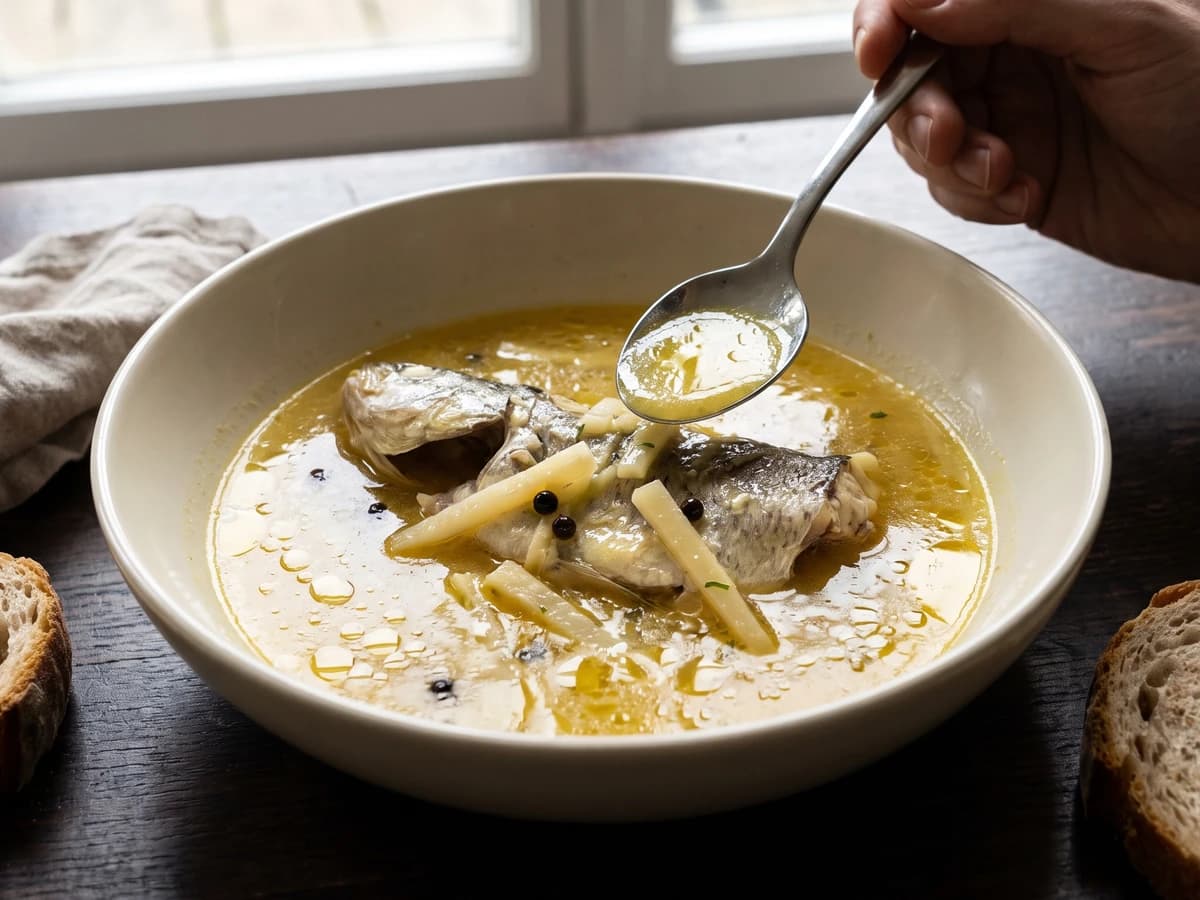
Waterzoi asks fresh, bone-in river fish to thicken its own buttery broth, with parsley root and pepper for company. No flour, no stockpot, just a brisk simmer watched closely.
Chef Juliette
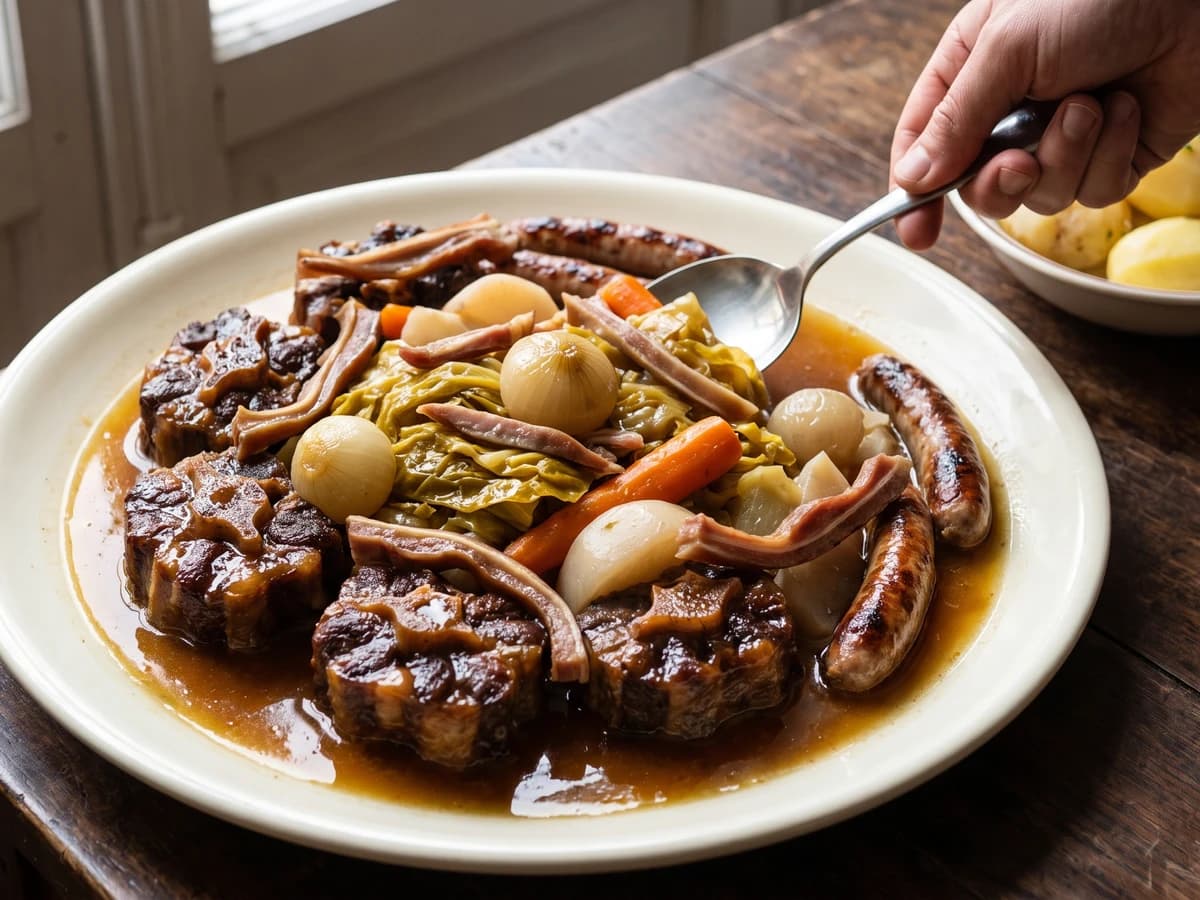
Queue de Bœuf en Hochepot gathers oxtail, pig's trotter and ear, cabbage, roots, and grilled chipolatas around a clear, gelatin-rich broth whose quiet simmer keeps every piece tender and distinct.
Chef Juliette
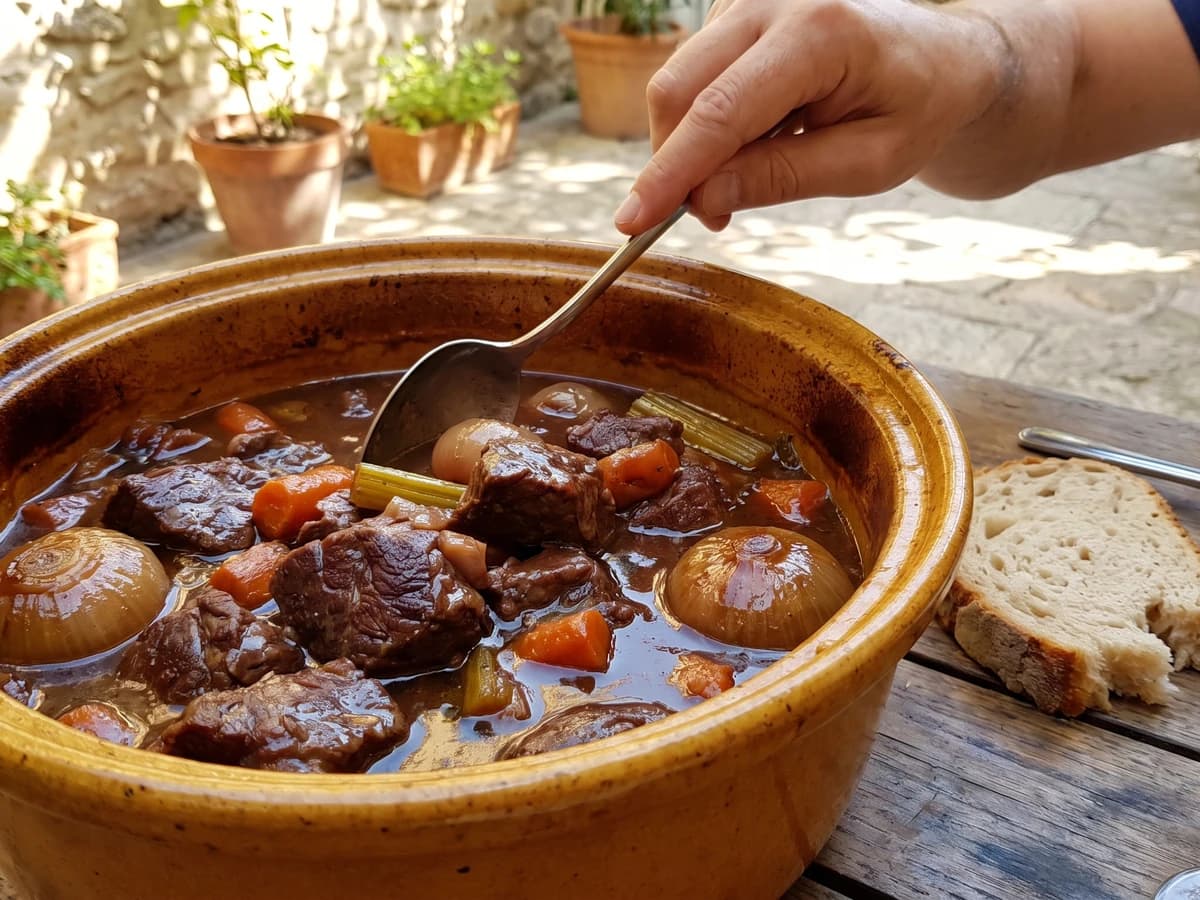
Beef shoulder larded with bacon, sharpened by red wine and vinegar, then sealed with garlic, vegetables, and dry lemon peel until the low oven turns it yielding and the gravy darkly glossy.