Chef Juliette
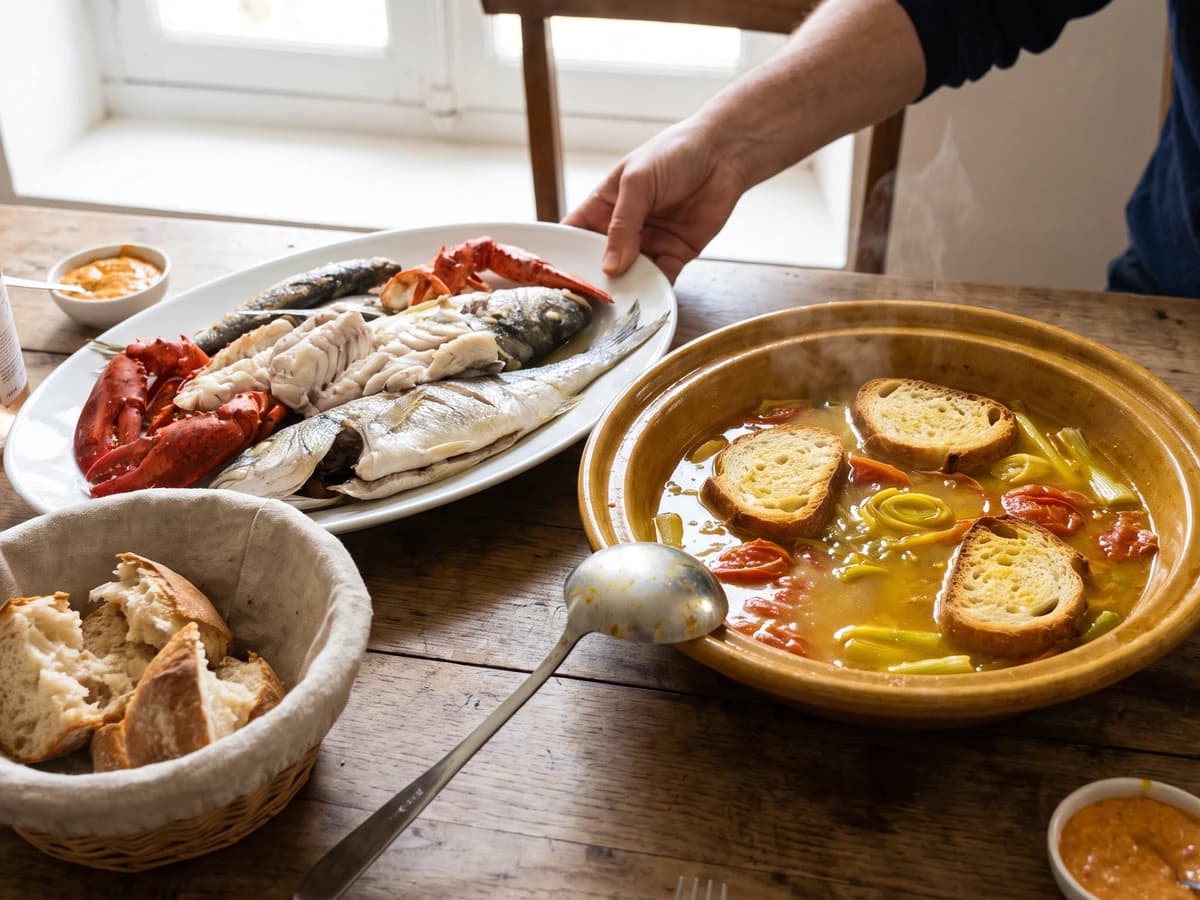
Bouillabaisse à la Marseillaise
Marseille's great fish stew, saffron-gold and garlic-scented, proves that a hard boil can be the careful choice: it binds olive oil into broth before the whole pot meets bread.
A cooking platform built around craft, culture, and the stories behind what we eat.
Created by Chef Juliette
Based on No. 723, Potage Favori, from Le Guide Culinaire (1907) by Auguste Escoffier
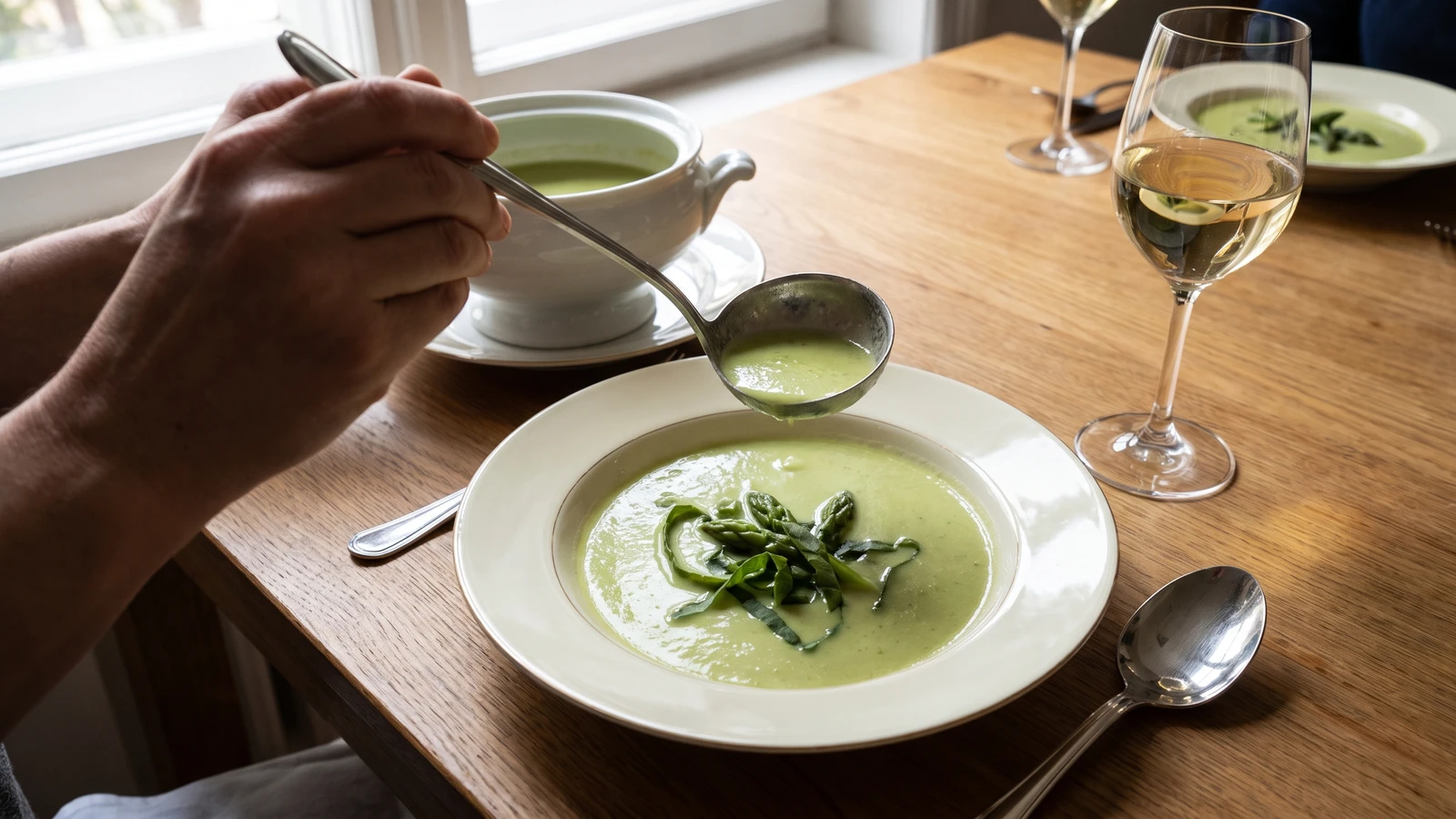
Three veloutés, green asparagus, lettuce, and poultry, meet in one ivory-green potage, enriched with a careful liaison and finished with fine sorrel ribbons and asparagus tips. Its lesson is proportion, then restraint at the heat.
Potage Favori (three-velouté spring soup) teaches proportion before richness. The one true thing to know before touching a pan is this: the asparagus must lead without swallowing the lettuce or poultry. Each velouté, a smooth soup built on a pale roux, must taste complete by itself before the three meet in their exact 2:1:1 proportion.
The original formula assumed a saucier with three finished veloutés at hand and white consommé never far from the fire. Your equivalent is one saucepan used three times, two measuring jugs, and good chicken stock. The book's two-pint base is scaled by half again so the consommé, liaison, and finishing butter bring it to about two quarts. Reusing one pan is brigade scaffolding that can go. Keeping the three bases distinct until their marriage is the dish and must stay.
The finished Potage Favori should be pale spring green, smooth enough to pour in an unbroken ribbon, with asparagus tips and fine sorrel giving freshness against the butter. The liaison, the egg-yolk-and-cream binding, supplies silk rather than heaviness. Once the liaison enters, the soup must never boil.
Potage Favori belongs to the French grande cuisine repertoire rather than to a single regional household table; its natural home was the Parisian grand kitchen, where named potages were assembled from finished bases at service. Its identity lies in the measured marriage of two parts green asparagus velouté with one part each of lettuce and poultry velouté, followed by a rich liaison and a fresh sorrel finish. Despite its spring color, it is not simply cream of asparagus: lettuce softens the vegetable edge, while poultry gives the soup its quiet backbone.
Quantity
1 pound (about 4 cups cut / 455 g)
trimmed, with 1½ tablespoons of the tips reserved
Quantity
8 ounces (about 8 loosely packed cups / 225 g)
ribs removed
Quantity
4 tablespoons (60 ml / 57 g)
Quantity
½ cup (120 ml / 60 g)
Quantity
5 cups (1.2 L / 1.2 kg)
preferably gelatin-rich, divided
Quantity
Up to 1 cup (240 ml / 240 g)
Quantity
3
Quantity
½ cup (120 ml / 120 g)
divided
Quantity
6 tablespoons (90 ml / 85 g)
diced
Quantity
1½ tablespoons (22.5 ml / about 10 g) Chiffonade (No. 215)
Quantity
1½ teaspoons (7.5 ml / 9 g), plus more as needed
divided
Quantity
¼ teaspoon (1.25 ml / 0.5 g), plus more as needed
| Ingredient | Quantity |
|---|---|
| tender green asparagustrimmed, with 1½ tablespoons of the tips reserved | 1 pound (about 4 cups cut / 455 g) |
| tender butter lettuce leavesribs removed | 8 ounces (about 8 loosely packed cups / 225 g) |
| unsalted butter for the three veloutés | 4 tablespoons (60 ml / 57 g) |
| all-purpose flour | ½ cup (120 ml / 60 g) |
| unsalted white chicken stockpreferably gelatin-rich, divided | 5 cups (1.2 L / 1.2 kg) |
| white chicken consommé | Up to 1 cup (240 ml / 240 g) |
| large egg yolks | 3 |
| heavy creamdivided | ½ cup (120 ml / 120 g) |
| cold unsalted butterdiced | 6 tablespoons (90 ml / 85 g) |
| Chiffonade, prepared with tender sorrel | 1½ tablespoons (22.5 ml / about 10 g) Chiffonade (No. 215) |
| fine sea saltdivided | 1½ teaspoons (7.5 ml / 9 g), plus more as needed |
| finely ground white pepper | ¼ teaspoon (1.25 ml / 0.5 g), plus more as needed |
Cut off enough tender asparagus heads to measure 1½ tablespoons and keep them whole or halved lengthwise if thick. Blanch them in salted water until bright green and barely tender, about 90 seconds, then cool them immediately in cold water and drain well. Cut the remaining asparagus into 1-inch pieces, keeping any tough peel or woody ends out of the soup.
Melt 2 tablespoons of the butter in a 3-quart saucepan over medium-low heat. Stir in ¼ cup of the flour and cook for 2 minutes without coloring, until the roux smells faintly of warm biscuits. Whisk in 2 cups of the chicken stock gradually, keeping the mixture smooth, then simmer gently for 10 minutes to cook out the flour. Add the cut asparagus and a pinch of salt, simmer only until tender and still green, about 7 minutes, then blend until completely smooth and pass through a fine sieve. Measure exactly 3 cups, thinning with a little reserved stock or reducing gently as needed, and hold it in a measuring jug.
Rinse and dry the saucepan. Melt 1 tablespoon butter over low heat, add the lettuce, and turn it until collapsed but not browned. Stir in 2 tablespoons flour and cook for 2 minutes, then whisk in 1 cup chicken stock. Simmer gently for 8 minutes, blend thoroughly, and pass through the cleaned sieve. Adjust with reserved stock or a brief reduction until you have exactly 1½ cups. The lettuce should taste tender and fresh, not like boiled greens.
Clean the saucepan once more. Melt the remaining 1 tablespoon butter, stir in the remaining 2 tablespoons flour, and cook the pale roux for 2 minutes without letting it brown. Whisk in 1½ cups chicken stock a little at a time and simmer at the barest tremble for 15 minutes, skimming if needed. Pass it through the sieve and measure exactly 1½ cups, correcting the volume with the remaining stock. It should lightly coat a spoon while tasting cleanly of poultry.
Combine 3 cups green asparagus velouté, 1½ cups lettuce velouté, and 1½ cups poultry velouté in the clean saucepan. Measure, don't guess. C'est la même grammaire, but the proportion is what gives this potage its particular voice. Whisk in ½ cup of the white chicken consommé, then add more only until the soup pours from a spoon in a smooth, lightly coating ribbon. The consommé corrects consistency and strengthens the foundation; it must not wash the vegetables away.
Heat the married veloutés slowly, stirring along the floor of the pan, until the surface barely trembles at the edges. Do not let it boil. Pass the hot soup through the fine sieve into the cleaned saucepan, pressing gently but not forcing fibrous pulp through the mesh. This final passing is part of the dish, not ceremony; three textures have become one, and the soup should now feel like satin on the spoon.
Whisk the egg yolks with 6 tablespoons of the cream in a bowl, keeping the remaining 2 tablespoons cold. Gradually whisk in about 1 cup of the hot soup, then return the tempered liaison to the saucepan over the lowest heat. Stir constantly until it gains a little body and reaches 175 to 180°F (79 to 82°C), never a boil. If tiny curds appear, pull the pan off the heat immediately, whisk in the reserved cold cream, blend for 15 seconds, and pass it through the clean sieve. Ça se rattrape, provided you catch it before a full boil. If the liaison stays smooth, stir in the reserved cream normally. Remove the pan from the heat and whisk in the cold diced butter a few pieces at a time until the surface gleams. If butter pools at the rim, set the pan on a cold damp towel and whisk until the soup comes back together.
Taste for salt and white pepper, keeping both restrained enough for the asparagus and sorrel to remain clear. Divide the Potage Favori among warmed shallow soup bowls. Distribute the Chiffonade (No. 215) and blanched asparagus heads across the servings, using 1½ tablespoons of each over the whole pot. Serve at once while the surface is glossy and the liaison remains supple. À table!
1 serving (about 240g)
Culinary guides, cultural storytelling, and the editorial depth that makes cooking meaningful.
Discover Culinary ExplorerChef Juliette
Marseille's great fish stew, saffron-gold and garlic-scented, proves that a hard boil can be the careful choice: it binds olive oil into broth before the whole pot meets bread.
Chef Juliette
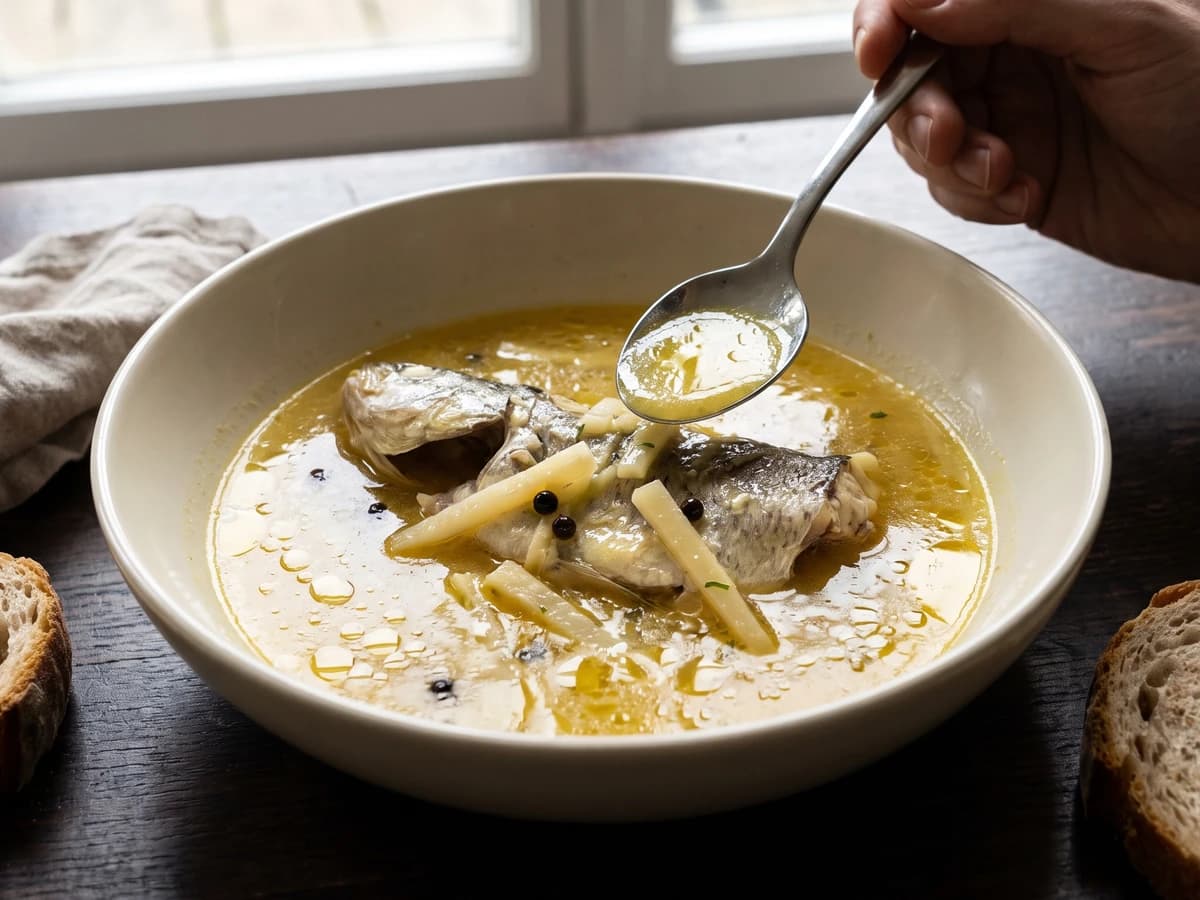
Waterzoi asks fresh, bone-in river fish to thicken its own buttery broth, with parsley root and pepper for company. No flour, no stockpot, just a brisk simmer watched closely.
Chef Juliette
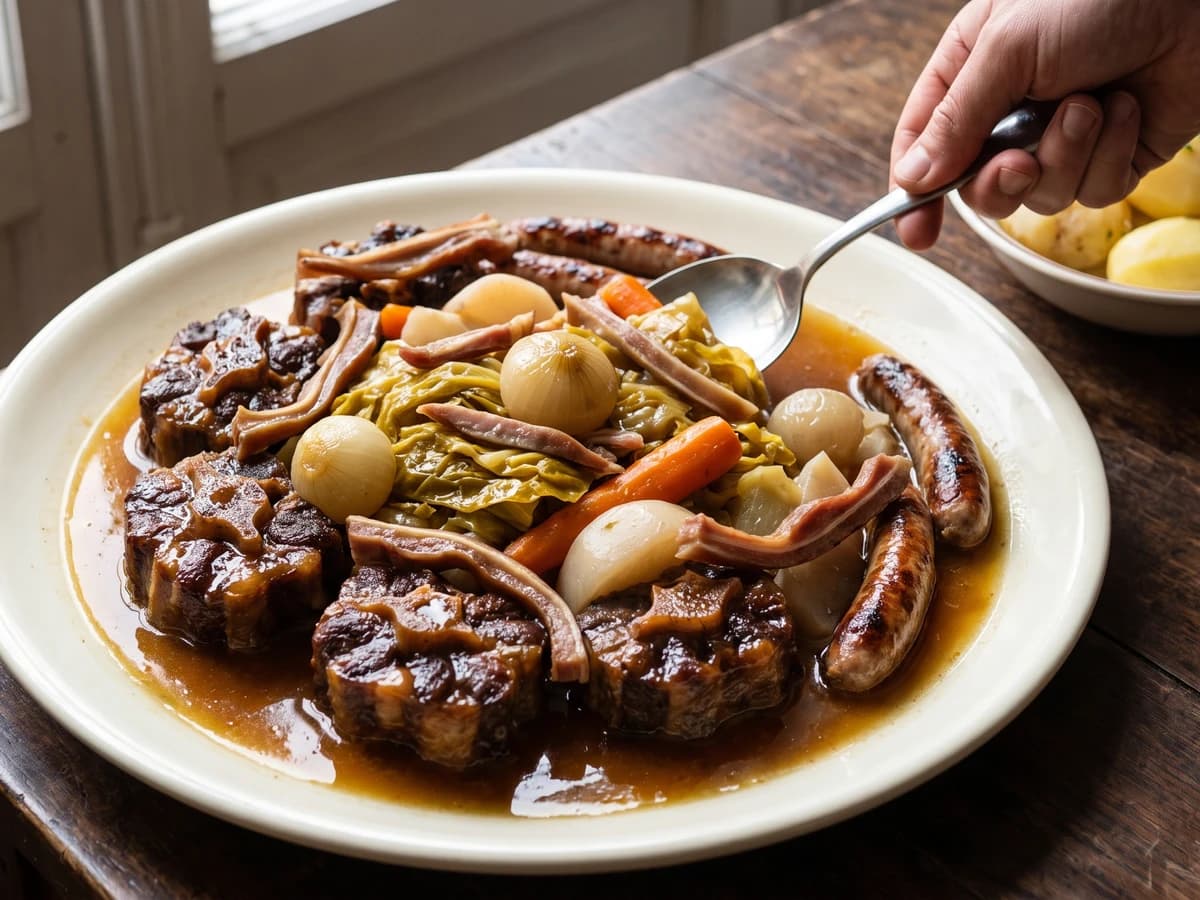
Queue de Bœuf en Hochepot gathers oxtail, pig's trotter and ear, cabbage, roots, and grilled chipolatas around a clear, gelatin-rich broth whose quiet simmer keeps every piece tender and distinct.
Chef Juliette
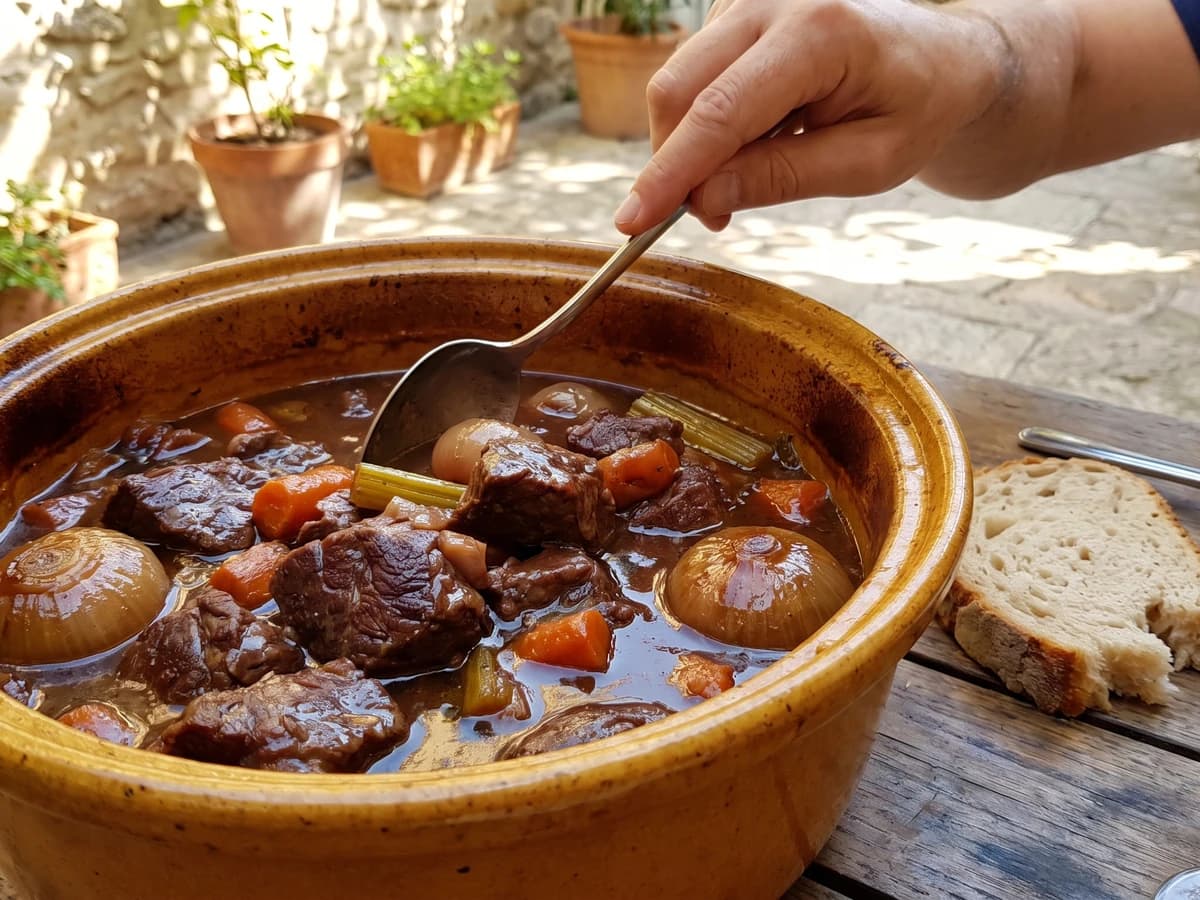
Beef shoulder larded with bacon, sharpened by red wine and vinegar, then sealed with garlic, vegetables, and dry lemon peel until the low oven turns it yielding and the gravy darkly glossy.