Chef Juliette
Bouillabaisse à la Marseillaise
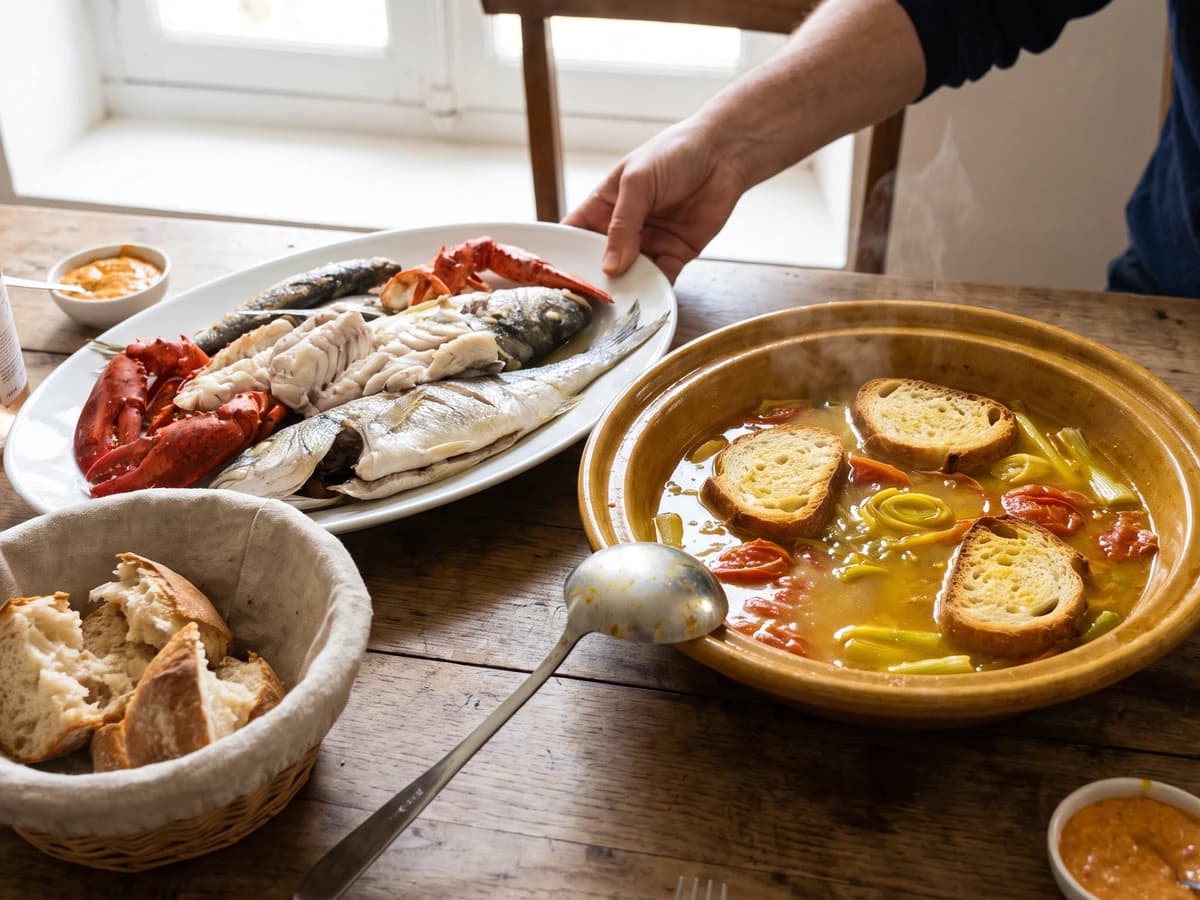
Marseille's great fish stew, saffron-gold and garlic-scented, proves that a hard boil can be the careful choice: it binds olive oil into broth before the whole pot meets bread.
A cooking platform built around craft, culture, and the stories behind what we eat.
Created by Chef Juliette
Based on No. 673, Velouté Carmélite, from Le Guide Culinaire (1907) by Auguste Escoffier
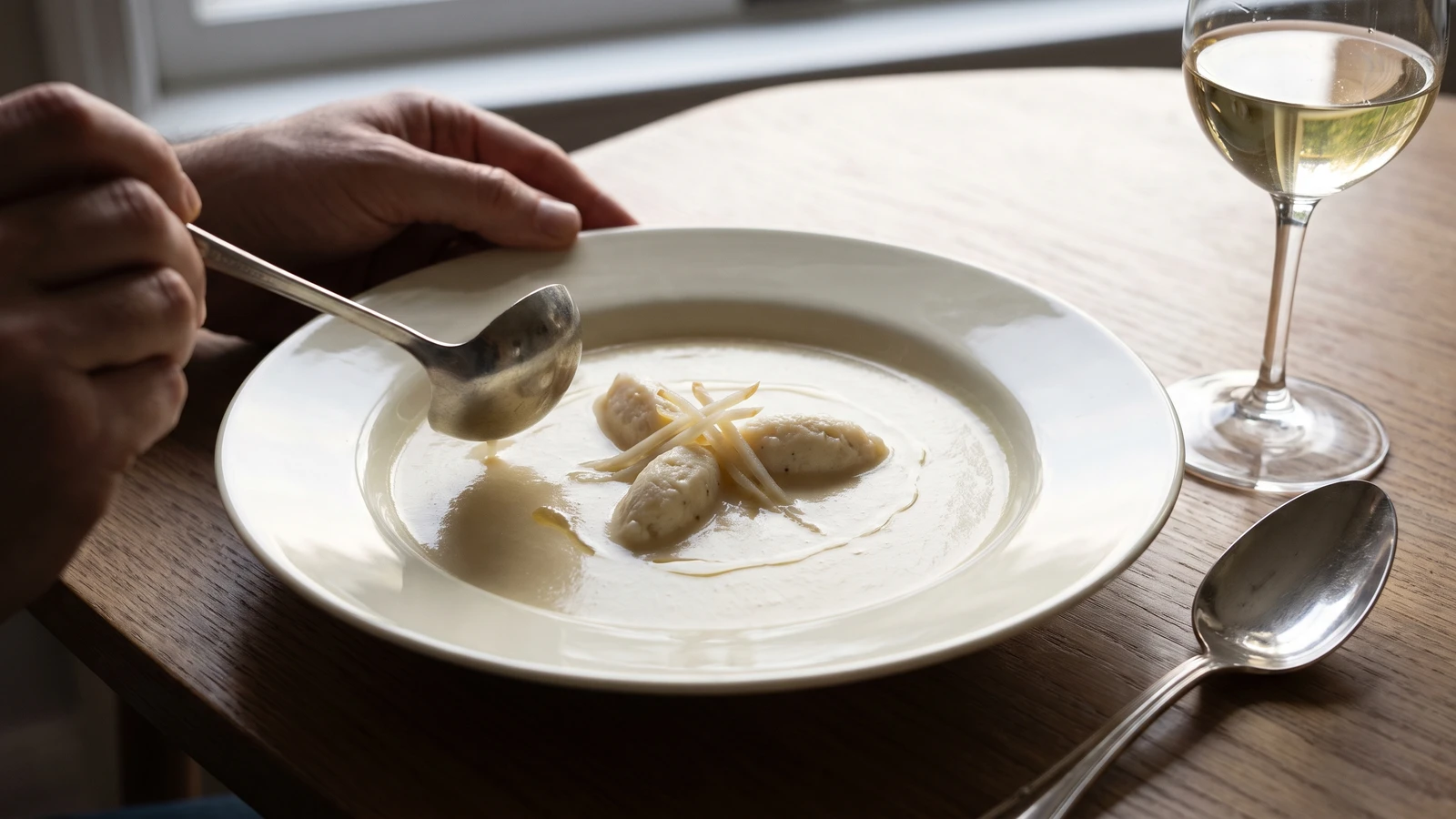
Butter-stewed sole and whiting vanish into a pale fish velouté, then a yolk-and-cream liaison gives it satin, while sole julienne and tiny smelt quenelles restore texture to every spoonful.
Velouté Carmélite (a silken fish soup bound with yolks and cream) teaches the difference between thickness and refinement. The fish is not left as meat in broth. It is stewed softly in butter and lemon, worked into fish velouté, then passed through a sieve until the soup feels like satin. One true thing before you touch a pan: once the liaison enters, the Carmélite must never boil.
The original kitchen assumed a saucier at the pot, fish velouté and consommé never far from the fire, and a broad tammy with hands available to work the soup through it. At home, a blender does the pounding and a fine-mesh sieve does the tammy’s work. This batch carries the source proportions into about two quarts, enough for eight first-course bowls. The mortar and extra hands were brigade scaffolding; the gentle butter stew, fine sieving, liaison, sole julienne, and smelt quenelles are the dish, so they stay. One cook, one stove, one evening.
When it is right, the Carmélite is pale ivory and quietly glossy, tasting first of clean fish, then butter, with lemon present only as brightness. Temper the liaison slowly and keep the heat gentle. If it begins to grain, ça se rattrape, and the rescue is waiting in the method.
Velouté Carmélite belongs to the codified Parisian repertoire of named potages, where a soup was distinguished by its foundation, liaison, and exact garnish rather than by a separate regional pantry. Its combination of sole, whiting, and smelt reflects the formal fish kitchen, while the Carmélite title is a repertoire name rather than proof of invention in a Carmelite convent. As the soup moved to bourgeois dinner tables, the fine household sieve replaced the kitchen tammy, but its defining garnish and yolk-and-cream finish remained.
Quantity
6 cups (1.42 L / approximately 1.5 kg)
Quantity
8 oz (227 g)
cut into 1-inch (2.5 cm) pieces
Quantity
8 oz (227 g)
cut into 1-inch (2.5 cm) pieces
Quantity
6 tablespoons (90 ml / 85 g)
Quantity
2 tablespoons (30 ml / 30 g)
Quantity
up to 1½ cups (355 ml / 355 g)
Quantity
1 oz (28 g)
reserved for the poached julienne
Quantity
1 cup (240 ml / 225 g)
kept very cold
Quantity
1½ quarts (1.42 L / 1.42 kg)
Quantity
1¼ teaspoons (6 ml / 7 g)
Quantity
4
Quantity
1 cup (240 ml / 240 g)
Quantity
4 tablespoons (60 ml / 57 g)
cut into small cubes
Quantity
to taste
Quantity
to taste
| Ingredient | Quantity |
|---|---|
| prepared fish velouté | 6 cups (1.42 L / approximately 1.5 kg) |
| skinless sole filletscut into 1-inch (2.5 cm) pieces | 8 oz (227 g) |
| skinless whiting filletscut into 1-inch (2.5 cm) pieces | 8 oz (227 g) |
| unsalted butter | 6 tablespoons (90 ml / 85 g) |
| fresh lemon juice | 2 tablespoons (30 ml / 30 g) |
| prepared fish consommé | up to 1½ cups (355 ml / 355 g) |
| skinless sole filletreserved for the poached julienne | 1 oz (28 g) |
| prepared smelt forcemeatkept very cold | 1 cup (240 ml / 225 g) |
| water | 1½ quarts (1.42 L / 1.42 kg) |
| fine sea salt for poaching | 1¼ teaspoons (6 ml / 7 g) |
| large egg yolks | 4 |
| heavy cream | 1 cup (240 ml / 240 g) |
| cold unsalted buttercut into small cubes | 4 tablespoons (60 ml / 57 g) |
| fine sea salt | to taste |
| ground white pepper | to taste |
Combine the water and poaching salt in a small saucepan and bring it to 175°F (80°C), where the surface barely quivers. Add the 1 oz (28 g) sole fillet and poach gently for 2 to 3 minutes, until opaque and just firm. Lift it out and let it cool briefly, then cut it julienne-fashion, into fine match-shaped rods. Measure about 2 tablespoons (30 ml / 28 g) and keep them covered.
Keep the poaching liquid between 170°F and 180°F (77°C and 82°C). With two teaspoons dipped in cold water, shape the cold smelt forcemeat into 24 little ovals, each holding about 2 teaspoons. Lower them into the liquid in batches and poach for 4 to 5 minutes, turning once, until lightly springy and cooked to 160°F (71°C) at the centre. Do not let the water boil, which tightens the forcemeat. If it does, pull the pan off the heat at once; the quenelles may be less tender, but they are not lost. Drain and cover them.
Étuver means to stew gently in butter and the ingredient’s own moisture. Melt the 6 tablespoons (90 ml / 85 g) butter in a wide covered pan over low heat. Add the 8 oz (227 g) each of sole and whiting with the lemon juice and a small pinch of salt, cover, and cook for 7 to 9 minutes, turning once, until the fish is opaque and flakes under light pressure. Nothing should brown. If the butter begins to colour or the pan sounds like frying, add a tablespoon of fish consommé and lower the heat. Keep every drop of the buttery cooking liquor.
Transfer the cooked fish and all its liquor to a blender. Add about 2 cups (475 ml) of the prepared fish velouté and purée until completely smooth, venting the lid safely if the mixture is warm. Whisk this purée into the remaining fish velouté, then passer au tamis, pass the entire soup through a fine-mesh sieve into a clean saucepan. Press patiently with a flexible spatula. If the mixture is too tight to pass, loosen it with fish consommé one spoonful at a time. The blender replaces the mortar, but not the sieve; removing the last fibres is what gives the Carmélite its finish.
Warm the sieved Carmélite over medium-low heat, whisking along the bottom so the velouté does not catch. Add enough fish consommé to make a soup that coats the spoon lightly yet pours without dragging, reserving at least 2 tablespoons for adjustment or rescue. If it becomes too thin, reduce it gently now, before the liaison enters. Bring it just below a simmer, then lower the heat.
Whisk the egg yolks and heavy cream together in a bowl. Add 2 cups (475 ml) of the hot soup in a thin stream while whisking constantly, then return the tempered liaison, the yolk-and-cream binding, to the saucepan. Stir over the lowest heat until the Carmélite reaches about 165°F (74°C), lightly naps the back of a spoon, and leaves a clean line when you draw a finger through it. Never boil it. If fine grains appear, take the pan off the heat immediately, whisk in the reserved cold consommé, blend briefly, and pass it through the sieve once more. Ça se rattrape.
Take the pan off the heat. Monter au beurre means to finish by whisking in cold butter, and this last enrichment gives the soup its quiet gloss. Add the 4 tablespoons (60 ml / 57 g) butter a few cubes at a time, whisking until each addition disappears. Season with fine salt and white pepper, keeping both restrained so the fish remains clear. Divide the warm quenelles among heated soup plates, three per serving, add a few rods of sole julienne, and ladle the Carmélite around them. Serve at once. À table!
1 serving (about 240g)
Culinary guides, cultural storytelling, and the editorial depth that makes cooking meaningful.
Discover Culinary ExplorerChef Juliette
Marseille's great fish stew, saffron-gold and garlic-scented, proves that a hard boil can be the careful choice: it binds olive oil into broth before the whole pot meets bread.
Chef Juliette
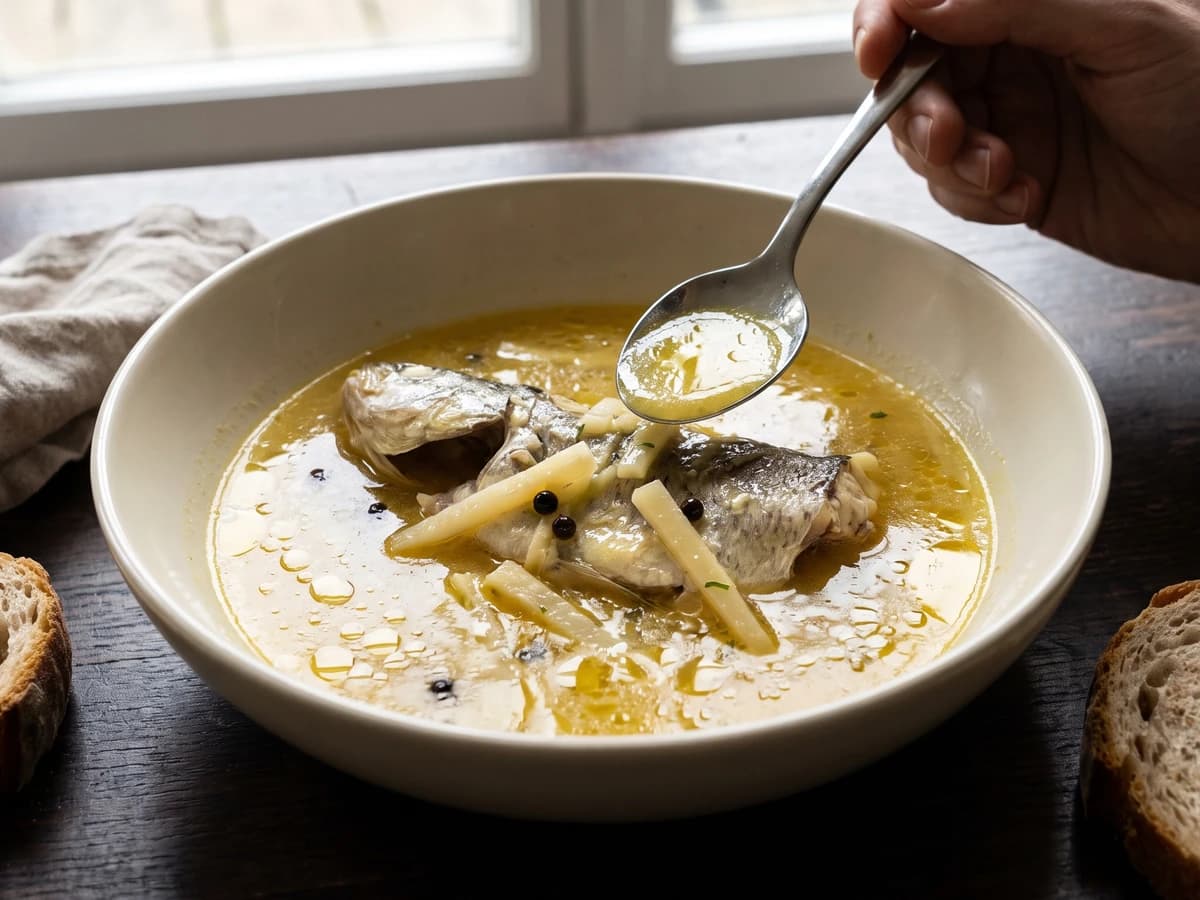
Waterzoi asks fresh, bone-in river fish to thicken its own buttery broth, with parsley root and pepper for company. No flour, no stockpot, just a brisk simmer watched closely.
Chef Juliette
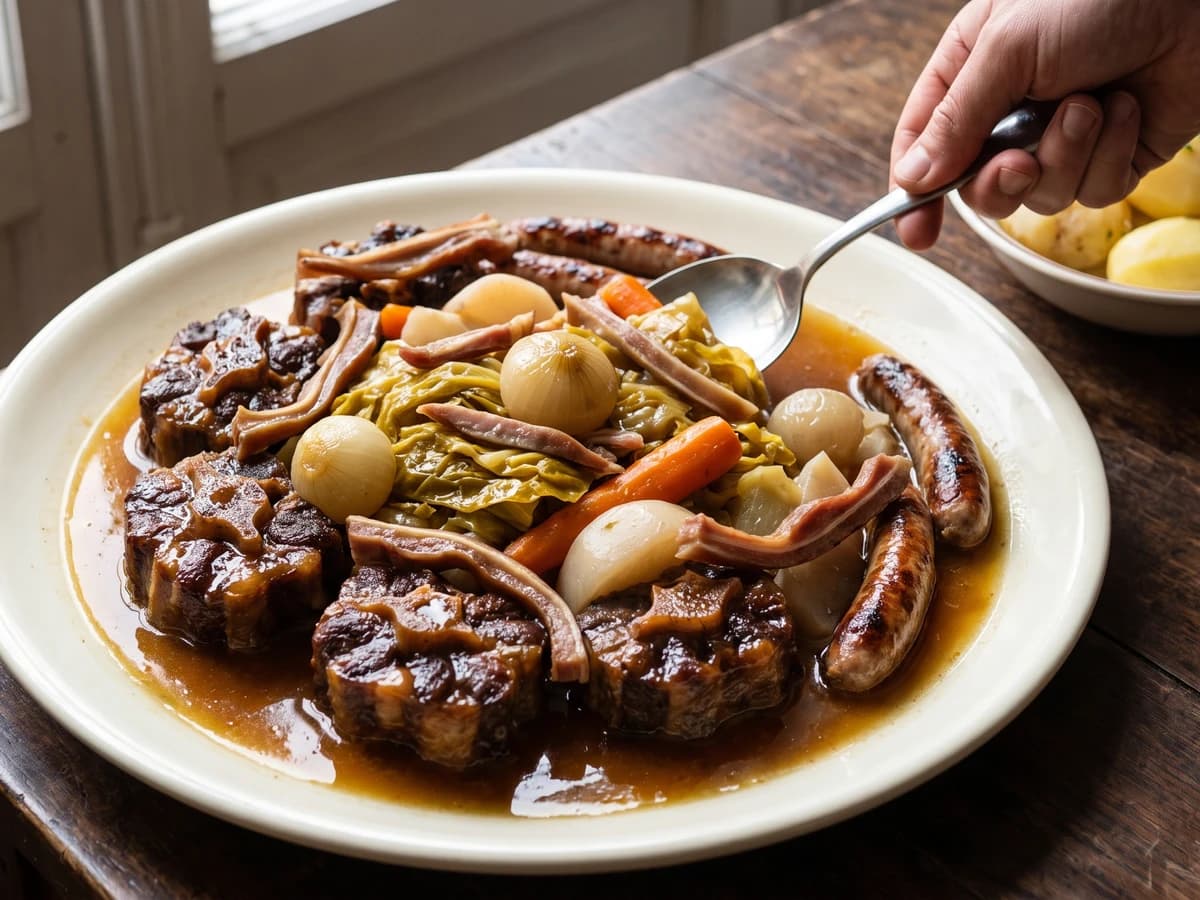
Queue de Bœuf en Hochepot gathers oxtail, pig's trotter and ear, cabbage, roots, and grilled chipolatas around a clear, gelatin-rich broth whose quiet simmer keeps every piece tender and distinct.
Chef Juliette
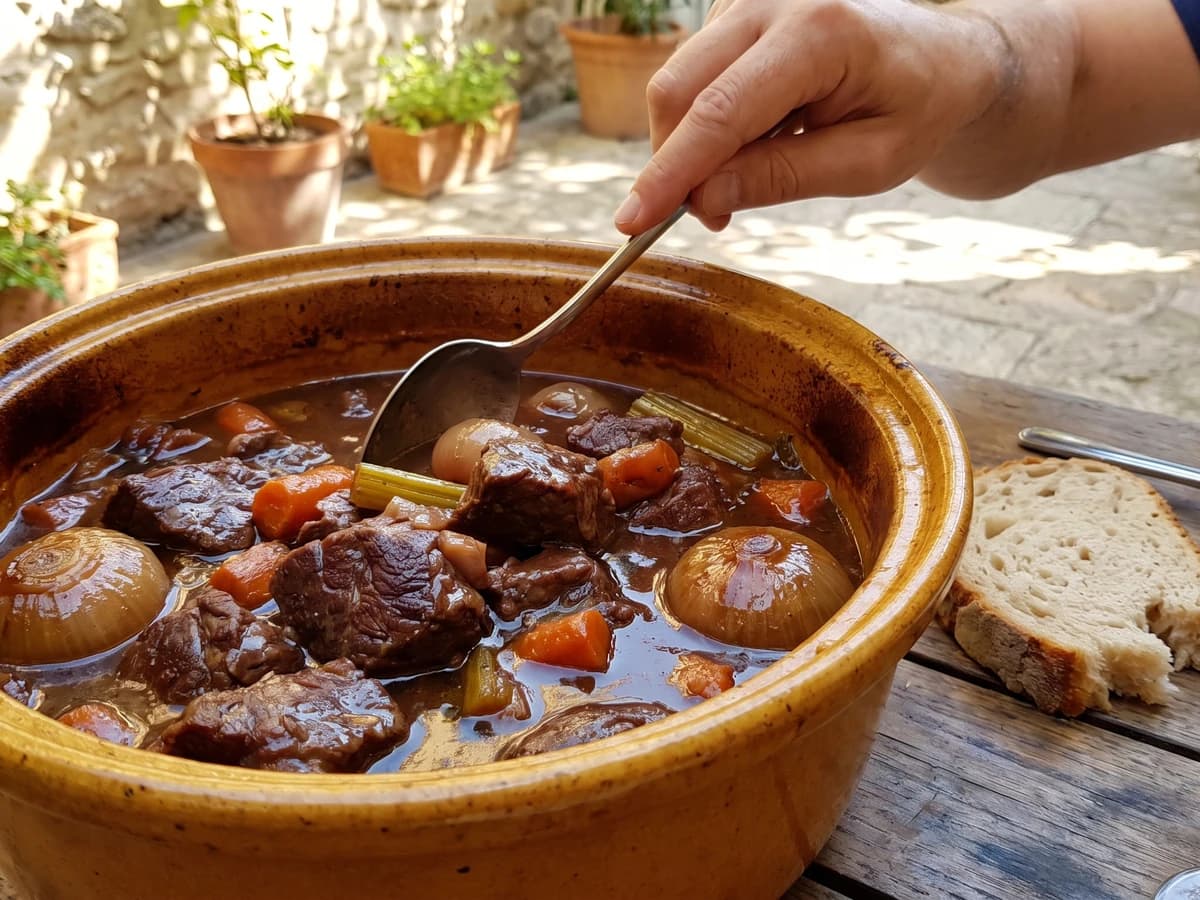
Beef shoulder larded with bacon, sharpened by red wine and vinegar, then sealed with garlic, vegetables, and dry lemon peel until the low oven turns it yielding and the gravy darkly glossy.