Chef Juliette
Bouillabaisse à la Marseillaise
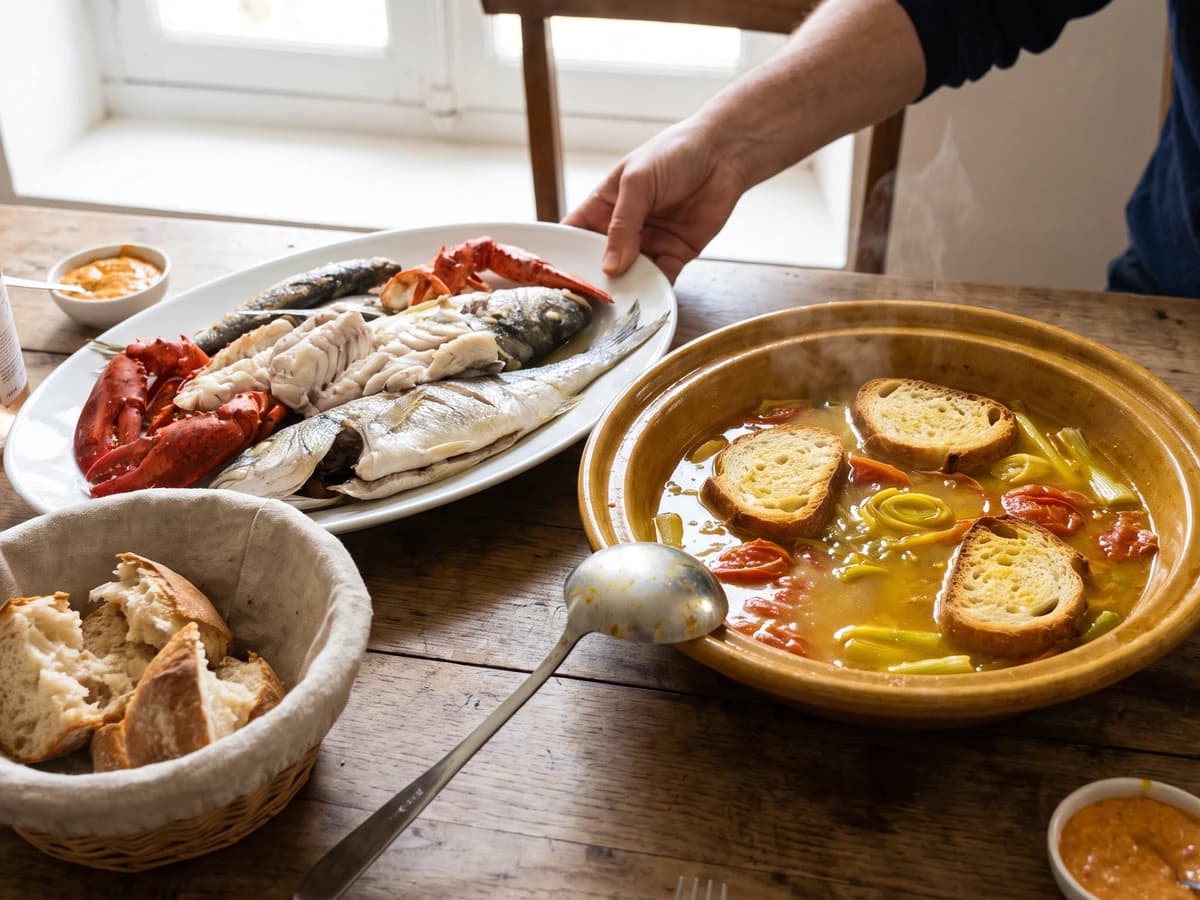
Marseille's great fish stew, saffron-gold and garlic-scented, proves that a hard boil can be the careful choice: it binds olive oil into broth before the whole pot meets bread.
A cooking platform built around craft, culture, and the stories behind what we eat.
Created by Chef Juliette
Based on No. 670, Coulis de Volaille, otherwise à la Reine, from Le Guide Culinaire (1907) by Auguste Escoffier
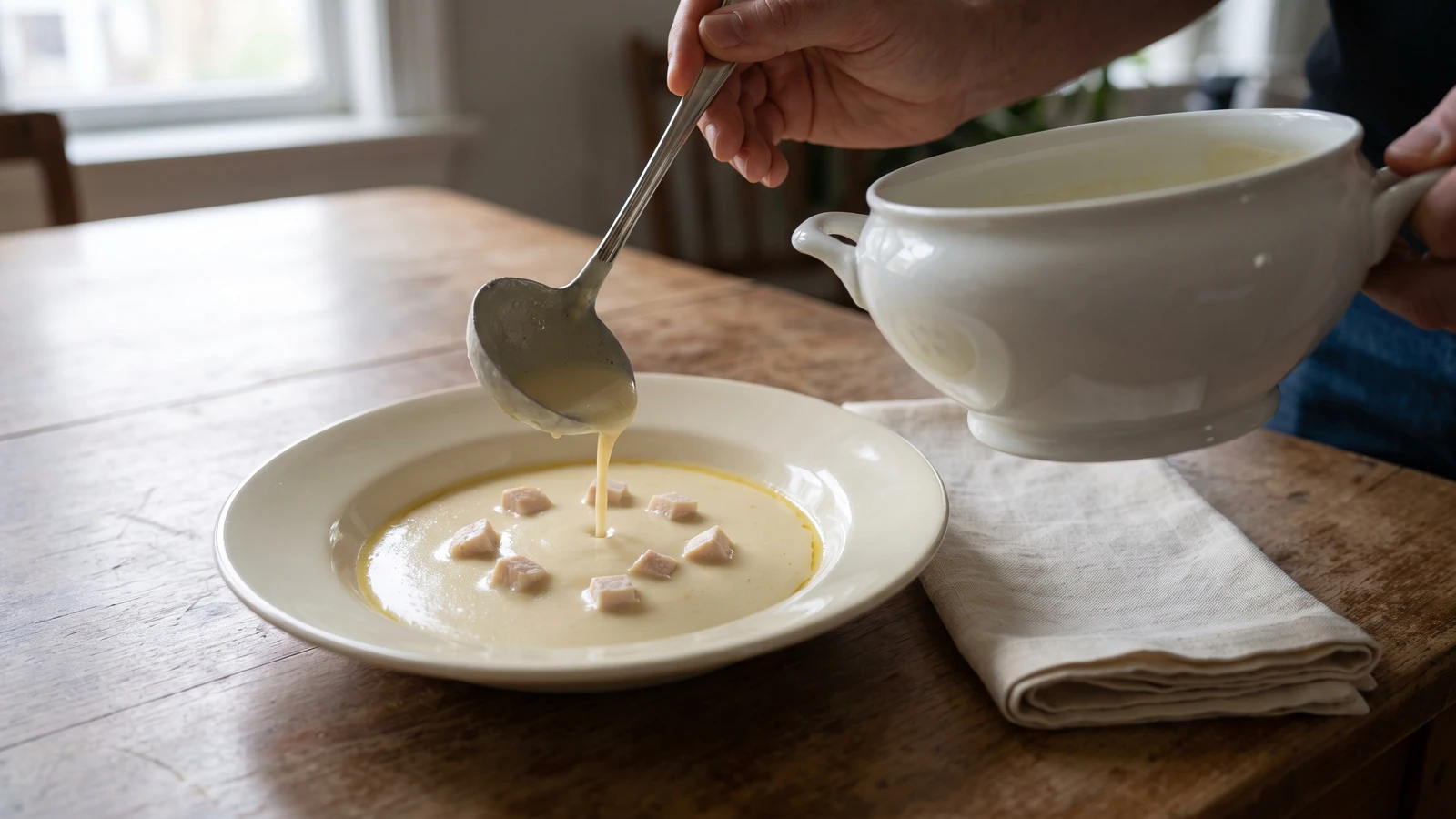
Coulis de Volaille, otherwise à la Reine, teaches the gentlest liaison: chicken and rice passed to velvet, enriched with yolks, cream, and butter, then crowned with neat dice of poached breast.
Coulis de Volaille, otherwise à la Reine (velvet chicken coulis), teaches the gentlest binding in the classical soup pot: once the liaison (egg-yolk binding) enters, the soup must never boil. That is the one true thing to know before touching the pan. Everything before it builds body; that final restraint preserves the velvet.
The grand kitchen assumed a saucier at the pot, white consommé never off the fire, a mortar for pounding the fowl, and a tammy broad enough to handle service. A salamander has no part in this dish. At home, a prepared batch of consommé, a countertop blender, and a fine-mesh sieve do the work for one cook, one stove, one evening. The mortar and service-sized handling were brigade scaffolding and can go. The pounding, two careful strainings, and final liaison are the dish and must stay. The source formula's three-pound bird already settles neatly into a dinner-party pot of about two quarts, so its proportions are kept intact.
When à la Reine is right, it pours in an ivory ribbon, tastes deeply of chicken without heaviness, and carries a quiet gleam from the butter. Keep the pot gentle after tempering the yolks, then take it completely off the heat before the butter goes in. That final minute decides everything.
Coulis de volaille à la Reine belongs to the Parisian classical table, where pale poultry soups traveled from courtly service into grand kitchens and bourgeois dining rooms. In classical kitchen language, coulis means a preparation pounded and forced through cloth or a sieve, not merely the thin vegetable sauce the word often names now; à la Reine marks the delicate family of poultry soups enriched with rice, cream, and yolks. The preparation may also be written as a velouté or a cream, but this formula is specifically the pounded and sieved coulis, with the breast fillets reserved for garnish.
Quantity
1, about 3 lb 2 oz (1.45 kg)
giblets removed and excess fat trimmed
Quantity
6 cups (1.4 L / 1.4 kg), divided, plus up to 2 cups (475 ml / 475 g) as needed
Quantity
⅓ cup (80 ml / 57 g), previously prepared according to Blanchings (No. 273)
Quantity
3
Quantity
⅓ cup plus 1 tablespoon (95 ml / 95 g)
Quantity
6 tablespoons (90 ml / 85 g)
chilled and diced
| Ingredient | Quantity |
|---|---|
| small whole chickengiblets removed and excess fat trimmed | 1, about 3 lb 2 oz (1.45 kg) |
| well-seasoned white chicken consommé | 6 cups (1.4 L / 1.4 kg), divided, plus up to 2 cups (475 ml / 475 g) as needed |
| raw white rice | ⅓ cup (80 ml / 57 g), previously prepared according to Blanchings (No. 273) |
| large egg yolks | 3 |
| heavy cream | ⅓ cup plus 1 tablespoon (95 ml / 95 g) |
| unsalted butterchilled and diced | 6 tablespoons (90 ml / 85 g) |
Place the chicken breast-side up in a snug, heavy pot and scatter in the rice already prepared according to Blanchings (No. 273). Add 4 cups (950 ml) of the white consommé. Bring it gradually to a bare simmer, skimming any foam that rises, then cover with the lid slightly ajar. Poach for 55 to 70 minutes, turning the chicken once and stirring gently beneath it so the rice cannot catch. The liquid should barely tremble, never roll. The chicken is ready when the thigh joint moves freely and the thickest part reaches at least 165°F (74°C); the rice should be exceedingly soft, well beyond the texture wanted for the table.
Lift the chicken onto a board and let it stand only until it can be handled. Raise the two breast fillets cleanly and reserve them, covered, for the garnish. Remove the remaining meat from the legs, thighs, wings, and back, discarding skin, bones, cartilage, and tough sinew. Skim excess fat from the poaching liquid, but keep every drop of the rice and consommé beneath it.
Put the boned dark meat in a blender and work it first to a fine paste, reproducing the original pounding. Add the overcooked rice and enough poaching liquid to let the blades move, then blend in batches until perfectly smooth. Press the purée firmly through a fine-mesh sieve with a flexible spatula, scraping the smooth paste from the underside. Do not skip this pass. A blender cuts the fibres finely, but the sieve removes them; that distinction is the texture of a true coulis.
Return the sieved purée to a clean saucepan. Whisk in the remaining 2 cups (475 ml) of consommé, then add more as needed until the coulis flows like thick cream and measures about 2 quarts (1.9 L). Bring it to one full boil while stirring steadily across the bottom, then immediately pass it through the clean fine-mesh sieve once more into another saucepan. If the base catches, do not scrape the bottom. Pour the unscorched soup into a clean pot and strain it; the pale coulis cannot hide a burnt speck, but the rest can still be saved.
Whisk the yolks and cream together in a bowl until completely smooth. Let the strained coulis fall below a simmer, then slowly whisk about 1 cup (240 ml) of it into the yolk mixture. Pour this tempered liaison back into the saucepan in a thin stream while whisking constantly. Keep the heat low and stir until the coulis lightly coats the back of a spoon, 2 to 4 minutes, or reaches about 167°F to 176°F (75°C to 80°C). Do not let it boil.
Take the saucepan completely off the heat. Montez au beurre, whisk in the cold butter a few pieces at a time, allowing each addition to disappear before adding the next. The coulis should become glossy and supple without tasting greasy. If tiny yolk grains appear, stop the cooking at once, whisk in a spoonful of cold consommé, blend briefly, and pass the soup through the fine sieve again. Ça se rattrape, provided it has not been allowed to boil hard. If the butter separates at the surface, whisk in another spoonful of warm consommé until the emulsion closes.
Cut the reserved breast fillets into small, regular ¼-inch (6 mm) dice. Fold them into the finished coulis for no more than 30 seconds, just long enough to warm without tightening the meat, or divide them among warmed bowls and ladle the coulis over them. Serve immediately in a warmed soupière or shallow soup bowls. No herb, spice, or colored flourish is needed; the ivory surface and precise dice are the garnish. À table!
1 serving (about 240g)
Culinary guides, cultural storytelling, and the editorial depth that makes cooking meaningful.
Discover Culinary ExplorerChef Juliette
Marseille's great fish stew, saffron-gold and garlic-scented, proves that a hard boil can be the careful choice: it binds olive oil into broth before the whole pot meets bread.
Chef Juliette
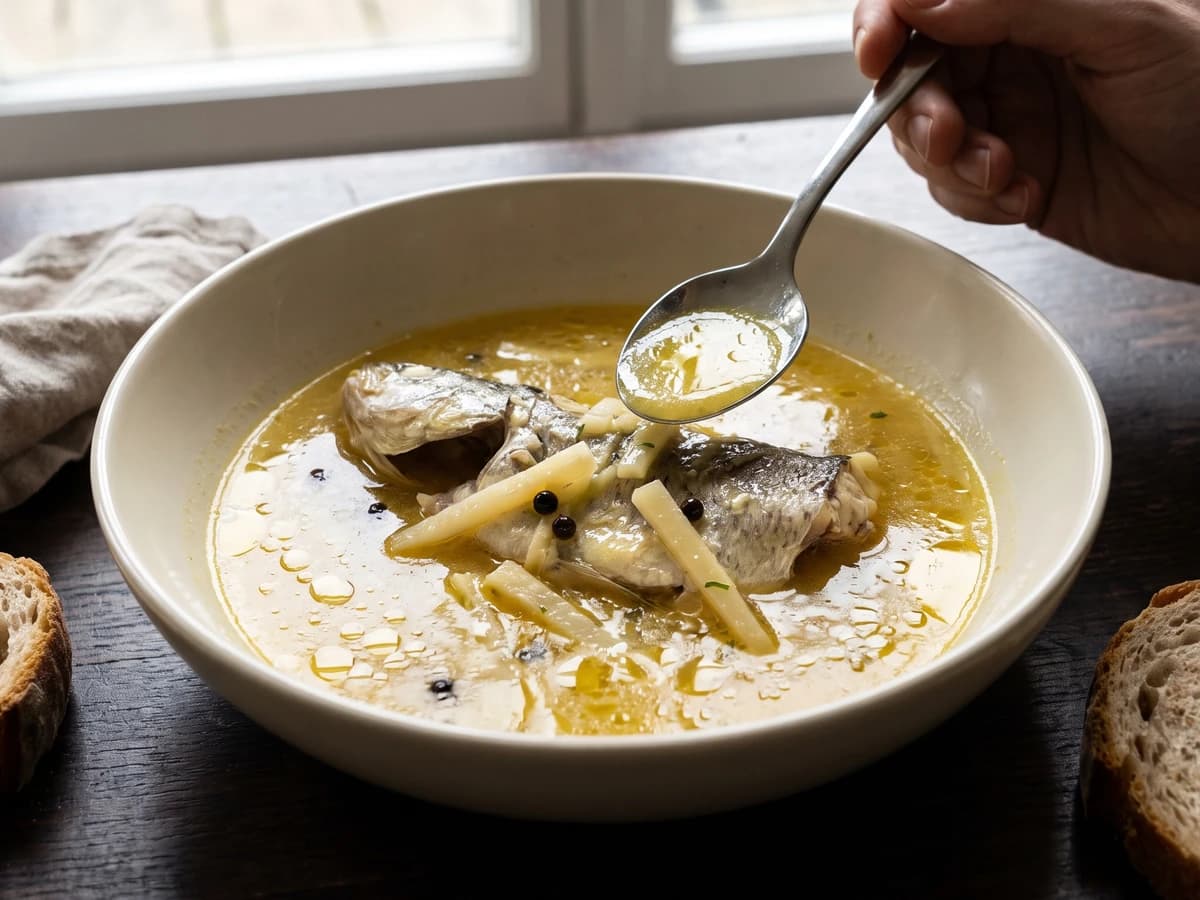
Waterzoi asks fresh, bone-in river fish to thicken its own buttery broth, with parsley root and pepper for company. No flour, no stockpot, just a brisk simmer watched closely.
Chef Juliette
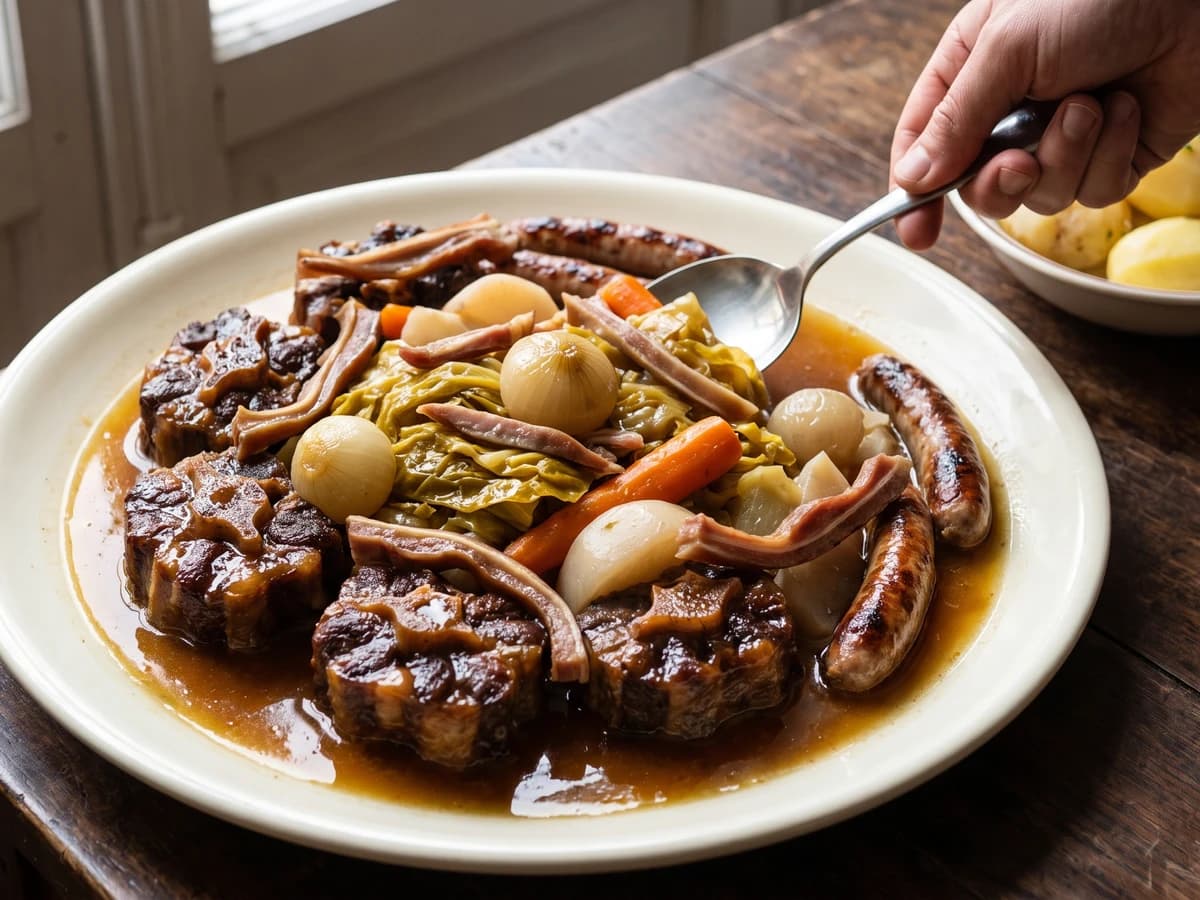
Queue de Bœuf en Hochepot gathers oxtail, pig's trotter and ear, cabbage, roots, and grilled chipolatas around a clear, gelatin-rich broth whose quiet simmer keeps every piece tender and distinct.
Chef Juliette
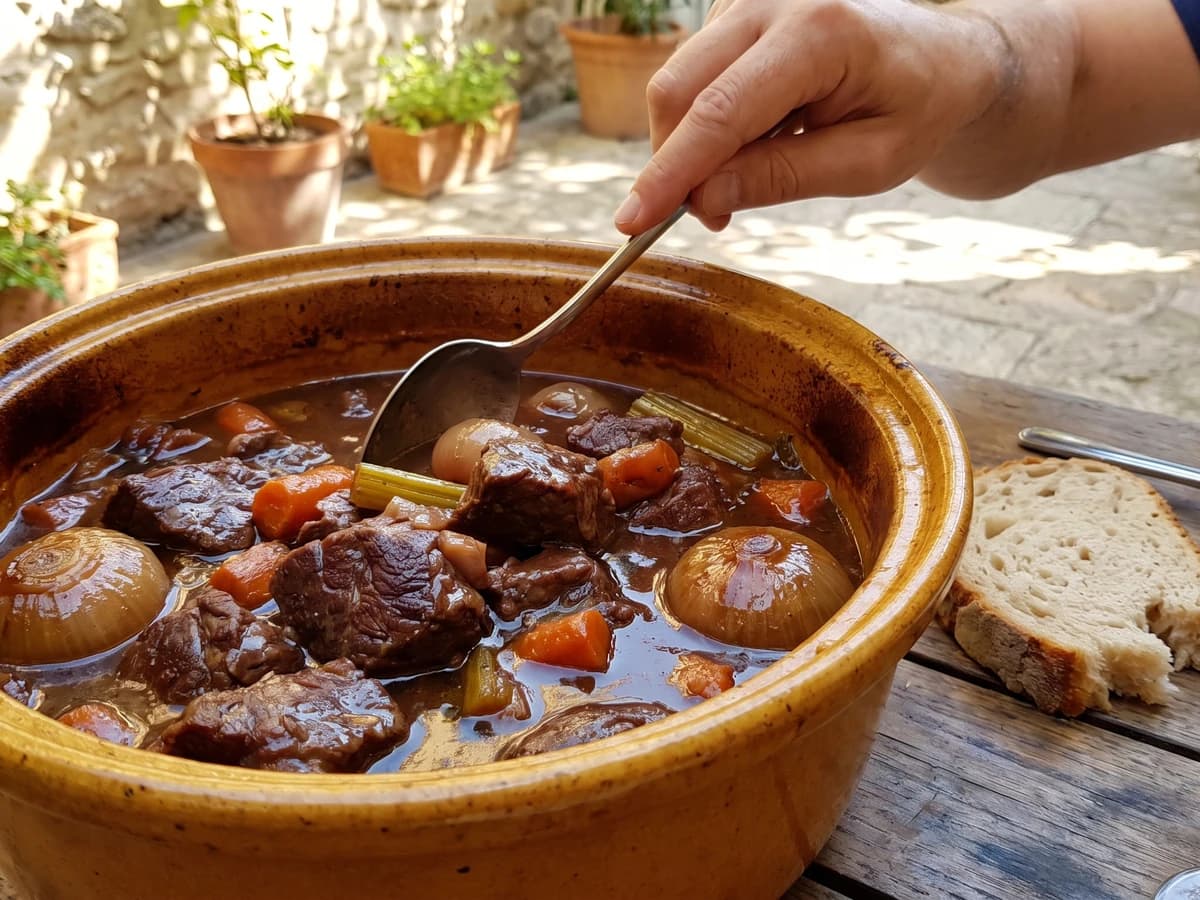
Beef shoulder larded with bacon, sharpened by red wine and vinegar, then sealed with garlic, vegetables, and dry lemon peel until the low oven turns it yielding and the gravy darkly glossy.