Chef Juliette
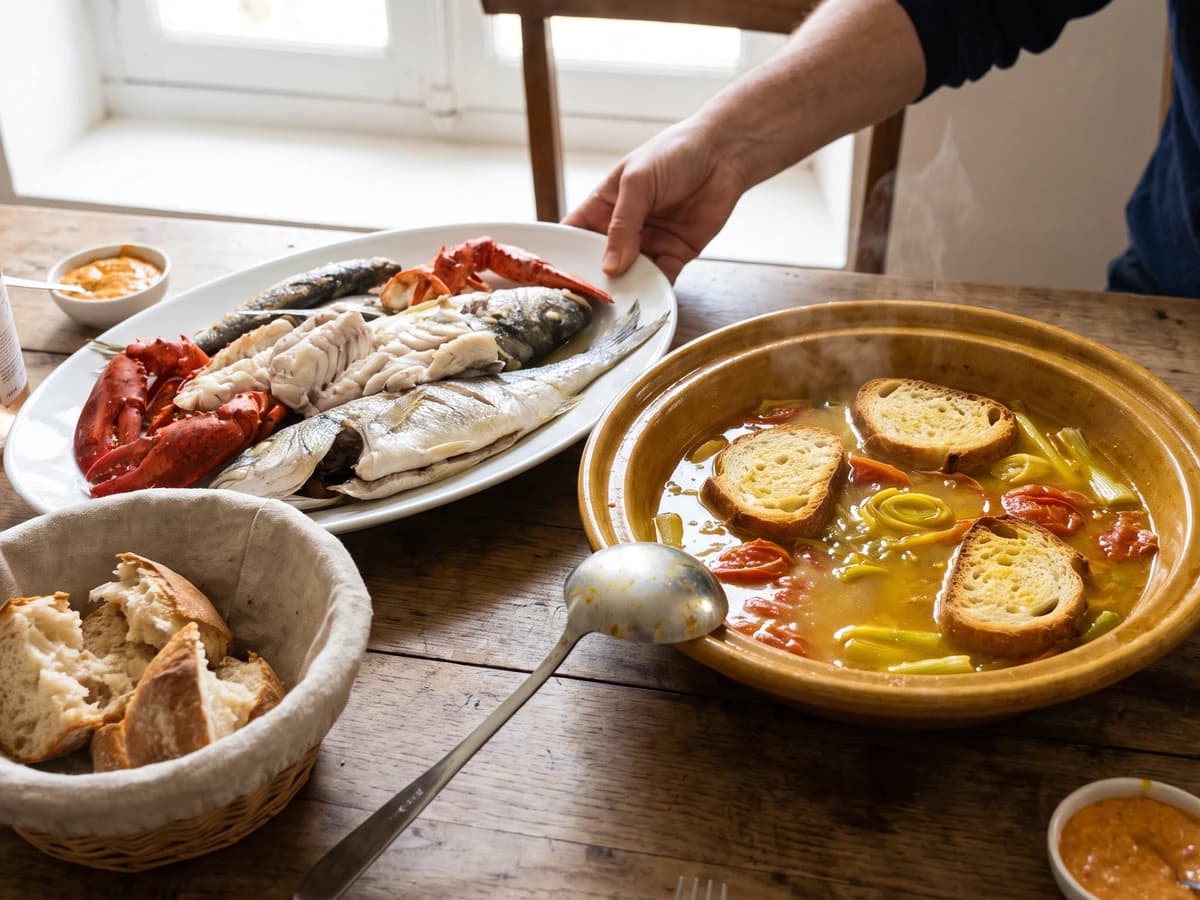
Bouillabaisse à la Marseillaise
Marseille's great fish stew, saffron-gold and garlic-scented, proves that a hard boil can be the careful choice: it binds olive oil into broth before the whole pot meets bread.
A cooking platform built around craft, culture, and the stories behind what we eat.
Created by Chef Juliette
Based on No. 649, Purée de Pois Frais à la Menthe, from Le Guide Culinaire (1907) by Auguste Escoffier
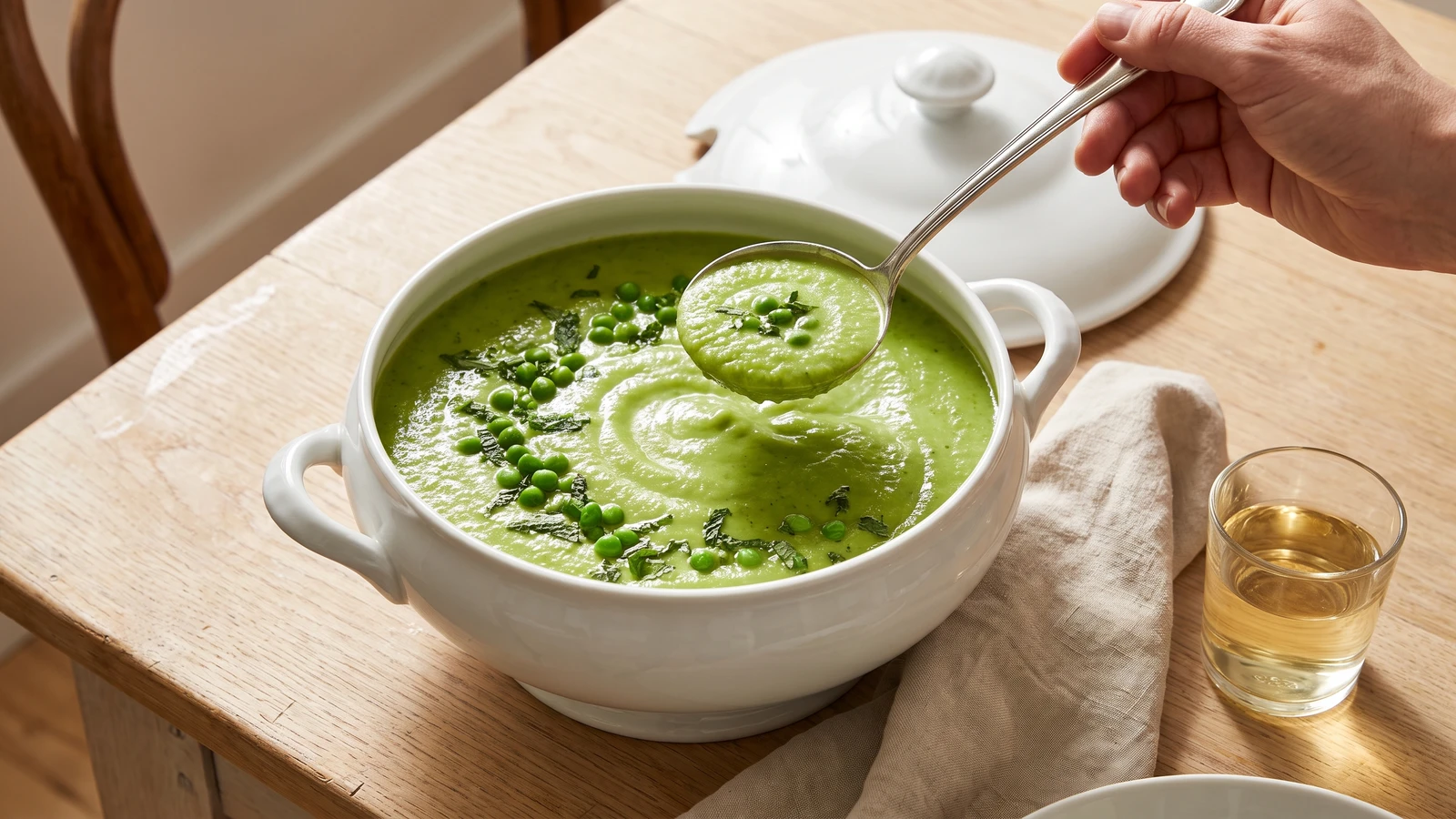
Fresh peas, mint in two layers, consommé, and cold butter make a Saint-Germain purée whose sweetness stays bright because the peas cook quickly and the finishing leaves keep their perfume.
Purée de Pois Frais à la Menthe (fresh pea purée with mint) teaches one clean lesson: mint must perfume the peas, never smother them. A faggot of three little sprigs cooks with the peas and comes out; tender leaves are chopped over the bowls at the last moment. The herb lies in two layers, deep and fresh, while the peas remain unmistakably themselves.
The source assumed a saucier, a pot of consommé never off the fire, and enough hands to pound, pass, and finish a service quantity on command. Tonight, one measured saucepan of good consommé, a blender, and a fine sieve do the same honest work for about two quarts. The brigade's repeated pounding and long hot holding are scaffolding, so they go. Passing the purée and mounting it with cold butter stay, because those steps are the dish. One cook, one stove, one evening.
The finished purée should pour in a green ribbon, glossy from butter, with whole peas under the spoon and mint lifting the first mouthful. Don't let the main batch idle in its boiling water. The step that decides everything is stopping when a pea yields sweetly under your teeth, then draining and puréeing at once.
Purées of fresh peas belong to the Parisian classical table, where the name Saint-Germain came to signify smooth green pea potages associated with the market gardens around Saint-Germain-en-Laye. Grand kitchens refined the household soup by passing the peas, loosening them with consommé, and mounting them with butter; this mint version keeps that structure but replaces the usual chervil pluches, fine herb shreds, with tender mint leaves.
Quantity
5 cups (1.2 L / 725 g) shelled, from about 4 pounds (1.8 kg) peas in the pod
reserve ¾ cup for the garnish
Quantity
3 small sprigs
tied together in a faggot
Quantity
¼ cup loosely packed (60 ml / 6 g)
chopped at the last moment
Quantity
6 cups (1.4 L / 1.4 kg)
lightly seasoned and kept hot
Quantity
3 quarts (2.8 L / 2.8 kg)
Quantity
1 tablespoon plus 1 teaspoon (20 ml / 24 g), plus more as needed
Quantity
6 tablespoons (90 ml / 85 g)
divided, with 5 tablespoons cold and cubed
Quantity
¼ teaspoon (1.25 ml / 0.6 g)
| Ingredient | Quantity |
|---|---|
| very fresh peasreserve ¾ cup for the garnish | 5 cups (1.2 L / 725 g) shelled, from about 4 pounds (1.8 kg) peas in the pod |
| fresh spearminttied together in a faggot | 3 small sprigs |
| very tender fresh spearmint leaveschopped at the last moment | ¼ cup loosely packed (60 ml / 6 g) |
| clear chicken consommélightly seasoned and kept hot | 6 cups (1.4 L / 1.4 kg) |
| water | 3 quarts (2.8 L / 2.8 kg) |
| fine sea salt | 1 tablespoon plus 1 teaspoon (20 ml / 24 g), plus more as needed |
| unsalted butterdivided, with 5 tablespoons cold and cubed | 6 tablespoons (90 ml / 85 g) |
| freshly ground white pepper | ¼ teaspoon (1.25 ml / 0.6 g) |
Pour the consommé into a 3-quart saucepan, bring it to a bare simmer, then keep it hot over the lowest heat. Bring the water and measured salt to a full rolling boil in a 6-quart pot. Tie the three mint sprigs into a compact faggot with kitchen twine so the stems can be lifted out cleanly. Set the blender and sieve within reach; once the peas begin cooking, waiting is the enemy.
Measure out ¾ cup (180 ml / 110 g) of the peas for the garnish. Drop them into the boiling water and cook for 60 to 90 seconds, just until tender but still round and bright. Lift them out with a sieve or slotted spoon, cool them immediately under cold running water, and drain well. Keep the cooking water at the boil.
Add the remaining 4¼ cups (1 L / 615 g) peas and the mint faggot to the rolling water. Cook uncovered for 3 to 5 minutes, tasting after three: a pea should yield sweetly under your teeth without collapsing into meal. Drain immediately. If the peas have softened too far, cool them briefly under cold running water to stop the cooking; the sieve will rescue the texture, though no amount of cooking restores lost colour. Ça se rattrape: proceed promptly and keep the finishing mint fresh.
Discard the cooked mint faggot. Blend the drained peas with 4 cups (950 ml / 950 g) of the hot consommé, working in batches until completely smooth. Never fill a blender more than halfway with hot liquid; remove the centre cap and cover the opening loosely with a folded towel. Press the purée through a fine-mesh sieve into a clean bowl, using the back of a ladle to extract the green flesh, then discard the fibrous skins. If the purée stands too stiffly in the sieve, work in a little more hot consommé.
Return the passed purée to a clean saucepan and whisk in enough of the remaining consommé to make about 2 quarts, with a consistency that pours in a smooth ribbon and lightly coats a spoon. Heat it gently to the first bare quiver. If it is thin, reduce it now; if it is too thick, add more consommé. Take the pan off the heat and montez au beurre, finish by whisking in the 5 tablespoons of cold cubed butter one piece at a time. Season with white pepper and only as much salt as the consommé requires. Do not boil the purée after the butter goes in. If beads of butter appear, take it off the heat, add a tablespoon of cool water, and blend briefly until glossy again. Ça se rattrape.
Melt the remaining tablespoon of butter over low heat and roll the reserved peas through it for about 30 seconds, just until warm and glossy. Chop the tender mint leaves now, never earlier. Ladle the purée into warmed bowls or a warmed soupière, divide the whole peas among them, and scatter over the mint in place of the customary chervil pluches. Serve at once, while the butter gleams and both layers of mint are distinct. À table!
1 serving (about 240g)
Culinary guides, cultural storytelling, and the editorial depth that makes cooking meaningful.
Discover Culinary ExplorerChef Juliette
Marseille's great fish stew, saffron-gold and garlic-scented, proves that a hard boil can be the careful choice: it binds olive oil into broth before the whole pot meets bread.
Chef Juliette
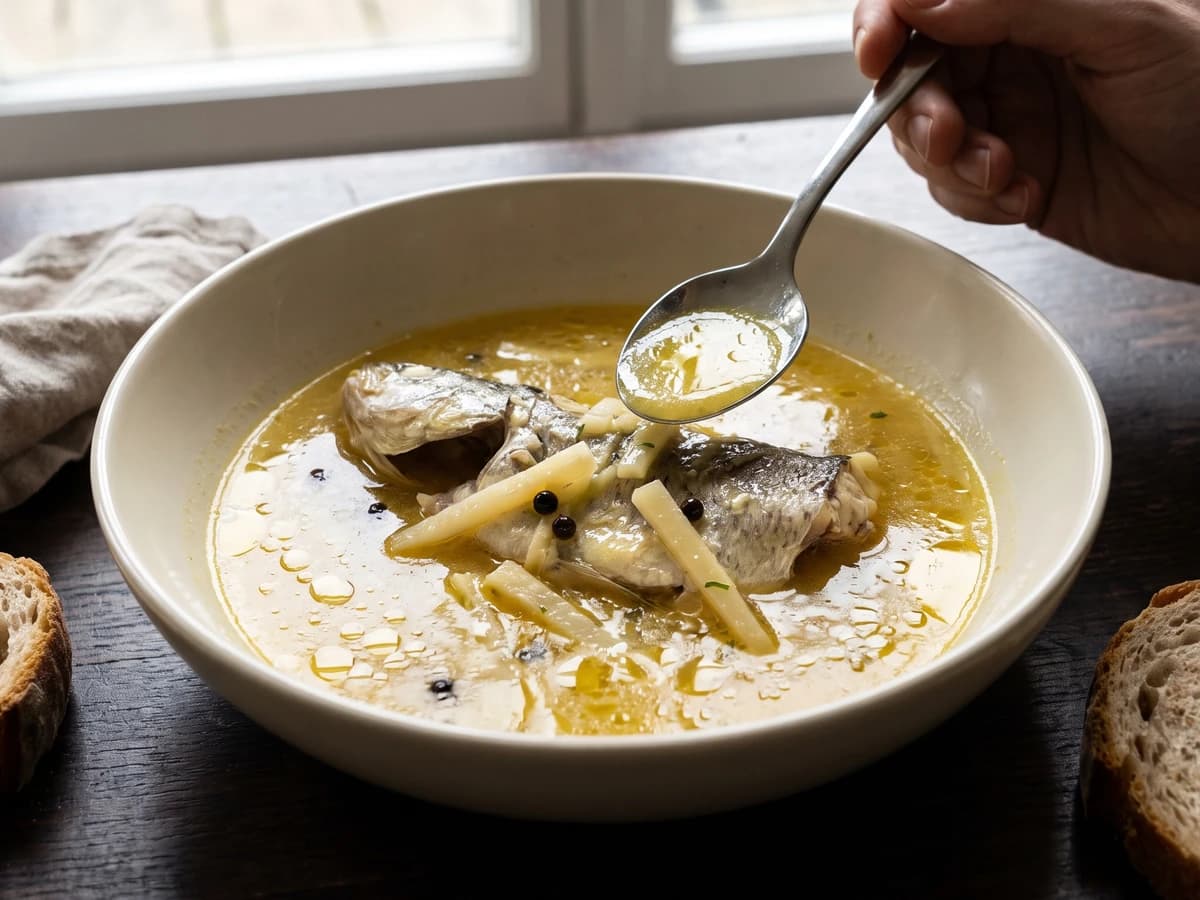
Waterzoi asks fresh, bone-in river fish to thicken its own buttery broth, with parsley root and pepper for company. No flour, no stockpot, just a brisk simmer watched closely.
Chef Juliette
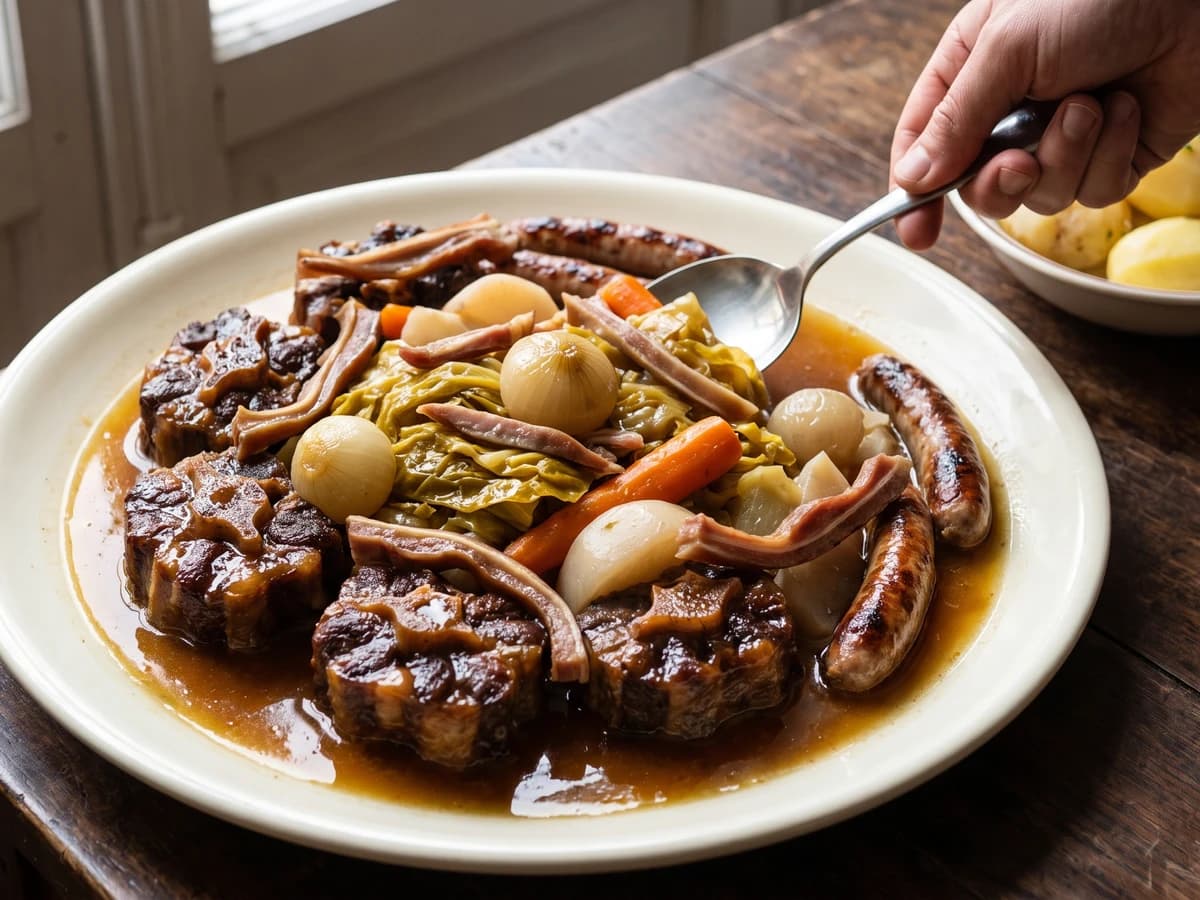
Queue de Bœuf en Hochepot gathers oxtail, pig's trotter and ear, cabbage, roots, and grilled chipolatas around a clear, gelatin-rich broth whose quiet simmer keeps every piece tender and distinct.
Chef Juliette
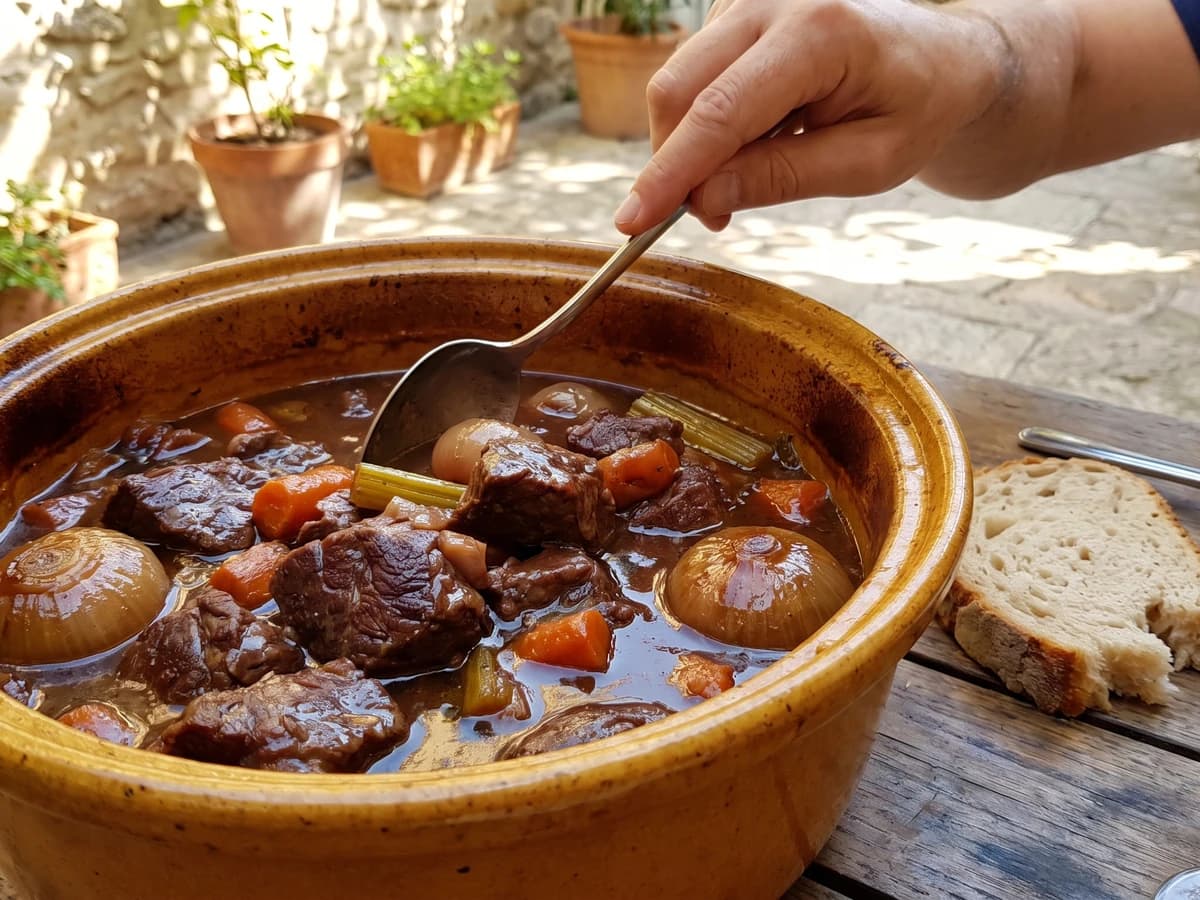
Beef shoulder larded with bacon, sharpened by red wine and vinegar, then sealed with garlic, vegetables, and dry lemon peel until the low oven turns it yielding and the gravy darkly glossy.