Chef Juliette
Bouillabaisse à la Marseillaise
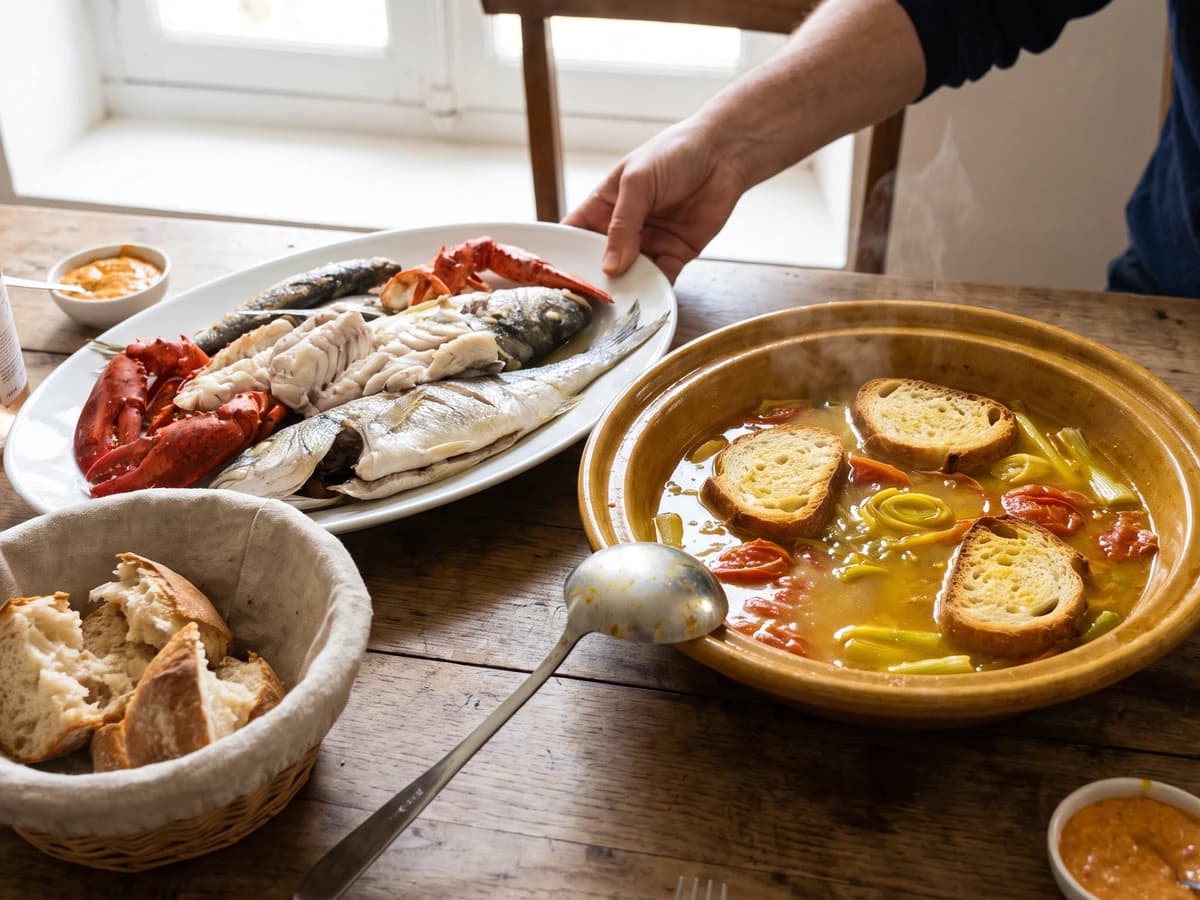
Marseille's great fish stew, saffron-gold and garlic-scented, proves that a hard boil can be the careful choice: it binds olive oil into broth before the whole pot meets bread.
A cooking platform built around craft, culture, and the stories behind what we eat.
Created by Chef Juliette
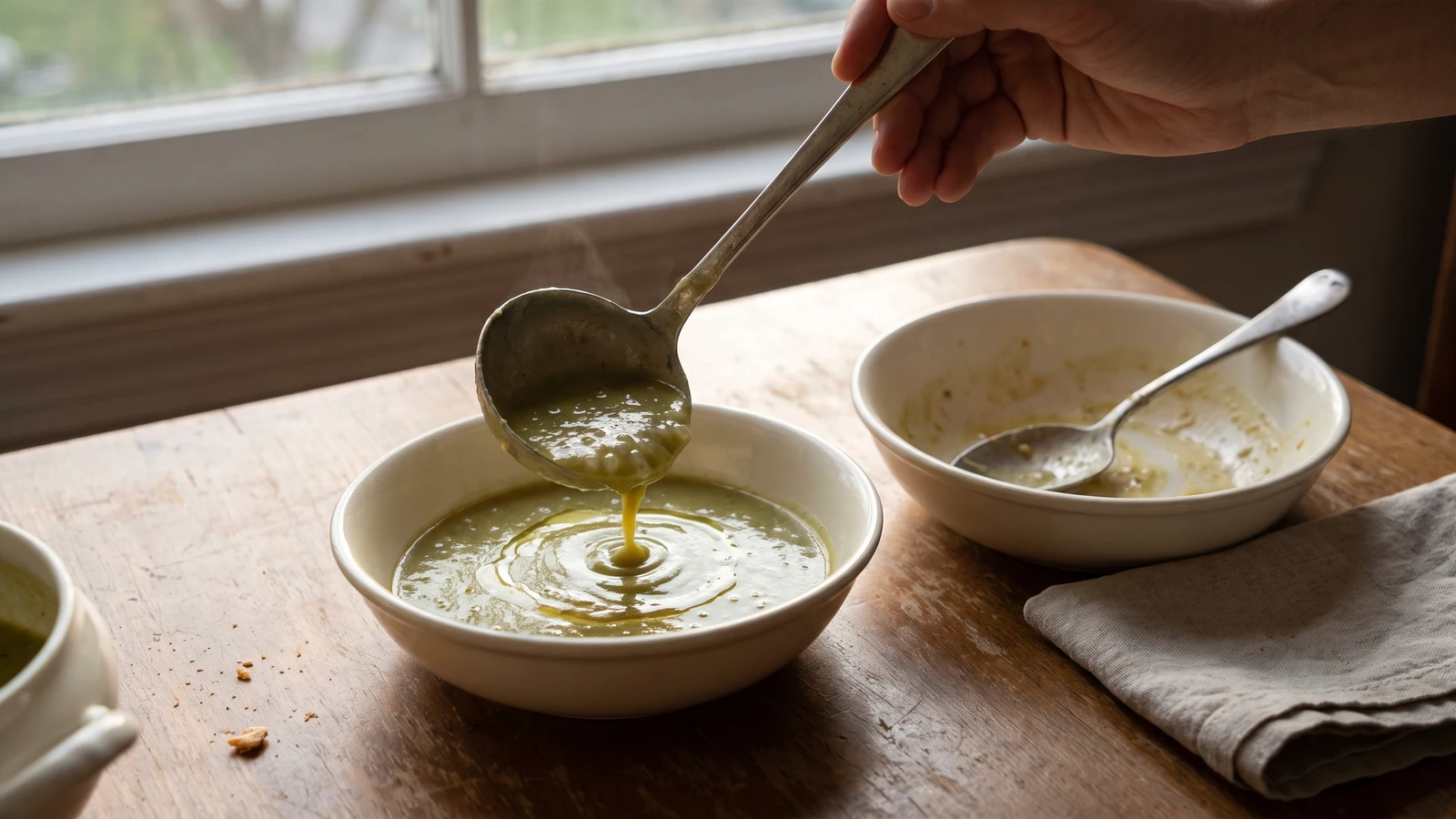
Based on No. 643, Purée d’Oseille et de Sagou à la Crème, from Le Guide Culinaire (1907) by Auguste Escoffier
Buttered sorrel gives this pale green cream soup its bright, mineral edge, while sago supplies the body; the egg-and-cream liaison turns it silken, provided the pot never returns to a hard boil.
Purée d’Oseille et de Sagou à la Crème (sorrel and sago cream soup) teaches one exact lesson: enrichment is not boiling. The sharp leaves must first collapse in butter, the sago must swell until translucent, and the liaison, egg yolks and cream used to bind the soup, must thicken gently enough to remain silken.
The source gives the sago precisely, three ounces, then leaves the choice of milk or consommé and the final consistence to the cook. This home version keeps those three ounces, chooses milk for the cream preparation, and finishes at about two quarts. The original assumed a saucier watching separate pans and liquid always ready for adjustment; here a saucepan, a skillet, and an immersion blender replace the extra hands and tamis. Large service quantities are scaffolding. Buttered sorrel, thoroughly cooked sago, and the liaison are the dish. One cook, one stove, one evening.
The moment that decides everything comes after the yolks enter. Keep the soup below a simmer and stir without pause until it lightly coats the spoon. Give it a hard boil and the liaison grains; hold your nerve over gentle heat and the soup turns glossy, tender, and softly tart.
Purée d’Oseille et de Sagou à la Crème belongs to the classical Parisian potage repertoire rather than to one regional farmhouse tradition, joining a familiar French garden leaf to an imported pantry starch. Sago moved through bourgeois and grand kitchens as an alternative to rice or vermicelli because its pearls swelled clear while lending body without a roux. Despite loose modern labeling, true sago comes from palm starch and is not tapioca, though the two are often sold under the same name.
Quantity
8 packed cups (1.9 L / 225 g)
stemmed, washed, spun dry, and roughly sliced
Quantity
4 tablespoons (60 ml / 57 g)
Quantity
Scant 1/2 cup (110 ml / 85 g)
Quantity
7 cups (1.65 L / 1.7 kg)
divided
Quantity
1 cup (240 ml / 240 g)
Quantity
4
Quantity
2 teaspoons (10 ml / 12 g), plus more to taste
divided
Quantity
1/4 teaspoon (1.25 ml / 0.6 g)
| Ingredient | Quantity |
|---|---|
| fresh sorrel leavesstemmed, washed, spun dry, and roughly sliced | 8 packed cups (1.9 L / 225 g) |
| unsalted butter | 4 tablespoons (60 ml / 57 g) |
| fine pearl sago | Scant 1/2 cup (110 ml / 85 g) |
| whole milkdivided | 7 cups (1.65 L / 1.7 kg) |
| heavy cream | 1 cup (240 ml / 240 g) |
| large egg yolks | 4 |
| fine sea saltdivided | 2 teaspoons (10 ml / 12 g), plus more to taste |
| ground white pepper | 1/4 teaspoon (1.25 ml / 0.6 g) |
Strip away the tough central stems, wash the sorrel well, and spin it thoroughly dry before slicing it roughly. Dry leaves matter because the sorrel must soften in butter, not stew in wash water; excess moisture thins its flavor and sends butter spitting across the stove.
Reserve 1 cup of the milk in the cold. Bring the remaining 6 cups to the edge of a simmer in a heavy saucepan, then sprinkle in the sago gradually while whisking. Lower the heat and cook for 25 to 35 minutes, stirring frequently across the pot floor, until the pearls are swollen and translucent with no chalky white core. The milk should tremble, never gallop. If it catches, don't scrape the scorched floor; pour the clean milk and sago into another saucepan and continue. Ça se rattrape.
While the sago cooks, melt the butter in a wide skillet over medium-low heat. Add the sorrel with 1/2 teaspoon of the salt and turn it through the butter until it collapses into a soft, muted green mass, 6 to 8 minutes. Let its loose moisture cook away, but allow no browning. The color will lose its youthful brightness. That is sorrel behaving properly, not a mistake.
Blend the buttered sorrel with 1/2 cup of the reserved cold milk until smooth, then stir it into the cooked sago. This brief blending replaces the tamis work of a staffed kitchen while leaving the sago pearls whole. Bring the mixture only to a bare simmer and judge the consistence: it should pour freely while lightly coating the back of a spoon. If it is thin, simmer it for a few minutes now; if it is too thick, add reserved milk a little at a time, keeping at least 1/4 cup cold for the liaison step.
Whisk the egg yolks and cream together in a bowl. Take the soup off the heat, then whisk two ladlefuls of it gradually into the liaison to temper the yolks. Pour this mixture back into the saucepan while stirring constantly. Return the pan to the lowest heat and stir until the soup lightly coats the spoon and reaches 160 to 167°F (71 to 75°C), without simmering. If fine egg flecks appear, remove the pan immediately and whisk in the reserved cold milk. Caught early, ça se rattrape; blend for only a few seconds if flecks remain, accepting that some pearls will soften into the body of the soup.
Stir in the white pepper and enough of the remaining salt to sharpen the sorrel without making the soup taste salty. If the purée has tightened while standing, loosen it with a little warm milk. Ladle it at once into warmed bowls; reheating is always gentle and it must never return to a boil. À table!
1 serving (about 240g)
Culinary guides, cultural storytelling, and the editorial depth that makes cooking meaningful.
Discover Culinary ExplorerChef Juliette
Marseille's great fish stew, saffron-gold and garlic-scented, proves that a hard boil can be the careful choice: it binds olive oil into broth before the whole pot meets bread.
Chef Juliette
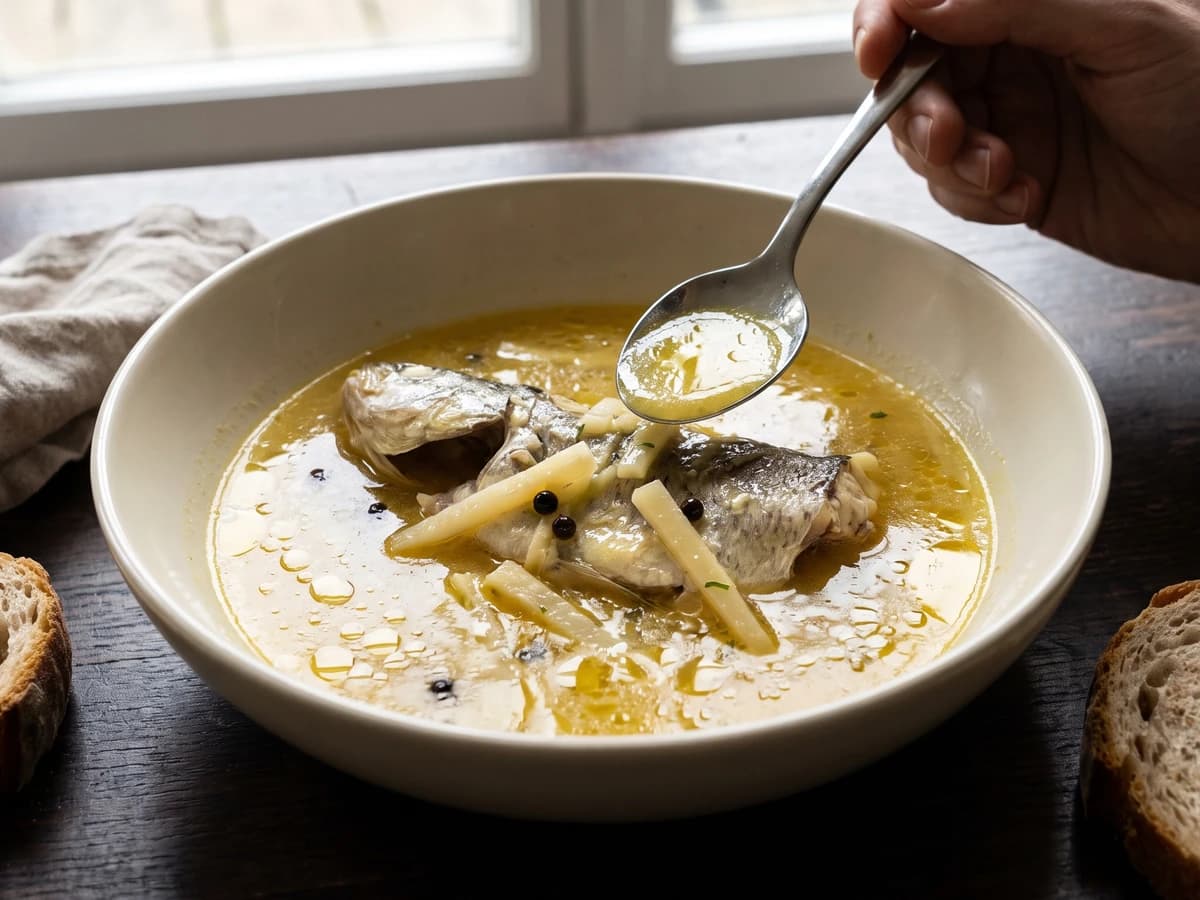
Waterzoi asks fresh, bone-in river fish to thicken its own buttery broth, with parsley root and pepper for company. No flour, no stockpot, just a brisk simmer watched closely.
Chef Juliette
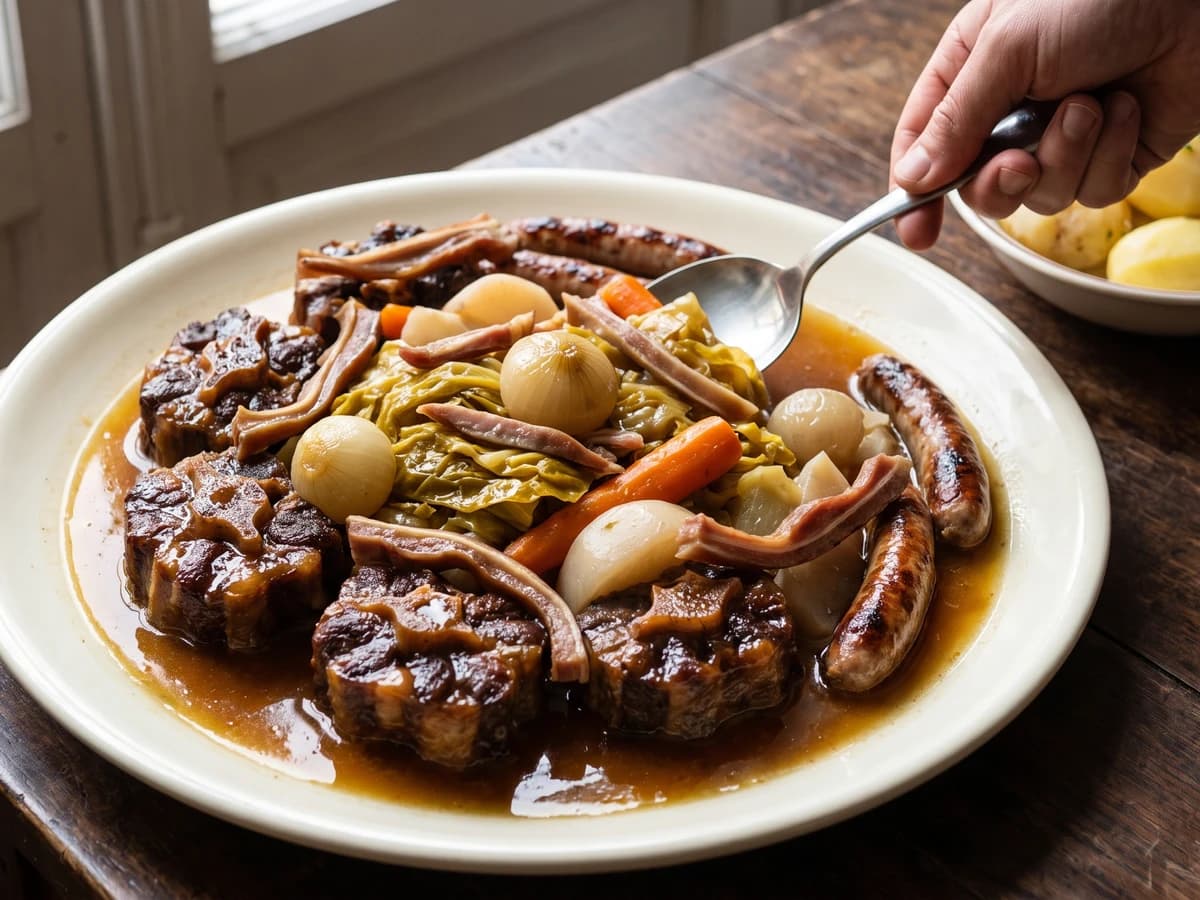
Queue de Bœuf en Hochepot gathers oxtail, pig's trotter and ear, cabbage, roots, and grilled chipolatas around a clear, gelatin-rich broth whose quiet simmer keeps every piece tender and distinct.
Chef Juliette
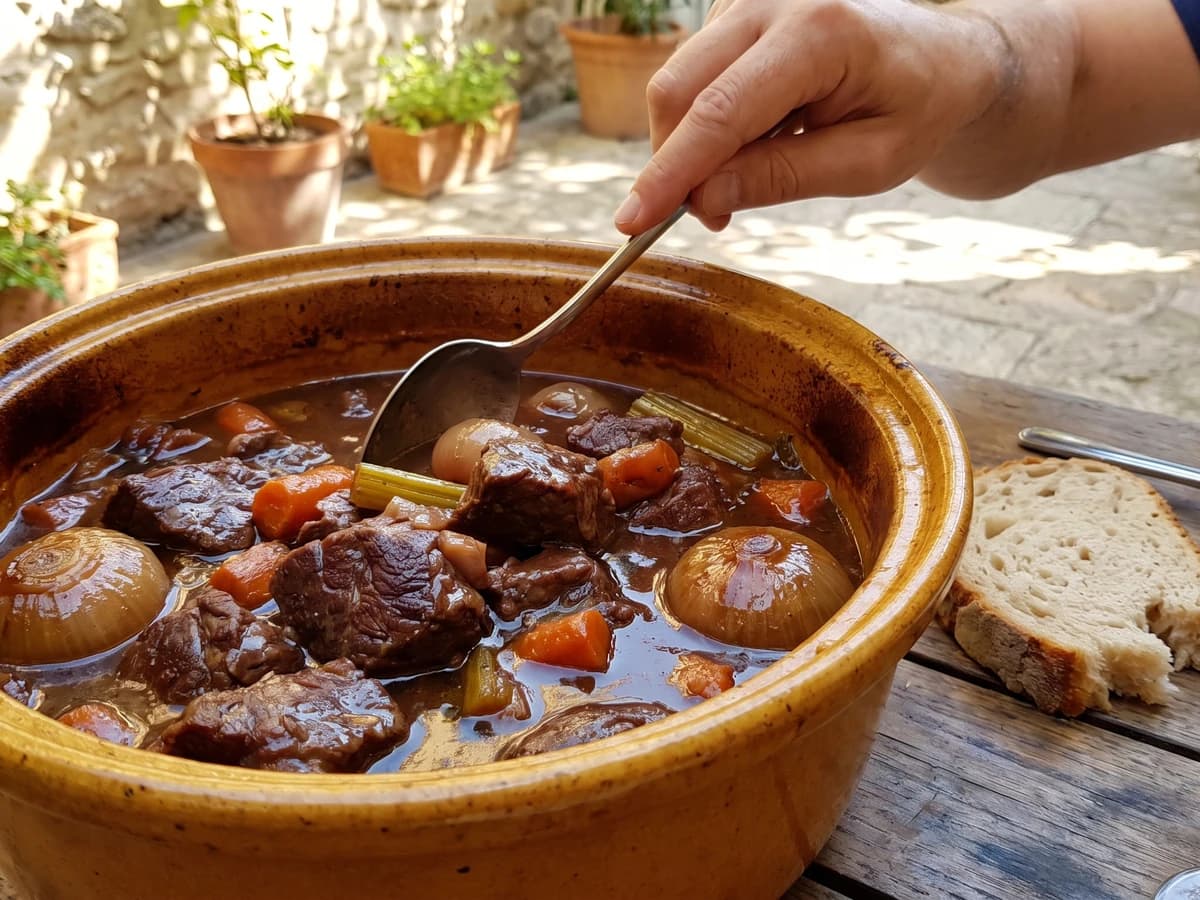
Beef shoulder larded with bacon, sharpened by red wine and vinegar, then sealed with garlic, vegetables, and dry lemon peel until the low oven turns it yielding and the gravy darkly glossy.