Chef Juliette
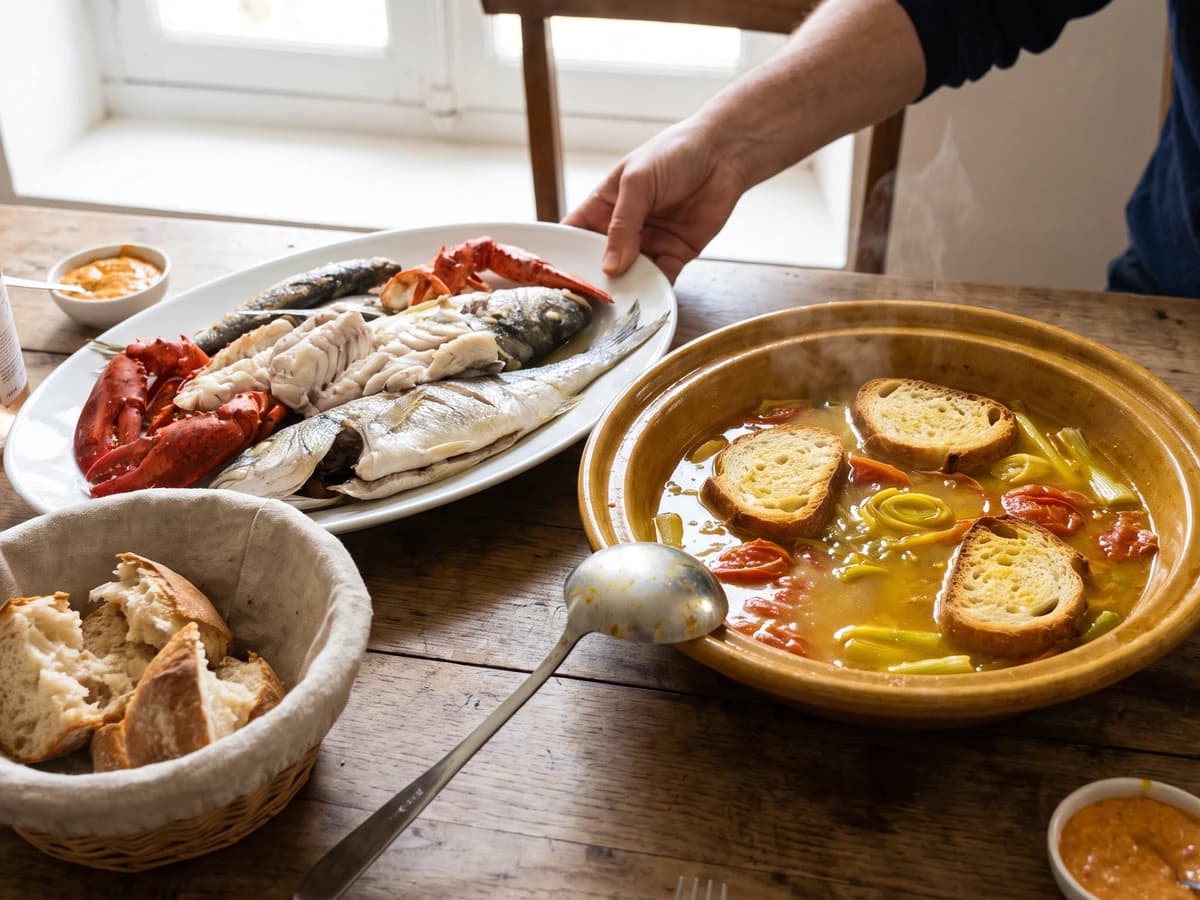
Bouillabaisse à la Marseillaise
Marseille's great fish stew, saffron-gold and garlic-scented, proves that a hard boil can be the careful choice: it binds olive oil into broth before the whole pot meets bread.
A cooking platform built around craft, culture, and the stories behind what we eat.
Created by Chef Juliette
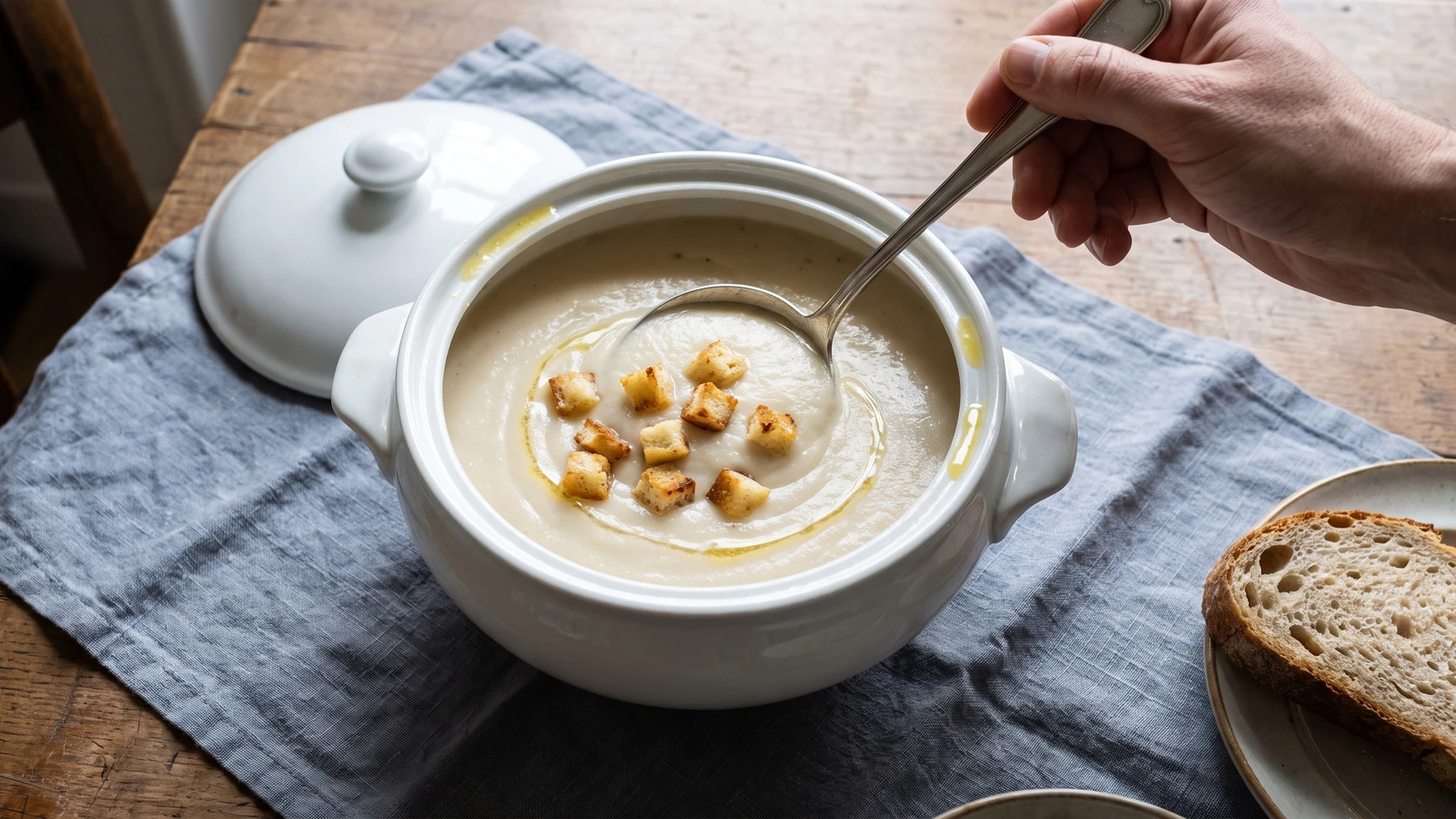
Based on No. 637, Purée de Haricots Blancs, otherwise Soissonnaise, from Le Guide Culinaire (1907) by Auguste Escoffier
Soissonnaise makes a silken soup from the plainest pantry: white beans cooked with carrot, bouquet garni, and clove-stuck onion, passed fine, loosened with white stock and milk, then glossed with butter.
Purée de Haricots Blancs, dite Soissonnaise (silken white bean soup), teaches the first law of every legume purée: smooth is not the same as refined. A machine can break a bean down, but a tamis, a fine sieve, removes its skins, leaving an ivory soup with body and no mealiness. The sieve is the dish; everything around it is support.
The source entry assumed a stock never off the fire, a saucier free to skim the pot through service, and a tammy wide enough for brigade work. Your honest equivalents are pale unsalted chicken stock, one heavy pot, a food mill, and a fine-mesh tamis. Its good half-pint of dried beans is already nearly right for a home pot, so I preserve it as 1¼ cups, about 250 grams, and finish at roughly two quarts. Repeated holding was service scaffolding and can go, while the slow cooking and final sieve stay. One cook, one stove, one evening.
The finished Soissonnaise should pour in a broad ivory ribbon, rich with bean but never stodgy, with milk softening the edges and butter giving the surface its quiet gleam. Cook the beans until they collapse between two fingers before you reach for the tamis. That tenderness is the one step that decides everything.
Soissonnaise belongs to Soissons and the Aisne valley in northern France, where the large white haricot became an emblem of the city and gave its name to preparations built on white beans. From household pots the purée entered the classical repertoire, where cooks refined it through a tamis, diluted it with white consommé and milk, and finished it with butter. Despite its place among cream soups, this version is thickened by the bean itself; velouté and cream are separate treatments the source names as alternatives, not ingredients quietly folded into the purée.
Quantity
1¼ cups (300 ml / 250 g)
rinsed and picked over
Quantity
10 cups (2.4 L / 2.4 kg)
plus more if needed
Quantity
½ cup (120 ml / 70 g)
sliced
Quantity
1 medium (about 150 g)
peeled and stuck with 1 whole clove
Quantity
1 small bouquet
2 parsley stems, 2 thyme sprigs, and 1 bay leaf, tied
Quantity
3 cups (720 ml / 720 g)
Quantity
2 cups (480 ml / 495 g)
Quantity
6 tablespoons (90 ml / 85 g)
divided
Quantity
2 cups (480 ml / 100 g)
cut into small dice
Quantity
2 teaspoons (10 ml / 12 g)
divided, plus more as needed
Quantity
¼ teaspoon (1.25 ml / 0.6 g)
| Ingredient | Quantity |
|---|---|
| dried large white haricot beansrinsed and picked over | 1¼ cups (300 ml / 250 g) |
| cold waterplus more if needed | 10 cups (2.4 L / 2.4 kg) |
| carrotsliced | ½ cup (120 ml / 70 g) |
| yellow onionpeeled and stuck with 1 whole clove | 1 medium (about 150 g) |
| bouquet garni2 parsley stems, 2 thyme sprigs, and 1 bay leaf, tied | 1 small bouquet |
| white consommé or unsalted pale chicken stock | 3 cups (720 ml / 720 g) |
| whole milk | 2 cups (480 ml / 495 g) |
| unsalted butterdivided | 6 tablespoons (90 ml / 85 g) |
| day-old white breadcut into small dice | 2 cups (480 ml / 100 g) |
| fine sea saltdivided, plus more as needed | 2 teaspoons (10 ml / 12 g) |
| ground white pepper | ¼ teaspoon (1.25 ml / 0.6 g) |
Put the rinsed beans and cold water in a heavy 5 to 6-quart pot. Bring to a full boil for 2 minutes, cover, remove from the heat, and leave undisturbed for 1 hour. This quick soak is the honest one-evening equivalent of an overnight soak; it shortens the waiting without replacing the slow cooking that gives the purée its body.
Add the carrot, clove-stuck onion, and bouquet garni to the soaking pot. Bring the water back slowly, skim away the first grey foam, then hold the beans at a gentle simmer with the lid slightly ajar for 75 to 105 minutes. Add hot water whenever the beans threaten to rise above the liquid. When they are nearly tender, stir in 1 teaspoon of the salt. The beans are ready only when one collapses into a smooth paste between two fingers; if they remain chalky after the expected time, give them more hot water and patience. Older beans simply take longer.
Set a colander over a bowl and drain the beans, reserving all their cooking liquor. Remove the bouquet garni and the whole clove, but keep the cooked onion and carrot with the beans. Work the beans and vegetables through a food mill, moistening them with 3 to 4 tablespoons of cooking liquor, then rub that purée through a fine-mesh tamis with a flexible scraper. If the purée clogs the mesh, loosen it one tablespoon at a time with more liquor; forcing a dry mass through only pushes skins into the soup. A blender alone is brigade scaffolding in reverse, quick but less refined. The final sieve must stay.
Return the sieved purée to the cleaned pot. Whisk in 2½ cups of the white consommé or pale chicken stock a little at a time, followed by all but 2 tablespoons of the milk. Bring it up slowly over medium-low heat, stirring across the bottom so the bean starch cannot catch. Add enough of the remaining stock or reserved cooking liquor to make about 2 quarts. The soup should coat a spoon lightly and pour from it, never sit in a mound.
Dépouiller, skim the surface, while the soup trembles at the gentlest simmer for 10 to 15 minutes. Remove every patch of pale foam as it gathers, then stir along the pot floor before it can scorch. If the soup is too thick, whisk in more stock or cooking liquor; if it is too loose, simmer it uncovered until the spoon carries a light veil. Ça se rattrape. Do not reach for flour, because the bean supplies the proper body.
While the soup settles, melt 2 tablespoons of the butter in a wide skillet over medium heat. Add the bread dice and toss them patiently until every side is crisp and butter-gold, with darker brown corners here and there. Transfer them to a plate at once. Leave them in the hot pan and they continue browning past the point of pleasure.
Remove the soup from the heat. Monter au beurre, finish with butter, by whisking in the remaining 4 tablespoons a piece at a time until the surface gleams and no oily beads remain. Season with the white pepper and remaining salt as needed. Do not boil it again. If the butter separates on the surface, whisk in the reserved 2 tablespoons of cold milk off the heat until the emulsion returns. Ladle into warm bowls and add the bread dice at the last moment so they stay crisp. À table!
1 serving (about 250g)
Culinary guides, cultural storytelling, and the editorial depth that makes cooking meaningful.
Discover Culinary ExplorerChef Juliette
Marseille's great fish stew, saffron-gold and garlic-scented, proves that a hard boil can be the careful choice: it binds olive oil into broth before the whole pot meets bread.
Chef Juliette
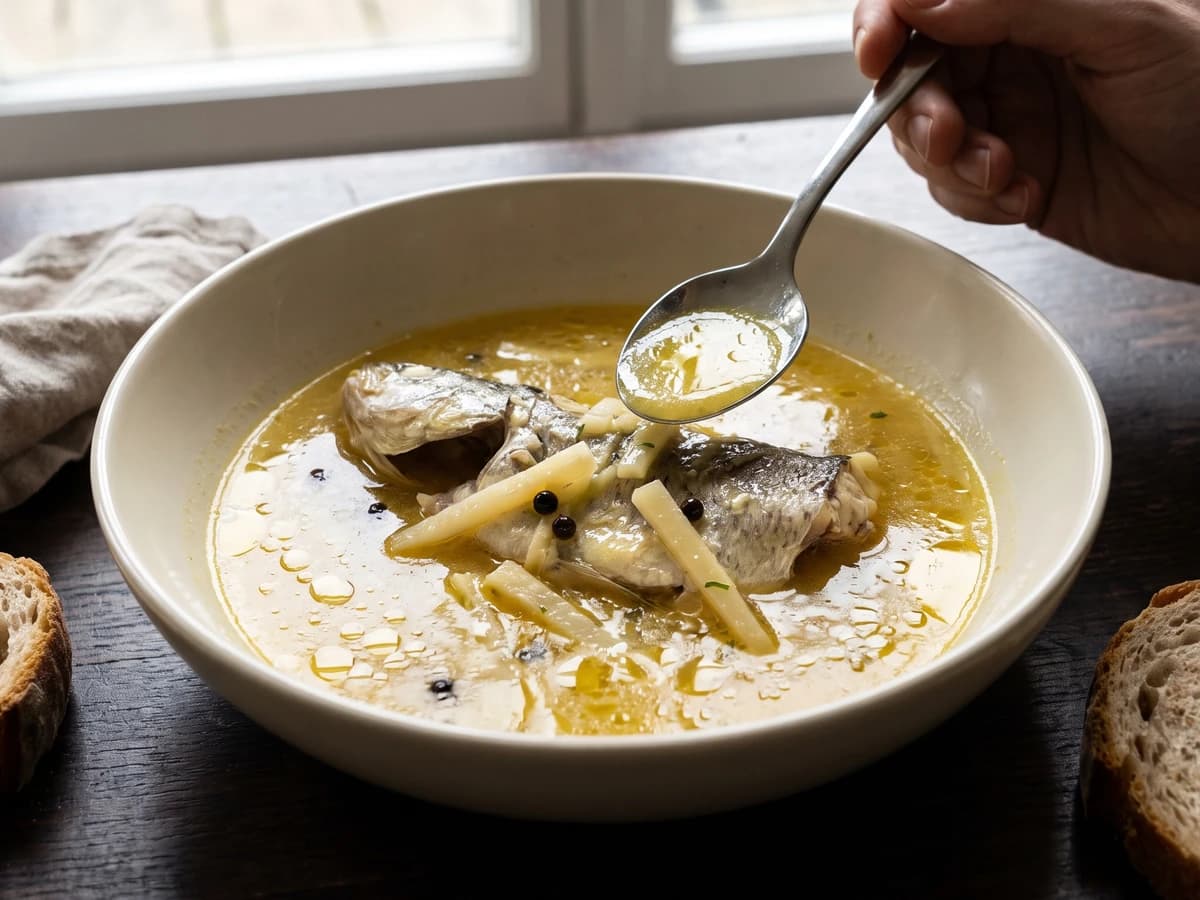
Waterzoi asks fresh, bone-in river fish to thicken its own buttery broth, with parsley root and pepper for company. No flour, no stockpot, just a brisk simmer watched closely.
Chef Juliette
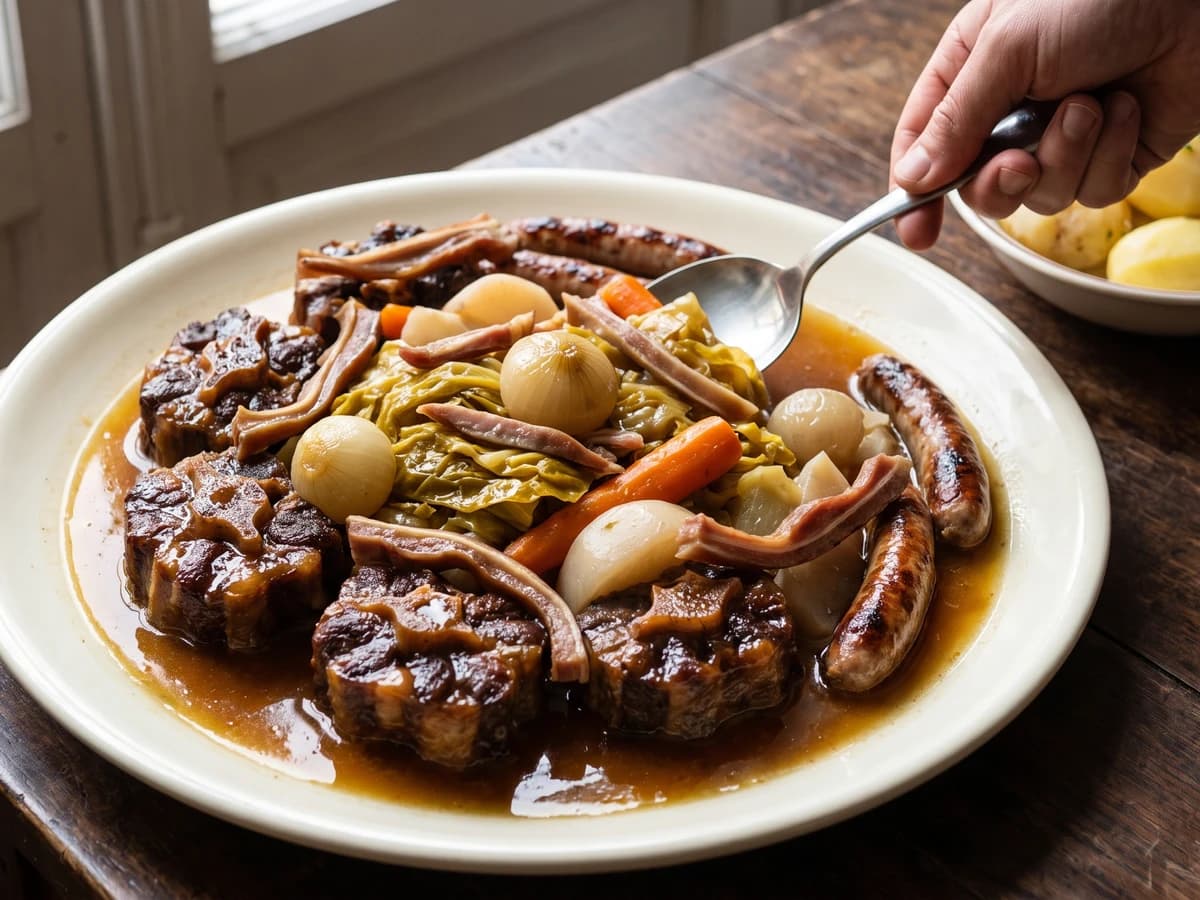
Queue de Bœuf en Hochepot gathers oxtail, pig's trotter and ear, cabbage, roots, and grilled chipolatas around a clear, gelatin-rich broth whose quiet simmer keeps every piece tender and distinct.
Chef Juliette
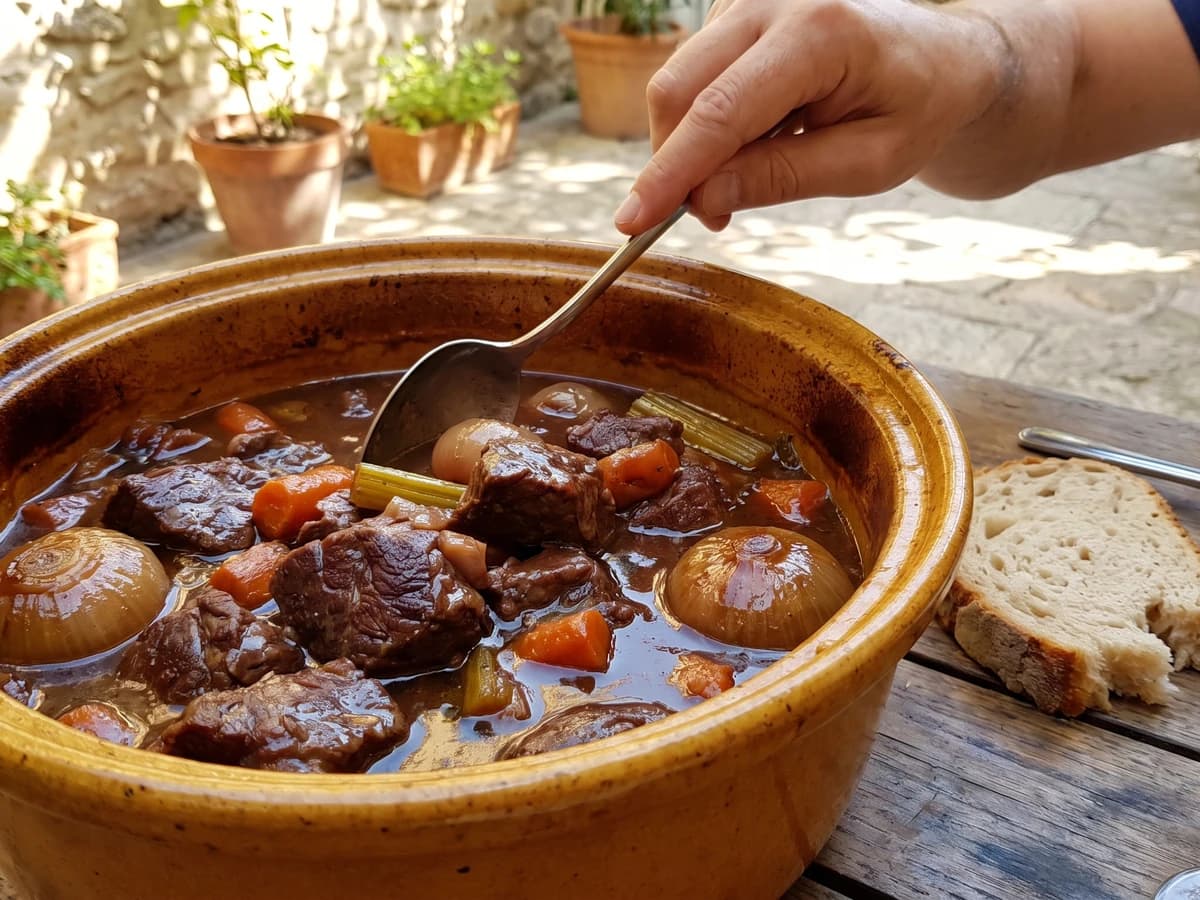
Beef shoulder larded with bacon, sharpened by red wine and vinegar, then sealed with garlic, vegetables, and dry lemon peel until the low oven turns it yielding and the gravy darkly glossy.