Chef Juliette
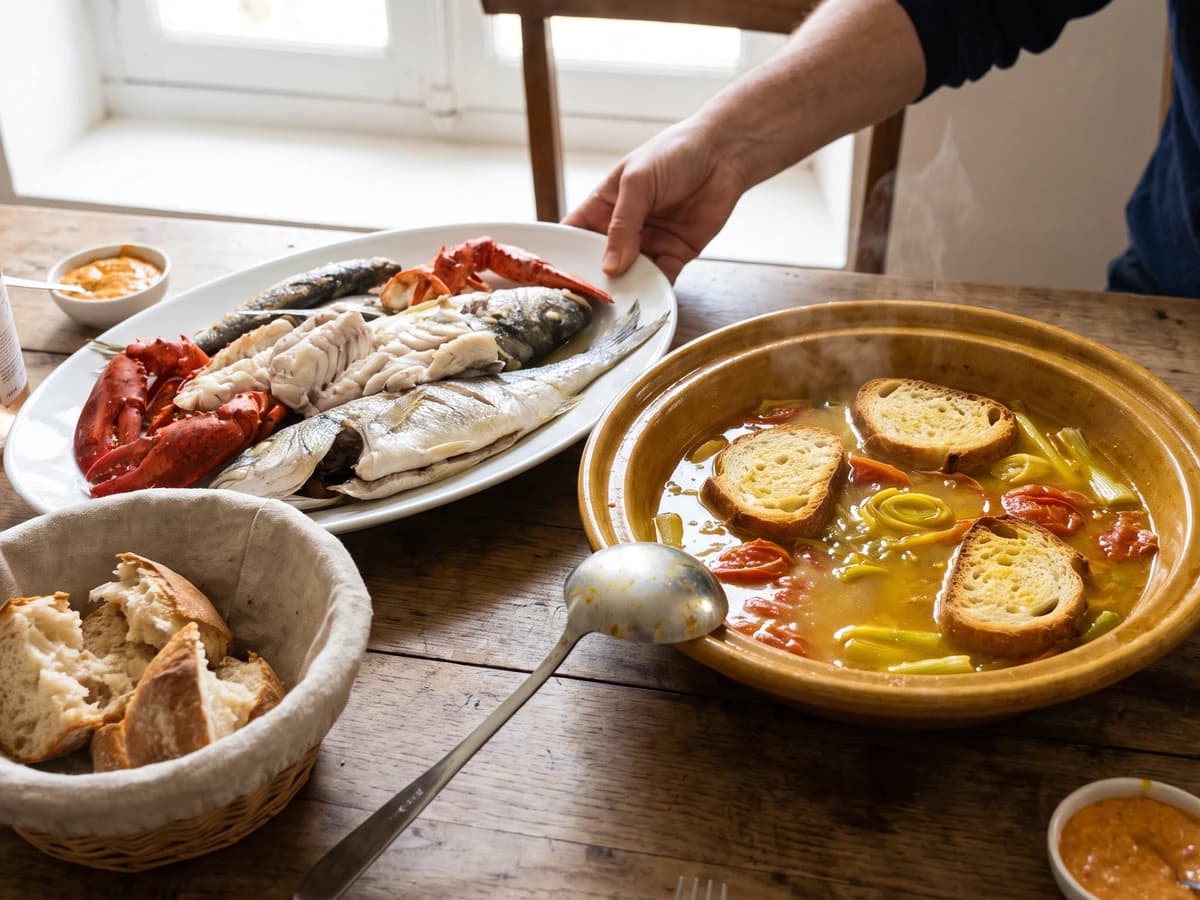
Bouillabaisse à la Marseillaise
Marseille's great fish stew, saffron-gold and garlic-scented, proves that a hard boil can be the careful choice: it binds olive oil into broth before the whole pot meets bread.
A cooking platform built around craft, culture, and the stories behind what we eat.
Created by Chef Juliette
Based on No. 615, Consommé Tosca, from Le Guide Culinaire (1907) by Auguste Escoffier
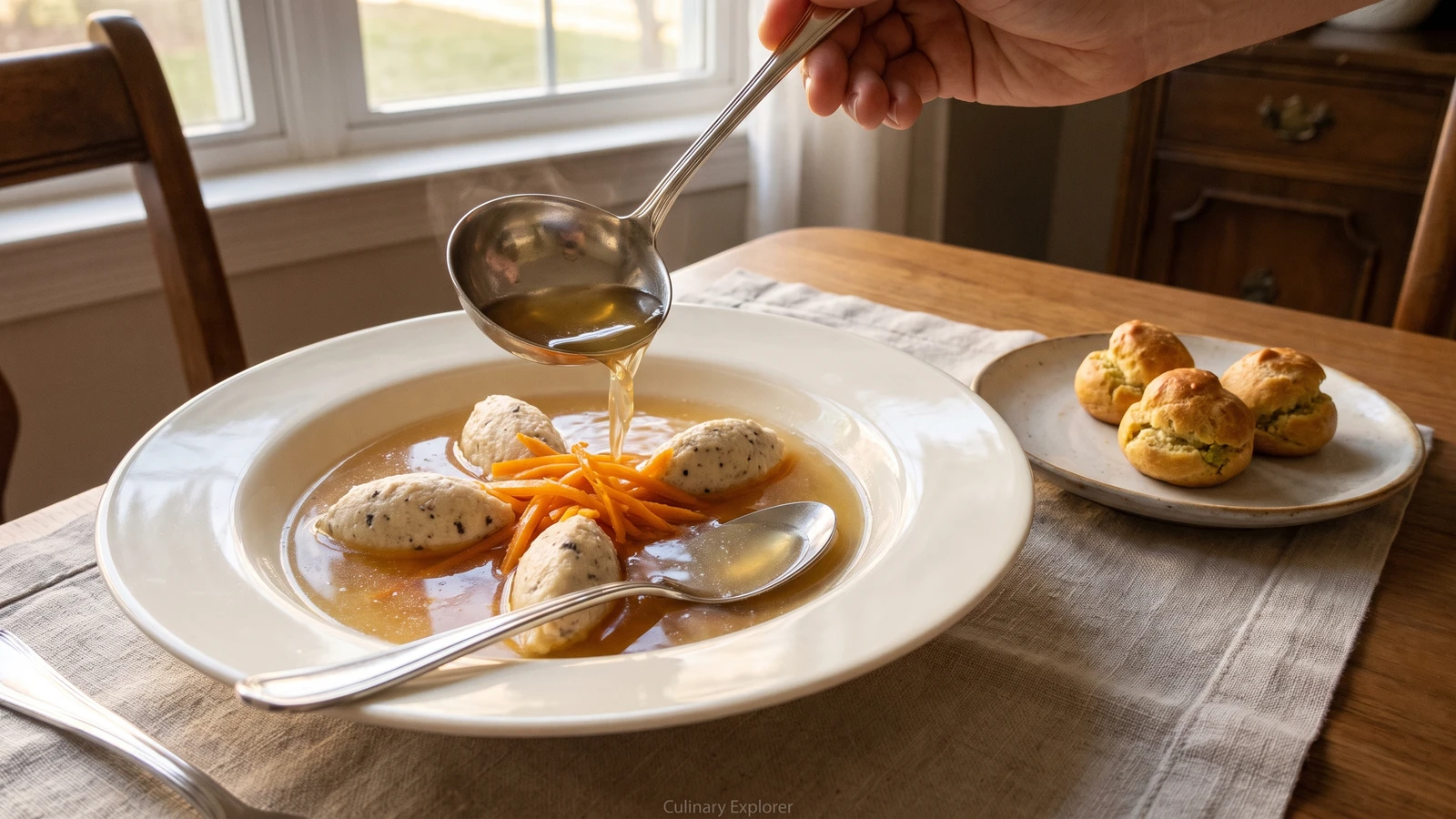
Amber chicken consommé gains the faintest silk from tapioca, then carries buttered carrot julienne and foie gras and truffle quenelles, while crisp pistachio-chicken profiterolles arrive hot on their own plate.
Consommé Tosca (clear chicken broth lightly bound with tapioca) teaches the discipline of a composed consommé: richness may sit inside clarity, but it must never muddy it. The broth stays amber and lucid, the carrot julienne (fine matchsticks) keeps its shape, the quenelles (small poached dumplings) stay tender, and the hot profiterolles wait beside the tureen so their shells remain crisp.
The original entry assumed a saucier tending clarified poultry stock that was never off the fire, a cold station making foie gras forcemeat, and another pair of hands responsible for the tiny choux. The source gives a one-quart formula; for a dinner-party tureen this version doubles every quantity exactly to two quarts and eight first courses, then cuts the brigade workflow to one cook, one processor, two pans, and a cloth-lined sieve. A damp lint-free towel replaces the linen strainer, and advance preparation replaces spare hands. Those are scaffolding. The tapioca binding, the careful strain, the one-third foie gras and truffle enrichment, the butter-stewed carrot, and the separately passed choux are the dish, so they stay. One cook, one stove, one evening.
Before you touch a pan, know this: the tapioca gives the consommé body, but restraint preserves its elegance. Let the broth pass through the cloth under its own weight. Squeezing is how a clear soup becomes a cloudy one.
Consommé Tosca belongs to the formal Parisian dining room, not to a regional Italian table; composed consommés were built from clarified French broth and a precisely measured garnish. Its title gestures toward the opera Tosca, while foie gras, truffle, chicken quenelles, and soup profiterolles place the preparation squarely within the French classical repertoire. The profiterolles are served apart by design, preserving their crisp shells so the diner alternates them with the broth rather than softening them in the tureen.
Quantity
8 cups (2 quarts / 1.9 L / about 1.9 kg)
Quantity
3 tablespoons dry (45 ml / 36 g), yielding 6 tablespoons poached (90 ml / about 90 g)
poached until transparent
Quantity
1/4 cup (60 ml / 35 g)
cut into a very fine julienne
Quantity
1 tablespoon (15 ml / 14 g)
Quantity
5.3 ounces (150 g)
cut into small cubes and thoroughly chilled
Quantity
1 (about 2 tablespoons / 30 ml / 30 g)
reserve 1 teaspoon
Quantity
1/3 cup (80 ml / 80 g)
Quantity
1 1/2 teaspoons (7.5 ml / 9 g)
divided
Quantity
1/8 teaspoon (0.6 ml / 0.3 g)
Quantity
2.6 ounces (75 g)
thoroughly chilled
Quantity
1 small, about 0.4 ounce (12 g)
finely chopped
Quantity
4 quarts (3.8 L / about 3.8 kg)
divided
Quantity
20 Profiterolles for Soups (No. 218)
| Ingredient | Quantity |
|---|---|
| finished clear chicken consommé | 8 cups (2 quarts / 1.9 L / about 1.9 kg) |
| small pearl tapiocapoached until transparent | 3 tablespoons dry (45 ml / 36 g), yielding 6 tablespoons poached (90 ml / about 90 g) |
| carrotcut into a very fine julienne | 1/4 cup (60 ml / 35 g) |
| unsalted butter | 1 tablespoon (15 ml / 14 g) |
| skinless chicken breastcut into small cubes and thoroughly chilled | 5.3 ounces (150 g) |
| large egg whitereserve 1 teaspoon | 1 (about 2 tablespoons / 30 ml / 30 g) |
| cold heavy cream | 1/3 cup (80 ml / 80 g) |
| fine sea saltdivided | 1 1/2 teaspoons (7.5 ml / 9 g) |
| finely ground white pepper | 1/8 teaspoon (0.6 ml / 0.3 g) |
| cooked foie grasthoroughly chilled | 2.6 ounces (75 g) |
| black trufflefinely chopped | 1 small, about 0.4 ounce (12 g) |
| water for poachingdivided | 4 quarts (3.8 L / about 3.8 kg) |
| very small profiterolles stuffed with chicken purée and pistachio kernels | 20 Profiterolles for Soups (No. 218) |
Chill the food processor bowl and blade for 10 minutes. Process the cold chicken with 3/4 teaspoon (4 g) of the salt and the white pepper until the meat becomes tacky. Add all but the reserved teaspoon of egg white and process until smooth, then add the cold cream gradually in short pulses. Stop as soon as the farce mousseline, the silky chicken forcemeat, looks glossy and cohesive. If greasy streaks appear, the mixture is warming; stop, set the bowl over ice for 10 minutes, and resume with brief pulses. Press the forcemeat through a fine-mesh sieve, work in the cold foie gras until evenly incorporated, and fold in the chopped truffle. The foie gras and truffle together weigh one-third as much as the chicken forcemeat, which preserves the source ratio. Cover and chill for 30 minutes.
Bring 2 quarts of the water to a gentle boil and add the dry tapioca. Cook for 15 to 25 minutes, stirring occasionally, until the pearls are transparent with no chalky centre. Drain and measure exactly 6 tablespoons of poached tapioca. Reserve 1 cup of the chicken consommé, then bring 2 cups of the remainder to a bare simmer with the tapioca. Cook gently for 8 minutes, stirring enough to release its starch, then whisk in the rest of the unreserved consommé. Pass the broth through a fine sieve lined with damp muslin or a clean lint-free towel, letting gravity do the work. Do not squeeze. If the broth looks veiled, leave it undisturbed for 5 minutes and pass it through fresh damp cloth. Ça se rattrape. Return it to a clean saucepan and add enough reserved consommé to restore the full two-quart volume, keeping 1/4 cup aside for the carrot.
Melt the butter in a small saucepan over low heat without letting it colour. Add the carrot julienne and a pinch of the remaining salt, cover, and stew for 3 minutes, tossing once so every matchstick receives butter. Add the reserved 1/4 cup of consommé and cook gently for another 3 to 5 minutes, until the carrot bends easily but still holds its shape. This completes the cooking in the consommé exactly as the entry directs. Set the carrot aside in its cooking liquid.
Bring the remaining 2 quarts of water and the remaining salt to 175 to 185°F (80 to 85°C), a quiet poach with movement below the surface but no hard bubbling. Poach a teaspoon of forcemeat as a test. If it feathers apart, return the mixture to the cold for 15 minutes, beat in the reserved teaspoon of egg white, and test again. Dip two teaspoons in the hot water and use them to shape 20 small oval quenelles, each about the size of a large hazelnut. Poach in batches for about 5 minutes, keeping the water below a simmer, until they feel lightly springy and reach 165°F (74°C) at the centre. Lift them out with a slotted spoon and keep them covered.
Heat the oven to 325°F (165°C). Arrange the Profiterolles for Soups (No. 218) on a small tray and warm them for 6 to 8 minutes, until their shells are dry and crisp and the chicken and pistachio filling is hot. They remain separate from the broth. Putting them into the tureen would soften the very contrast the dish was composed to preserve.
Fill the soup tureen with hot water, leave it for 2 minutes, then empty and dry it. Bring the strained consommé to one clean boil and pull it immediately from the heat; taste and correct the salt without dulling the broth. Put the quenelles, the carrot julienne, and its little cooking liquor into the warm tureen, then pour in the boiling consommé. Carry it straight to the table and pass the very hot profiterolles on their own plate. Each guest takes them between spoonfuls rather than drowning them. À table!
1 serving (about 300g)
Culinary guides, cultural storytelling, and the editorial depth that makes cooking meaningful.
Discover Culinary ExplorerChef Juliette
Marseille's great fish stew, saffron-gold and garlic-scented, proves that a hard boil can be the careful choice: it binds olive oil into broth before the whole pot meets bread.
Chef Juliette
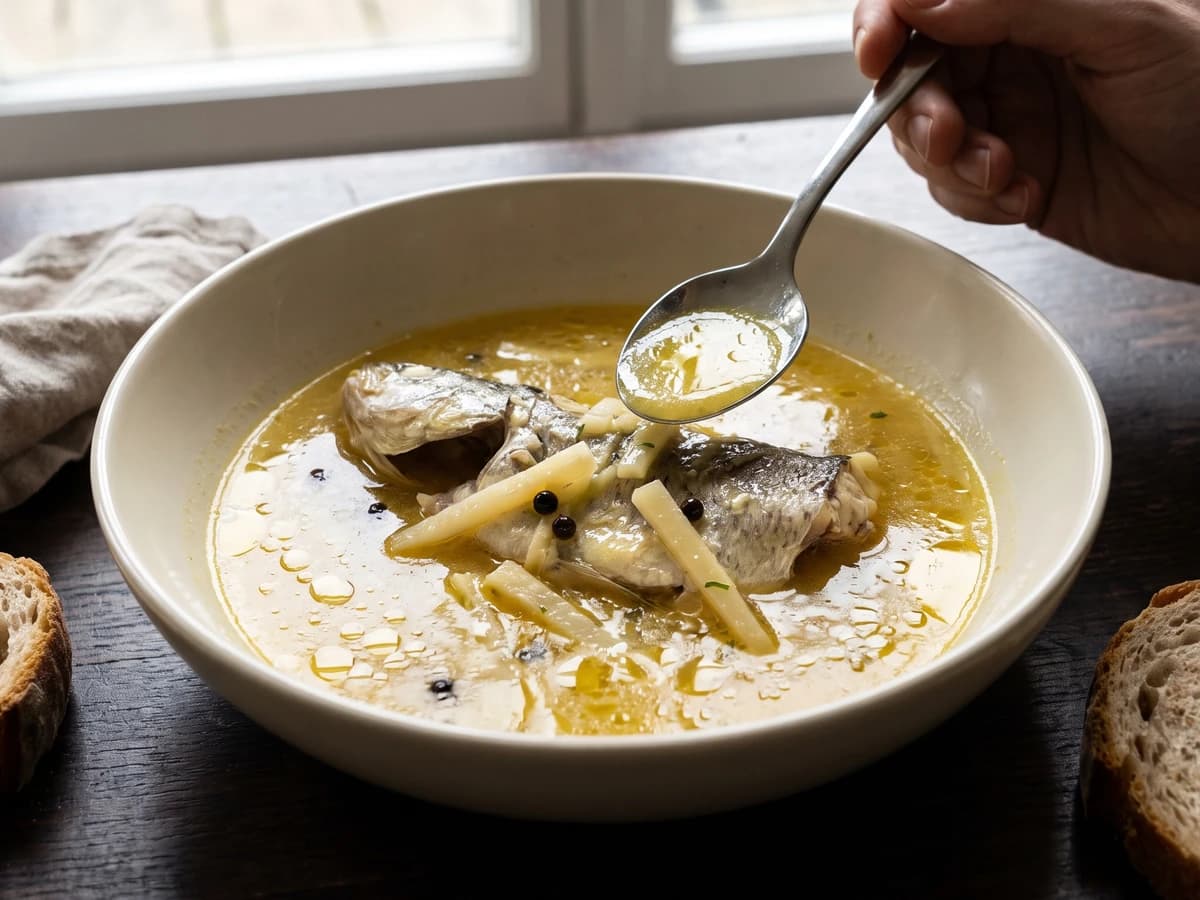
Waterzoi asks fresh, bone-in river fish to thicken its own buttery broth, with parsley root and pepper for company. No flour, no stockpot, just a brisk simmer watched closely.
Chef Juliette
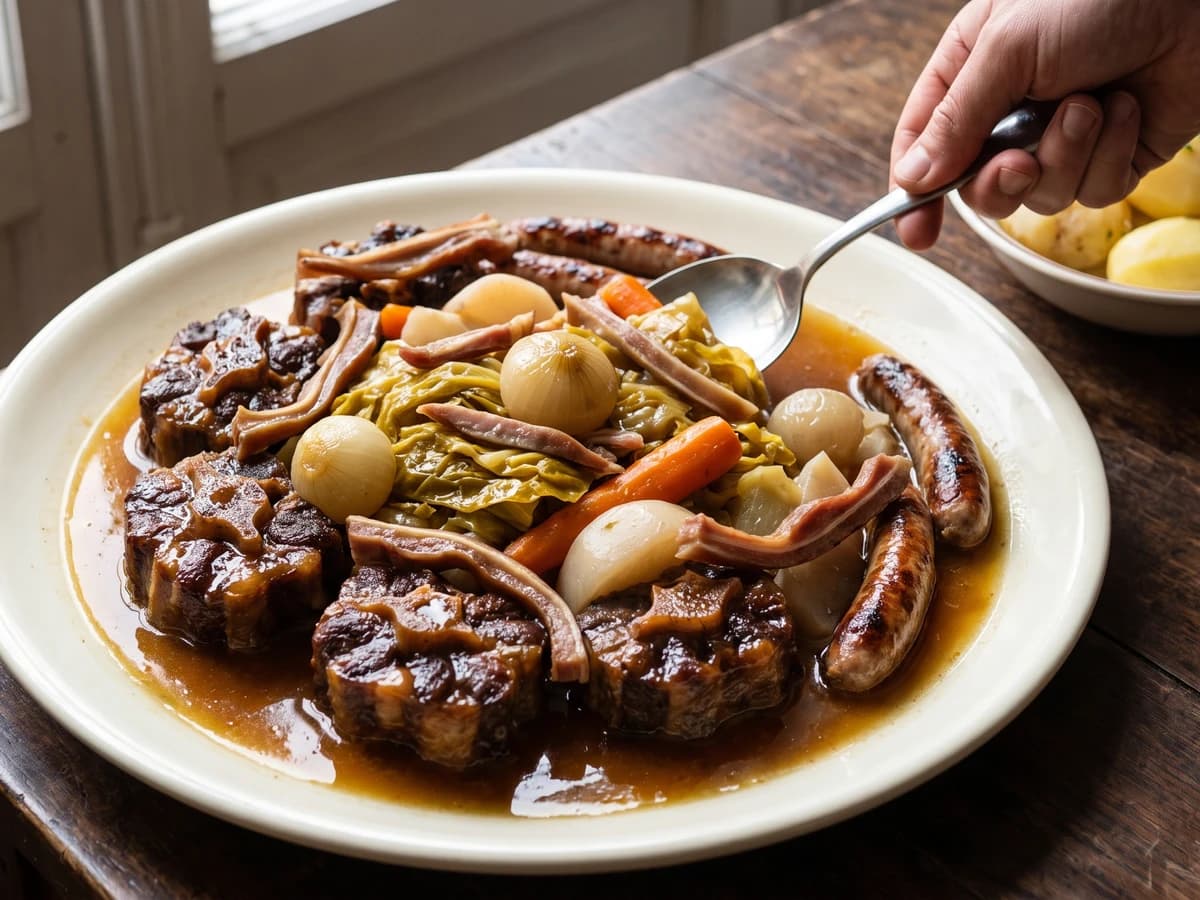
Queue de Bœuf en Hochepot gathers oxtail, pig's trotter and ear, cabbage, roots, and grilled chipolatas around a clear, gelatin-rich broth whose quiet simmer keeps every piece tender and distinct.
Chef Juliette
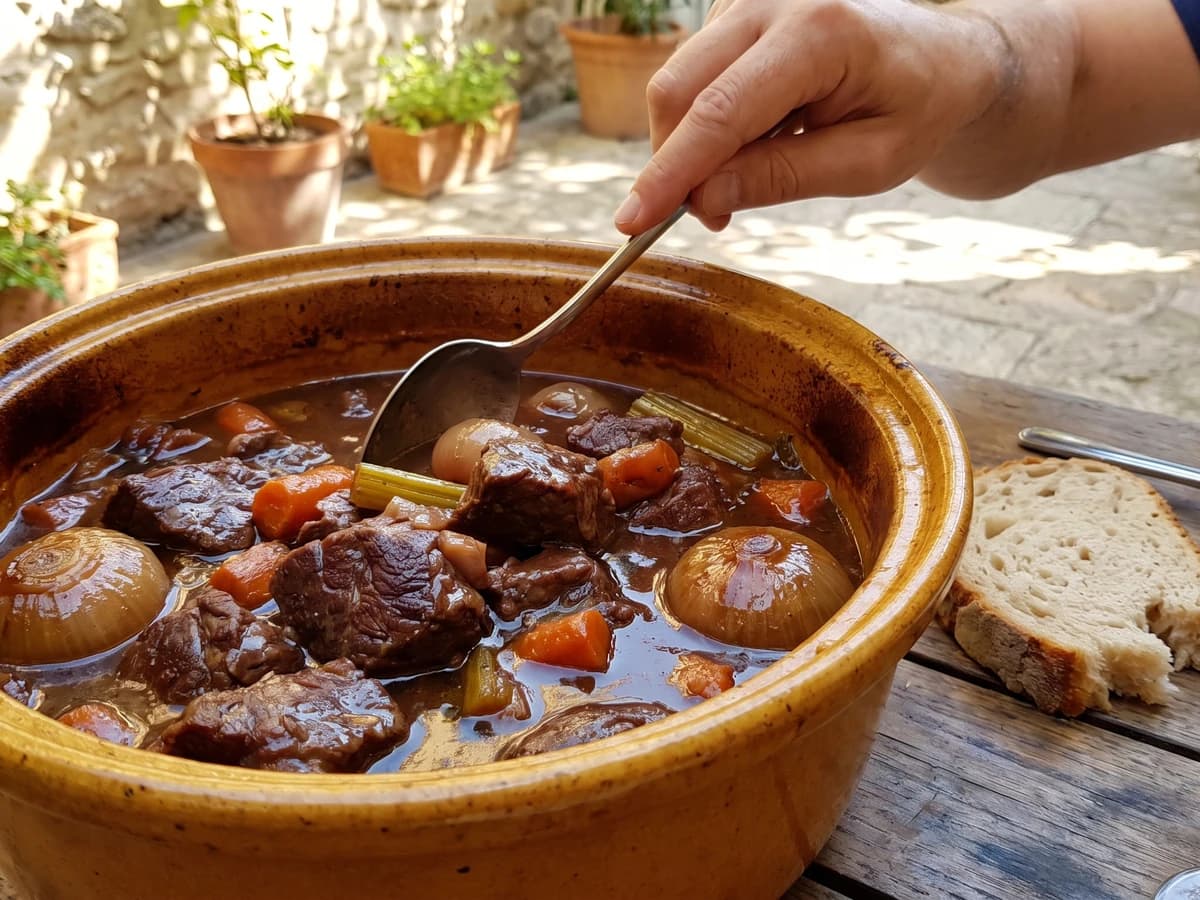
Beef shoulder larded with bacon, sharpened by red wine and vinegar, then sealed with garlic, vegetables, and dry lemon peel until the low oven turns it yielding and the gravy darkly glossy.