Chef Juliette
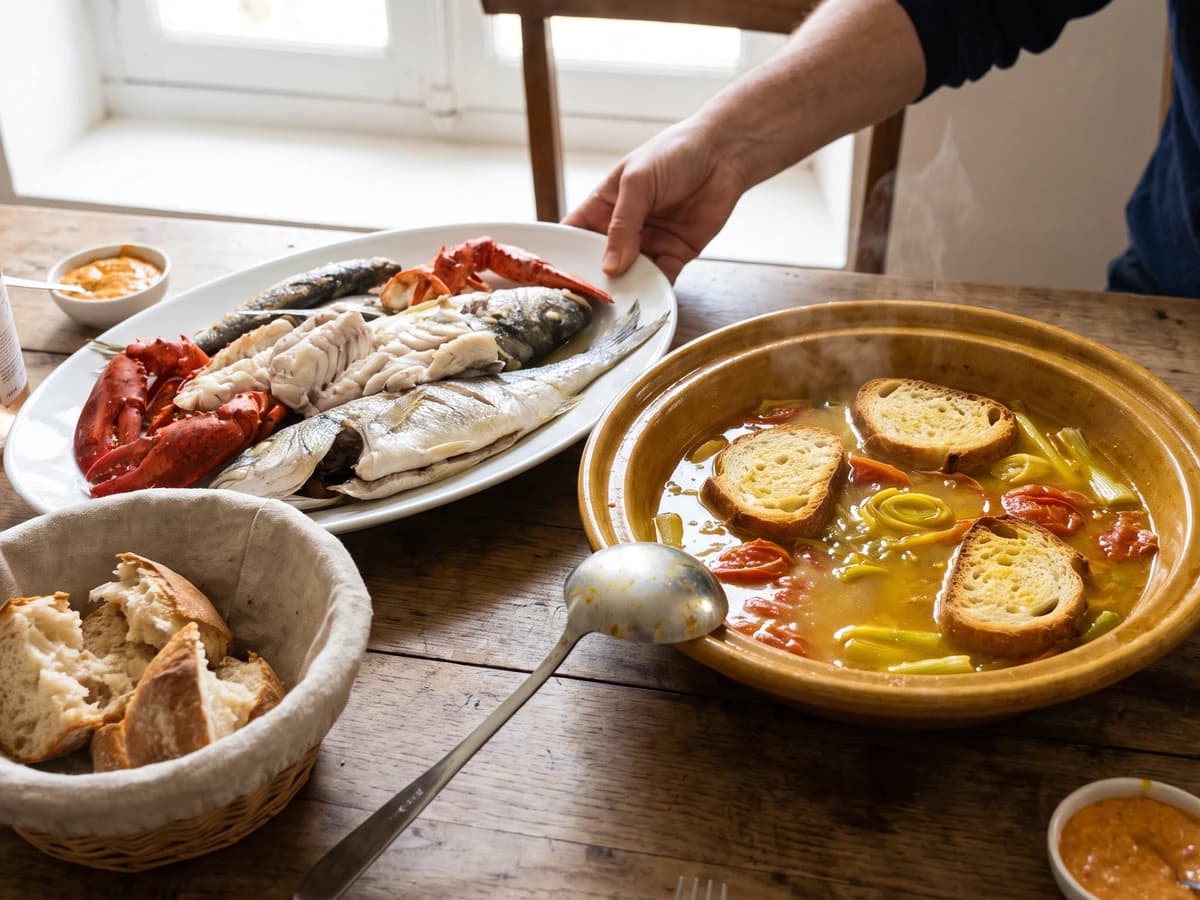
Bouillabaisse à la Marseillaise
Marseille's great fish stew, saffron-gold and garlic-scented, proves that a hard boil can be the careful choice: it binds olive oil into broth before the whole pot meets bread.
A cooking platform built around craft, culture, and the stories behind what we eat.
Created by Chef Juliette
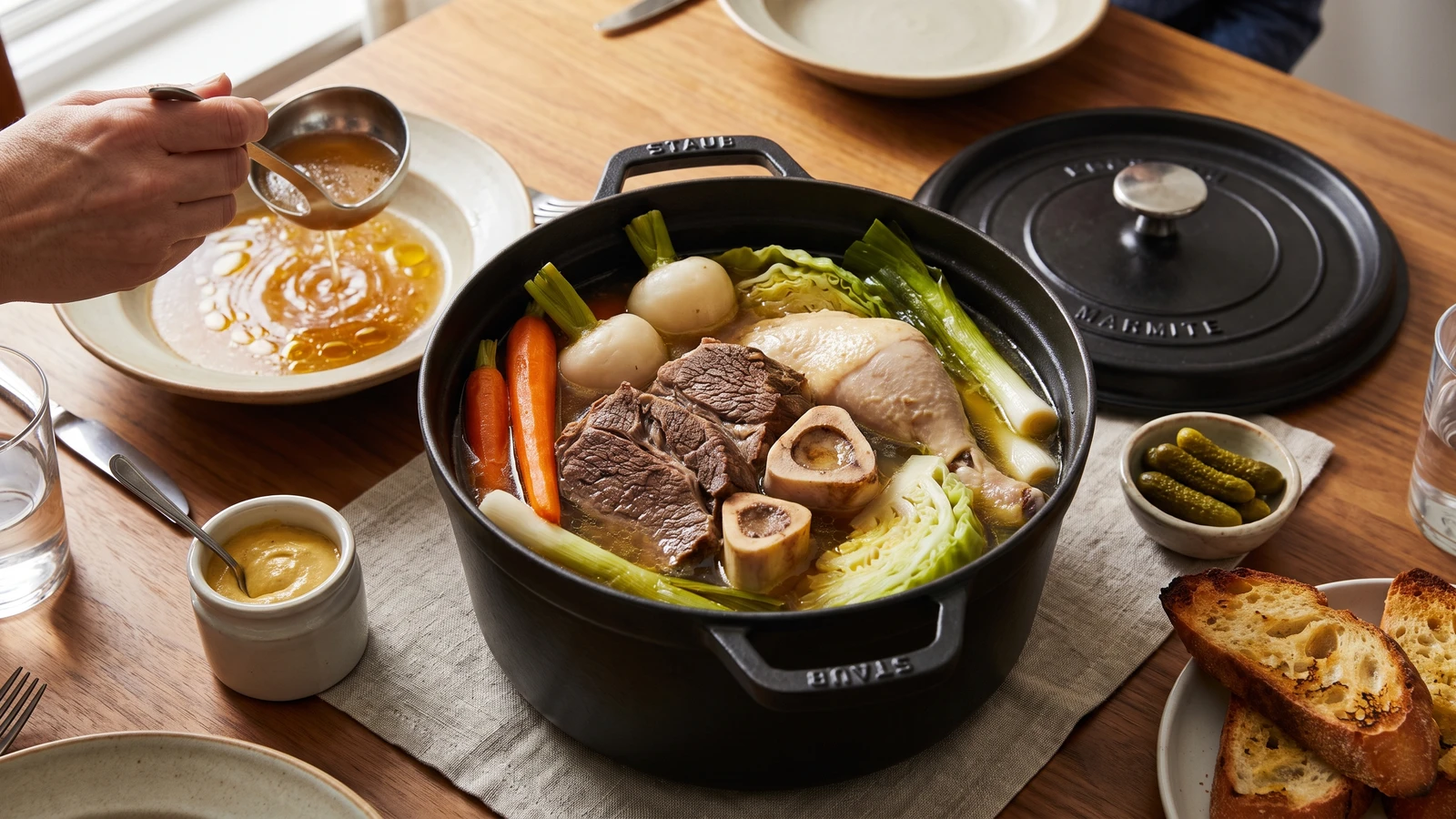
Based on No. 599, The Pot-au-Feu, from Le Guide Culinaire (1907) by Auguste Escoffier
France's Sunday pot teaches the discipline of clear broth: beef, marrow, chicken, and vegetables held below a boil, then carried to the table in two generous courses.
Pot-au-feu (the pot on the fire) teaches one true thing before all others: a clear, deeply flavored broth is drawn, never bullied. Keep the liquid at frémissement (the barest simmer), skim without stirring, and meat, marrow, roots, and cabbage give themselves to the pot without turning the broth muddy or the meat dry.
The classical Petite Marmite formula assumed a broad pot kept close to the fire, several pieces of beef, a mature fowl sturdy enough to share their long cooking, and hands free to skim while dinner moved around them. For four diners, the honest equivalent is a six-quart pot, chuck for flesh, shank for gelatin, four marrow bones, and young chicken added later because today's bird is tender. The brigade-sized pot can go. Cold extraction, patient skimming, marrow, vegetables, and the two-course service must stay. One cook, one stove, one evening.
When it is right, the broth is amber and clean, the beef yields beneath the knife, and the leeks hold together just long enough to reach the platter. Skim before you stir, and never let the pot gallop. That is the step that decides the dish.
Pot-au-feu belongs to the French household table as a national dish rather than to one province: the name describes the pot kept near the hearth and filled according to each region's larder. At Parisian bourgeois tables and in the grand kitchens that codified the canon, the same practice became Petite Marmite, with selected beef, fowl, marrow, and vegetables presented in ordered courses. It is often dismissed as boiled beef, but the broth is made in the act of cooking the meal, which is why its restrained simmer carries such importance.
Quantity
1½ pounds (680 g)
tied into a compact roast
Quantity
1 pound (450 g)
cross-cut
Quantity
2 pieces (about 1½ pounds / 680 g total)
Quantity
4 pieces (about 1 pound / 450 g total)
Quantity
12 cups (2.8 liters / 2.8 kg)
Quantity
1 cup (240 ml / 240 g)
reserved in case the pot boils
Quantity
8 cups (1.9 liters / 1.9 kg)
Quantity
2 teaspoons (10 ml / 12 g), divided, plus more to finish
Quantity
1 (about 7 ounces / 200 g)
peeled and halved crosswise
Quantity
2
Quantity
1
made with 6 parsley stems, 2 thyme sprigs, and 1 bay leaf
Quantity
1 teaspoon (5 ml / 3 g)
Quantity
4 (about 1 pound / 450 g)
peeled and halved crosswise
Quantity
3 (about 12 ounces / 340 g)
peeled and quartered
Quantity
3 (about 1 pound / 450 g)
white and pale green parts cleaned and tied into bundles
Quantity
3 (about 5 ounces / 140 g)
cut into large lengths
Quantity
½ head (about 1 pound / 450 g)
cut through the core into 4 wedges
Quantity
8 thick slices (about 8 ounces / 225 g)
toasted dry
Quantity
¼ cup (60 ml / 60 g)
Quantity
12 (about 4 ounces / 120 g)
drained
Quantity
2 tablespoons (30 ml / 36 g)
for serving
| Ingredient | Quantity |
|---|---|
| boneless beef chucktied into a compact roast | 1½ pounds (680 g) |
| bone-in beef shankcross-cut | 1 pound (450 g) |
| bone-in chicken leg quarters | 2 pieces (about 1½ pounds / 680 g total) |
| cross-cut beef marrow bones | 4 pieces (about 1 pound / 450 g total) |
| cold water | 12 cups (2.8 liters / 2.8 kg) |
| ice-cold water (optional)reserved in case the pot boils | 1 cup (240 ml / 240 g) |
| water for blanching the cabbage | 8 cups (1.9 liters / 1.9 kg) |
| fine sea salt | 2 teaspoons (10 ml / 12 g), divided, plus more to finish |
| large yellow onionpeeled and halved crosswise | 1 (about 7 ounces / 200 g) |
| whole cloves | 2 |
| bouquet garnimade with 6 parsley stems, 2 thyme sprigs, and 1 bay leaf | 1 |
| black peppercorns | 1 teaspoon (5 ml / 3 g) |
| medium carrotspeeled and halved crosswise | 4 (about 1 pound / 450 g) |
| small turnipspeeled and quartered | 3 (about 12 ounces / 340 g) |
| medium leekswhite and pale green parts cleaned and tied into bundles | 3 (about 1 pound / 450 g) |
| celery stalkscut into large lengths | 3 (about 5 ounces / 140 g) |
| small Savoy cabbagecut through the core into 4 wedges | ½ head (about 1 pound / 450 g) |
| baguettetoasted dry | 8 thick slices (about 8 ounces / 225 g) |
| Dijon mustard | ¼ cup (60 ml / 60 g) |
| cornichonsdrained | 12 (about 4 ounces / 120 g) |
| coarse sea saltfor serving | 2 tablespoons (30 ml / 36 g) |
Heat a dry skillet over medium-high heat and set the onion halves in it, cut sides down. Let them char until nearly black in patches, then press one clove into each half. This dark face gives the broth its warm amber color without browning the meat. Tie the chuck firmly, clean the leeks between every layer, and keep the garniture, the vegetable accompaniment, in generous pieces so it survives the long pot.
Set the chuck and shank in a narrow six-quart stockpot and pour in the 12 cups of cold water. Add half the fine salt. Bring the pot up very slowly over medium-low heat, allowing thirty to forty minutes before the first gentle movement appears at the surface. Starting cold draws gelatin and flavor from the meat; browning would make a fine stew, but it would not make this clear broth.
As gray foam gathers, skim it gently from the surface without stirring the pot. Continue until the foam becomes sparse, about twenty minutes, then add the charred onion, bouquet garni, peppercorns, celery, and remaining fine salt. Partly cover and hold the broth at frémissement for 2 hours. If it reaches a hard boil, lower the heat immediately and pour the reserved ice-cold water around the edge; ça se rattrape. Wait for the impurities to rise, skim again, and strain through damp cheesecloth later if needed.
While the beef simmers, bring the separate 8 cups of water to a boil. Lower in the cabbage wedges and blanch them for 5 minutes, then drain and rinse briefly under cool water. Blanching removes the cabbage's strongest sulfurous edge and keeps it from clouding the broth. This small extra pot is part of the dish, not kitchen theater.
After the beef has simmered for 2 hours, lower in the chicken leg quarters, carrots, and turnips. Let the pot return gradually to frémissement, skimming once more if the chicken releases any foam, and cook for 25 minutes. Today's young chicken enters later than the mature fowl of the classical kitchen because it needs tenderness preserved, not toughness conquered.
Add the tied leeks and blanched cabbage wedges, keeping them near the surface where they can be lifted without breaking. Continue cooking for 25 to 30 minutes. The chicken should yield at the joint and register at least 165°F (74°C) in its thickest part; the beef should accept a thin knife with little resistance. If the chicken is ready before the beef, lift it out with the vegetables, moisten everything with a ladle of broth, and continue the beef alone. A stubborn cut sets the clock, not the other way around.
During the final 20 minutes, wrap each marrow bone loosely in damp cheesecloth and lower it into the broth. Keep the pot quiet. The marrow is ready when it looks translucent and gives beneath a small knife but has not melted out of the bone. If cheesecloth is unavailable, stand the bones upright in a small saucepan, cover them with strained broth, and poach at the same gentle tremble for about 15 minutes.
Lift the marrow bones, chicken, beef, and serving vegetables onto a warm platter. Keep them covered with a little hot broth. Discard the onion, celery, bouquet garni, and peppercorns, then strain the broth through a fine sieve into a clean saucepan without pressing on the solids. Spoon away excess surface fat, leaving a few golden beads for flavor. If the broth tastes weak, reduce it alone for 10 to 15 minutes; if it has grown too concentrated or salty, loosen it a little at a time with hot water. A full consommé clarification was service scaffolding for a brigade. Careful skimming and straining give the home table everything this dish intends.
Taste the broth for salt and serve it first in warm bowls, with one dry baguette toast per person. For the second course, slice the chuck across the grain, lift the shank meat from its bone, and divide each chicken leg quarter at the joint. Arrange the meats with the carrots, turnips, leeks, cabbage, and marrow bones on the warm platter. Give each diner another toast for the marrow, and pass Dijon mustard, cornichons, and coarse salt. Never apologize at your own table. À table!
1 serving (about 1150g)
Culinary guides, cultural storytelling, and the editorial depth that makes cooking meaningful.
Discover Culinary ExplorerChef Juliette
Marseille's great fish stew, saffron-gold and garlic-scented, proves that a hard boil can be the careful choice: it binds olive oil into broth before the whole pot meets bread.
Chef Juliette
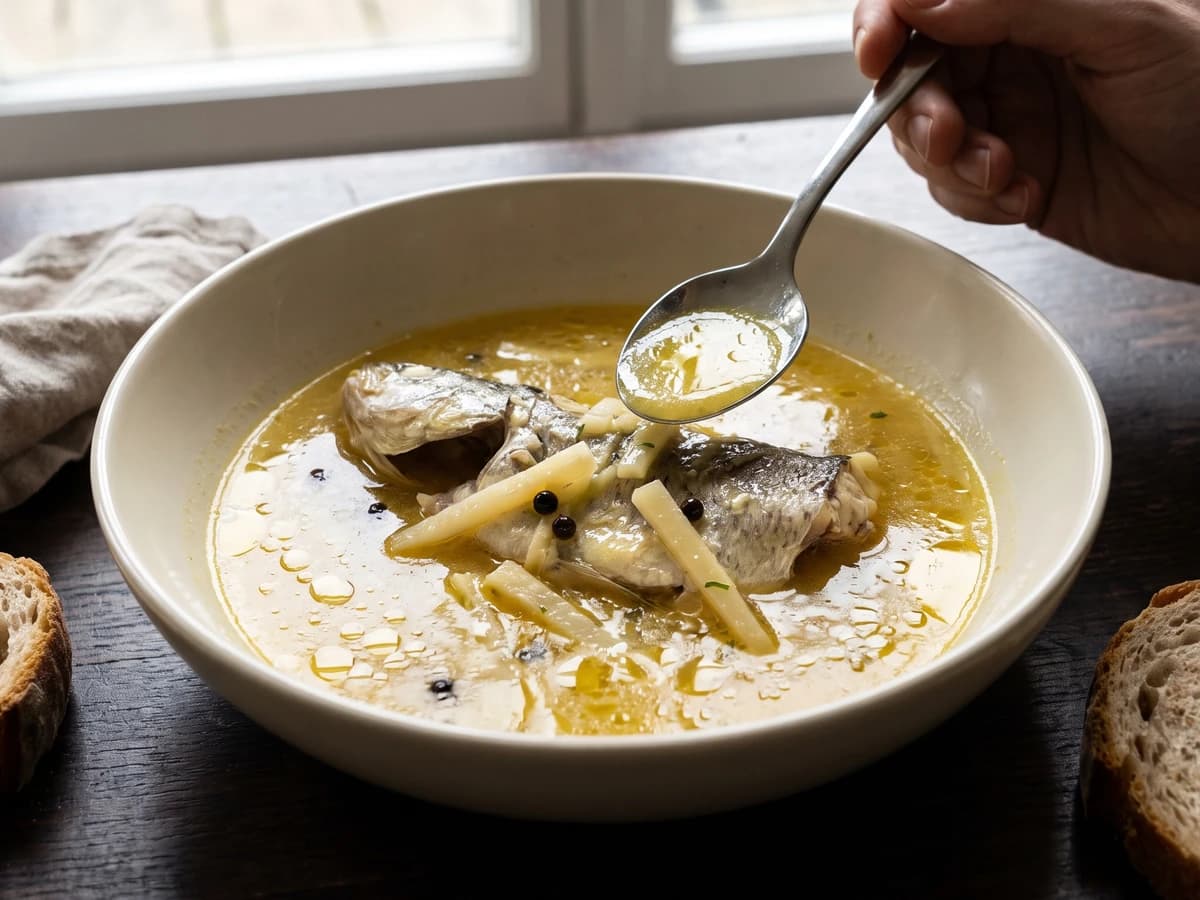
Waterzoi asks fresh, bone-in river fish to thicken its own buttery broth, with parsley root and pepper for company. No flour, no stockpot, just a brisk simmer watched closely.
Chef Juliette
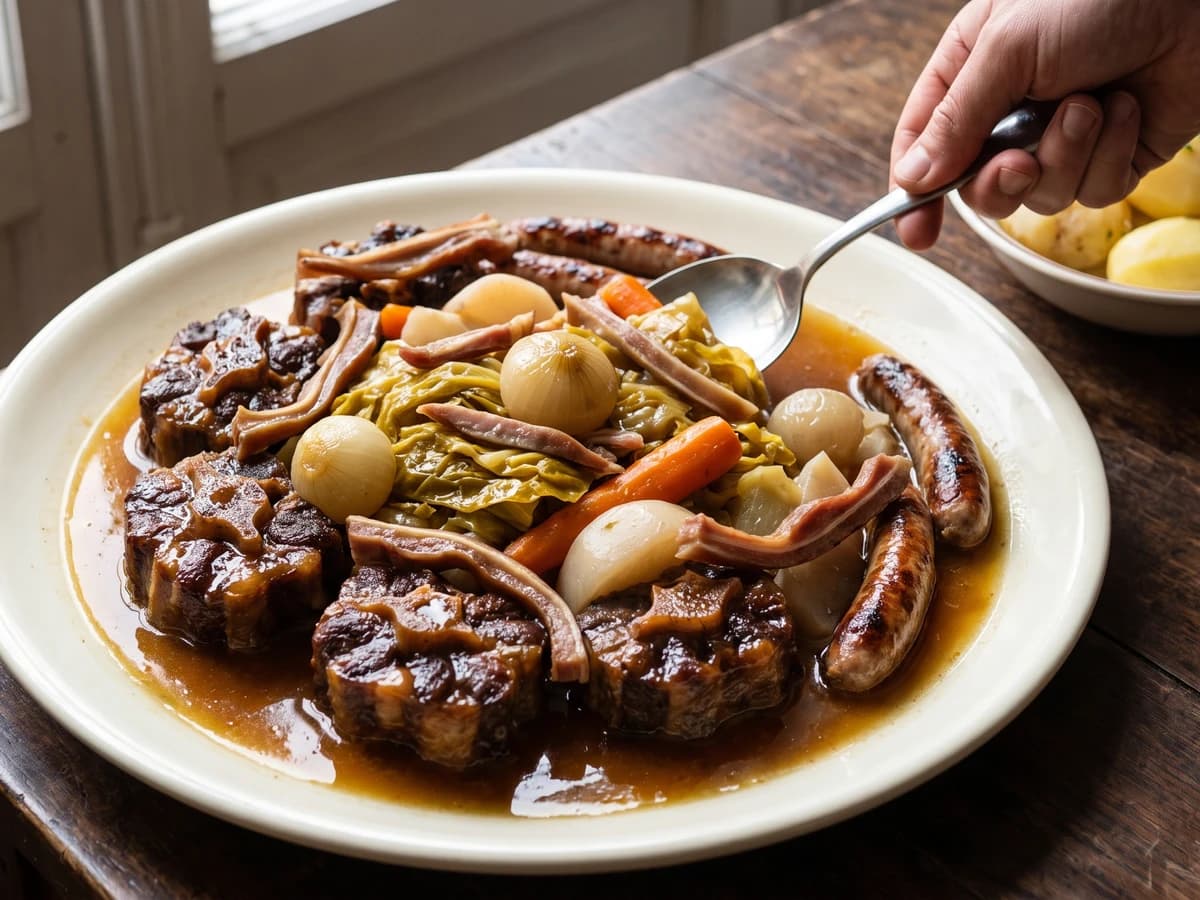
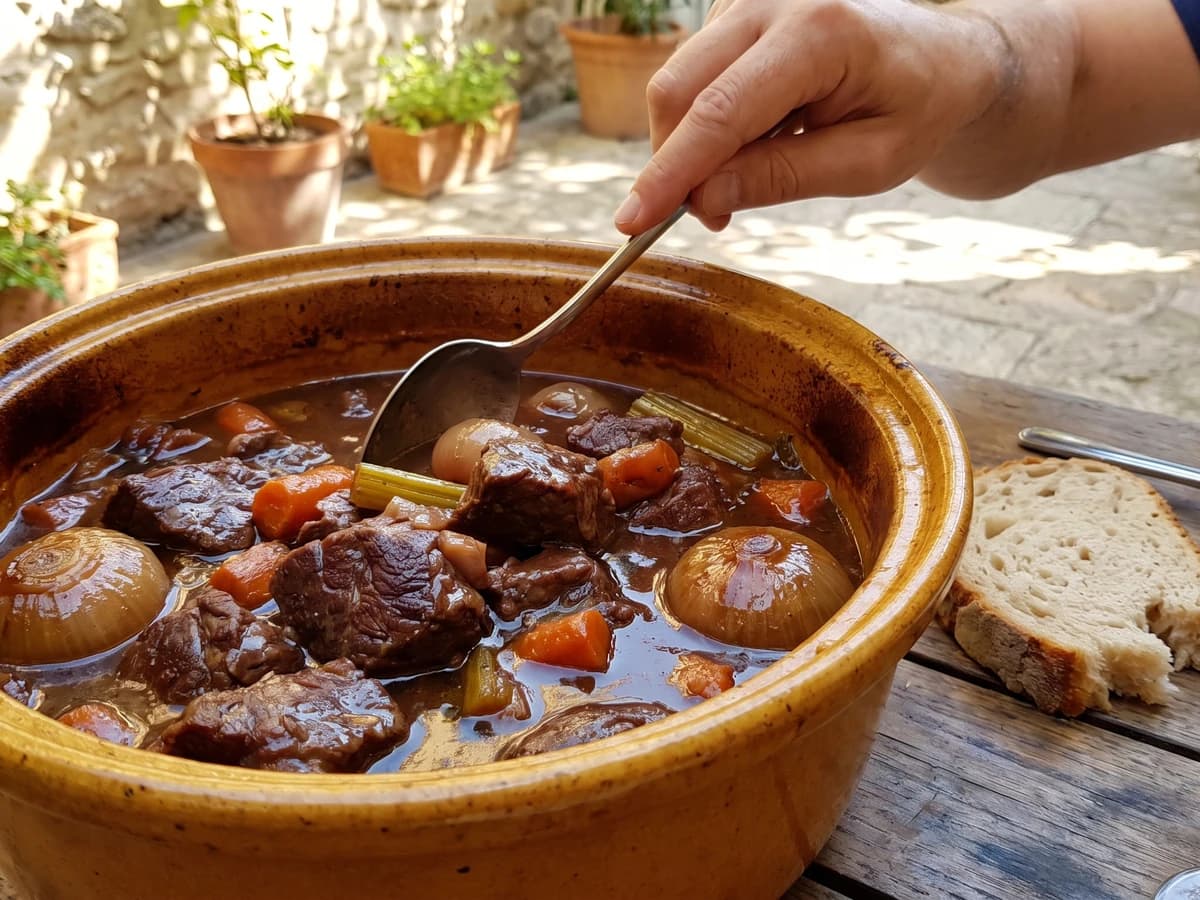
Queue de Bœuf en Hochepot gathers oxtail, pig's trotter and ear, cabbage, roots, and grilled chipolatas around a clear, gelatin-rich broth whose quiet simmer keeps every piece tender and distinct.
Chef Juliette
Beef shoulder larded with bacon, sharpened by red wine and vinegar, then sealed with garlic, vegetables, and dry lemon peel until the low oven turns it yielding and the gravy darkly glossy.