Chef Juliette
Ordinary or White Consommé
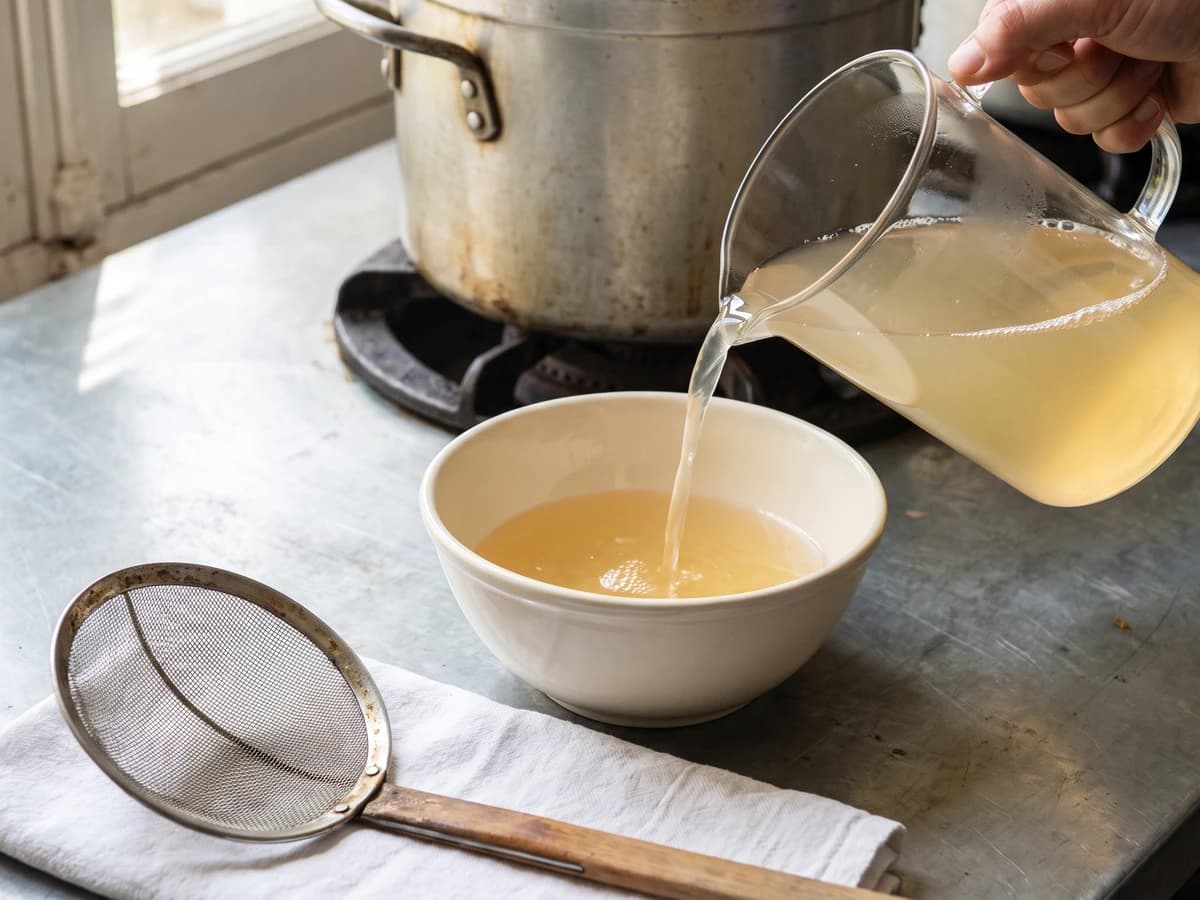
Beef shin, lean beef, and fowl begin in cold water and rise slowly toward a tremble. Skim before the boil, and you learn the quiet discipline that gives every clear French broth its backbone.
A cooking platform built around craft, culture, and the stories behind what we eat.
Created by Chef Juliette
Based on No. 2971, Apple Jelly, from Le Guide Culinaire (1907) by Auguste Escoffier
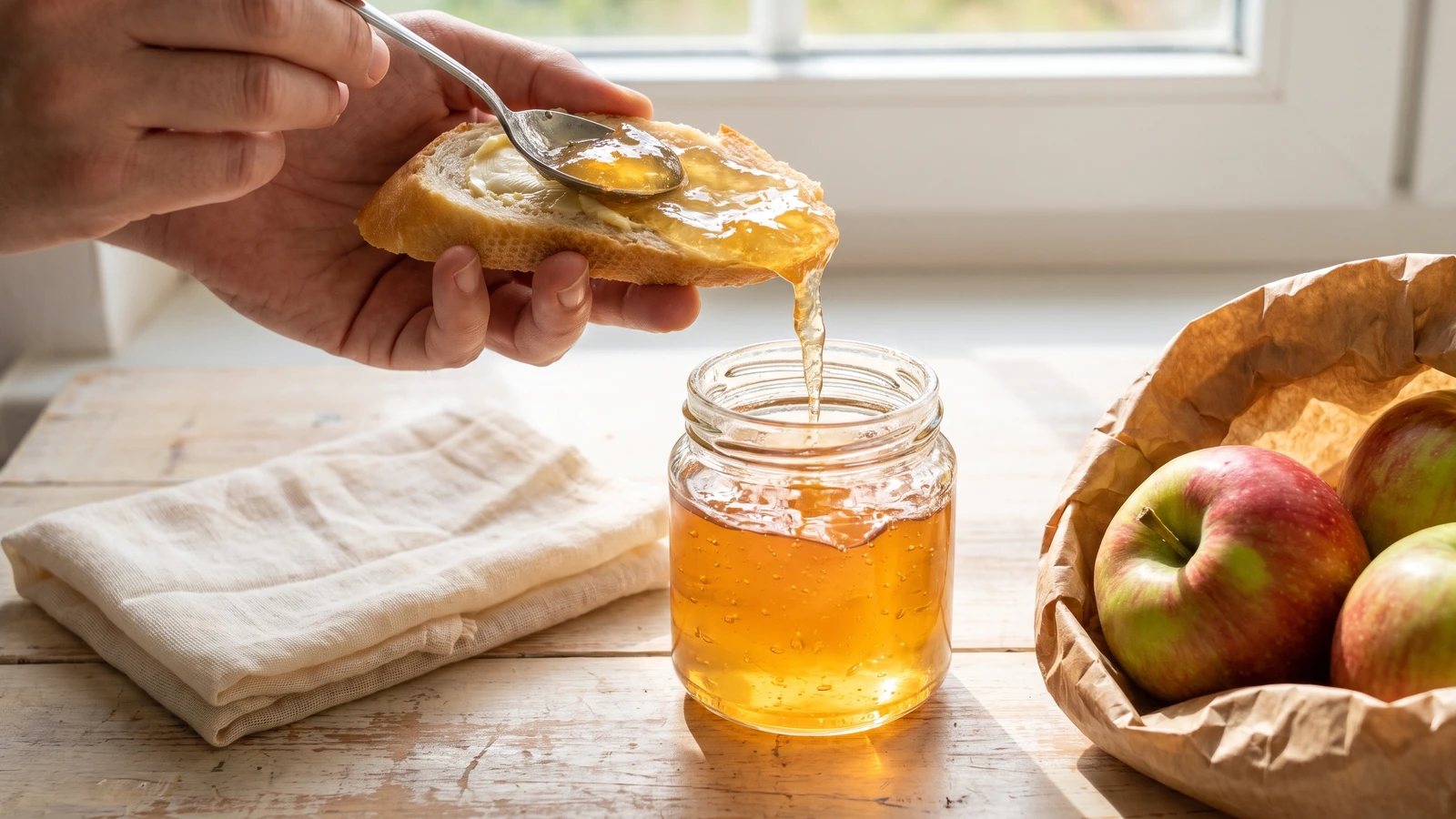
Gelée de pommes teaches the preserve-maker's first law: clarity comes from restraint. Let tart apples surrender their pectin, never press the muslin, then set the lucid juice with sugar and vanilla.
Gelée de pommes (apple jelly) teaches the first law of clear preserves: pectin must be drawn from the fruit without dragging the fruit itself into the juice. Before you touch a pan, know this one thing: never press the apples. Their skins and cores give the set; pressure gives cloudiness.
The old formula assumed a broad copper preserving pan, loaf sugar, muslin always ready, and a pantry batch large enough to occupy several hands. The loaf sugar and brigade-sized equipment were scaffolding, so they can go. A wide stainless-steel pan, ordinary white granulated sugar kept at the exact ratio, and a damp square of muslin give one cook the same result. The batch has been scaled to about eight small jars, but the sequence has not changed: cook lightly, drain by gravity, pour the juice away from its deposit, boil it with sugar and vanilla, then strain it once more.
The finished gelée should be lucid amber, softly fragrant with vanilla, and tender enough to tremble on a spoon rather than bounce. One cook, one stove, one evening. The step that matters most is the quiet, unpressed drain, because clarity lost there cannot be boiled back into the jelly.
Gelée de pommes belongs to orchard households across Normandy, Brittany, and the other apple-growing districts of northern and western France, where sound windfalls and tart cooking fruit were preserved after the harvest. From the household pantry it entered the classical kitchen as both a breakfast preserve and a clear glazing jelly for fruit preparations. Its set does not come from apple flesh, as is sometimes supposed, but from pectin drawn chiefly from the skins and cores while the pulp is kept out of the juice.
Quantity
About 24 medium (12 lb / 5.4 kg)
scrubbed, with stems and damaged portions removed
Quantity
14 cups (3.3 L / 3.3 kg)
Quantity
5½ cups (39 oz / 1.1 kg), calculated at 13 oz (369 g) per 1 quart (4 cups / 946 ml) strained juice
Quantity
1 bean
cut crosswise into thirds
| Ingredient | Quantity |
|---|---|
| tart cooking applesscrubbed, with stems and damaged portions removed | About 24 medium (12 lb / 5.4 kg) |
| cold water | 14 cups (3.3 L / 3.3 kg) |
| white granulated sugar | 5½ cups (39 oz / 1.1 kg), calculated at 13 oz (369 g) per 1 quart (4 cups / 946 ml) strained juice |
| vanilla beancut crosswise into thirds | 1 bean |
Put two small saucers in the freezer for testing the set. Cut the scrubbed apples into eighths without peeling or coring them; the skins and cores carry much of the pectin this jelly needs. Remove the stems and any spoiled flesh, but leave the sound cores and pips intact. Do not crush the pips.
Put the apples and water into a large nonreactive pot. Bring them just to a boil, then lower the heat and simmer gently for 25 to 30 minutes, turning the upper fruit through the liquid once or twice. Stop when the pieces are tender and beginning to collapse at their edges, but before they become applesauce. Overcooked fruit releases fine pulp that muddies the juice, so resist the masher. Light cooking is part of the dish, not brigade scaffolding.
Dampen a jelly bag or two layers of muslin with hot water, wring it out, and suspend it securely over a deep nonreactive bowl. Ladle in the apples and their liquid, then leave them to drain by gravity for 1½ to 2 hours. Do not twist, squeeze, or press the cloth. If the juice has become cloudy, ça se rattrape: let it stand until the pulp settles, then pass it through clean damp muslin again, still without pressure.
Let the collected juice stand undisturbed for 20 minutes. A fine deposit will settle even when you have worked carefully. Pour the clear juice slowly into a measuring jug, stopping before the deposit reaches the lip, and measure up to 3 quarts (12 cups / 2.8 L). For every quart of juice, weigh exactly 13 oz (369 g) sugar and allow one-third of the vanilla bean. If your apples yielded less juice, reduce both in the same proportion; the ratio belongs to the formula.
Pour the measured juice into a wide preserving pan and add the calculated sugar and vanilla. Warm gently, stirring only until every grain of sugar has dissolved, then bring the mixture to a full, brisk boil. Boil uncovered for 15 to 25 minutes, until it reaches about 220°F (104 to 105°C) at sea level, or about 8°F (4°C) above water's boiling point at your altitude. Test a teaspoonful on a frozen saucer: wait 30 seconds, then push it with a fingertip. The surface should wrinkle and the divided jelly should close slowly. If it runs together at once, boil for one minute and test again. Short tests preserve the apple's brightness; blind extra boiling darkens it and weakens the fresh flavor.
Remove the vanilla pieces. Rinse the muslin with very hot water, wring it out, and line a warmed heatproof jug with it. Pour the finished jelly through immediately and let it fall freely, without pressing. Warm cloth and a warm jug keep the jelly fluid enough to pass cleanly. If it begins setting in the cloth, scrape it back into the pan, warm it only until fluid, then strain again through freshly warmed muslin.
Pour the jelly into clean, hot half-pint jars, leaving ¼ inch (6 mm) headspace. Wipe the rims, fit the lids, and process the jars in a boiling-water bath for 10 minutes, adjusting the processing time for your altitude according to local preserving guidance. Lift the jars out upright and leave them untouched for 12 to 24 hours. Check the seals, label the jars, and refrigerate any that failed to seal. The jelly may take a full day to reach its final tender set. Once it does, bring out the bread and butter. À table!
1 serving (about 20g)
Culinary guides, cultural storytelling, and the editorial depth that makes cooking meaningful.
Discover Culinary ExplorerChef Juliette
Beef shin, lean beef, and fowl begin in cold water and rise slowly toward a tremble. Skim before the boil, and you learn the quiet discipline that gives every clear French broth its backbone.
Chef Juliette
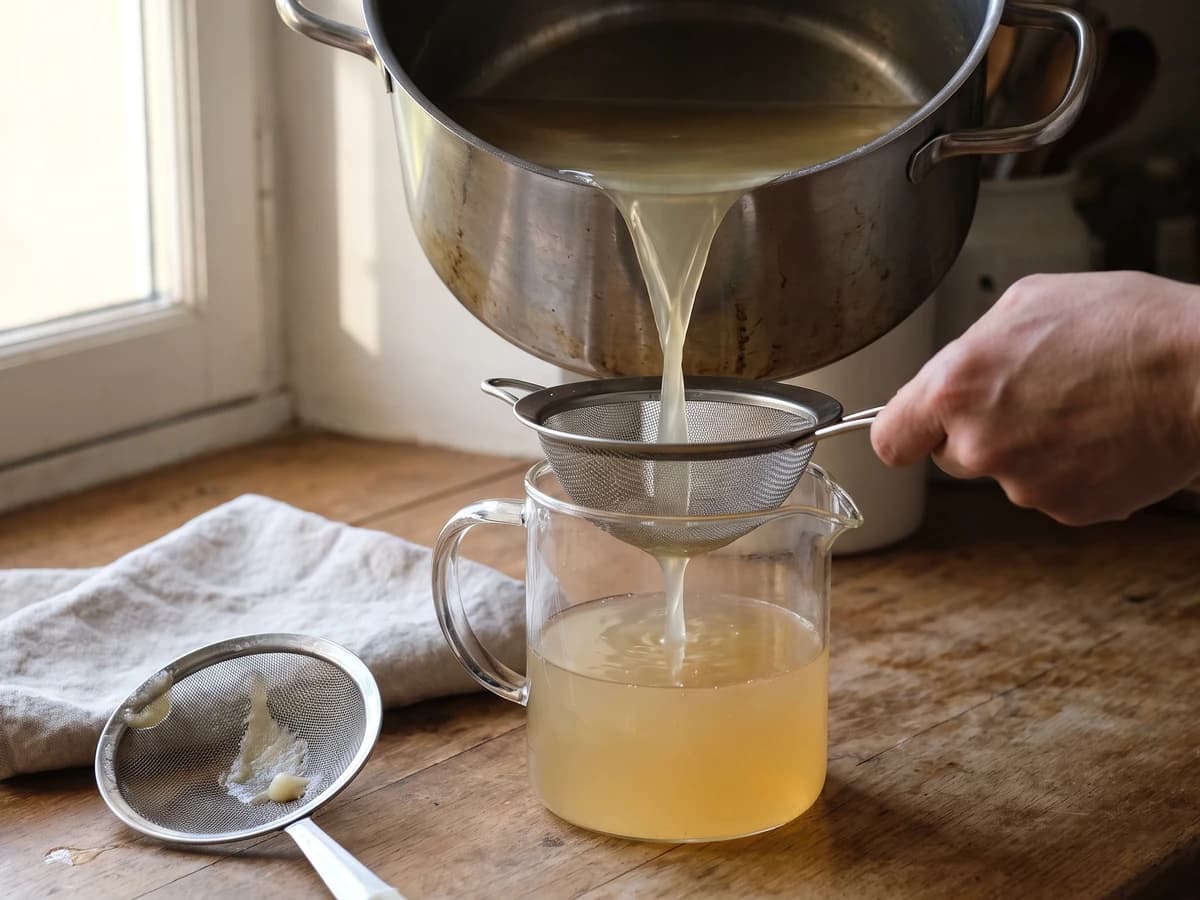
Break the veal bones small, then give them eight hours at a bare tremble. This pale, gelatinous fond becomes the quiet foundation beneath velouté, blanquette, and every sauce that must stay light.
Chef Juliette
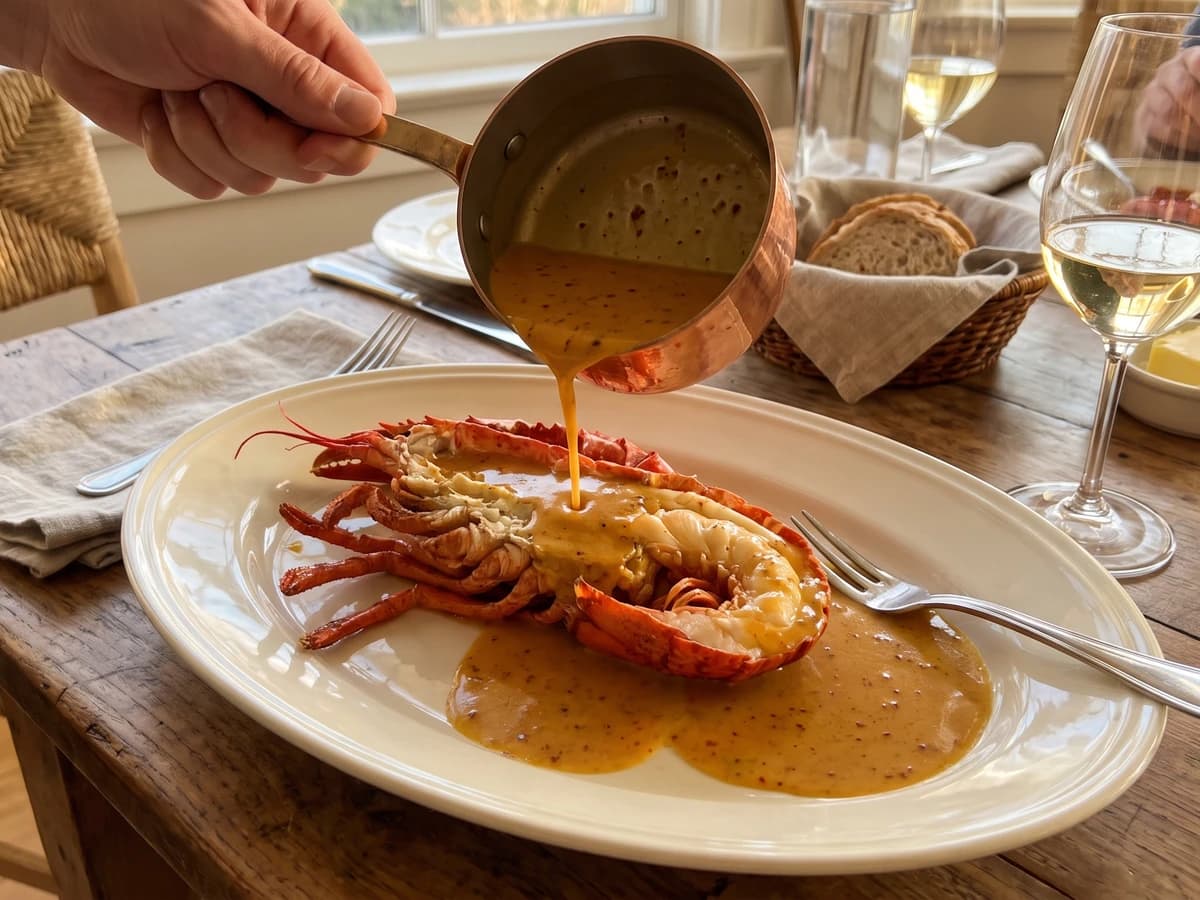
Sauce Orientale concentrates lobster-rich American Sauce with curry, then folds in cream away from the fire: a glossy, gently spiced derivative made for lobster, crayfish, and firm fish.
Chef Juliette
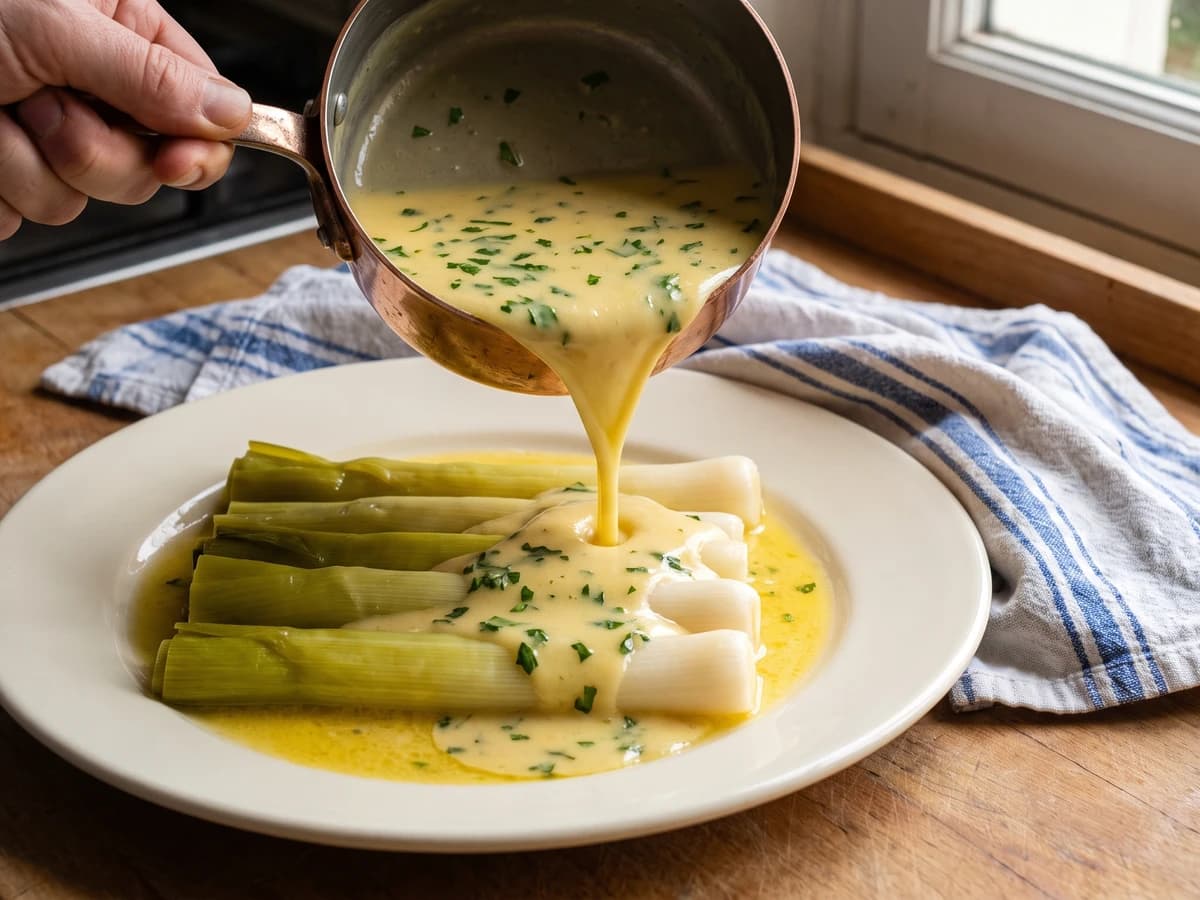
An old lesson in sauce families: Sauce Allemande takes mushroom liquor, then butter, lemon, and parsley, becoming a glossy Poulette for sheep's trotters, leeks, cauliflower, and anything needing gentle richness with a bright edge.