Chef Juliette
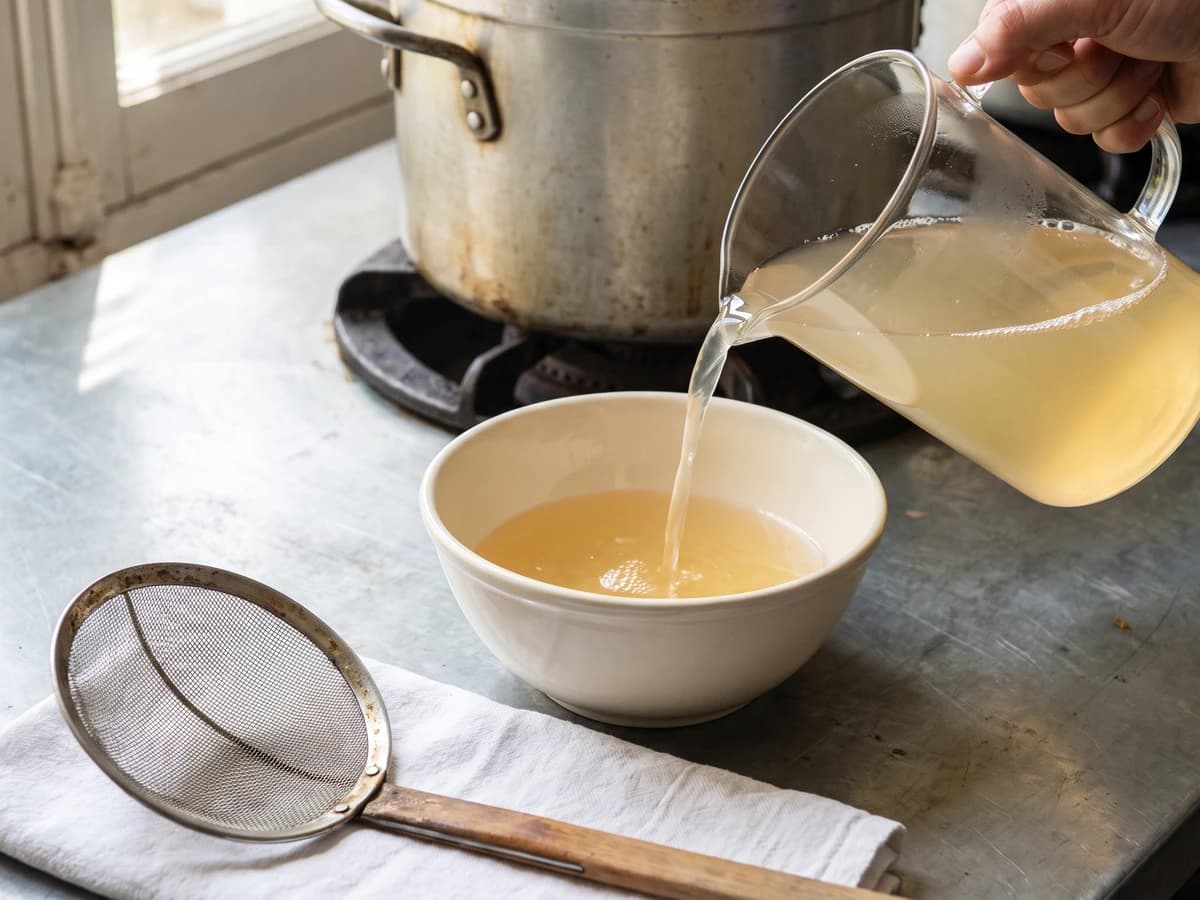
Ordinary or White Consommé
Beef shin, lean beef, and fowl begin in cold water and rise slowly toward a tremble. Skim before the boil, and you learn the quiet discipline that gives every clear French broth its backbone.
A cooking platform built around craft, culture, and the stories behind what we eat.
Created by Chef Juliette
Based on No. 2969, Red-currant Jelly, Prepared Cold, from Le Guide Culinaire (1907) by Auguste Escoffier
Raw currant juice, icing sugar, dry air, and measured sunlight make a trembling garnet jelly without flame. Its delicacy is the point, and bone-dry tools are the discipline that keeps it sound.
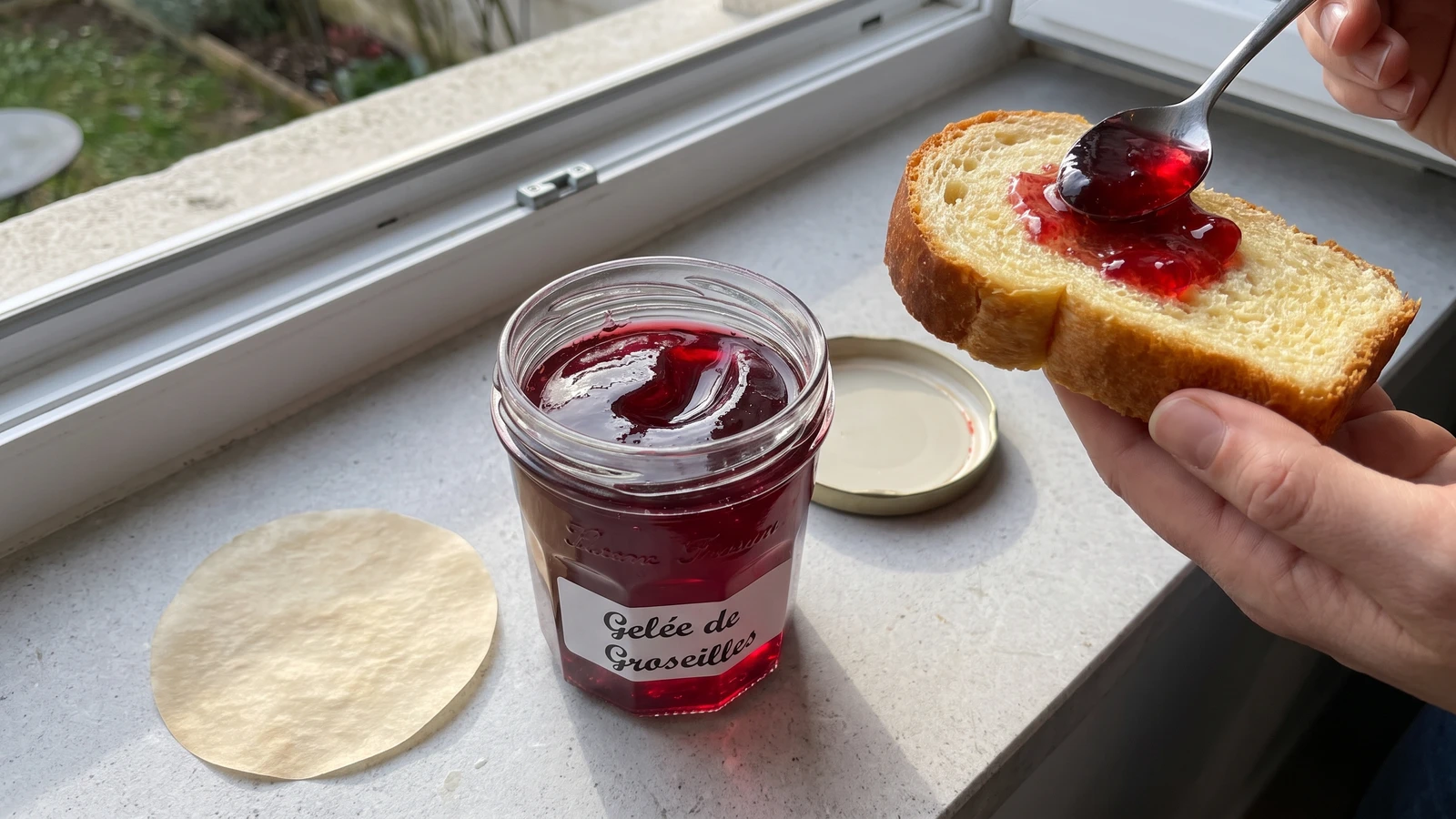
Gelée de groseilles préparée à froid (cold-prepared red-currant jelly) teaches one severe little truth: when there is no heat, dryness is part of the recipe. Currants bring their own acid and pectin, icing sugar dissolves into the raw juice, and dry air plus measured sunlight coax a soft garnet set. Before you lift a spoon, make every jar, lid, bowl, and utensil bone dry.
The book assumed a cool preserving room, rows of pots, a silver spoon, and paper covers that breathed in reliable dry weather. For a home batch, a stainless-steel spoon replaces silver because both are nonreactive, eight small wide jars replace the brigade row, and a clean frost-free refrigerator supplies the cool holding place. The silver and the scale of service are scaffolding; the exact one-pound-per-quart sugar ratio, frequent stirring, uncovered rest, and two visits to the sun are the dish. One cook, no flame, several brief turns of the hand.
This gelée de groseilles will never stand like boiled jelly, nor should it. It should tremble and slump from the spoon while tasting vividly of fresh fruit. Dissolving every grain of icing sugar while the juice stays cold is the one step that decides it. If a few grains persist, ça se rattrape, and the method below keeps heat out of the bowl.
Gelée de groseilles is a fixture of French household confiturerie (preserve making), with Lorraine, and Bar-le-Duc in particular, holding the country's most exacting currant-preserve tradition. Bar-le-Duc's emblematic preserve keeps the berries whole and removes each seed with a goose quill, so it should not be confused with this strained jelly. The cold-prepared gelée entered the classical canon as the delicate counterpoint to boiled jelly, prized for its raw fruit perfume and always understood to be the more fragile pot.
Quantity
6 cups (1.42 L / approximately 1.48 kg) prepared as directed in Red-currant Jelly (Method A) (No. 2965)
Quantity
5 2/3 cups (24 oz / 680 g)
sifted
| Ingredient | Quantity |
|---|---|
| freshly pressed currant juice | 6 cups (1.42 L / approximately 1.48 kg) prepared as directed in Red-currant Jelly (Method A) (No. 2965) |
| pure icing sugarsifted | 5 2/3 cups (24 oz / 680 g) |
Sanitize eight wide-mouth preserving jars and their lids in a dishwasher, then let them cool and dry completely without nesting them. Set the lids aside for later. Measure 6 cups of the freshly pressed juice prepared as directed in Red-currant Jelly (Method A) (No. 2965). Keep it cold and do not heat it; the perfume of raw currants is the entire point.
Pour the juice into a wide, bone-dry glass or stainless-steel bowl. Sift in the icing sugar in four additions, stirring each one thoroughly with a dry stainless-steel spoon before adding the next. Keep the bowl in the refrigerator for 2 to 3 hours and stir every 15 minutes, reaching along the bottom and around the sides. The mixture is ready when it looks clearer and heavier, and no grit catches between the spoon and the bowl. If powdery knots remain after 3 hours, do not warm the juice or add water. Ça se rattrape: press the knots against the bowl with the back of the spoon, then give the mixture another 30 minutes in the cold with two more thorough stirrings.
Divide the mixture among the dry jars, filling each to within 1/2 inch (1.25 cm) of the rim. It will still look more like syrup than jelly. That is exactly right. Arrange the jars on a clean tray and refrigerate them uncovered for 48 to 72 hours in a clean frost-free refrigerator, well away from uncovered savory food. This open rest is not brigade scaffolding; it is part of the set. By the end, the surface should look settled and the contents should move as one soft body when a jar is tilted. If moisture beads inside a jar, move the tray to a drier shelf and use the full 72-hour rest. Do not touch or blot the surface.
Cover each jar mouth with a fresh, bone-dry parchment round and secure it so dust cannot enter while a little moisture can still escape. Set the covered jars on an indoor sill in direct sunlight for 2 to 3 hours, then return them to the refrigerator. Repeat on the following day. This measured sunlight is the home equivalent of the old preserving shelf, gentle concentration without cooking. If clear sun does not arrive, keep the jars cold until it does; do not force the set with an oven or lamp.
After the second sunning, remove the parchment and close the jars with bone-dry lids. Refrigerate immediately and let the jelly settle overnight before serving. A spoon drawn through it should leave a soft cleft that slowly eases back, not a rigid cut. If it remains pourable after the full process, serve it as a soft currant preserve with brioche, pâté, or roast duck; the perfume is still splendid. This preparation is not shelf-stable. Use it within 10 days, and discard any jar showing mold, fermenting bubbles, pressure, or an alcoholic smell. Spoilage cannot be rescued. À table!
1 serving (about 270g)
Culinary guides, cultural storytelling, and the editorial depth that makes cooking meaningful.
Discover Culinary ExplorerChef Juliette
Beef shin, lean beef, and fowl begin in cold water and rise slowly toward a tremble. Skim before the boil, and you learn the quiet discipline that gives every clear French broth its backbone.
Chef Juliette
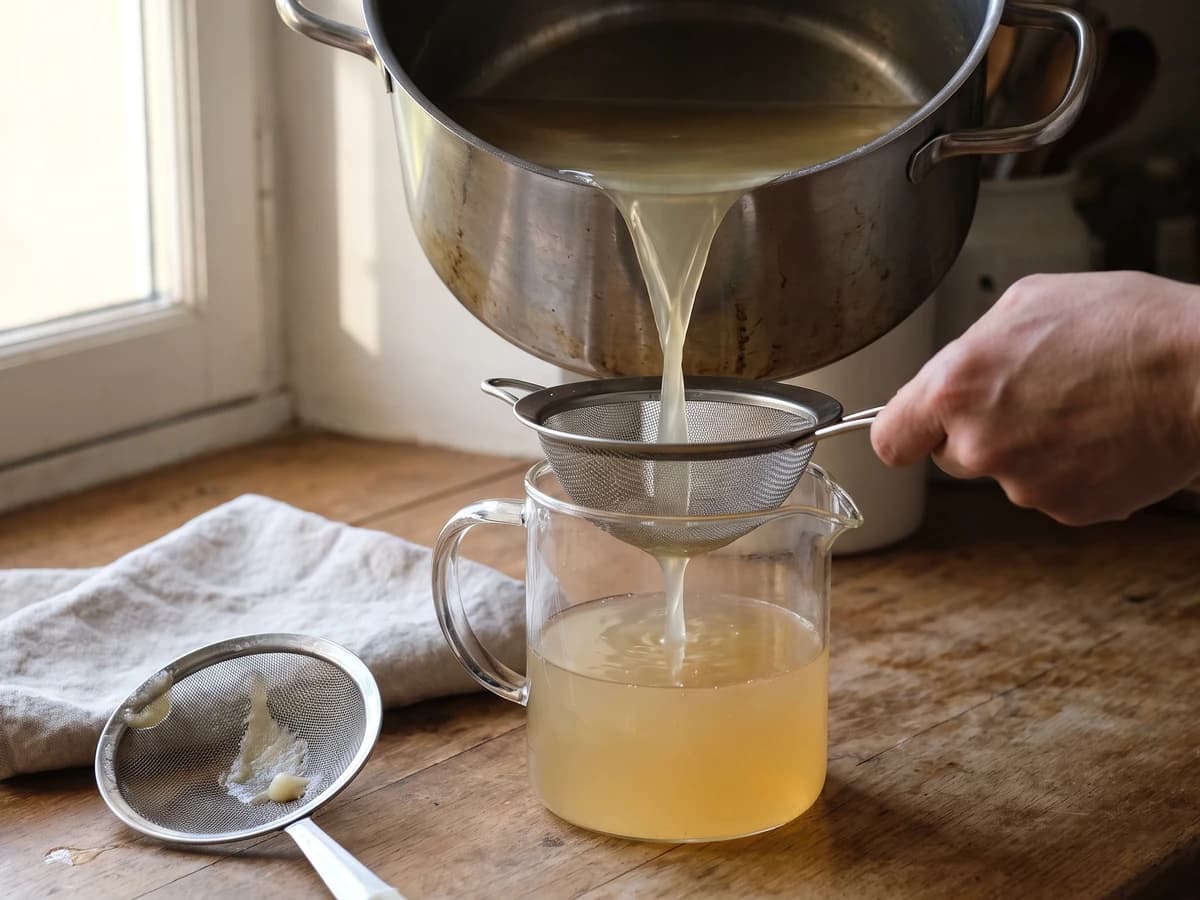
Break the veal bones small, then give them eight hours at a bare tremble. This pale, gelatinous fond becomes the quiet foundation beneath velouté, blanquette, and every sauce that must stay light.
Chef Juliette
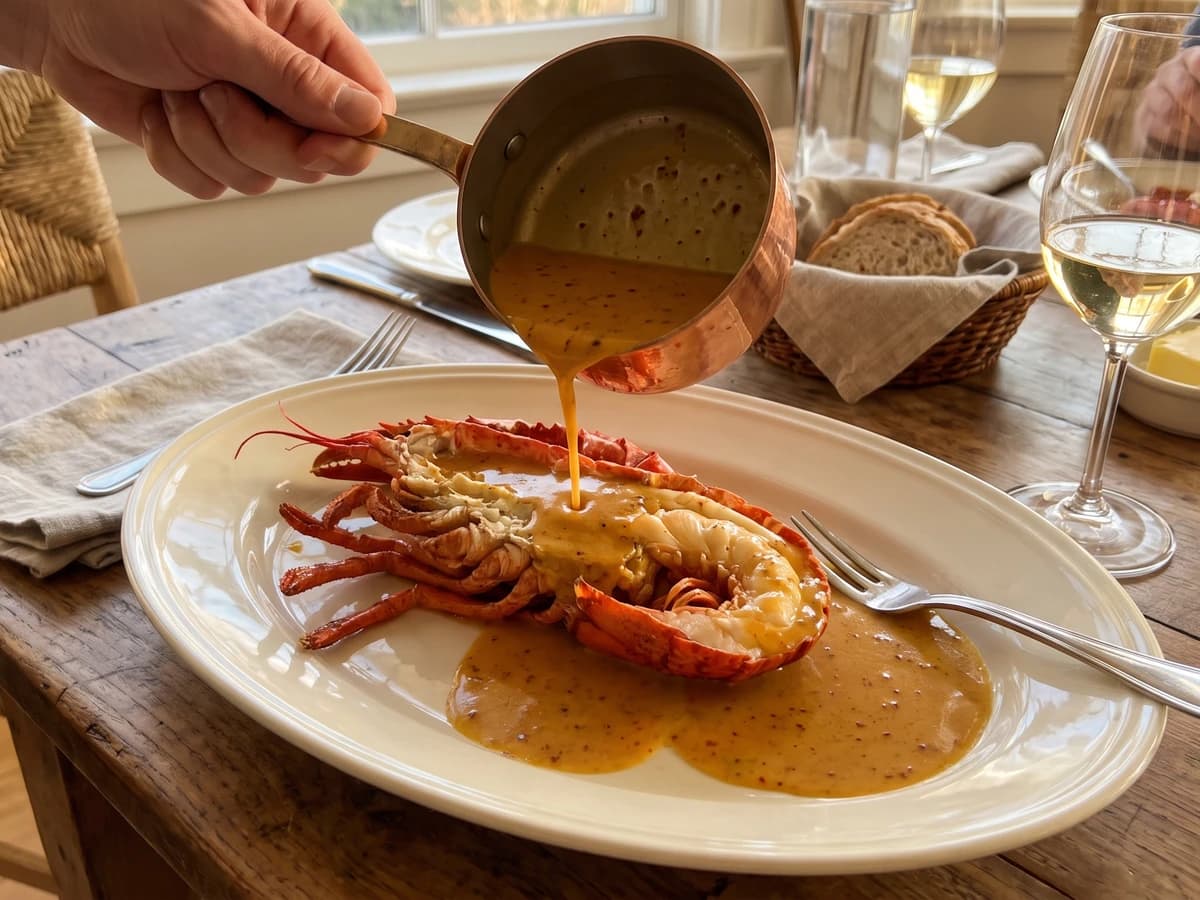
Sauce Orientale concentrates lobster-rich American Sauce with curry, then folds in cream away from the fire: a glossy, gently spiced derivative made for lobster, crayfish, and firm fish.
Chef Juliette
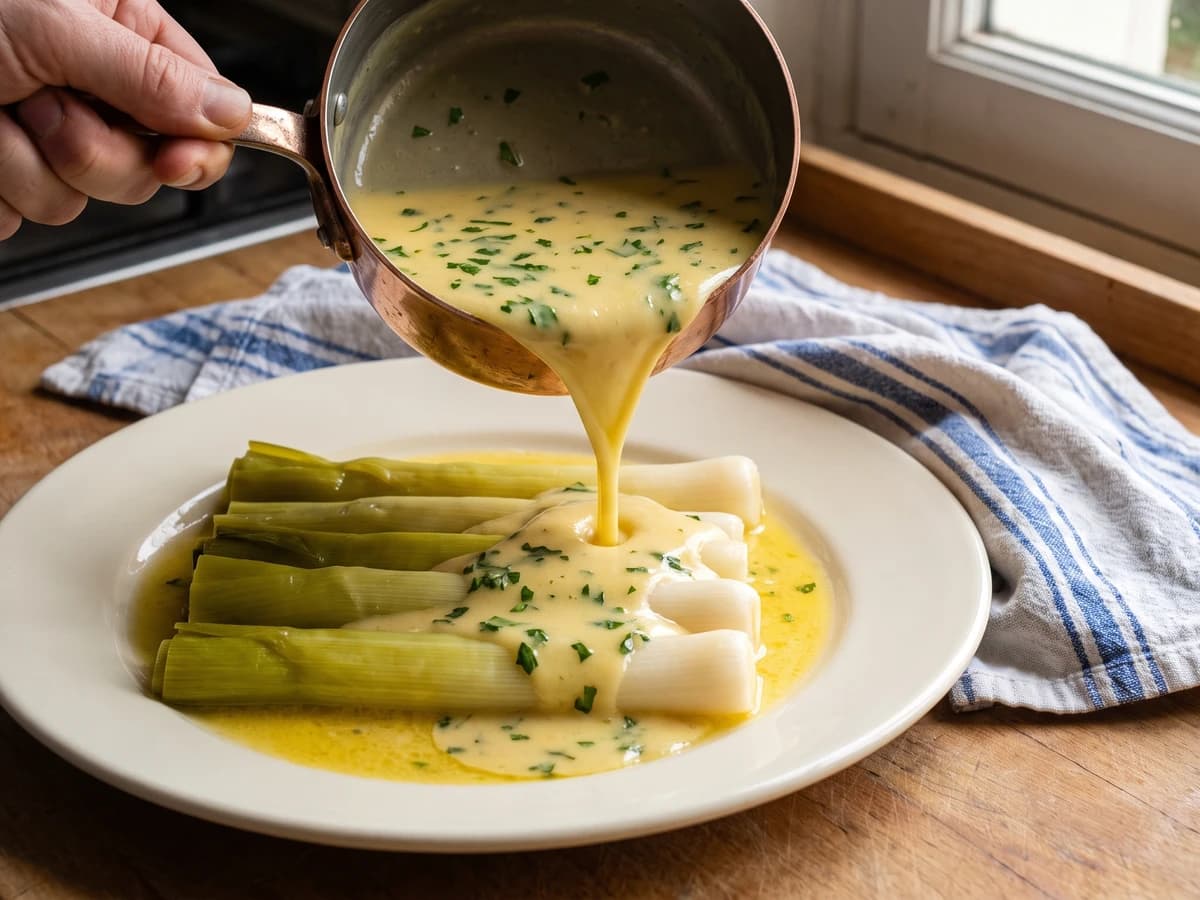
An old lesson in sauce families: Sauce Allemande takes mushroom liquor, then butter, lemon, and parsley, becoming a glossy Poulette for sheep's trotters, leeks, cauliflower, and anything needing gentle richness with a bright edge.