Culinary Explorer

A cooking platform built around craft, culture, and the stories behind what we eat.
Discover Culinary Explorer
Bombe Almeria

Bombe Almeria

Created by Chef Juliette

Based on No. 2833, Bombe Almeria, from Le Guide Culinaire (1907) by Auguste Escoffier

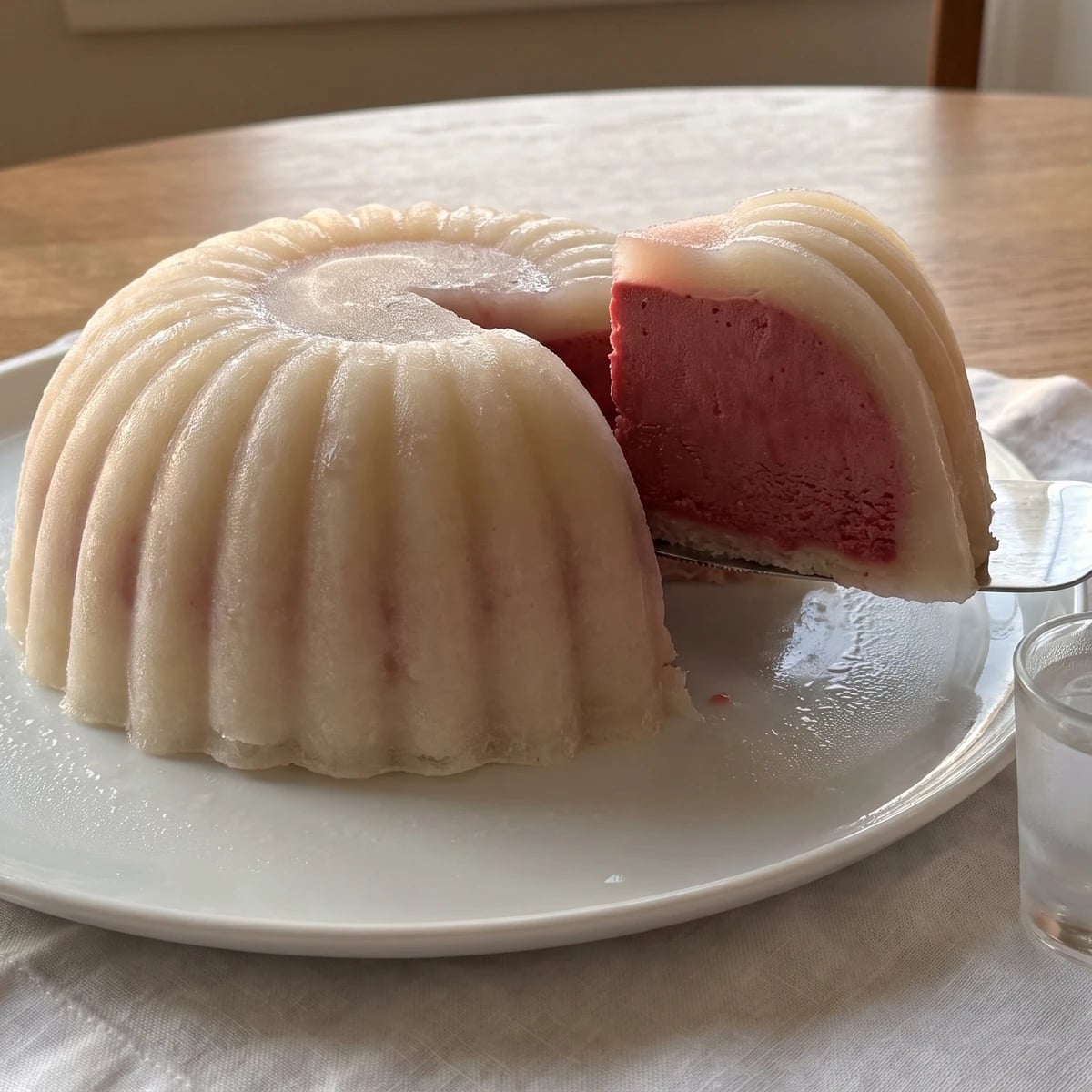
Anisette ice gives way to a garnet pomegranate pâte à bombe, a clean, aromatic contrast that depends on bold warm seasoning and an evenly clothed mould.

Desserts
French
Dinner Party
Special Occasion
Celebration
50 min
Active Time
35 min cook10 hr 30 min total
YieldOne 1-quart (1 L) bombe, 8 servings

Bombe Almeria (anisette ice enclosing pomegranate frozen cream) teaches one true thing before you touch a pan: cold silences flavour. The anisette and pomegranate must each taste a shade too bold while warm or cool, because the freezer will soften their perfume, sweetness, and acidity into balance.

The original entry assumed anisette ice and pomegranate Bombe-preparation already waiting at the pastry station, a freezing cabinet ready for packed moulds, and a practiced hand that understood “clothe the mould” without another word. Here, the brine freezer becomes an ice-cream machine and an ordinary home freezer, while brigade vats become one 1-quart mould. That bulk production was scaffolding and can go. The distinct anisette shell, the pomegranate centre, and their order are the dish, so they stay exactly where the entry puts them. One cook, one stove, one evening of work, then the freezer keeps watch.

Chemiser, to clothe the mould with an even layer, is the step that decides the Bombe Almeria. Build a shell of equal thickness from rim to crown, freeze it firm, and only then add the pâte à bombe. If the ice slides or exposes the metal, don't begin again. Ça se rattrape: freeze the thin spot briefly, patch it with more anisette ice, and carry on.

Bombe glacée belongs to the Parisian grand-kitchen dessert repertoire, where contrasting frozen preparations were layered in rounded moulds and turned out whole for the table. The name Almeria looks toward Almería in Andalusia and its Mediterranean larder, but the construction itself is French, pairing anisette ice with pomegranate Bombe-preparation. It should not be mistaken for a regional Spanish pudding; the place-name identifies a flavour composition within the French canon.

The technique, the tradition, and the story behind every dish.

Discover Culinary Explorer

Ingredients

water

Quantity

1¼ cups (300 ml / 300 g)

granulated sugar

Quantity

½ cup (120 ml / 100 g)

for the anisette ice

anisette liqueur

Quantity

3 tablespoons (45 ml / 42 g)

unsweetened 100% pomegranate juice

Quantity

2 cups (480 ml / 480 g)

granulated sugar

Quantity

½ cup plus 2 tablespoons (150 ml / 125 g)

for the pomegranate pâte à bombe

large egg yolks

Quantity

5

cold heavy cream, at least 35% fat

Quantity

1¼ cups (300 ml / 300 g)

mould-clothing technique reference, not a food ingredient

Quantity

1 application of Another Method of Preparing Aspics de Filets de Soles (No. 916)

Equipment Needed

  • 1-quart (1 L) metal bombe mould or deep freezer-safe metal bowl
  • Ice-cream machine
  • Stand mixer or electric hand mixer
  • Instant-read or sugar thermometer
  • Small heavy-bottomed saucepan
  • Wide saucepan for reducing the juice
  • Small offset spatula

Instructions

  1. 1

    Chill the equipment

    Set the bombe mould, mixer bowl, whisk, and a shallow container in the freezer. Chill the ice-cream machine according to its instructions. Cold equipment gives the anisette ice a finer grain and keeps the finished pâte à bombe from losing volume while you assemble the mould.

  2. 2

    Make anisette ice

    Combine the water and the first measure of sugar in a small saucepan. Warm gently, stirring only until the sugar dissolves, then remove it from the heat. Cool the syrup completely over an ice bath before stirring in the anisette, which preserves the liqueur's volatile perfume. Taste it cold: it should seem slightly sweeter and more anise-forward than you want at the table. Churn until thick, smooth, and firm enough to hold the track of a spoon, about 20 to 25 minutes.

    Don't add extra anisette after tasting. Alcohol softens frozen mixtures, and more liqueur can leave the shell too weak to unmould cleanly.
  3. 3

    Reduce the pomegranate

    While the anisette base chills or churns, pour the pomegranate juice into a wide saucepan and simmer steadily until reduced to ⅔ cup (160 ml / 170 g), about 18 to 25 minutes. The colour should deepen to garnet and the flavour should become sharply fruity without tasting scorched. If it reduces too far, measure it and add enough water to restore ⅔ cup; the concentration can be corrected before the sugar goes in.

  4. 4

    Clothe the mould

    The book directs the cook to the mould-coating operation in Another Method of Preparing Aspics de Filets de Soles (No. 916). Apply that clothing principle to the churned anisette ice: reserve about ¾ cup in the chilled shallow container, then press the remainder against the crown and sides of the frozen mould in an even layer about ⅜ inch (1 cm) thick. Inspect it against a light so no metal shows through. If the ice slips, freeze the mould for 10 minutes and patch the bare place. Freeze the clothed mould for at least 45 minutes, until hard.

    The savoury title of the cross-reference is not an ingredient. It supplies the classical meaning of clothing a mould; no sole, fish jelly, truffle, or crayfish butter belongs in this dessert.
  5. 5

    Cook pomegranate syrup

    Combine the reduced pomegranate juice with the second measure of sugar in a clean saucepan. Heat gently until the sugar dissolves, then boil without stirring. When the syrup reaches 230°F (110°C), begin whipping the yolks at medium-high speed. Continue cooking the syrup to 244°F (118°C). If crystals form around the pan before it reaches temperature, stop and add 1 tablespoon (15 ml / 15 g) water, dissolve them over low heat, and begin the boil again.

  6. 6

    Whip pâte à bombe

    Whip the yolks until pale and thickened. With the mixer running at medium speed, pour the 244°F (118°C) pomegranate syrup in a narrow thread down the inside of the bowl, keeping it away from the moving whisk. Increase the speed and whip until the pâte à bombe, yolks expanded with hot syrup, is voluminous, cool to the touch, and falls from the whisk in a broad ribbon, about 7 minutes. If a little syrup hardens on the whisk, leave it there rather than scraping brittle sugar into the mixture; the pâte à bombe beneath remains sound.

  7. 7

    Fold the filling

    Whip the cold cream to soft peaks that bend at their tips. Fold one-third into the pomegranate pâte à bombe to loosen it, then fold in the remainder with broad strokes until no white streaks remain. Work gently but decisively. The filling should taste more vividly of pomegranate than seems necessary, since freezing will quiet both its fruit and acidity.

  8. 8

    Fill and freeze

    Spoon the pomegranate mixture into the frozen anisette shell, pressing it gently into the curve so no hollow pockets remain, and stop ⅜ inch (1 cm) below the rim. Let the reserved anisette ice soften just until spreadable, then seal the exposed filling with it and level the base. Cover the mould tightly and freeze on a level shelf for at least 8 hours, preferably overnight, until completely firm.

  9. 9

    Unmould and serve

    Chill the serving platter. Dip only the outside of the mould into warm water for 4 to 6 seconds, dry it, invert it onto the platter, and lift straight upward. If the bombe holds fast, repeat for 2 seconds rather than forcing it. Return the unmoulded bombe to the freezer for 10 minutes if its surface softens, then cut it with a knife dipped in hot water and wiped dry between slices. The pale anisette shell should break cleanly around the deep rose centre. À table!

Chef Tips

  • Choose a clear anisette with a direct anise perfume, not a dark herbal liqueur. Three tablespoons give the shell presence while allowing it to freeze firmly enough to support the centre.
  • Use unsweetened pomegranate juice and reduce it yourself. Pomegranate molasses is darker, more tannic, and often seasoned; it changes the clear fruit character the source asks for.
  • The unusual reference, Another Method of Preparing Aspics de Filets de Soles (No. 916), appears because the canon reused a precise mould-coating operation across savoury aspics and frozen desserts. C'est la même grammaire: an even outer layer must set before the centre is added.
  • Use pasteurized yolks if serving anyone advised to avoid lightly cooked egg preparations. The hot syrup cooks and thickens the yolks, but the final temperature can vary with bowl size and pouring speed.
  • Move the bombe from the freezer to the refrigerator for 10 minutes before slicing if it has been frozen longer than a day. The anisette shell should cut cleanly, not fracture under the knife.

Advance Preparation

  • The anisette syrup and reduced pomegranate juice can be prepared a day ahead and kept separately in the refrigerator. Add the anisette only after its syrup has cooled.
  • The completed bombe can be frozen up to 3 days ahead. Cover the mould tightly so the delicate anise perfume doesn't collect other freezer aromas.
  • Chill the serving platter before unmoulding. The cold surface buys enough time to cut and serve eight neat portions without the base turning soft.

Frequently Asked Questions

Nutrition Information

1 serving (about 135g)

Calories
325 calories
Total Fat
16 g
Saturated Fat
10 g
Trans Fat
0 g
Unsaturated Fat
6 g
Cholesterol
160 mg
Sodium
15 mg
Total Carbohydrates
39 g
Dietary Fiber
0 g
Sugars
38 g
Protein
3 g

Note: Chef personas and recipes are created with AI assistance. Cook with care: follow safe food-handling practices, check doneness with a thermometer when needed, and adapt for allergies and your kitchen.

Where cooking meets culture.

Culinary guides, cultural storytelling, and the editorial depth that makes cooking meaningful.

Discover Culinary Explorer

More from Ices and Sherbets - Various Bombes

Browse the full collection