Culinary Explorer

A cooking platform built around craft, culture, and the stories behind what we eat.
Discover Culinary Explorer
Braised Vegetables

Braised Vegetables

Created by Chef Juliette

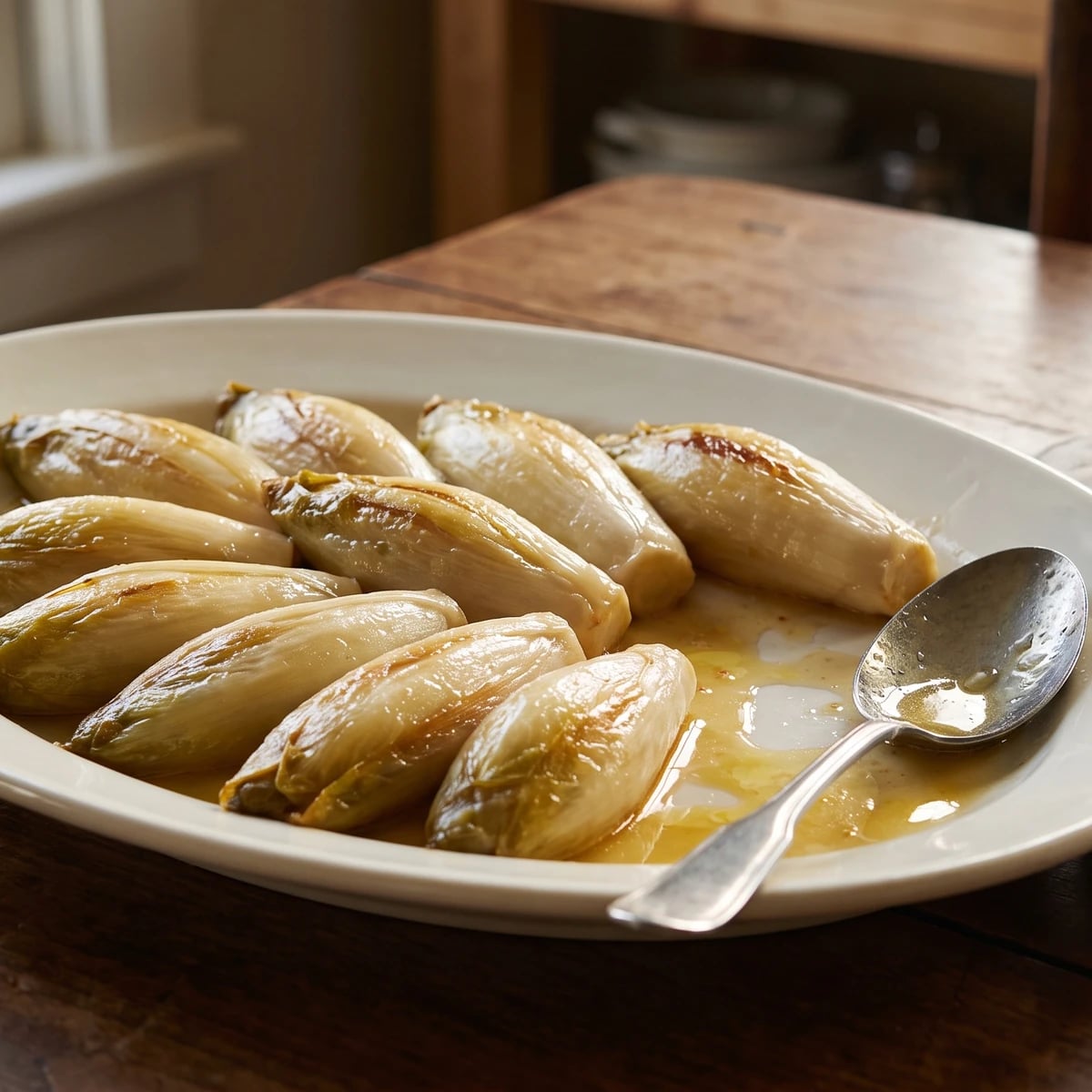
Légumes braisés teach the quiet discipline of vegetable cookery: expel excess water, braise gently over pork and aromatics, then reduce the cooking liquor until every piece carries its own savory gloss.

Side Dishes
French
Comfort Food
Dinner Party
Make Ahead
30 min
Active Time
1 hr cook1 hr 30 min total
Yield4 servings

Légumes braisés (braised vegetables) teach water management. That is the one true thing to know before touching the pan: water must leave the vegetable before stock can enter it. Blanching tames bitterness and begins the cooking, but it also fills the tissues with water; the covered oven sweat drives that water into the aromatic bed so the later braise tastes of stock, pork, and herbs rather than dilution.

The classical formula assumed a saucier on staff, a white stockpot never off the fire, prepared pork rind, several pans, and enough vegetables for a full service. Here the brigade quantity becomes 2 pounds for four people, the prepared couenne becomes rind cut from unsmoked slab bacon, and one heavy casserole does the work of both saucepan and sauté pan. That second pan was scaffolding and can go. Blanchings (No. 273), the covered sweat, the gentle stock braise, and the final reduction are the dish and must stay. One cook, one stove, one evening.

Choose one kind of vegetable so every piece cooks at the same pace, then drain it until no water drips and tie loose pieces into compact shapes. Give the covered sweat its full ten minutes. That small, quiet step decides whether the finished vegetables taste deeply braised or merely boiled.

Légumes braisés belong to the French cuisine bourgeoise table and the classical vegetable station rather than to one province. Household cooks used pork scraps, herbs, and broth to make sturdy or faintly bitter vegetables generous, while grand kitchens formalized the same pot logic into Blanchings (No. 273), an aromatic bed, and a reduced finishing liquor. The preliminary blanching is not chiefly about preserving color: for endive, celery, cabbage, and similar vegetables, it softens harsh flavors and prepares the tissues to receive the braise.

The technique, the tradition, and the story behind every dish.

Discover Culinary Explorer

Ingredients

firm braising vegetables of one kind

Quantity

2 lb (900 g), prepared through Blanchings (No. 273)

cooled and thoroughly drained

blanched pork rind or rind cut from unsmoked slab bacon

Quantity

1/2 cup loosely packed (120 ml / 60 g)

cut into broad pieces

carrot

Quantity

1 medium, about 3/4 cup (180 ml / 100 g)

thinly sliced

yellow onion

Quantity

1 medium, about 1 cup (240 ml / 150 g)

thinly sliced

bouquet garni of parsley stems, thyme, and bay leaf

Quantity

1

unsmoked streaky bacon

Quantity

8 thin slices, about 6 oz (170 g)

gelatin-rich, unsalted white chicken or veal stock

Quantity

3 to 4 cups (720 to 960 ml / 720 to 960 g)

heated, using only enough to cover

fine sea salt

Quantity

1 teaspoon (5 ml / 6 g), plus more only if needed

unsalted butter (optional)

Quantity

1 tablespoon (15 ml / 14 g)

for make-ahead parchment

Equipment Needed

  • 5-quart (4.7 L) heavy lidded casserole or braiser
  • Kitchen twine
  • Fine-mesh sieve
  • Fat separator or shallow ladle
  • Parchment paper for make-ahead storage

Instructions

  1. 1

    Pare and tie

    Begin with the vegetables already prepared through Blanchings (No. 273), cooled and thoroughly drained. Pare away any tough outer surfaces and shape the pieces evenly. Leave compact endives whole, halve thick celery hearts lengthwise, or cut cabbage into firm wedges; tie anything loose with kitchen twine so it holds together during the braise. Use one vegetable, not a mixture, because different tissues surrender at different speeds.

    Good choices include Belgian endive, celery hearts, small Savoy cabbage wedges, sturdy romaine hearts, or thick young leeks. Begin checking tender vegetables early rather than forcing every kind to obey one clock.
  2. 2

    Build the aromatic bed

    Heat the oven to 350°F (180°C). Cover the bottom of a snug 5-quart casserole with the blanched pork rind, then scatter over the sliced carrot and onion and tuck in the bouquet garni. Line the sides with the bacon slices, overlapping them slightly. Set the tied vegetables closely over this bed in one layer and season lightly; the bacon and stock will contribute more salt as their liquor reduces.

  3. 3

    Sweat out water

    Cover the casserole and place it in the oven for 10 minutes without adding stock. This suage, or covered sweat, drives water from the vegetables into the aromatic bed so the stock can later season them properly. If more than a shallow film of watery liquid collects, set the uncovered casserole over medium heat for 2 to 4 minutes, just until the excess recedes. Do not brown the vegetables. Ça se rattrape, but only if you remove the water before adding more liquid.

  4. 4

    Moisten and braise

    Pour in enough hot white stock to cover the vegetables, pressing them gently beneath the surface without breaking their shapes. Bring the liquor only to a bare tremble on the stove, cover, and return the casserole to the oven. Braise until a knife enters the thickest part with little resistance but the pieces still hold themselves, about 25 to 35 minutes for endive or leeks and 35 to 50 minutes for celery hearts or cabbage. If the liquid begins boiling hard, lower the oven and leave the lid slightly ajar until it calms; violent boiling tears vegetables apart and muddies the liquor.

  5. 5

    Drain and shape

    Lift the vegetables carefully onto a tray and let them stand until cool enough to handle. Remove every string and trim or cut the pieces into their serving shape. Strain the cooking liquor through a fine sieve, pressing nothing, and discard the pork rind, bacon, vegetables, and bouquet garni from the aromatic bed. For same-day service, let the liquor settle and skim away the surface fat. If preparing ahead, stop here and follow the advance preparation instructions before removing that fat.

  6. 6

    Reduce and glaze

    Return the degreased liquor to the cleaned casserole and boil it steadily until reduced to about 1 1/4 cups (300 ml) and nappant, lightly coating the back of a spoon. Taste before adding salt. If the liquor becomes too salty before it coats, stop reducing, loosen it with 1/4 cup (60 ml) hot water, and serve it as a lighter jus; flavor matters more than forced thickness. Return the vegetables, spoon the reduced stock over them, and warm gently for 3 to 5 minutes, turning once so every surface gleams. Arrange on a warm platter and spoon over the remaining liquor. À table!

Chef Tips

  • This is a master method, so choose the vegetable according to what the market handed you. Belgian endive brings a fine bitterness, celery hearts become almost buttery, and Savoy cabbage takes the pork and herbs especially well. Tired vegetables belong in this pot, not raw on the plate.
  • Ask a butcher for a strip of pork skin or buy unsmoked slab bacon with the rind attached. Crisp snack pork rinds are no substitute; they carry salt and seasoning but none of the fresh skin's gelatin.
  • The white stock must be unsalted or very lightly salted because it reduces hard at the finish. A proper stock sets softly when chilled. If yours pours like water from the refrigerator, reduce it by one quarter before measuring.
  • The carrots, onions, bacon, pork rind, and bouquet garni are a cooking bed, not a garnish. They have given everything useful to the liquor by the time it is strained, so don't clutter the platter with them.
  • Serve the vegetables beside roast chicken, veal, pork, or a plainly roasted fish. Let the main dish decide the wine; a light red or a firm dry white both sit comfortably with the savory stock glaze.

Advance Preparation

  • Braise and drain the vegetables up to 2 days ahead. Place them in a shallow heatproof container, strain the cooking liquor over them while it is boiling, and leave the fat in place. Press a round of parchment brushed with the real butter directly onto the surface, then set the container in an ice bath, cool promptly, and refrigerate.
  • To serve, lift away the chilled fat and transfer the liquor to the casserole. Reduce it until nappant, then add the vegetables and reheat at a bare simmer for 8 to 12 minutes. The fat protected the vegetables while they waited; it has finished that job and should not remain in the sauce.

Frequently Asked Questions

Nutrition Information

1 serving (about 340g)

Calories
390 calories
Total Fat
26 g
Saturated Fat
9 g
Trans Fat
0 g
Unsaturated Fat
15 g
Cholesterol
60 mg
Sodium
1050 mg
Total Carbohydrates
18 g
Dietary Fiber
6 g
Sugars
7 g
Protein
20 g

Note: Chef personas and recipes are created with AI assistance. Cook with care: follow safe food-handling practices, check doneness with a thermometer when needed, and adapt for allergies and your kitchen.

Where cooking meets culture.

Culinary guides, cultural storytelling, and the editorial depth that makes cooking meaningful.

Discover Culinary Explorer

More from Leading Culinary Operations

Browse the full collection