Culinary Explorer

A cooking platform built around craft, culture, and the stories behind what we eat.
Discover Culinary Explorer
Glazings

Glazings

Created by Chef Juliette

Two classical finishes, one decisive lesson: coat already-cooked food with butter-rich sauce or Mornay and cheese, then use fierce top heat to make a golden film before the sauce can boil.

Side Dishes
French
Dinner Party
Special Occasion
15 min
Active Time
5 min cook20 min total
Yield4 side-dish servings

Glaçages (glazings) teach one clean lesson: the food and sauce are cooked before they meet fierce top heat. You are not baking a casserole. You are creating a thin golden film almost at once, before the sauce underneath can boil or throw off its butter. That timing is the dish.

The original method assumed a saucier with warm sauce ready, a stockpot never off the fire, and a salamander that struck the surface with immediate heat. At home, one cup of finished sauce, a fully heated broiler, and a shallow bain-marie (water bath) do the same work for four. Keeping several sauces alive through service was brigade scaffolding and can go; the hot base, the water buffer, and the swift finish must stay. One cook, one stove, one evening.

Choose one of two glaçages. Whisk butter into a suitable finished sauce and color it bare, or cover the food with Mornay Sauce (No. 91), then add grated cheese and melted butter. Do not combine the routes. The step that decides everything is preheating the broiler until the surface colors in seconds rather than simmering underneath.

Glaçage belongs to the Parisian grand-kitchen service table, where a finished dish could pass beneath a salamander moments before it entered the dining room. The technique traveled easily into cuisine bourgeoise because a household broiler could supply the fierce top heat, while a shallow water bath protected the carefully built sauce below. Despite its place among gratins, this is not prolonged baking: the food is already cooked, and only the golden surface is made at the finish.

The technique, the tradition, and the story behind every dish.

Discover Culinary Explorer

Ingredients

fully cooked, lightly seasoned vegetables

Quantity

5 cups (1.2 L / 650 g)

drained thoroughly and kept hot

smooth finished sauce suited to the vegetables (optional)

Quantity

1 cup (240 ml / 250 g)

warm; choose for the butter glazing

unsalted butter (optional)

Quantity

3 tablespoons (45 ml / 42 g)

softened and divided into small pieces for the butter glazing

Mornay Sauce (optional)

Quantity

1 cup (240 ml / 250 g) Mornay Sauce (No. 91)

warm; choose for the cheese glazing

finely grated Gruyère and Parmesan (optional)

Quantity

1/4 cup (60 ml / 25 g)

mixed in equal parts for the cheese glazing

unsalted butter (optional)

Quantity

1 tablespoon (15 ml / 14 g)

melted for the cheese glazing

just-boiled water

Quantity

2 cups (480 ml / 480 g)

for the bain-marie

Equipment Needed

  • 1.5-quart (1.4 L) shallow gratin dish
  • Rimmed metal roasting pan large enough to hold the gratin dish
  • Small saucepan
  • Small whisk

Instructions

  1. 1

    Heat the broiler

    Set an oven rack about 4 inches (10 cm) below the broiler and heat it at its highest setting for a full 10 minutes. The old salamander gave fierce heat the instant a dish arrived; a thoroughly preheated broiler is the honest home equivalent. Have a shallow gratin dish and a rimmed metal roasting pan ready.

  2. 2

    Arrange the hot base

    Drain the cooked vegetables until no water collects beneath them, then spread them in the gratin dish in a shallow, even layer. They must be fully cooked and hot before the sauce goes on. The broiler has time to color a surface, not warm a cold center, and wet vegetables dilute the sauce before it can glaze.

    Cauliflower, leeks, spinach, cardoons, and other tender cooked vegetables all take a glaçage well, provided they are thoroughly drained. Press leafy vegetables gently in a clean towel before arranging them.
  3. 3

    Prepare one finish

    For the butter glazing, take the warm finished sauce off the heat and whisk in the softened butter a piece at a time until the sauce is glossy, rich, and thick enough to coat a spoon. Never boil it after the butter enters. If it turns greasy, stop. Ça se rattrape: whisk 1 teaspoon of the hot bain-marie water in a clean bowl, then add the broken sauce gradually until the emulsion gathers again. For the cheese glazing, simply warm the Mornay Sauce (No. 91) gently until it flows from the spoon without boiling.

  4. 4

    Set the bain-marie

    Pour the buttered sauce evenly over the vegetables if using the first route. For the second route, cover them with the Mornay Sauce (No. 91), sprinkle the Gruyère and Parmesan evenly over the surface, and trickle the melted butter across the cheese. Set the gratin dish inside the rimmed roasting pan on the partly pulled-out oven rack, then carefully pour in enough boiling water to stand about 1/4 inch (6 mm) deep around it. This shallow bain-marie is not there to cook the food; it protects the sauce from boiling and separating while the heat strikes from above.

  5. 5

    Glaze in seconds

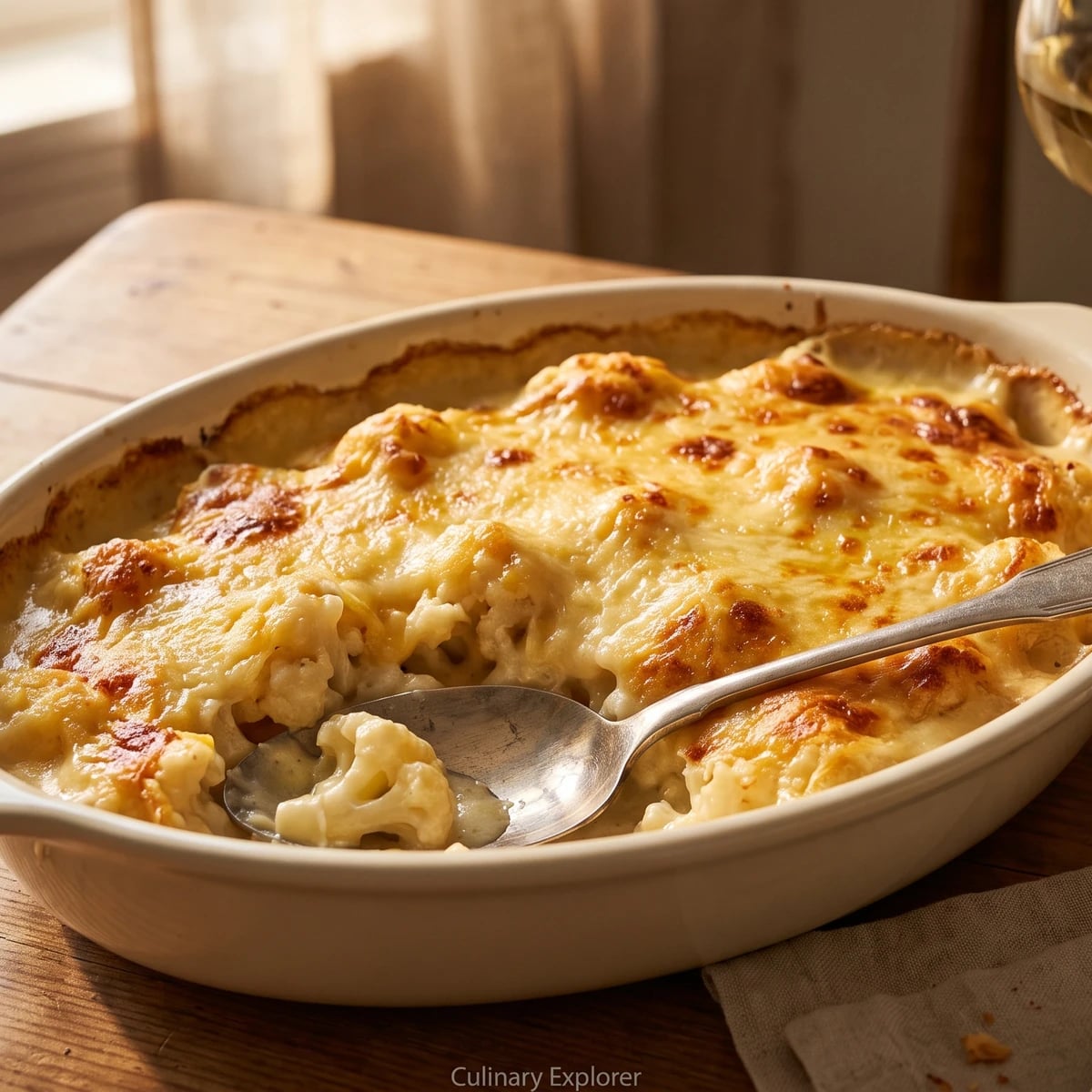
    Slide the rack beneath the broiler and watch without leaving it. The butter glazing should take a light, even golden film; the Mornay should form a delicate golden crust from its cheese and melted butter. Turn the dish once if the heat falls unevenly, but expect 45 seconds to 3 minutes, not a long bake. If the sauce starts boiling before it colors, pull it out immediately and move the rack closer to the heat. If beads of butter appear, let the dish settle for a minute, blot only the free fat, smooth the surface, and flash it beneath the broiler for another 10 to 20 seconds. Ça se rattrape.

  6. 6

    Rest and serve

    Lift the gratin dish carefully from the water and let it stand for 2 minutes, just long enough for the sauce to settle beneath its thin golden film. Bring it to the table in its dish and serve at once. A glaçage waits for the diners, never the other way round. À table!

Chef Tips

  • This entry is a finishing method, not a recipe for the food underneath. Begin with vegetables that are completely cooked, properly seasoned, hot, and dry; the few minutes beneath the broiler cannot correct a raw center or a puddle of cooking water.
  • Choose one finish. The butter route suits a smooth sauce already matched to the vegetable, fish, or poultry beneath it. The Mornay route gives the more familiar cheese crust. Combining both only makes the surface heavy and slow to color.
  • A slight golden film is correct. Waiting for a thick, dark crust keeps the sauce under heat too long, which is exactly when the butter separates and the Mornay becomes oily.
  • Serve the glaçage immediately with a dry white wine whose acidity can meet the butter and cheese. Cooking well is not cooking fancy; the pleasure here is that first spoon breaking through the golden skin.

Advance Preparation

  • Cook and drain the vegetables up to 1 day ahead. Chill them separately, then reheat them thoroughly and blot away any released moisture before adding the sauce.
  • The finished sauce or Mornay Sauce (No. 91) may be prepared up to 1 day ahead and reheated over gentle heat. Add the extra butter for the butter glazing only at the final moment.
  • Do not assemble and glaze the dish ahead. Once the sauce covers the hot base, set the bain-marie and finish it beneath the broiler at once.

Frequently Asked Questions

Nutrition Information

1 serving (about 230g)

Calories
205 calories
Total Fat
12 g
Saturated Fat
7 g
Trans Fat
0 g
Unsaturated Fat
5 g
Cholesterol
30 mg
Sodium
425 mg
Total Carbohydrates
16 g
Dietary Fiber
4 g
Sugars
9 g
Protein
9 g

Note: Chef personas and recipes are created with AI assistance. Cook with care: follow safe food-handling practices, check doneness with a thermometer when needed, and adapt for allergies and your kitchen.

Where cooking meets culture.

Culinary guides, cultural storytelling, and the editorial depth that makes cooking meaningful.

Discover Culinary Explorer

More from Leading Culinary Operations

Browse the full collection