
Chef Juliette
Flan aux Carottes
A pale short-paste shell holds silken, lightly sweet carrot purée beneath neat glazed half-discs, their butter syrup catching the light: a classical tart poised between vegetable course and sweet.
A cooking platform built around craft, culture, and the stories behind what we eat.
Created by Chef Juliette
Based on No. 2591, Pommes à la Bourdaloue, from Le Guide Culinaire (1907) by Auguste Escoffier
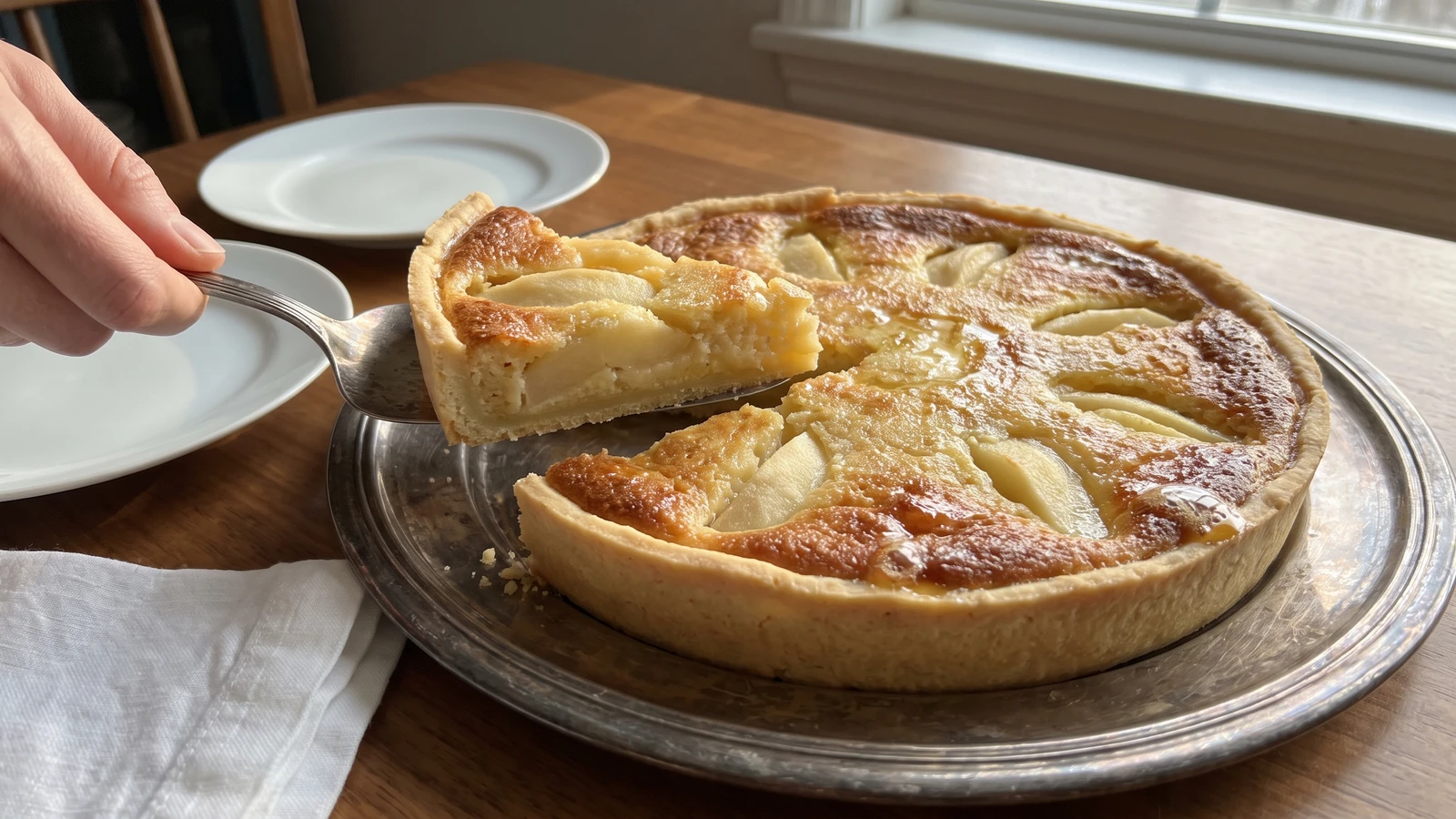
Firm vanilla-poached apple quarters settle between thin layers of frangipane in a pale flawn-crust, then macaroon crumbs and butter meet fierce top heat for the quick golden gratin that makes Bourdaloue.
Pommes à la Bourdaloue (apples in a frangipane tart with macaroon gratin) teaches one true thing: the oven must finish the apples. Poach them until a knife enters but still meets resistance, because fruit cooked tender in the syrup turns soft beneath the cream and loses the clean quarters that give this tart its shape.
The source entry assumed a pâtissier's mise en place, with Apricots à la Bourdaloue (No. 2549) already understood, its pale flawn-crust and frangipane ready, and a salamander waiting to color the macaroon-and-butter surface in moments. At home, the linked preparation supplies that foundation at tart scale, while a thoroughly preheated broiler gives the same fierce top heat. The apples replace the apricot halves, exactly as the entry directs. That is the modernization, and nothing essential is lost.
The brigade's separate stations are scaffolding. The firm vanilla-poached fruit, thin layers of cream, and swift gratin are the dish, and those stay. One cook, one stove, one evening. Underdo the poach.
Pommes à la Bourdaloue belongs to the pastry vocabulary of Paris, and the Bourdaloue name is associated with the Rue Bourdaloue and its pastry shops. Pears became the best-known fruit, but the classical family is broader: this apple entry points directly to Apricots à la Bourdaloue (No. 2549), showing that à la Bourdaloue names a method of poached fruit, frangipane, macaroon crumbs, butter, and gratin rather than one fruit alone. The preparation traveled naturally from pastry shop to bourgeois table because its elements could be readied separately and brought together under fierce top heat before serving.
Quantity
1 home-scale Apricots à la Bourdaloue (No. 2549) preparation
made as directed, with the apricots withheld for replacement by apples
Quantity
4 medium (about 1½ lb / 680 g)
Quantity
2⅛ cups (500 ml / 500 g)
Quantity
1¼ cups (300 ml / 250 g)
Quantity
1
| Ingredient | Quantity |
|---|---|
| referenced Bourdaloue preparationmade as directed, with the apricots withheld for replacement by apples | 1 home-scale Apricots à la Bourdaloue (No. 2549) preparation |
| firm, fine-flavoured apples, such as Reinette, Boskoop, Braeburn, or Pink Lady | 4 medium (about 1½ lb / 680 g) |
| water | 2⅛ cups (500 ml / 500 g) |
| granulated sugar | 1¼ cups (300 ml / 250 g) |
| vanilla bean | 1 |
Prepare the Apricots à la Bourdaloue (No. 2549) exactly as its own entry directs, but leave out the apricots and pause when that fruit would be placed. That linked preparation supplies the Bourdaloue foundation and final sequence, so its component recipes are not rebuilt here. Keep the prepared shell dry and the cream cool while you attend to the apples.
Split the vanilla bean lengthwise and scrape its seeds into a saucepan. Add the pod, water, and sugar, then warm gently while stirring until the sugar dissolves. Bring the syrup just to a boil, lower the heat, and hold it below a simmer for 5 minutes so the vanilla opens into the liquid. The surface should barely quiver.
Quarter the apples through the stem, remove every trace of core, peel them, and trim the quarters into even rounded pieces. Keep them close in size so they finish together. Lower each quarter into the warm syrup as soon as it is trimmed; this protects the exposed flesh while you finish the rest.
Hold the syrup between 180 and 190°F (82 and 88°C), with no rolling bubbles, and poach the apples for 6 to 12 minutes according to variety. Turn them once with a spoon. Test at the thickest point: a small knife should enter the outer flesh cleanly and then meet distinct resistance toward the centre. Stop there. The oven finishes them. If they pass into softness, lift them out immediately. Ça se rattrape: chill them uncovered until firm enough to handle, arrange the soundest quarters where they show, and tuck any fragile pieces beneath the upper cream.
Lift the quarters onto a rack set over a tray and leave them until completely cool. Do not let them sit in the hot syrup, which continues cooking them after the pan leaves the heat. Blot the surfaces gently before assembly; wet fruit thins the frangipane and leaves syrup beneath the gratin.
Resume the Apricots à la Bourdaloue (No. 2549) preparation at the fruit-placement stage. Set the apple quarters where that entry places the apricot halves, rounded sides uppermost and close enough to give every slice a proper piece of fruit. Complete the remaining cream and macaroon-and-butter treatment exactly as the linked entry directs. Keep the cream layers thin. More cream would bury the fruit rather than enrich it.
Preheat the broiler fully and place a rack 4 to 6 inches (10 to 15 cm) beneath it. Set the tart on a baking sheet and gratiner, brown rapidly under fierce top heat, until the macaroon crumbs turn deep gold and the butter gives the surface a lively sheen, usually 1 to 3 minutes. Watch without leaving the oven and rotate the tart as soon as one side colors. If a patch darkens too quickly, shield that spot with a small piece of foil. The aim is a quick gratin, not a second long bake.
Let the tart settle for 20 minutes before releasing it from the tin. The cream firms, the apple juices quiet, and the first wedge comes away cleanly. Serve warm or at room temperature, with the apple quarters still distinct beneath their golden macaroon gratin. À table!
1 serving (about 165g)
Culinary guides, cultural storytelling, and the editorial depth that makes cooking meaningful.
Discover Culinary ExplorerChef Juliette
A pale short-paste shell holds silken, lightly sweet carrot purée beneath neat glazed half-discs, their butter syrup catching the light: a classical tart poised between vegetable course and sweet.
Chef Juliette
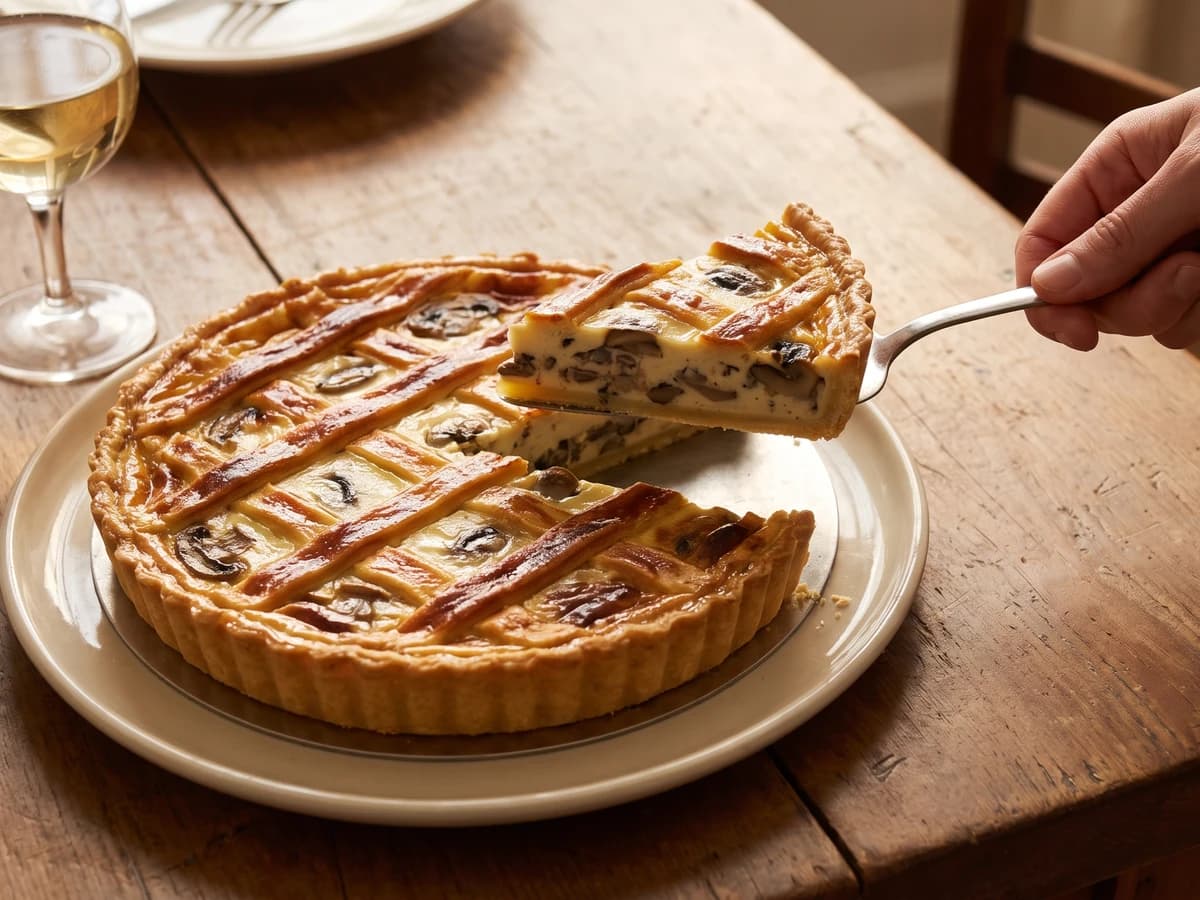
A hot mushroom flan under a butter-gold lattice, with cream reduced close around barely opened caps and a crisp short-paste base protected by one discipline: cool the filling completely.

Chef Juliette
Four little mushroom flans, latticed and gilded, baked hard and fast until butter-gold: a classical garnish scaled to the meat it accompanies and served before its crispness has time to fade.
Chef Juliette
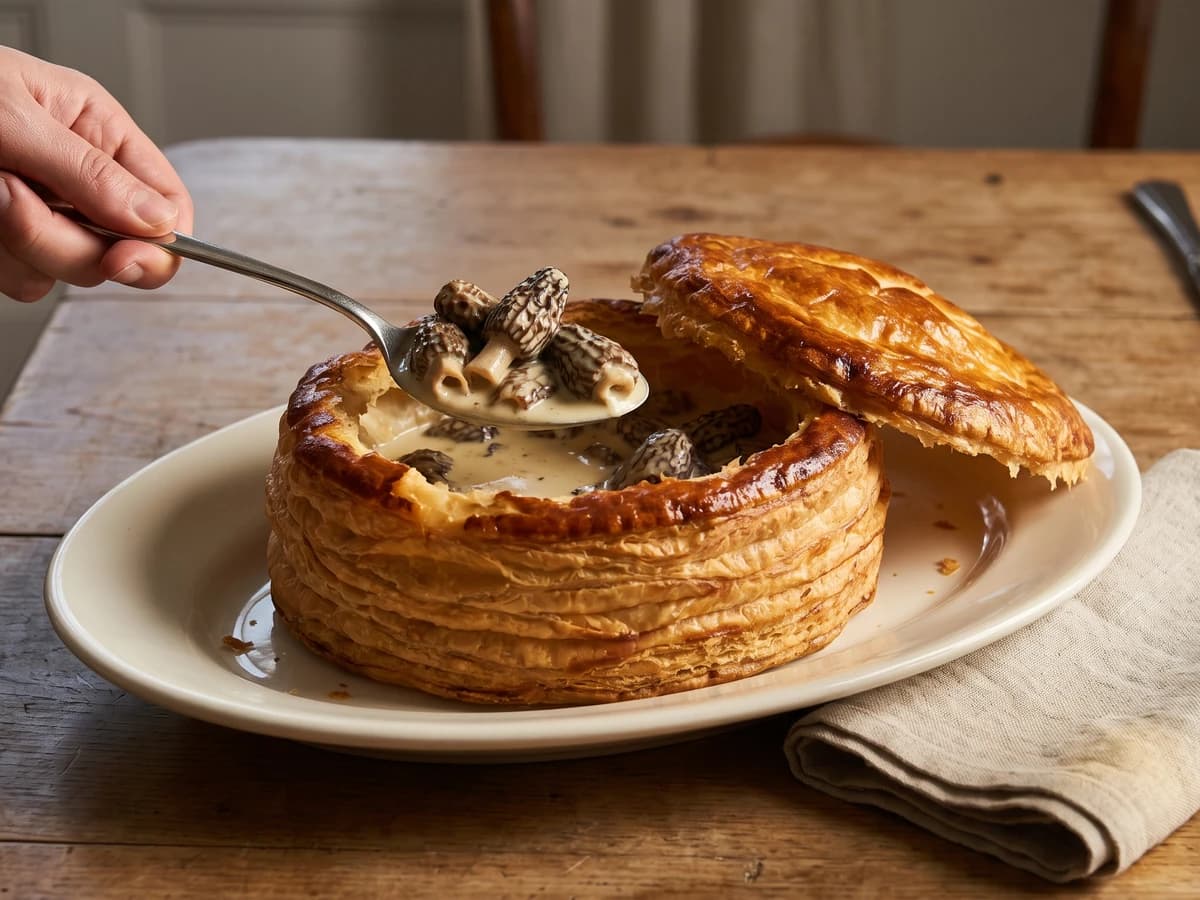
Morels surrender their liquor, then take it back as a glossy cream-and-butter sauce inside burnished puff pastry. The lesson is simple and absolute: reduce with patience, then heat gently and never boil.