Culinary Explorer

A cooking platform built around craft, culture, and the stories behind what we eat.
Discover Culinary Explorer
Red Meat Grills

Red Meat Grills

Created by Chef Juliette

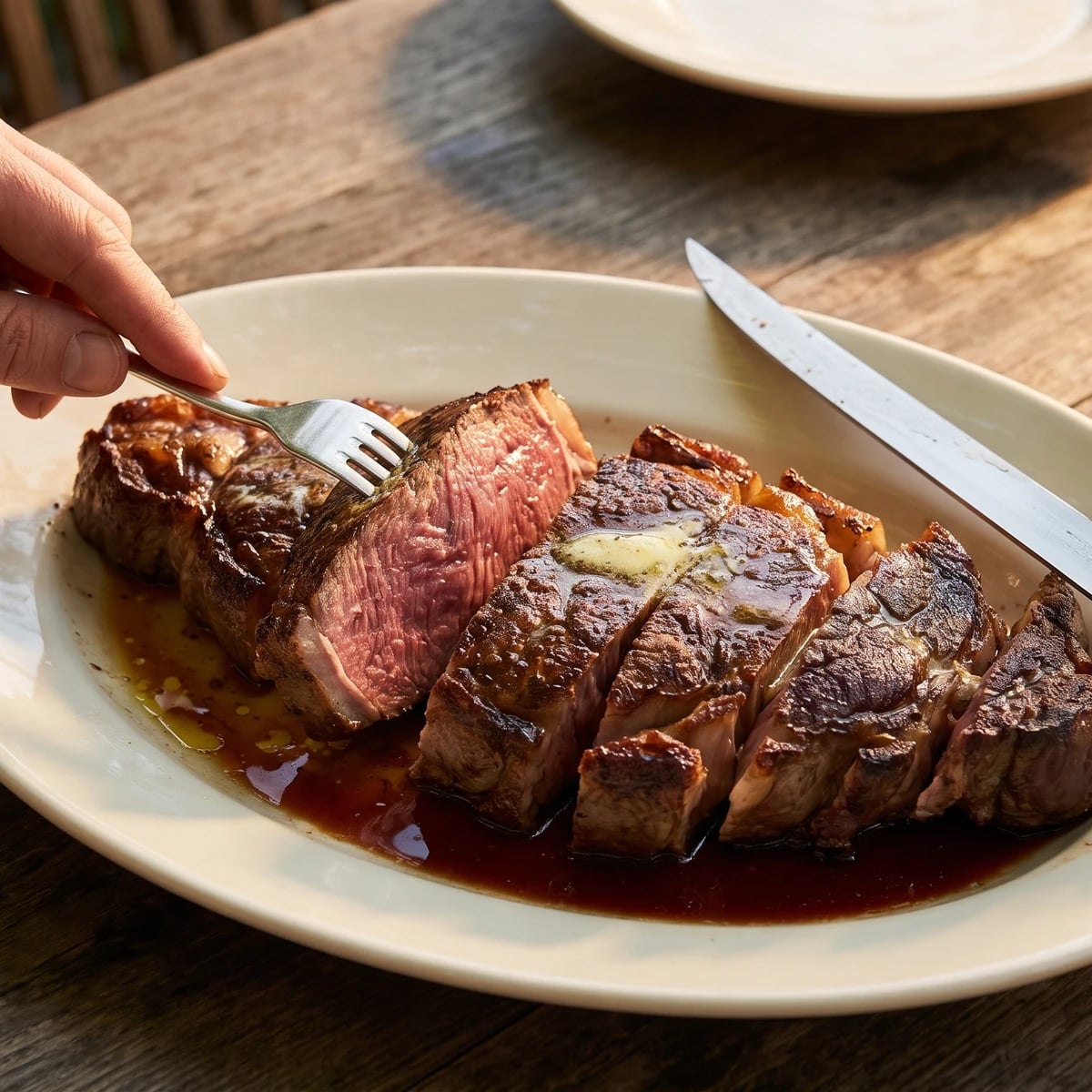
A thick Châteaubriand receives a fierce bronze crust, then finishes over moderate heat with clarified butter, proving that control of the fire, not constant ferocity, makes a great red meat grill.

Main Dishes
French
BBQ
Special Occasion
Date Night
15 min
Active Time
25 min cook55 min total
Yield4 servings

Grillades de viandes rouges (grilled red meats) teach control of heat before anything else. The one true thing is this: rissole, meaning fry brown, over a fierce fire, then reduce the heat before that bronze crust turns to carbon. Searing doesn't seal meat like a closed bottle. It builds the deep roasted flavor that makes grilling worthwhile, while careful finishing and resting preserve the rosy, succulent center.

The source assumed a grillardin tending a graded bed of coals and basting each order as it cooked. A saucier on staff, a stockpot never off the fire, and a salamander belonged elsewhere in the brigade, but this preparation needs none of them. That is scaffolding, and it goes. A lidded charcoal or gas grill arranged with fierce and moderate zones is the honest home equivalent, while one thick 2-pound cut replaces a service counter crowded with steaks. One cook, one grill, one evening.

The clarified butter stays because it is part of the method, protecting the browned surface and giving it a rich sheen without the milk solids that scorch in whole butter. The step that decides the dish is the handoff between fires: move the meat the moment its crust is deeply bronzed, before fierceness becomes burning.

Grillades de viandes rouges belong to the French grill room, especially the Paris dining-room repertoire, rather than to one provincial larder. Châteaubriand and rump steak were treated as large pieces, first deeply rissolé and then moved to gentler heat, while tournedos, noisettes, and chops remained over fierce heat because their centers were reached quickly. The classical explanation said the crust imprisoned the juices; what endured at the home table was the sound practice beneath it: build color quickly, control the finish, and never pierce the meat.

The technique, the tradition, and the story behind every dish.

Discover Culinary Explorer

Ingredients

center-cut beef tenderloin roast (Châteaubriand) or thick rump steak

Quantity

1 piece, 2 lb (900 g), about 2¼ to 2½ inches (5.5 to 6.5 cm) thick

trimmed and tied to an even shape

clarified unsalted butter

Quantity

¼ cup (60 ml / 55 g)

melted and divided

fine sea salt

Quantity

2 teaspoons (10 ml / 12 g)

freshly ground black pepper

Quantity

1 teaspoon (5 ml / 2 g)

Equipment Needed

  • Lidded charcoal or gas grill with a grate at least 18 inches (46 cm) wide
  • Long grill tongs, about 12 inches (30 cm)
  • Instant-read digital thermometer
  • Silicone basting brush and two small bowls
  • Carving board with a juice groove

Instructions

  1. 1

    Build Two Heat Zones

    Prepare a lidded grill with two distinct zones. Bank hot coals beneath one side of a charcoal grate, leaving the other side with a thinner layer, or set one side of a gas grill to high and the other to medium-low. Heat the fierce zone to about 500 to 550°F (260 to 290°C) and the moderate zone to about 350 to 400°F (175 to 205°C), then scrub the grate clean. The fierce side creates the rissole; the moderate side carries heat through the center without burning that crust.

    Hold your hand well above the grate only long enough to confirm that the zones differ, then trust the grill thermometer. Guesswork around fierce coals proves very little and singes the cook.
  2. 2

    Dry and Season Meat

    Let the beef stand out of the cold while the grill heats, no longer than 30 minutes. Pat every surface thoroughly dry, season evenly with the salt and pepper, and brush it lightly with clarified butter. Divide the remaining butter between two bowls, keeping one clean tablespoon (15 ml / 14 g) untouched for the finish. Wet meat must shed its surface moisture before it can brown, so if it grows damp after seasoning, blot it once more before grilling.

  3. 3

    Rissole Over Fierce Heat

    Lay the beef over the fierce zone and leave it undisturbed for 2½ to 3 minutes, until the underside has a firm Maillard-bronze crust and releases cleanly from the grate. Turn it with long tongs, never a fork, and brown the second broad side for another 2½ to 3 minutes. Hold each narrow edge against the grate for 30 to 45 seconds, then brush the browned surfaces sparingly with the basting butter. If dripping butter causes flames, move the meat immediately to the moderate zone and close the vents until they subside. Ça se rattrape. Return it only long enough to complete the crust; persistent flame gives bitterness, not deeper flavor.

    Grill marks are decoration. An even bronze crust matters more, so resist turning the meat simply to draw a crosshatch.
  4. 4

    Finish Over Moderate Heat

    Move the beef to the moderate zone and close the lid. Cook for 10 to 18 minutes, turning with tongs every 3 to 4 minutes and brushing on only a thin film of basting butter after each turn. Insert an instant-read thermometer horizontally into the thickest part: remove the meat at 118 to 122°F (48 to 50°C) for rare, 126 to 129°F (52 to 54°C) for medium-rare, or 135 to 140°F (57 to 60°C) for medium. If the outside darkens while the center still lags, move the beef farther from the coals and continue with the lid closed. Little beads of rosy juice may appear on the upper surface, as the source describes, but they are water and myoglobin rather than blood, and the thermometer gives the surer judgment. For diners who require the standard food-safety threshold, cook whole-cut beef to 145°F (63°C) and rest it for at least 3 minutes.

  5. 5

    Rest and Carve

    Transfer the beef to a warm platter and brush it with the reserved clean clarified butter. Rest it uncovered or under a very loose foil tent for 12 to 15 minutes; tight covering traps moisture and softens the crust. Remove the string, carve across the grain into slices about ½ inch (1.25 cm) thick, and spoon the collected resting juices over the cut meat. The center should be evenly rosy, the exterior deeply browned, and the butter visible as a fine gloss rather than a greasy coat. À table!

Chef Tips

  • Thickness decides the fire. A Châteaubriand or rump steak more than 2 inches (5 cm) thick needs the fierce-to-moderate progression. Tournedos, lamb noisettes, and thick chops can remain over fierce heat after their rissole because there is less center to penetrate; begin checking their temperature within a few minutes.
  • Use clarified butter, not whole butter and certainly not margarine. Clarification removes the milk solids that blacken over fierce heat while keeping the flavor and sheen the source requires. We don't apologize for butter.
  • Choose a compact cut of even thickness and tie it if necessary. A tapered tenderloin gives three degrees of doneness in one piece, while an evenly shaped Châteaubriand lets the heat advance at the same rate from end to end.
  • Never test doneness by cutting into the meat on the grill. That loses juice and shows only one narrow point. A thermometer inserted from the side reaches the true center without mangling the crust.
  • A firm red Bordeaux or a northern Rhône Syrah has enough structure for the browned beef and butter. Keep the rest of the plate plain: pommes sautées or a sharp green salad, good bread, and the juices from the carving board.

Advance Preparation

  • Clarified butter can be prepared up to a week ahead and kept covered in the refrigerator. Melt it gently before grilling without allowing it to brown.
  • The beef can be trimmed and tied a day ahead. Refrigerate it uncovered on a rack so the exterior dries, then season it shortly before it meets the grill.
  • Leftover grilled beef should be chilled within 2 hours and kept covered for up to 3 days. Slice it cold for the best texture, or warm thick slices briefly in a covered pan with their reserved juices.

Frequently Asked Questions

Nutrition Information

1 serving (about 180g)

Calories
455 calories
Total Fat
28 g
Saturated Fat
13 g
Trans Fat
1 g
Unsaturated Fat
14 g
Cholesterol
180 mg
Sodium
1290 mg
Total Carbohydrates
0 g
Dietary Fiber
0 g
Sugars
0 g
Protein
50 g

Note: Chef personas and recipes are created with AI assistance. Cook with care: follow safe food-handling practices, check doneness with a thermometer when needed, and adapt for allergies and your kitchen.

Where cooking meets culture.

Culinary guides, cultural storytelling, and the editorial depth that makes cooking meaningful.

Discover Culinary Explorer

More from Leading Culinary Operations

Browse the full collection