
Chef Juliette
Various Almond Preparations
Five almond preparations, one discipline: remove the skins cleanly, dry every kernel through, then cut, toast, or cloak it in pale caramel without letting its fragrant oils escape.
A cooking platform built around craft, culture, and the stories behind what we eat.
Created by Chef Juliette
Based on No. 2517, Roly-poly Pudding, from Le Guide Culinaire (1907) by Auguste Escoffier
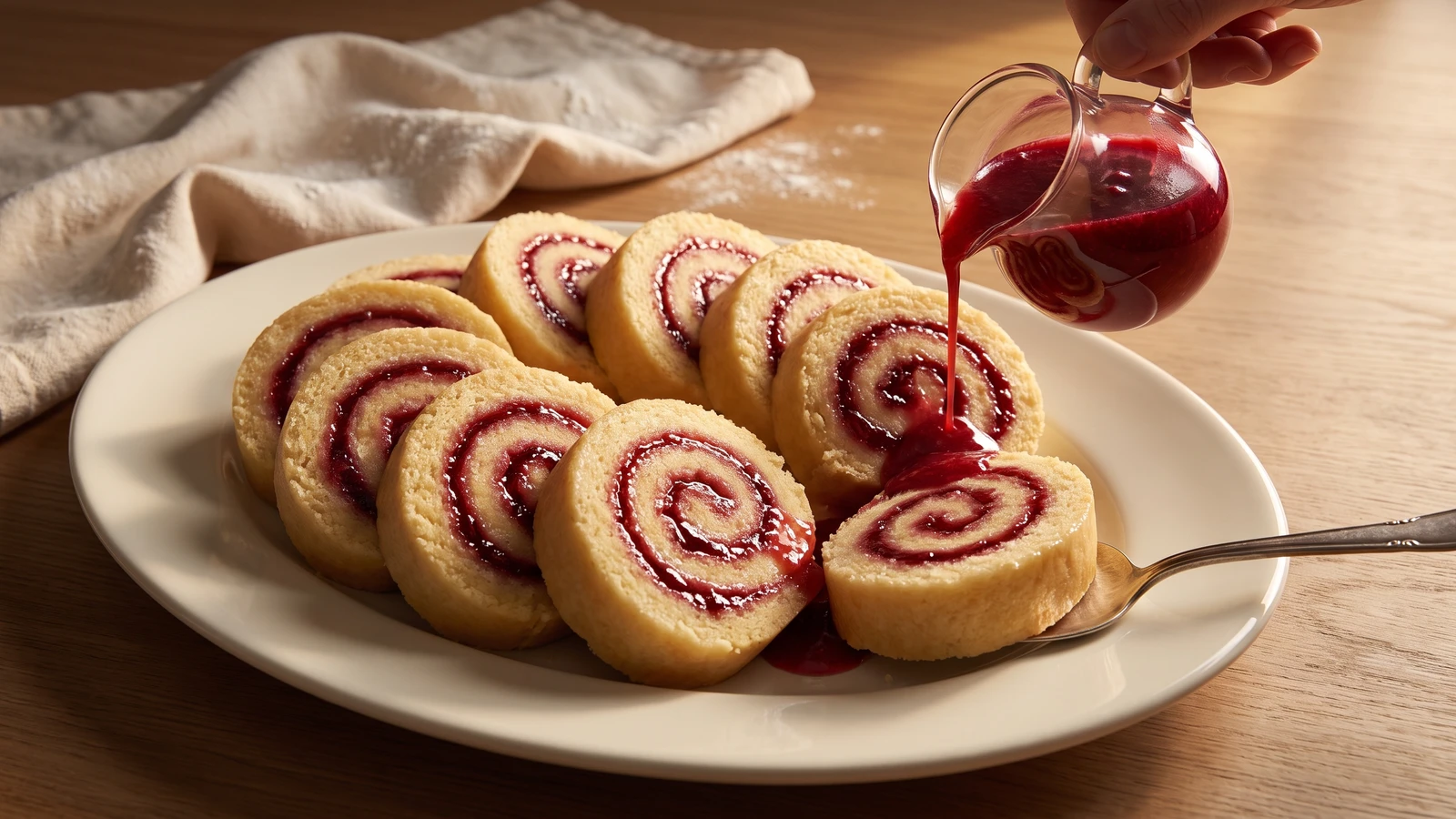
Pouding roulé à la confiture turns rested suet paste, a bright layer of jam, and ninety minutes in a cloth into tender spirals made for generous fruit sauce.
Pouding roulé à la confiture teaches patience before heat. The full hour of rest is not idle time: it relaxes the firm suet paste so it rolls thinly without springing back or tearing. After ninety minutes in its cloth, that plain paste becomes tender and close-grained, with garnet jam winding through every slice and fruit sauce brightening the plate.
The source formula needs neither a saucier nor a salamander. Its brigade convenience was a deep boiler already at the boil, a drawer of purpose-kept pudding cloths, and a full batch sized for service. For four, use a half batch of Dumpling and Pudding Pastes (No. 2361), its proportions intact, a washed cotton cloth, and a large lidded pot. One cook, one stove, one evening, with nothing essential lost.
The dedicated boiler is scaffolding. Cooking inside a buttered, floured cloth, rolling the paste one-fifth of an inch thick, and giving it the full ninety minutes are the dish itself, so those stay. Rest the paste for the entire hour before the rolling pin touches it. That is the hinge on which the pudding turns.
Roly-poly pudding belongs to the English domestic boiled-pudding table, not to any French region. French classical manuals admitted it under a translated name as a foreign pudding, retaining its suet paste, jam spiral, cloth cooking, and accompanying fruit sauce rather than remaking it as French pastry. Its Swiss-roll appearance causes a lasting misconception: this is not sponge cake, but an unleavened suet paste rendered tender by long cooking in cloth.
Quantity
1 half batch (about 15 oz / 425 g) Dumpling and Pudding Pastes (No. 2361)
rested for 1 hour
Quantity
½ cup (120 ml / 160 g)
stirred until spreadable
Quantity
1 tablespoon (15 ml / 14 g)
softened
Quantity
2 tablespoons (30 ml / 16 g)
divided between rolling and dredging the cloth
Quantity
12 cups (2.8 L / 2.8 kg), plus more as needed
Quantity
1 cup (240 ml / 240 g)
warmed for serving
| Ingredient | Quantity |
|---|---|
| Dumpling and Pudding Pastesrested for 1 hour | 1 half batch (about 15 oz / 425 g) Dumpling and Pudding Pastes (No. 2361) |
| smooth tart jam, such as raspberry or redcurrantstirred until spreadable | ½ cup (120 ml / 160 g) |
| unsalted buttersoftened | 1 tablespoon (15 ml / 14 g) |
| plain flourdivided between rolling and dredging the cloth | 2 tablespoons (30 ml / 16 g) |
| boiling water | 12 cups (2.8 L / 2.8 kg), plus more as needed |
| tart fruit saucewarmed for serving | 1 cup (240 ml / 240 g) |
Set the half batch of Dumpling and Pudding Pastes (No. 2361), prepared as its own entry directs, in a cool place for one full hour. Keep it covered so the surface cannot dry. This rest relaxes the paste; do not count its mixing time as part of the hour. If the rested paste still pulls back sharply when pressed, cover it and wait another ten minutes. Patience, not harder rolling.
Use an unbleached muslin square or a clean cotton tea towel washed without scented detergent or fabric softener. Butter a rectangle in its centre slightly larger than the finished pudding, dredge that area evenly with half the flour, and shake away the loose excess. Set a small heatproof trivet or saucer in the bottom of a large lidded pot, add the water, and bring it to a full boil.
Dust the work surface lightly with the remaining flour. Roll the rested paste into a neat rectangle about 12 by 10 inches (30 by 25 cm) and one-fifth of an inch (5 mm) thick. Spread the jam in a thin, even layer, leaving a 1-inch (2.5 cm) border clear on every side; too much jam is generosity in the wrong place, because it forces the seam open. Roll from a short side as for a Swiss roll, keeping the spiral even without squeezing it. Pinch the seam and ends closed. If an edge cracks, do not knead the whole roll again. Moisten the crack with a fingertip and press it together, borrowing a scrap from a thick corner if needed. Ça se rattrape.
Lay the roll seam-side down across the buttered, floured section of cloth. Wrap the cloth around it securely but not tightly, leaving enough ease for the paste to swell by about a finger's width. Gather and tie both ends firmly with kitchen string, like a large wrapped sweet, then fold any long cloth ends back so they cannot trail against the bottom of the pot.
Lower the wrapped pudding carefully into the boiling water. It should remain submerged by about 1 inch (2.5 cm); if it floats above the surface, hold it down with a small heatproof saucer. Cover the pot and maintain a steady, active boil for the full ninety minutes, vigorous enough to cook the paste but not so violent that the roll is battered around the pot. Check the water every twenty minutes and top it up only with boiling water. If the cloth becomes exposed, add boiling water at once and turn the roll so no ridge dries hard.
Lift the pudding out with tongs, drain it well, and let it settle for five minutes before untying. Peel the cloth away slowly. If the surface looks damp, leave the roll uncovered for two minutes and it will dry enough to cut cleanly. Warm the fruit sauce while it rests. Slice the pudding into half-inch (1.25 cm) roundels with a sharp serrated knife, arrange them overlapping in a crown on a warm platter, and serve the fruit sauce alongside. À table!
1 serving (about 215g)
Culinary guides, cultural storytelling, and the editorial depth that makes cooking meaningful.
Discover Culinary ExplorerChef Juliette
Five almond preparations, one discipline: remove the skins cleanly, dry every kernel through, then cut, toast, or cloak it in pale caramel without letting its fragrant oils escape.

Chef Juliette
A pastry pantry lesson in one tray: filberts warmed only until their red skins release, rubbed clean, cooled, and chopped into a fragrant mise-en-place for cakes, creams, pralines, and petits fours.

Chef Juliette
The smallest pâtisserie discipline decides whether a cake leaves its mould intact: clarified butter in every corner, followed by the lightest veil of dry flour or fécule.

Chef Juliette
Four whites, one spotless bowl, and a patient change of speed: whisk gently until loosened, then briskly to glossy stiffness, with powdered sugar waiting if the foam begins to granulate.