Chef Juliette
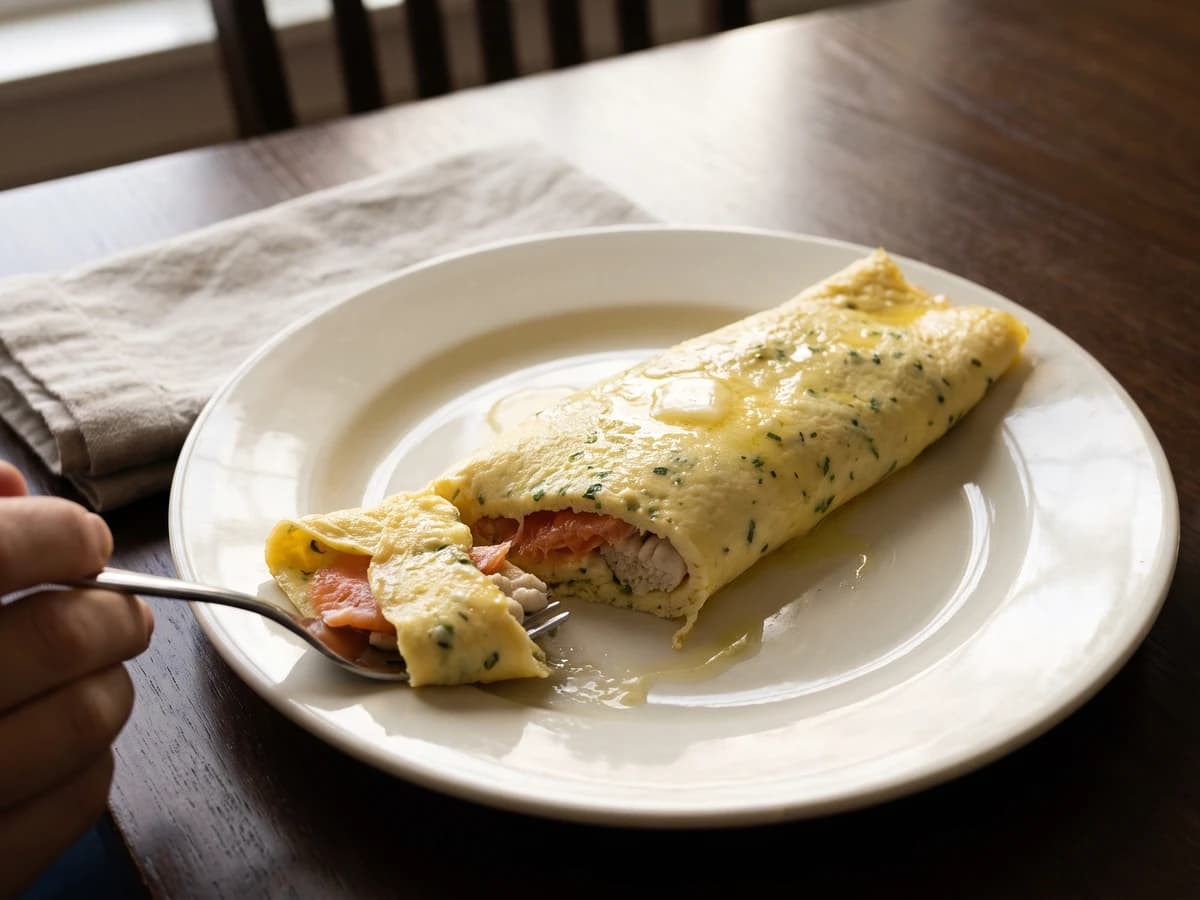
Omelette à l’Écossaise
A creamy omelette aux fines herbes closes around smoked-salmon-wrapped herring milts, gently poached in butter. Have the filling ready, then roll the eggs while they still shine.
A cooking platform built around craft, culture, and the stories behind what we eat.
Created by Chef Juliette
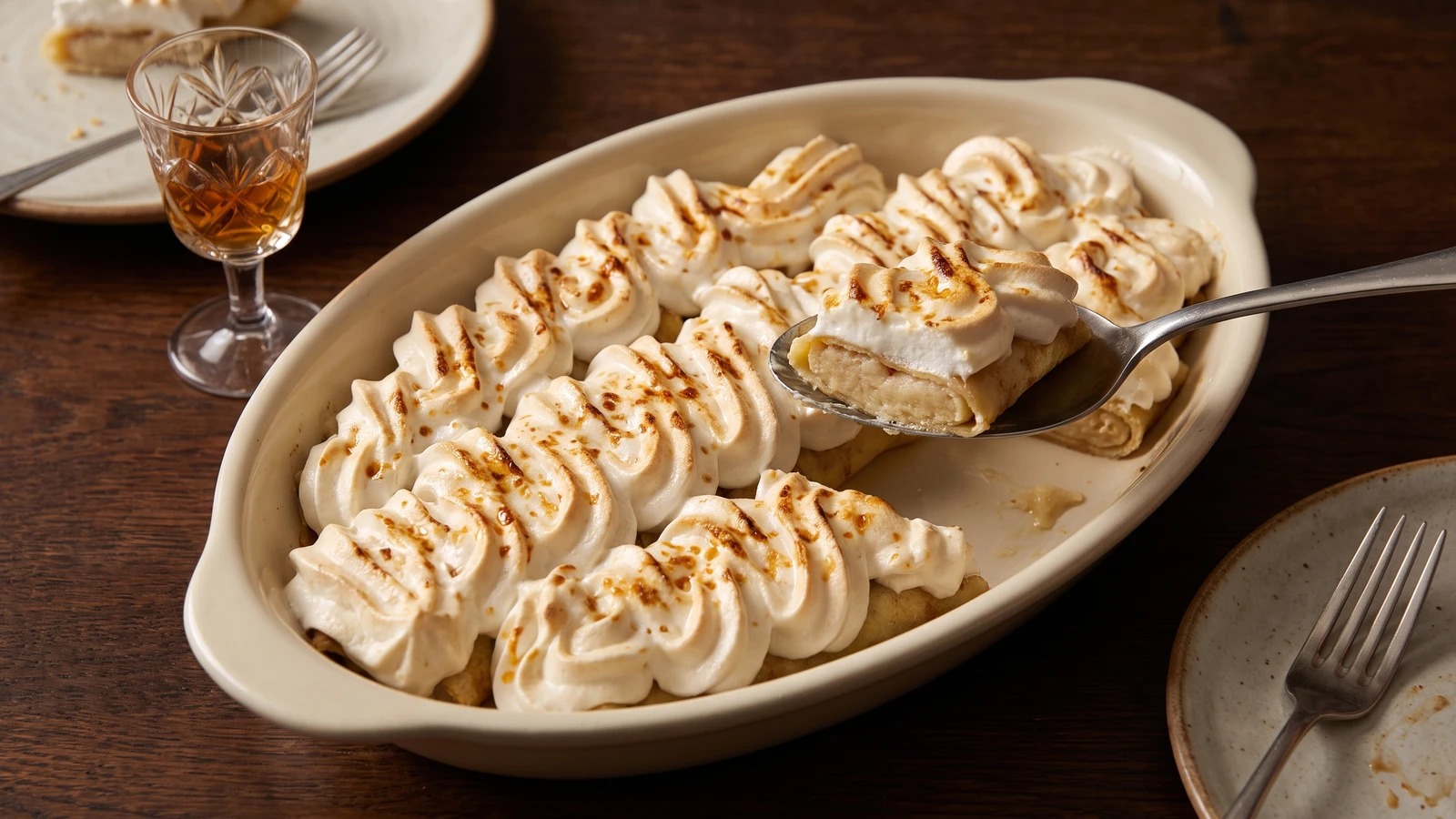
Based on No. 2478, Pannequets Meringués, from Le Guide Culinaire (1907) by Auguste Escoffier
Pannequets meringués turn thin crêpes and liqueur-scented Italian meringue into bronzed little parcels. The lesson is pure timing: fierce heat, quick colour, and straight to the table before the meringue can weep.
Pannequets meringués (meringue-covered crêpe lozenges) teach one clean lesson: fierce heat and out. Slow heat warms the filling, loosens the meringue, and gives you syrup where there should be a pale, buoyant centre beneath a bronzed piped shell. Know that before you touch a pan, and the rest is orderly work.
The original assumed a pastry hand with Meringue à l’Italienne (No. 2383) ready, a trayful of crêpes waiting, and a salamander standing at service heat. Here the brigade tray becomes eight crêpes and about half a batch of the referenced meringue, enough for four. A home broiler set fully hot, with the rack close, does the salamander’s work. The batter rests while the meringue is prepared, so two pairs of hands become one sensible sequence: one cook, one stove, one evening.
The separate pastry hand and full service tray are scaffolding, so they go. The Italian meringue, both cherry spirits, the roll, the diagonal cut, the piping, and the rapid colouring are the dish, so every one stays. The final colouring decides everything: have the broiler fierce before the dish goes beneath it.
Pannequets meringués belong to the Parisian classical entremets repertoire, where thin crêpes were rolled or folded into tidy individual portions for formal service before passing comfortably onto bourgeois celebration tables. Pannequet describes the parcel shape rather than a particular regional pancake, while kirsch and maraschino place this version firmly in the polished pastry-kitchen register. Its rapid browning beneath a salamander was not decorative fuss: it bronzed the meringue before the sweet interior had time to soften and weep.
Quantity
¾ cup plus 1 tablespoon (195 ml / 100 g)
Quantity
1 cup (240 ml / 240 g)
Quantity
2
Quantity
¼ teaspoon (1.25 ml / 1.5 g)
Quantity
3 tablespoons (45 ml / 42 g)
melted and divided
Quantity
3 cups (720 ml / about 350 g)
finished and cooled to room temperature
Quantity
1 teaspoon (5 ml / 5 g)
Quantity
1 teaspoon (5 ml / 5 g)
Quantity
2 tablespoons (30 ml / 15 g)
| Ingredient | Quantity |
|---|---|
| plain flour | ¾ cup plus 1 tablespoon (195 ml / 100 g) |
| whole milk | 1 cup (240 ml / 240 g) |
| large eggs | 2 |
| fine salt | ¼ teaspoon (1.25 ml / 1.5 g) |
| unsalted buttermelted and divided | 3 tablespoons (45 ml / 42 g) |
| Meringue à l’Italienne (No. 2383)finished and cooled to room temperature | 3 cups (720 ml / about 350 g) |
| kirsch | 1 teaspoon (5 ml / 5 g) |
| clear maraschino liqueur | 1 teaspoon (5 ml / 5 g) |
| icing sugar | 2 tablespoons (30 ml / 15 g) |
Put the flour and salt in a bowl and make a well. Whisk the eggs with all but 2 tablespoons of the milk, pour them gradually into the well, and draw in the flour until the batter is smooth. Whisk in 1½ tablespoons of the melted butter, then rest the batter for 30 minutes. Resting hydrates the flour and lets the crêpes bend without tearing. If small lumps remain, strain the batter rather than beating it endlessly.
Heat a 20 to 22 cm crêpe pan over medium heat and brush it sparingly with melted butter. Whisk the batter, adding enough reserved milk to give it the flow of light cream, then pour in a scant ¼ cup, about 50 ml, and turn the pan immediately to spread it thinly. Cook until the surface loses its wet shine and the underside is pale gold, about 45 seconds; turn and cook the second side for 15 to 20 seconds. Make eight crêpes, stacking them beneath a clean towel. If the first tears, let the pan grow a little hotter before trying again. Ça se rattrape. Cool the stack completely, because warm crêpes soften meringue.
Have the Meringue à l’Italienne (No. 2383) finished, cool, glossy, and firm enough to hold a curved peak. Add the kirsch and maraschino in separate thin trickles while whisking at low speed, allowing each addition to disappear before adding more. If the meringue softens, stop pouring and whisk briefly at medium speed until the peak returns, then add the remaining liqueur by droplets. Reserve a generous third in a piping bag fitted with a star tip.
Set the broiler rack 10 to 12 cm beneath the element and heat the broiler at its highest setting. Lay each cool crêpe pale-side up and spread it with a thin, even coat of the remaining flavoured meringue, stopping 1 cm short of the edge. Roll it snugly without squeezing, set it seam-side down, and cut it diagonally into three lozenges with a clean sharp knife. If filling escapes, scrape it back into the bowl and use a thinner coat on the next crêpe. Arrange the 24 lozenges seam-side down in a shallow broiler-safe dish brushed with the remaining butter.
Pipe a ridged crest of the reserved meringue over every lozenge, keeping the diagonal ends partly visible. Sift the icing sugar lightly and evenly over the piping. The ridges and sugar catch the fierce overhead heat first, giving rapid colour without asking the filled crêpes to bake.
Slide the dish beneath the fully heated broiler and watch it without stepping away. Colour the pannequets for 30 to 90 seconds, rotating the dish once if necessary, until the raised ridges are spotted chestnut and the hollows remain ivory. If they have not coloured after 90 seconds, withdraw the dish and let the broiler recover instead of leaving the meringue to warm slowly; dust with the faintest veil of icing sugar and give it one brief second pass. If syrup begins to bead, take them out at once. Slow heat weeps meringue, fierce heat colours it. Serve immediately, six lozenges to each guest. À table!
1 serving (about 190g)
Culinary guides, cultural storytelling, and the editorial depth that makes cooking meaningful.
Discover Culinary ExplorerChef Juliette
A creamy omelette aux fines herbes closes around smoked-salmon-wrapped herring milts, gently poached in butter. Have the filling ready, then roll the eggs while they still shine.
Chef Juliette
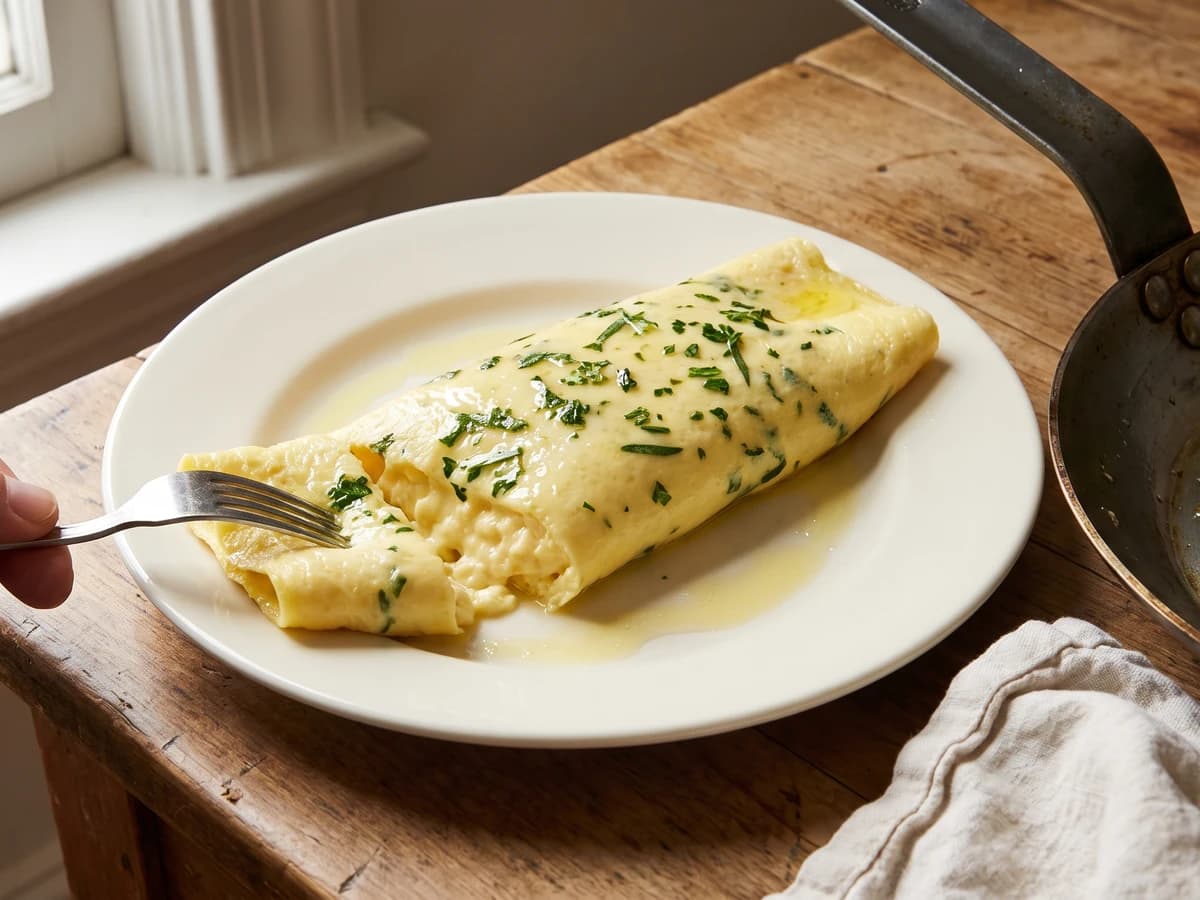
Four tender herbs, hot butter, and two eggs per pan: this rolled omelette teaches the quick hand and good judgment that keep the outside pale and the center creamy.
Chef Juliette
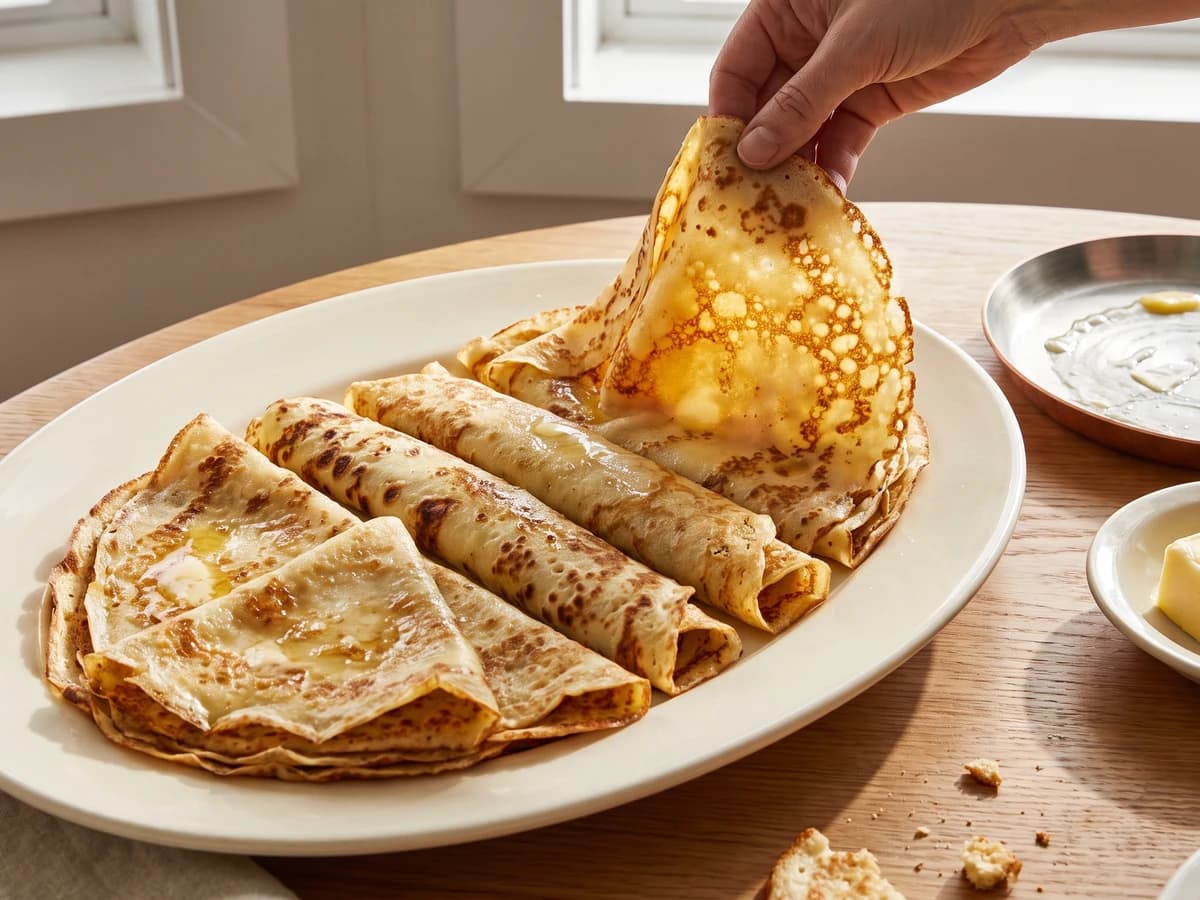
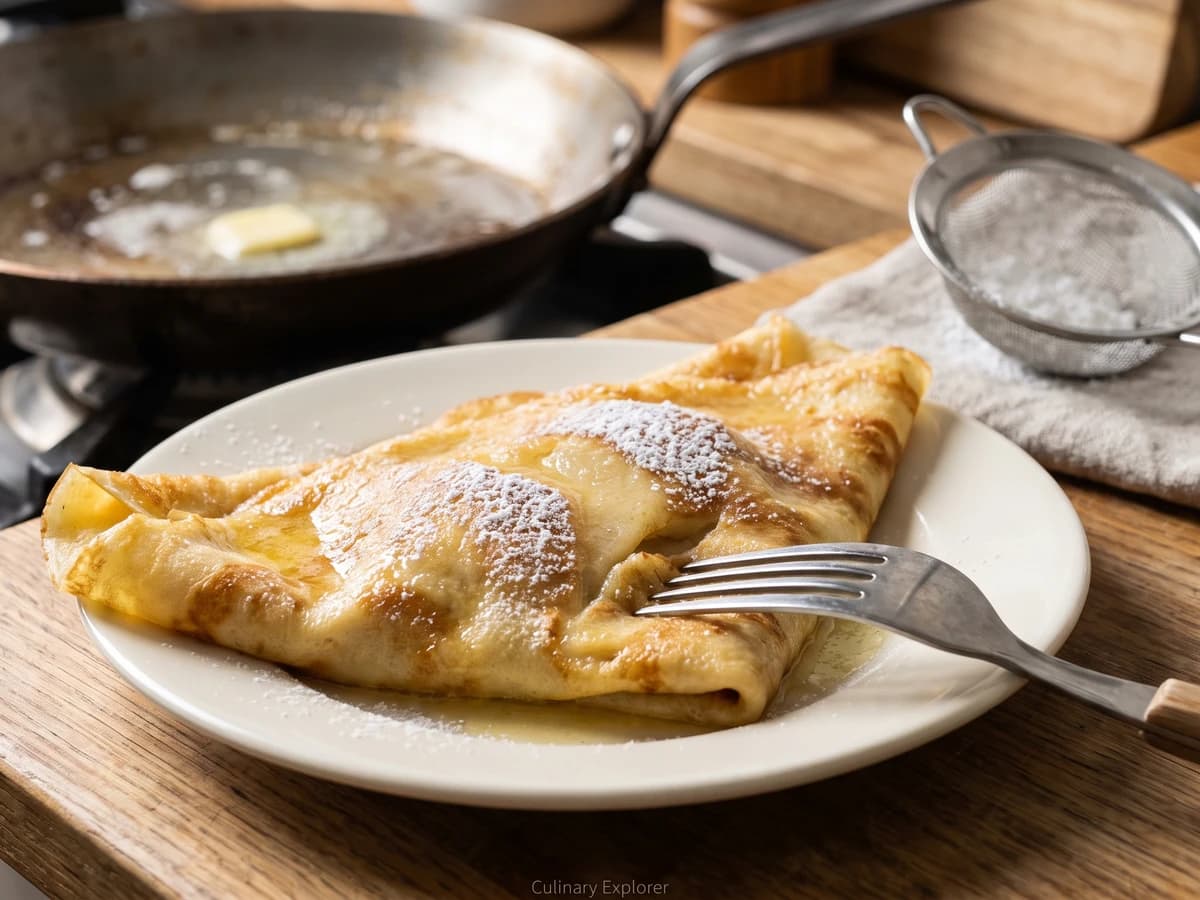
Four batters, one lesson: let the flour drink deeply before cooking, then spread the batter thinly in butter for crêpes and pannequets that bend without becoming tough.
Chef Juliette
Crêpes au Couvent trap ripe Williams pear dice between two thin pours of sweet batter, then turn in one clean toss and reach the table butter-gold, powdered, and burning hot.