
Chef Juliette
Flan aux Carottes
A pale short-paste shell holds silken, lightly sweet carrot purée beneath neat glazed half-discs, their butter syrup catching the light: a classical tart poised between vegetable course and sweet.
A cooking platform built around craft, culture, and the stories behind what we eat.
Created by Chef Juliette
Based on No. 2452, Rice Croquettes, from Le Guide Culinaire (1907) by Auguste Escoffier
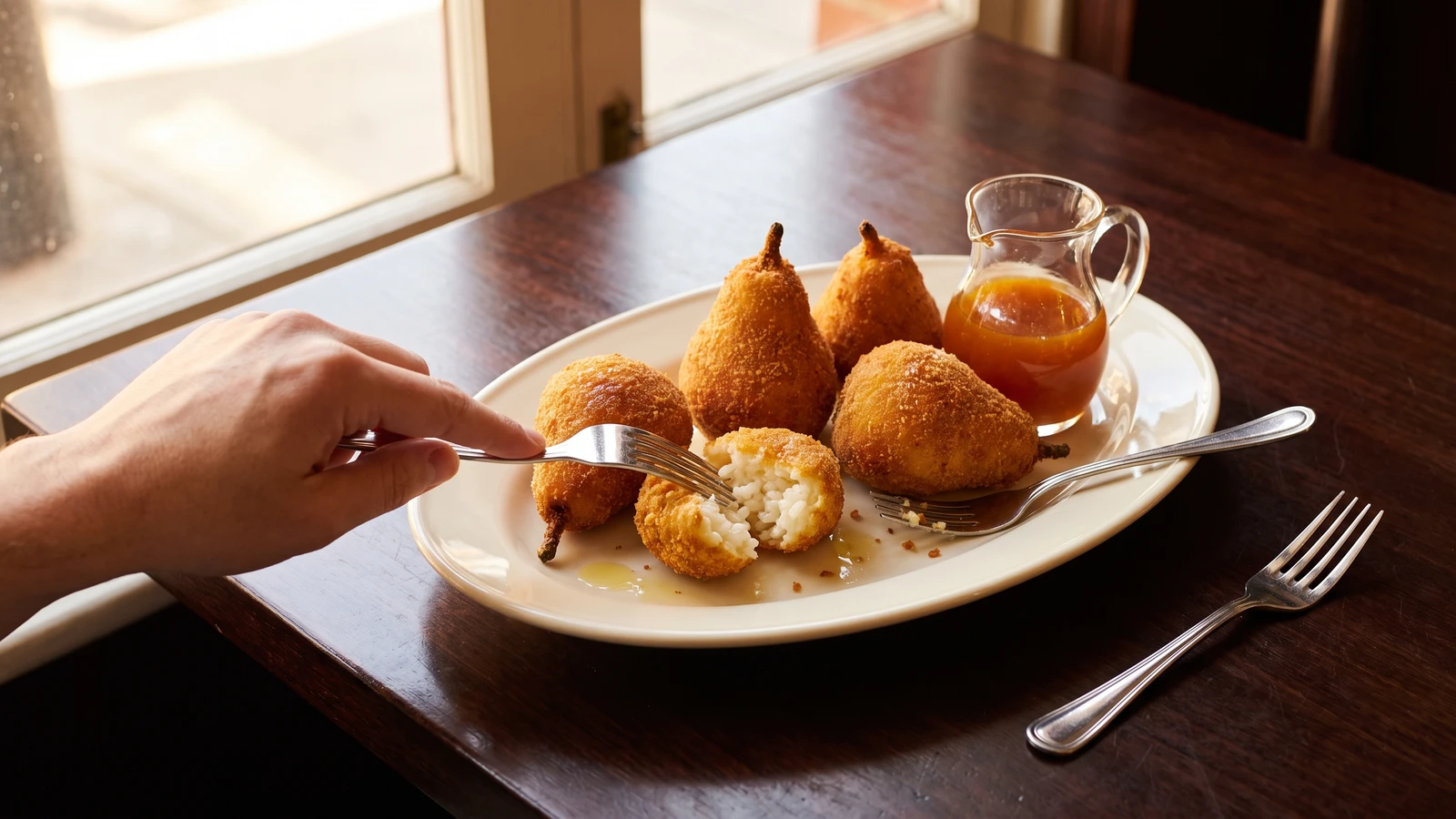
Croquettes de riz turn cold sweet rice into little pears and apricots with a crisp à l'anglaise shell, fried in fierce fat before the tender centre can slacken.
Croquettes de riz (rice croquettes) teach the contract between a tender centre and a protective crust. Know this before you touch the pan: the croquettes must be thoroughly cold and the frying fat fierce. À l'anglaise (floured, dipped in seasoned egg, and crumbed) is not decoration; it is the coat that seizes before the sweet rice can slacken.
The original formula assumed an entremets station, a brigade batch of rice ready to hand, several cooks shaping a procession of fruit, and a deep frying range already at temperature. At home, one pound of finished rice becomes eight exact two-ounce croquettes, and a heavy saucepan with a thermometer replaces the dedicated fryer. The service quantity and extra hands were scaffolding, so they go; the portion size, fruit moulding, à l'anglaise coat, hard chill, and fierce fat are the dish, so they stay. One cook, one stove, one evening.
When they are right, the shell is evenly bronzed and crisp beneath the teeth, while the vanilla-scented grains inside remain distinct and tender. Shape pears, apples, and apricots without fuss, then chill them until they hold themselves. The moment that matters most is the first contact with 190°C / 375°F fat; keep the batch small, and the crust will close before the centre loosens.
Croquettes de riz belong to the classical Parisian entremets repertoire, where sweet rice was moulded into pears, apples, and apricots before frying, then sent to table with sauce apart. Their fruit forms are decorative rather than flavoured, the centre remains rice, while actual apricot appears only in the accompanying sauce. À l'anglaise names the flour, egg, and crumb coat that lets fragile preparations survive fierce frying fat, a grand-kitchen technique that passed comfortably to the bourgeois home table.
Quantity
2 cups (475 ml / 454 g) Rice Preparation for Entremets (No. 2404)
vanilla-flavoured and completely cold
Quantity
1/2 cup (120 ml / 60 g)
Quantity
1/2 cup (120 ml / 115 g) Anglaise (for Egg-and-bread-crumbing) (No. 174)
Quantity
2 cups (475 ml / 200 g)
Quantity
6 cups (1.4 L / 1.3 kg)
for deep-frying
Quantity
1 cup (240 ml / about 250 g)
warmed gently for serving
| Ingredient | Quantity |
|---|---|
| Rice Preparation for Entremetsvanilla-flavoured and completely cold | 2 cups (475 ml / 454 g) Rice Preparation for Entremets (No. 2404) |
| all-purpose flour | 1/2 cup (120 ml / 60 g) |
| Anglaise (for Egg-and-bread-crumbing) | 1/2 cup (120 ml / 115 g) Anglaise (for Egg-and-bread-crumbing) (No. 174) |
| fine dry breadcrumbs | 2 cups (475 ml / 200 g) |
| refined sunflower oilfor deep-frying | 6 cups (1.4 L / 1.3 kg) |
| apricot saucewarmed gently for serving | 1 cup (240 ml / about 250 g) |
Set the Rice Preparation for Entremets (No. 2404) beside a parchment-lined tray. Weigh it into eight 2-ounce (57 g) portions, returning each portion to the cold as soon as it is measured. The rice must feel firm and cohesive, not merely cool; if it smears across the scale or settles under its own weight, chill it for another 20 minutes before shaping.
With barely damp hands, press each portion firmly enough to close any cracks. Shape three as little pears with narrow tops, three as round apples with shallow dimples, and two as plump apricots marked with a gentle seam. Keep the forms simple and compact. If one slumps, don't work flour or crumbs into the rice; return it to the cold until firm, then begin again. Chill the finished shapes uncovered for 30 minutes so their surfaces dry slightly.
Arrange the flour, Anglaise (for Egg-and-bread-crumbing) (No. 174), and breadcrumbs in three shallow dishes. Roll each cold shape in flour and tap away every loose patch, dip it thoroughly in the Anglaise, let the excess drain, then roll it in breadcrumbs, pressing lightly around the seam and narrow pear tops. No rice should remain visible. If the flour turns gummy and transparent, the surface is too damp; brush away the paste, chill the shape uncovered for 10 minutes, and flour it again. Ça se rattrape. Chill the coated croquettes for 20 minutes.
Pour the sunflower oil into a heavy 4-quart (3.8 L) saucepan or Dutch oven. It should stand about 2 inches (5 cm) deep and never fill more than half the pot. Set a wire rack over a tray, then heat the oil to 190°C / 375°F. A thermometer is the honest home equivalent of the brigade fryer. If the oil begins to smoke, remove the pot from the burner and let the temperature fall before continuing.
Lower two croquettes into the oil at a time. The temperature may fall, but keep it above 180°C / 355°F so the coat seizes immediately. Turn the croquettes gently and fry for 2 to 3 minutes, until evenly deep gold and firm beneath the skimmer. If one opens, lift it out at once and skim away every loose crumb. Return the oil to 190°C / 375°F, patch any fissures in the remaining shapes with flour, Anglaise (for Egg-and-bread-crumbing) (No. 174), and breadcrumbs, then chill them for 10 minutes before continuing. Ça se rattrape.
Transfer the croquettes to the wire rack and let them drain for 2 minutes; paper beneath them softens the lower crust. Arrange the pears, apples, and apricots on a warm platter and serve the apricot sauce separately, never poured over the crumb. The shell should remain crisp until the fork breaks it and finds the tender rice within. À table!
1 serving (about 290g)
Culinary guides, cultural storytelling, and the editorial depth that makes cooking meaningful.
Discover Culinary ExplorerChef Juliette
A pale short-paste shell holds silken, lightly sweet carrot purée beneath neat glazed half-discs, their butter syrup catching the light: a classical tart poised between vegetable course and sweet.
Chef Juliette
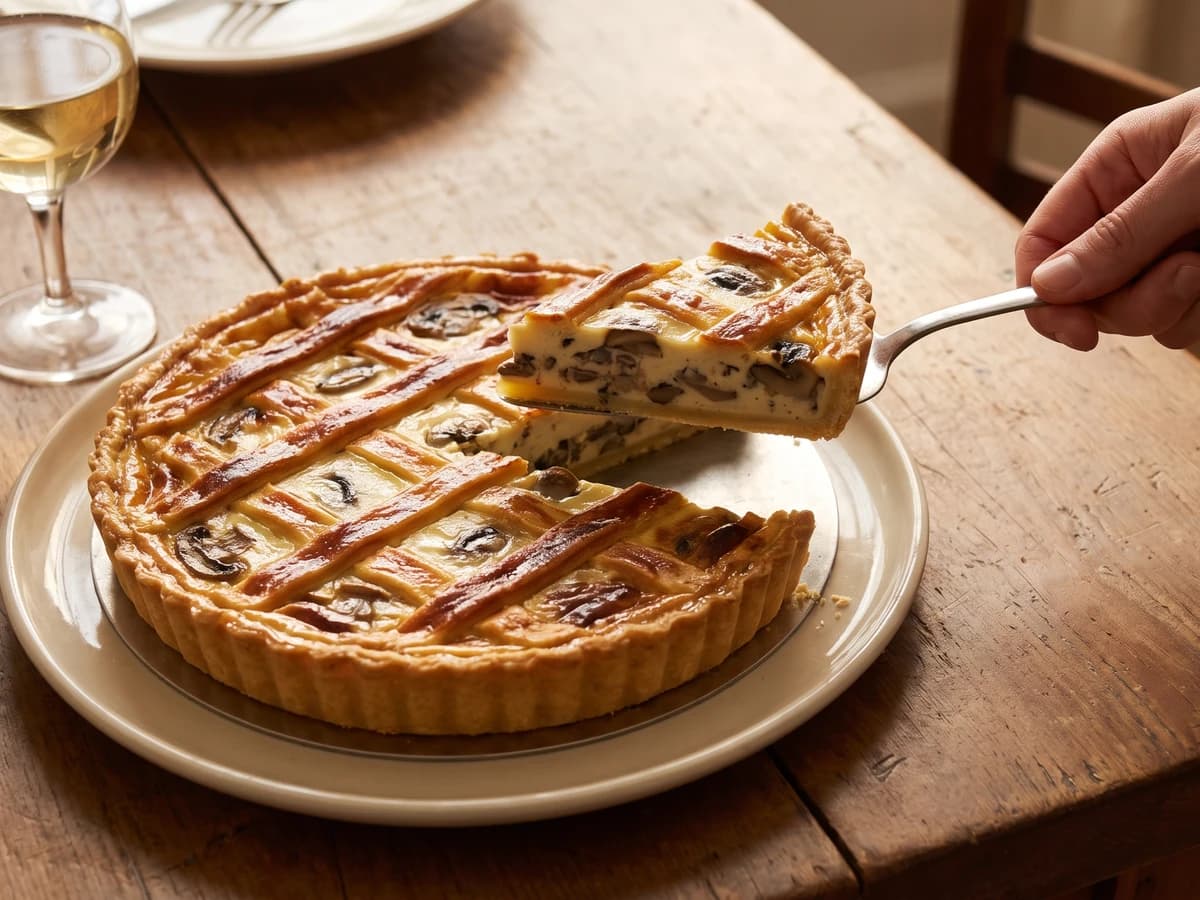
A hot mushroom flan under a butter-gold lattice, with cream reduced close around barely opened caps and a crisp short-paste base protected by one discipline: cool the filling completely.

Chef Juliette
Four little mushroom flans, latticed and gilded, baked hard and fast until butter-gold: a classical garnish scaled to the meat it accompanies and served before its crispness has time to fade.
Chef Juliette
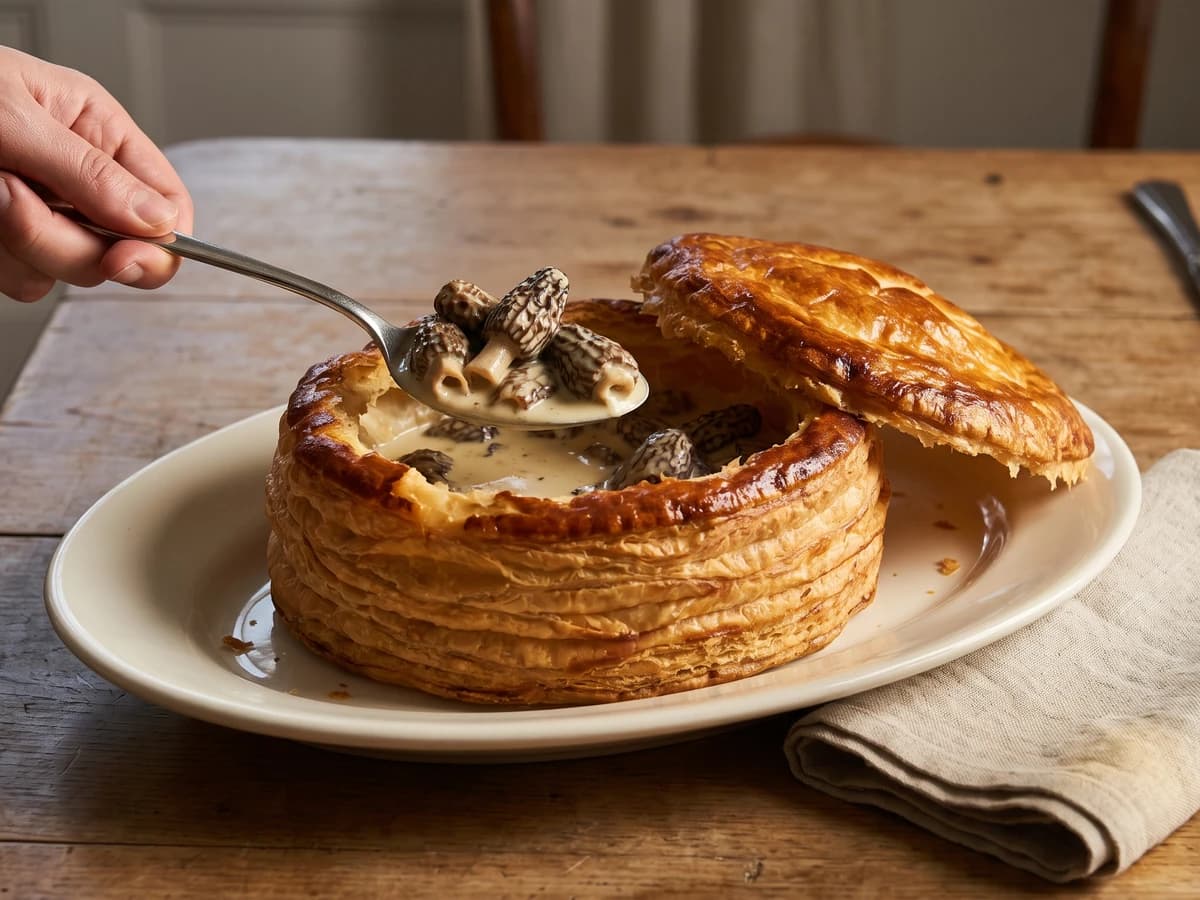
Morels surrender their liquor, then take it back as a glossy cream-and-butter sauce inside burnished puff pastry. The lesson is simple and absolute: reduce with patience, then heat gently and never boil.