
Chef Juliette
Flan aux Carottes
A pale short-paste shell holds silken, lightly sweet carrot purée beneath neat glazed half-discs, their butter syrup catching the light: a classical tart poised between vegetable course and sweet.
A cooking platform built around craft, culture, and the stories behind what we eat.
Created by Chef Juliette
Based on No. 2428, Souffléd Fritters “en Surprise”, from Le Guide Culinaire (1907) by Auguste Escoffier
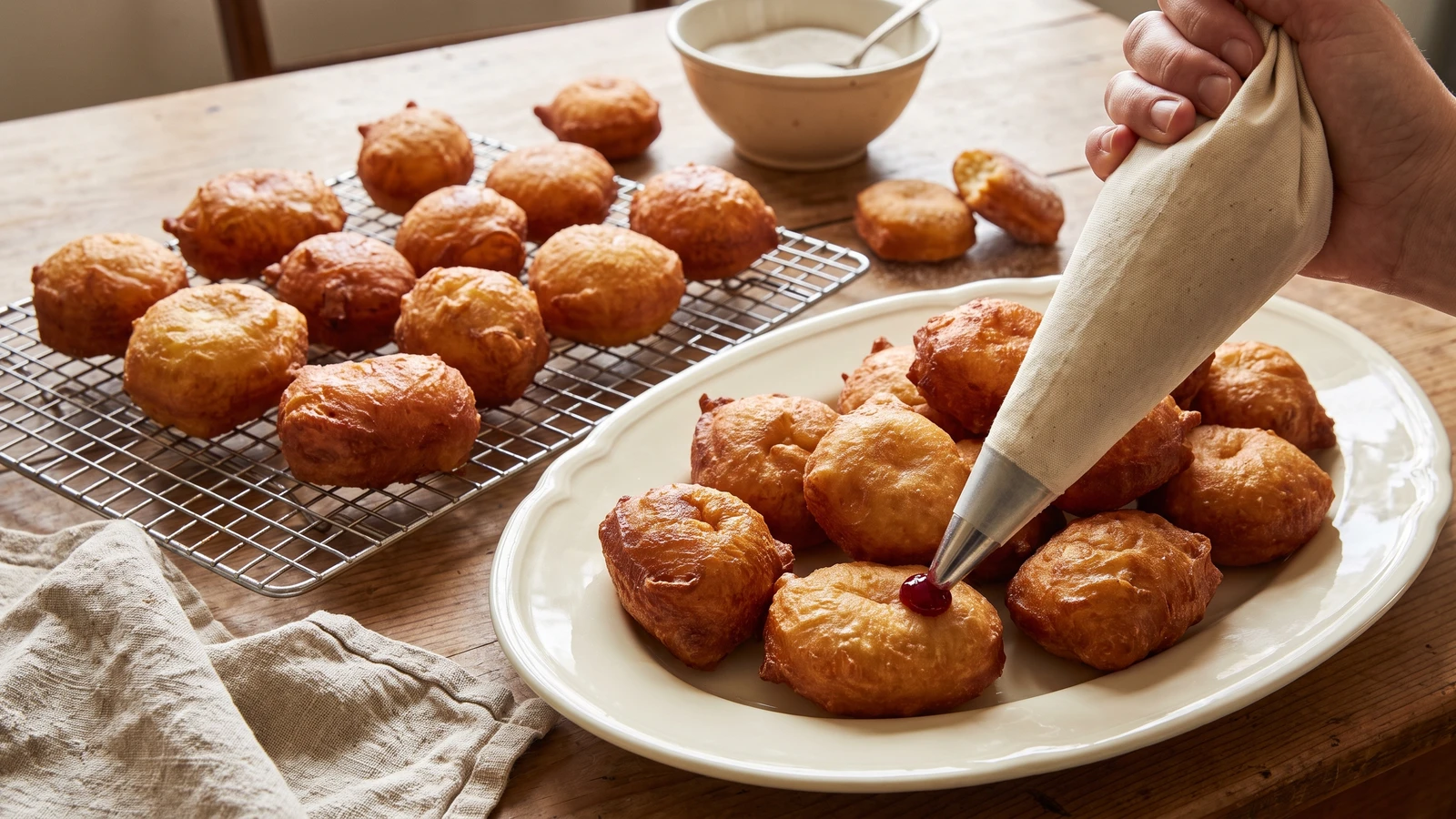
Hot choux fritters, crisp outside and nearly hollow within, take a hidden piping of jam, stewed fruit, crème frangipane, or pastry cream before the shells have time to cool.
Beignets soufflés en surprise (filled souffléd fritters) teach one uncompromising lesson: fill choux while it is hot. The shell leaves the fat crisp, light, and open enough to accept jam, crème frangipane, pastry cream, or a salpicon de fruits (very finely diced fruit bound into a thick filling). Once cold, it firms and tears under the piping tip.
The original entry assumed that the cook already knew the preceding fritter preparation, that one station tended a generous vat of frying fat, and that another pair of hands waited with the piping bag. Here the pâte à choux is written out, the batch is scaled to twenty beignets, and a high-sided pot with a thermometer replaces the fryer. The brigade handoff is scaffolding and can go. Frying the choux until hollow, opening it slightly, and piping the filling while the shell is hot are the dish itself, so those stay exactly where they belong.
Done properly, each beignet is butter-gold and crisp under the teeth, with a tender inner web and a concealed spoonful of fruit or cream. Have the filling loaded into its bag before the oil heats. That mise en place, more than any flourish, decides the dish.
Beignets soufflés belong to Parisian pâtisserie and the formal French entremets table, where pâte à choux could be fried until hollow instead of baked. The phrase en surprise signaled a concealed garnish, here inserted only after frying so jam, fruit salpicon, or cream could not weigh down the rise. The preparation moved naturally onto home celebration platters because its grandeur rests on timing and a piping bag, not on a rare regional ingredient.
Quantity
1/2 cup (120 ml / 120 g)
Quantity
4 tablespoons (60 ml / 57 g)
cut into pieces
Quantity
1 tablespoon (15 ml / 12 g)
Quantity
1/4 teaspoon (1.25 ml / 1.5 g)
Quantity
2/3 cup (160 ml / 80 g)
sifted
Quantity
2 (about 100 g without shells)
beaten
Quantity
6 cups (1.4 L / about 1.3 kg)
for deep-frying
Quantity
2/3 cup (160 ml / about 180 g)
thick jam, well-drained stewed fruit, fine fruit salpicon, cooked crème frangipane, or pastry cream
| Ingredient | Quantity |
|---|---|
| water | 1/2 cup (120 ml / 120 g) |
| unsalted buttercut into pieces | 4 tablespoons (60 ml / 57 g) |
| granulated sugar | 1 tablespoon (15 ml / 12 g) |
| fine salt | 1/4 teaspoon (1.25 ml / 1.5 g) |
| plain flour (all-purpose flour)sifted | 2/3 cup (160 ml / 80 g) |
| large eggsbeaten | 2 (about 100 g without shells) |
| refined sunflower or grapeseed oilfor deep-frying | 6 cups (1.4 L / about 1.3 kg) |
| chosen thick fillingthick jam, well-drained stewed fruit, fine fruit salpicon, cooked crème frangipane, or pastry cream | 2/3 cup (160 ml / about 180 g) |
Prepare the filling before touching the choux. Whisk jam, crème frangipane, or pastry cream until smooth and pipeable. Stewed fruit must be reduced until no loose syrup runs from it. For a fruit salpicon, cut the fruit into dice no larger than 3 mm and bind it with just enough thickened syrup or fruit purée to hold together. Fit a piping bag with an 8 to 10 mm plain tip and load it. Keep a cream filling chilled until the first batch is nearly ready.
Put the water, butter, sugar, and salt in a medium saucepan. Bring them to a full boil so the butter is completely melted, then take the pan from the heat and add the flour all at once. Beat firmly with a wooden spoon until no dry flour remains. Return the pan to medium-low heat and work the panade, the cooked flour base, for 2 to 3 minutes, until it forms a smooth ball and leaves a thin film across the pan floor. This drying gives the eggs somewhere to go and the beignets room to swell.
Transfer the panade to a bowl and beat it for 2 minutes to release its fiercest heat. Add the beaten eggs in four additions, beating each one completely into the dough and holding back the final spoonful until you judge the texture. The pâte à choux is ready when it is glossy and falls from the spoon in a heavy V. If it remains stiff and breaks off in a lump, add the reserved egg a teaspoon at a time. Stop as soon as the V forms; too much egg gives a loose dough that spreads before it can rise.
Pour the oil into a high-sided, heavy pot, leaving the vessel no more than half full, and heat it to 165 to 170°C (330 to 340°F). Using two lightly oiled teaspoons, ease four or five walnut-sized portions of choux into the oil. Fry for 7 to 9 minutes, turning them as needed, until they have swollen generously, become deep butter-gold, and feel light when lifted. Split the first tester: the centre should be mostly hollow with a dry, tender web, never a streak of raw paste. If a beignet colours before it swells, lift it out, lower the oil to 165°C, and return it once the temperature settles. Ça se rattrape, provided the crust has not gone dark.
Lift one batch onto a wire rack and move the oil pot to an unlit burner before handling the piping bag. After 30 seconds, hold each beignet in a folded cloth, make a small opening in its side with the point of a paring knife, and insert the piping tip. Fill until the shell feels slightly heavier and a trace of filling reaches the opening. Work while the shells are hot and pliable. If a batch has cooled and begins to tear, warm it on the rack in a 160°C (325°F) oven for 3 minutes, then open it again. Ça se rattrape.
Return the oil to 165 to 170°C and repeat with the remaining choux, frying and filling one small batch at a time. Arrange the beignets loosely on a platter and serve within 15 minutes, while the shells remain crisp and the filling is still hidden inside. No powdered disguise is needed. The surprise has already done the work. À table!
1 serving (about 120g)
Culinary guides, cultural storytelling, and the editorial depth that makes cooking meaningful.
Discover Culinary ExplorerChef Juliette
A pale short-paste shell holds silken, lightly sweet carrot purée beneath neat glazed half-discs, their butter syrup catching the light: a classical tart poised between vegetable course and sweet.
Chef Juliette
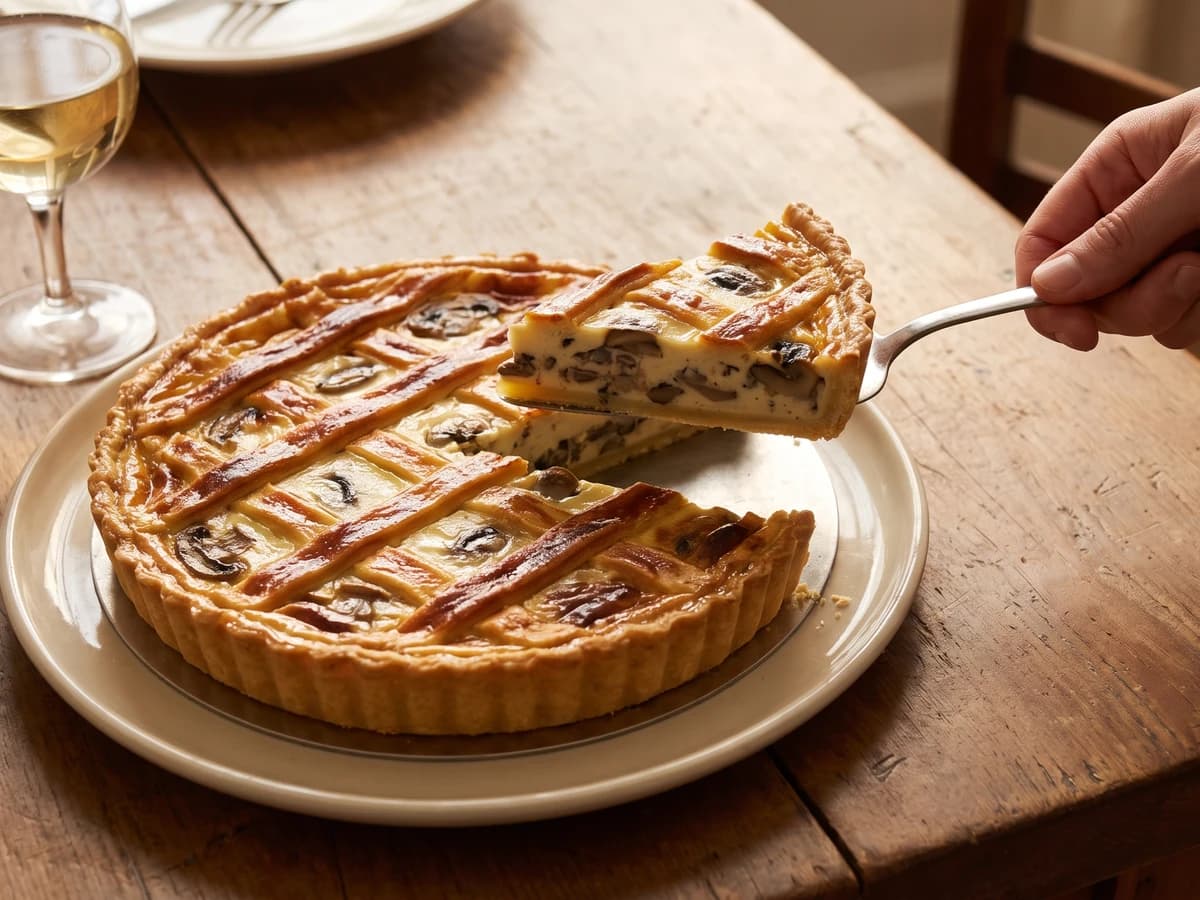
A hot mushroom flan under a butter-gold lattice, with cream reduced close around barely opened caps and a crisp short-paste base protected by one discipline: cool the filling completely.

Chef Juliette
Four little mushroom flans, latticed and gilded, baked hard and fast until butter-gold: a classical garnish scaled to the meat it accompanies and served before its crispness has time to fade.
Chef Juliette
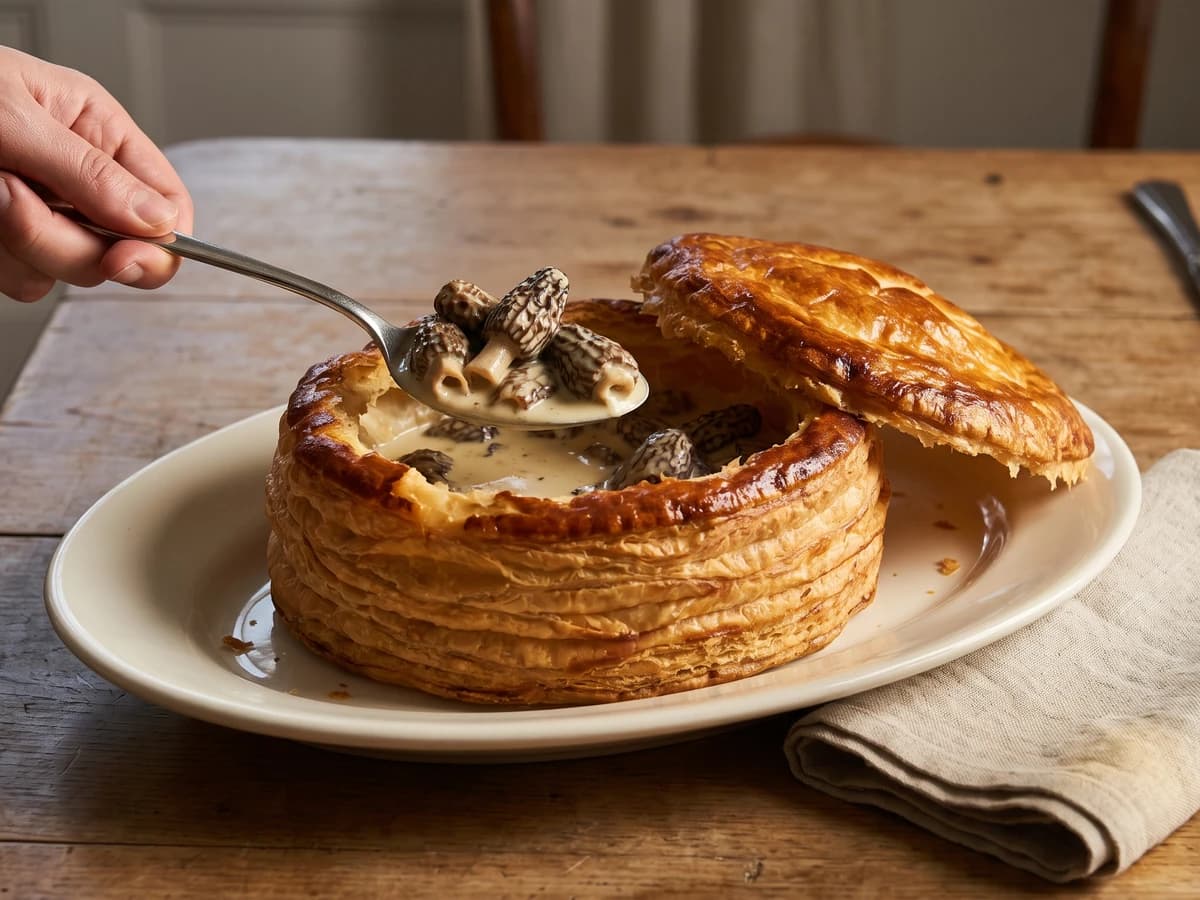
Morels surrender their liquor, then take it back as a glossy cream-and-butter sauce inside burnished puff pastry. The lesson is simple and absolute: reduce with patience, then heat gently and never boil.