Chef Juliette
Ordinary or White Consommé
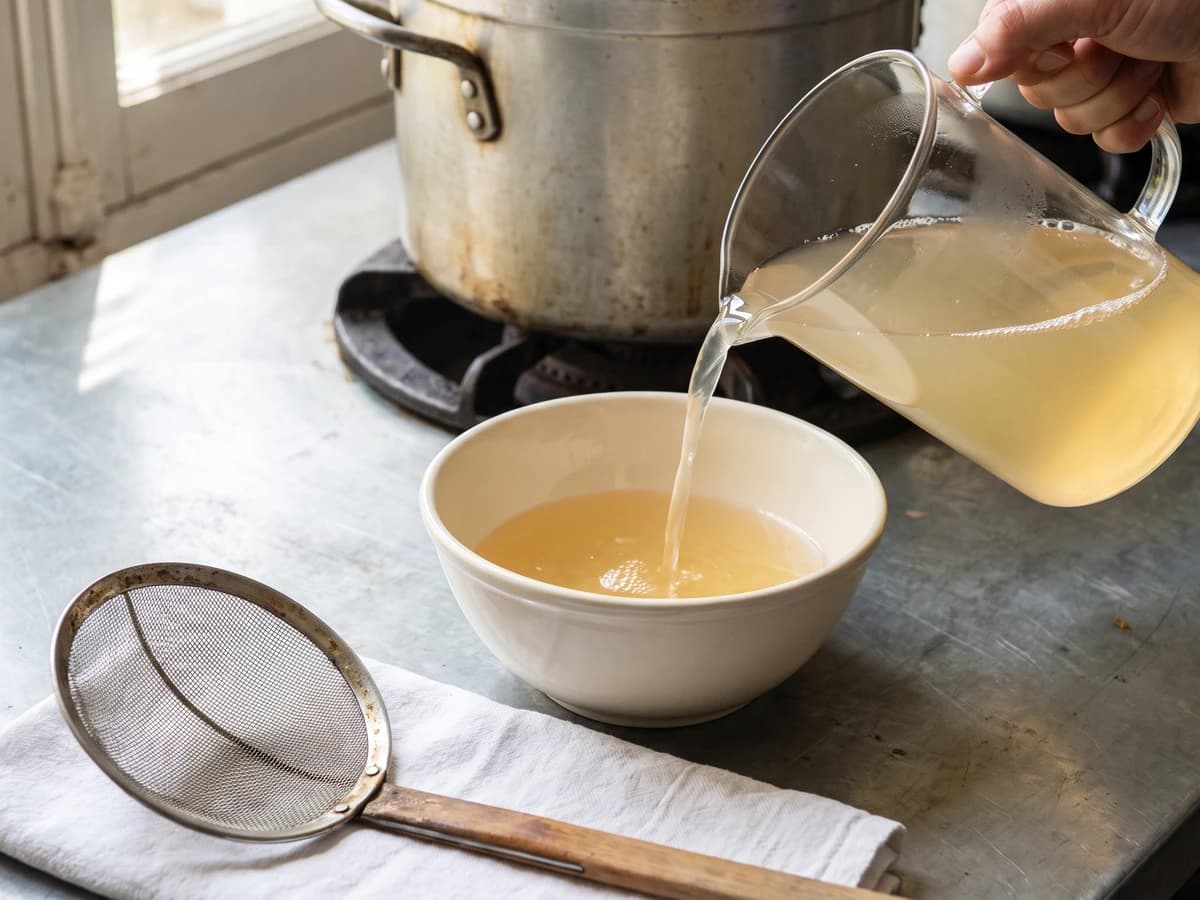
Beef shin, lean beef, and fowl begin in cold water and rise slowly toward a tremble. Skim before the boil, and you learn the quiet discipline that gives every clear French broth its backbone.
A cooking platform built around craft, culture, and the stories behind what we eat.
Created by Chef Juliette
Based on No. 2355, Gilding Preparation, from Le Guide Culinaire (1907) by Auguste Escoffier
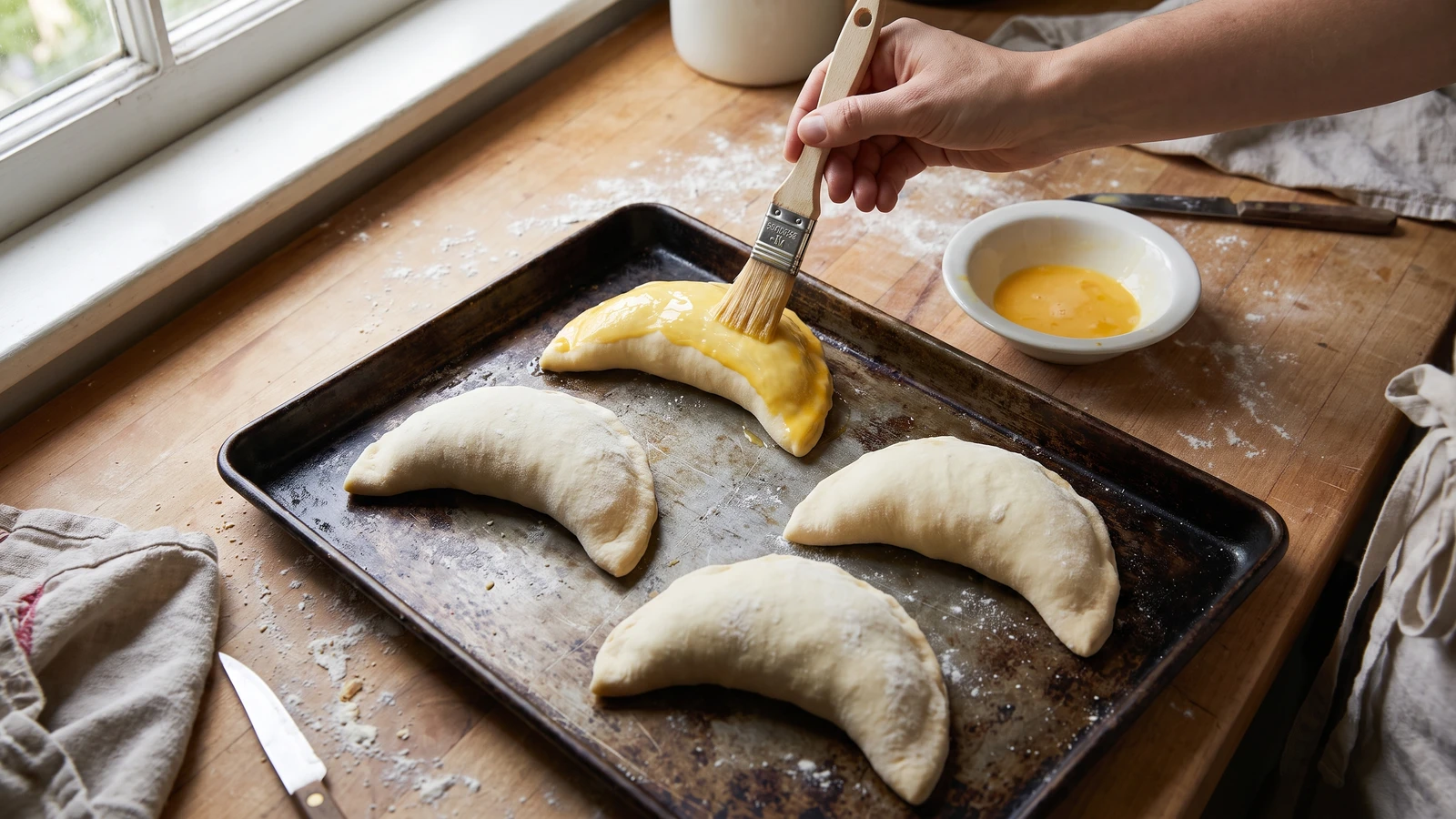
La dorure is a thin, even coat of beaten egg, brushed without puddles so pastry bakes to a clear gold; a few drops of water keep a fierce oven from taking it too dark.
La dorure teaches restraint. The one true thing to know before the brush touches pastry is that an even, very thin coat colours more beautifully than a generous one. Pooled egg bakes into dark patches, clogs fine scoring, and can glue the cut layers of puff pastry together.
The source formula speaks of eggs in the plural because it assumed a pastry station brushing whole trays throughout service. At home, one large egg covers a tart or a dozen small pastries. The bowlful was brigade scaffolding and can go; the complete beating and sparing brushwork are the preparation itself and must stay. One cook, one stove, one evening.
Use whole beaten egg for the standard dorure, add a little water when the oven runs fierce and you want a paler colour, or use yolk diluted with a few drops of water for small, dry cakes. Beat until no ropey strand of white remains, then brush the thinnest complete coat you can. That smooth, unpooled coat is the step that matters.
La dorure belongs to the working vocabulary of French pâtisserie and boulangerie, from Parisian pastry benches to bread ovens across the regions, rather than to one provincial larder. Across generations it has traveled with brioches, petits fours, and pâtés en croûte between household worktables and professional pastry production, where the brush made colour repeatable across a batch. To gild means both to coat with beaten egg and to give that coating a golden sheen through heat; the gilding is the egg film, not a sweet glaze.
Quantity
1 large (about 3 tablespoons / 45 ml / 50 g without shell)
for the standard dorure
Quantity
1 large (about 1 tablespoon / 15 ml / 18 g)
use instead of the whole egg for small, dry cakes
Quantity
¼ to 1 teaspoon (1.25 to 5 ml / 1.25 to 5 g)
add drop by drop as needed
| Ingredient | Quantity |
|---|---|
| large eggfor the standard dorure | 1 large (about 3 tablespoons / 45 ml / 50 g without shell) |
| large egg yolk (optional)use instead of the whole egg for small, dry cakes | 1 large (about 1 tablespoon / 15 ml / 18 g) |
| cool water (optional)add drop by drop as needed | ¼ to 1 teaspoon (1.25 to 5 ml / 1.25 to 5 g) |
Crack the whole egg into a small bowl for the standard dorure. If you are gilding small, dry cakes, put the yolk alone in the bowl and reserve the white for another use. These are alternatives, not ingredients to combine: whole egg gives a balanced golden coating, while diluted yolk leaves those little cakes with a richer, closer film.
Beat the egg steadily with a fork until the yolk and white are completely joined and no cord of egg white follows the fork. Keep the motion low in the bowl rather than whipping in air; dorure is a coating, not a foam. If bubbles cover the surface, let the bowl stand for 2 minutes and lift them away with the fork.
Leave the standard dorure undiluted unless the pastry will meet a fierce oven or you want a lighter gold. In that case, beat in ½ teaspoon (2.5 ml / 2.5 g) water, then add more by drops only if needed, never exceeding 1 teaspoon (5 ml / 5 g) per egg. For the yolk version, add just a few drops, up to ¼ teaspoon (1.25 ml / 1.25 g). The mixture should leave a thin, translucent trail from the brush; water changes the colour as well as the consistency, so use drops, not a splash.
Make certain the pastry surface is cool, dry, and free of loose flour. Load the pastry brush, wipe it lightly against the bowl, then gild the surface with one thin, complete coat, working gently so you don't disturb any scoring. On puff pastry, keep dorure away from the cut edges or it can seal the layers together. If a puddle gathers in a crease, lift it immediately with a clean, nearly dry brush. Ça se rattrape.
Move the gilded pastry directly into the fully heated oven specified by its own recipe. The oven's heat gives the dorure its golden sheen; this preparation has no separate cooking time. If the surface reaches the right colour before the pastry is baked through, shield it loosely with foil and finish baking. A heavier second coat is not the answer.
1 serving (about 53g)
Culinary guides, cultural storytelling, and the editorial depth that makes cooking meaningful.
Discover Culinary ExplorerChef Juliette
Beef shin, lean beef, and fowl begin in cold water and rise slowly toward a tremble. Skim before the boil, and you learn the quiet discipline that gives every clear French broth its backbone.
Chef Juliette
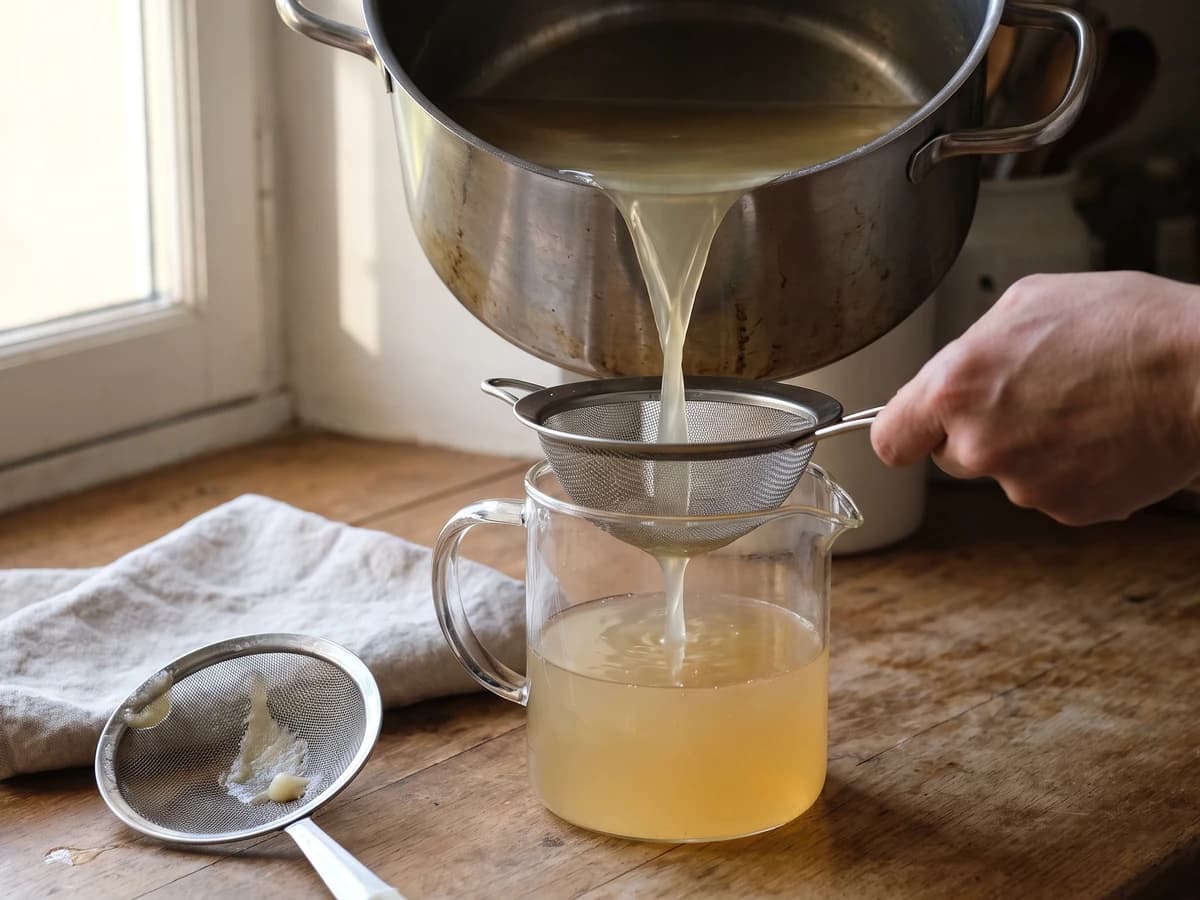
Break the veal bones small, then give them eight hours at a bare tremble. This pale, gelatinous fond becomes the quiet foundation beneath velouté, blanquette, and every sauce that must stay light.
Chef Juliette
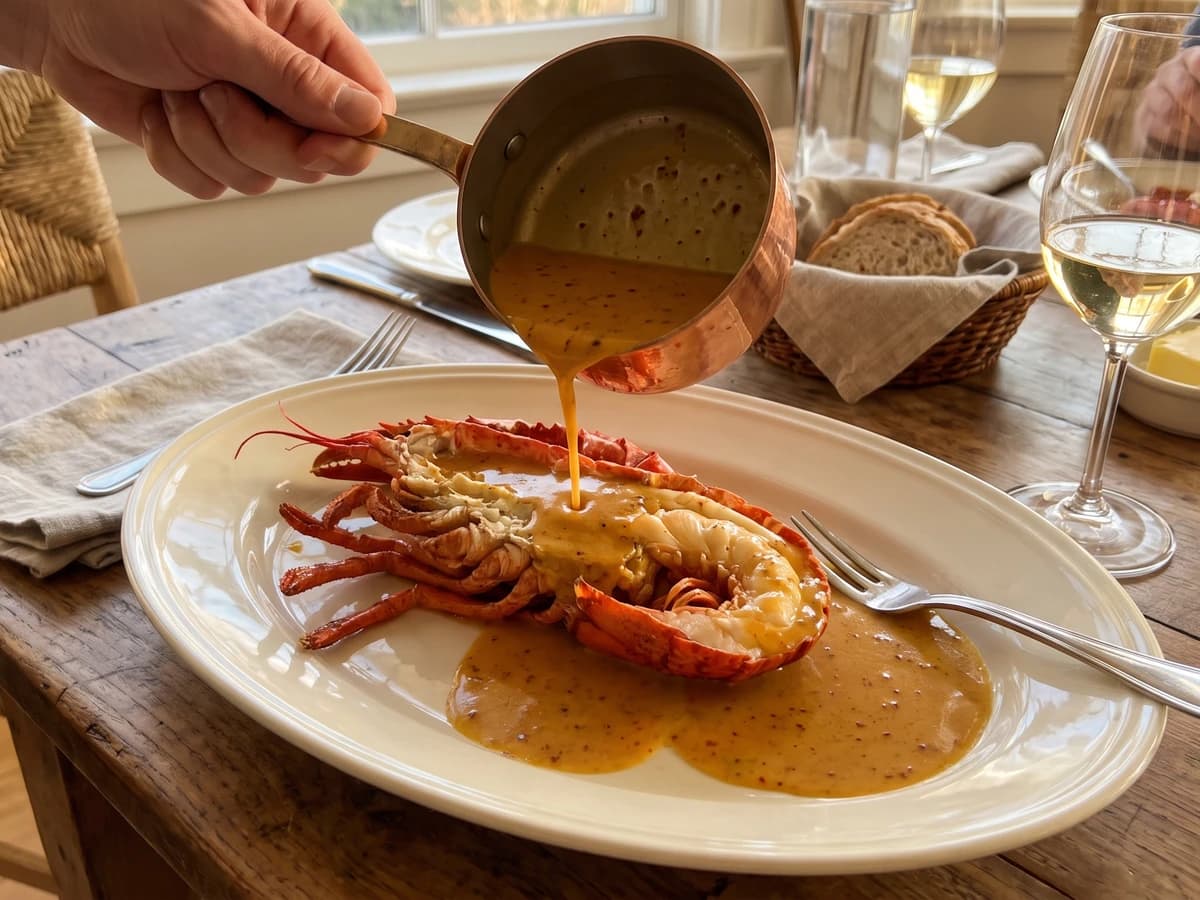
Sauce Orientale concentrates lobster-rich American Sauce with curry, then folds in cream away from the fire: a glossy, gently spiced derivative made for lobster, crayfish, and firm fish.
Chef Juliette
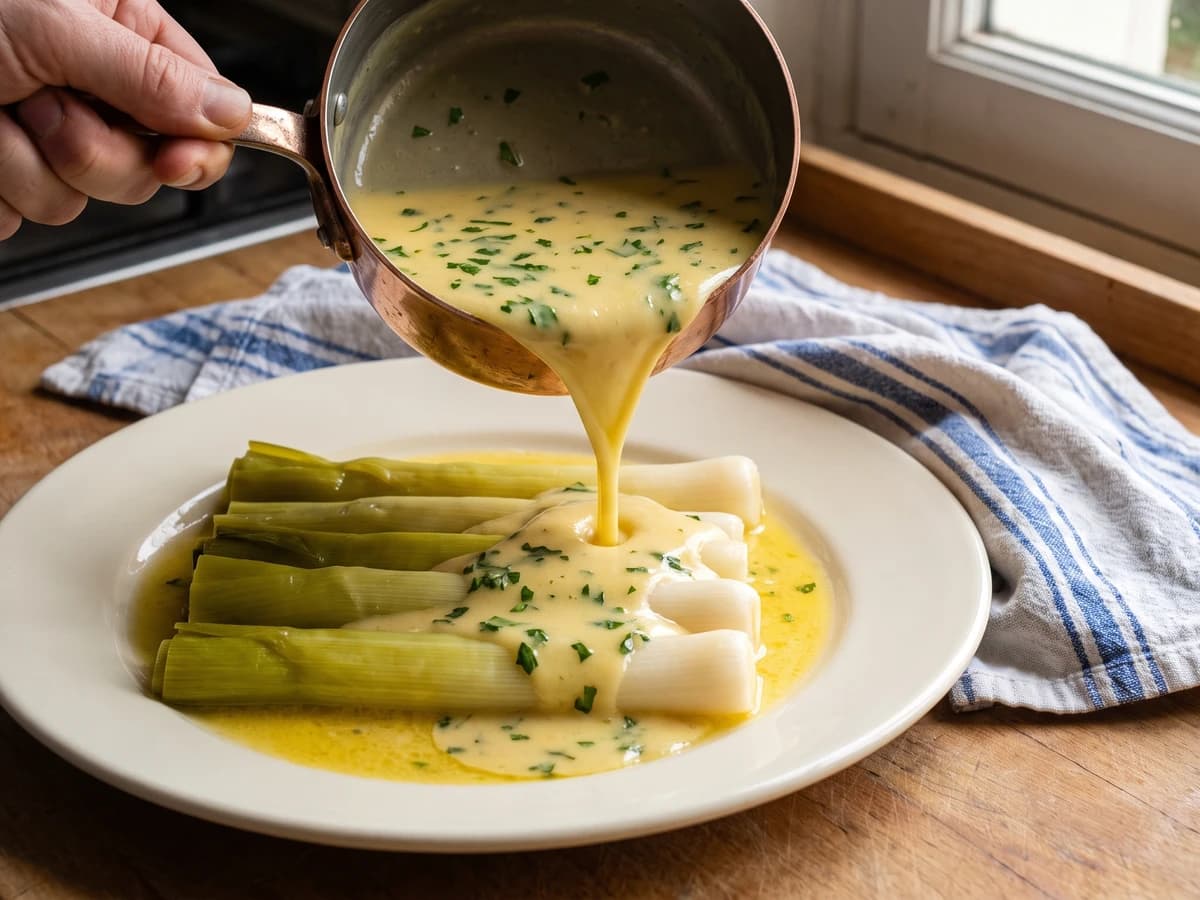
An old lesson in sauce families: Sauce Allemande takes mushroom liquor, then butter, lemon, and parsley, becoming a glossy Poulette for sheep's trotters, leeks, cauliflower, and anything needing gentle richness with a bright edge.