
Chef Juliette
Various Almond Preparations
Five almond preparations, one discipline: remove the skins cleanly, dry every kernel through, then cut, toast, or cloak it in pale caramel without letting its fragrant oils escape.
A cooking platform built around craft, culture, and the stories behind what we eat.
Created by Chef Juliette
Based on No. 2346, Glace au Fondant, from Le Guide Culinaire (1907) by Auguste Escoffier
Controlled crystallization, made visible: sugar stops at 230°F, then every patch is folded and scraped until the clear syrup becomes a white, supple fondant ready to glaze petits fours.
Glace au fondant (fondant glaze) teaches controlled crystallization. One true thing decides it: the syrup must remain clear until precisely 230°F, then every patch must be moved as it cools so the crystals form fine and even. Leave one patch untouched and it hardens into lumps. First you prevent crystallization, then you command it. C'est la même grammaire.
The original preparation assumed a responsive copper sugar pan, an oiled marble slab, a strong knife, and a pastry worker accustomed to judging hot sugar with bare fingers. Those are brigade scaffolding. A heavy stainless-steel saucepan, a reliable thermometer, an inverted metal baking sheet, and a rigid bench scraper give the home cook the same control more safely. The batch is scaled to 500 grams of sugar, enough for the thermometer to read properly but manageable by one pair of hands. One cook, one stove, one evening.
The exact temperature and the uninterrupted working are the dish, so neither has been shortened. Oil the surface, set every tool within reach, and calibrate the thermometer before the syrup boils. Once it reaches 230°F, the clock begins, and no patch of sugar may be left behind.
Glace au fondant belongs to the French confiserie and pâtisserie bench, especially the Parisian pastry shop, where white fondant is kept ready to warm, flavour, and pour over éclairs, petits fours, and gâteaux. Its fine, controlled crystals produce an opaque, tender coating instead of the brittle shell left by ordinary boiled sugar. Here glace means glaze, not ice cream, and this fondant is poured rather than rolled.
Quantity
2½ cups (590 ml / 500 g), for The Cooking of Sugar (No. 2344) and The Kneading of Pastes (No. 2357)
Quantity
⅔ cup (160 ml / 160 g)
Quantity
1 tablespoon (15 ml / 20 g)
Quantity
1 teaspoon (5 ml / 4 g)
for the working surface
Quantity
1 to 3 tablespoons (15 to 45 ml / 15 to 45 g)
for softening an essence-flavoured glaze
Quantity
1 to 3 tablespoons (15 to 45 ml / 14 to 42 g)
use in place of warm water
Quantity
½ teaspoon (2.5 ml / about 2 g)
Quantity
1 to 2 drops
Quantity
12 to 24
for glazing
| Ingredient | Quantity |
|---|---|
| superfine white sugar | 2½ cups (590 ml / 500 g), for The Cooking of Sugar (No. 2344) and The Kneading of Pastes (No. 2357) |
| water | ⅔ cup (160 ml / 160 g) |
| liquid glucose | 1 tablespoon (15 ml / 20 g) |
| neutral oilfor the working surface | 1 teaspoon (5 ml / 4 g) |
| warm waterfor softening an essence-flavoured glaze | 1 to 3 tablespoons (15 to 45 ml / 15 to 45 g) |
| selected liqueur (optional)use in place of warm water | 1 to 3 tablespoons (15 to 45 ml / 14 to 42 g) |
| selected essence (optional) | ½ teaspoon (2.5 ml / about 2 g) |
| food colouring matched to the chosen flavour (optional) | 1 to 2 drops |
| completely cooled, dry petits fours, éclairs, or small cakes (optional)for glazing | 12 to 24 |
Set a dedicated marble pastry slab or an inverted, heavy uncoated metal baking sheet on a level, heatproof surface. Rub it evenly with the neutral oil, leaving a continuous film without puddles. Arrange the thermometer, bench scraper, offset spatula, and storage container within reach. Do not pour boiling syrup directly onto a stone countertop, which may crack under thermal shock. The syrup will not wait while you search for a tool.
Put the sugar, water, and glucose into the saucepan. Stir only until every crystal is moistened, then set the pan over medium heat and follow The Cooking of Sugar (No. 2344). Once the syrup boils, stop stirring; wash any crystals from the sides with a barely damp pastry brush. Cook to precisely 230°F (110°C) at sea level, or 18°F (10°C) above your thermometer's reading for boiling water, then remove the pan immediately. Never test hot syrup with your fingers.
Carry the pan directly to the prepared surface and pour the syrup onto it at one tilt. Do not scrape the saucepan, since crystals clinging to its sides can seed coarse lumps. Leave the syrup undisturbed for 3 to 5 minutes, a little longer on thick metal, until its edges begin to thicken but the whole mass still yields beneath the scraper. It remains dangerously hot, so judge it with the tool, never your hand.
Use the scraper and offset spatula to move the syrup in every direction. Draw the outer edges into the centre, spread the mass outward, fold it over itself, and turn it continuously so no film remains untouched on the surface. After 10 to 15 minutes it will cloud, whiten, and tighten into a slightly granular paste. This change can look alarming. It is exactly right.
When the paste is barely warm and safe to touch, gather it into a compact mass and finish it through The Kneading of Pastes (No. 2357). Press it away from you with the heel of the palm, gather it back, and work through the whole mass twice until it becomes smooth, supple, and finely textured, with no sandy patches. If it cracks from dryness, moisten your palm and continue a few drops at a time. If it feels sticky, keep kneading; adding powdered sugar would introduce the coarse texture you have worked to remove.
Heap the finished fondant into a clean airtight container. Press a piece of barely dampened food-grade parchment or a clean, barely damp cloth directly against its surface, then close the lid and keep the container in a cool, dry cupboard. This gives the original damp covering without exposing the sugar to household dust. The fondant is ready now, though an overnight rest makes its moisture especially even.
Put only the fondant needed for glazing into a small saucepan and work it over the lowest heat, or set the pan over a gentle bain-marie if your stove runs fierce. For each 1 cup (250 g) fondant, add 1 tablespoon of warm water when using an essence, or the selected liqueur in place of water, then add more liquid by teaspoons until the glaze pours in a continuous sheet. Warm it only to 95 to 100°F (35 to 38°C), keeping it opaque. Tint it sparingly when the flavour calls for colour.
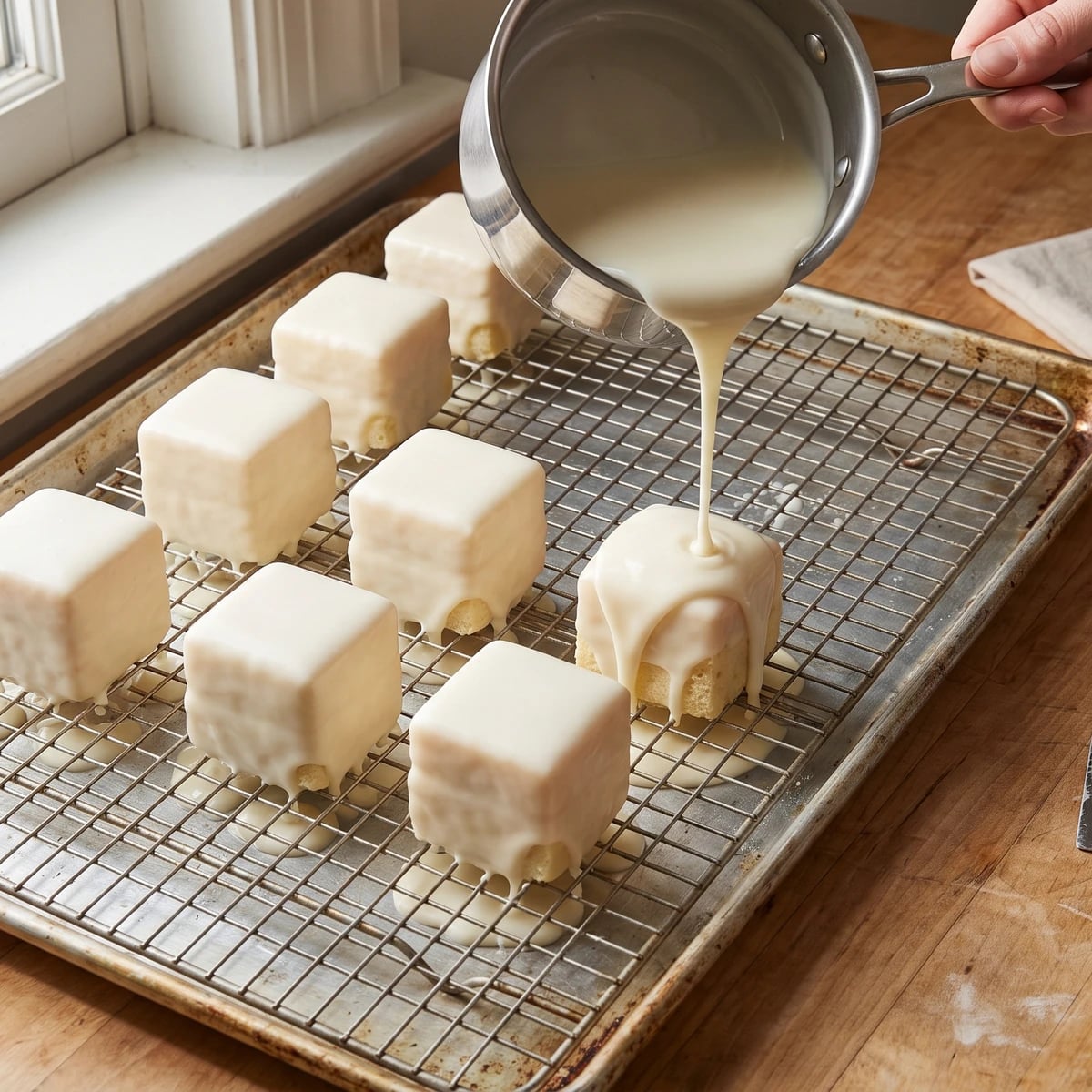
Arrange completely cooled, dry pastries on a rack over a tray. Pour the fluid fondant over each piece at one tilt, allowing it to cover the top and fall naturally down the sides. Work decisively and do not brush repeatedly over a setting surface, which leaves ridges and tears. Let the glaze stand for 15 to 20 minutes until dry to a light touch and smooth beneath it. À table!
1 serving (about 24g)
Culinary guides, cultural storytelling, and the editorial depth that makes cooking meaningful.
Discover Culinary Explorer
Chef Juliette
Five almond preparations, one discipline: remove the skins cleanly, dry every kernel through, then cut, toast, or cloak it in pale caramel without letting its fragrant oils escape.

Chef Juliette
A pastry pantry lesson in one tray: filberts warmed only until their red skins release, rubbed clean, cooled, and chopped into a fragrant mise-en-place for cakes, creams, pralines, and petits fours.

Chef Juliette
Three states, one lesson: control butter’s water and texture before it meets the pastry, then soften, work to pommade, or clarify according to the job it must do.

Chef Juliette
The smallest pâtisserie discipline decides whether a cake leaves its mould intact: clarified butter in every corner, followed by the lightest veil of dry flour or fécule.