
Chef Juliette
John Dory (St. Pierre)
John Dory has the delicacy of sole and the firmness of turbot. A light flouring, a quick butter sauté, and nut-brown beurre noisette show exactly why looks never mattered.
A cooking platform built around craft, culture, and the stories behind what we eat.
Created by Chef Juliette
Based on No. 2297, The Preparation of Ravioli, from Le Guide Culinaire (1907) by Auguste Escoffier
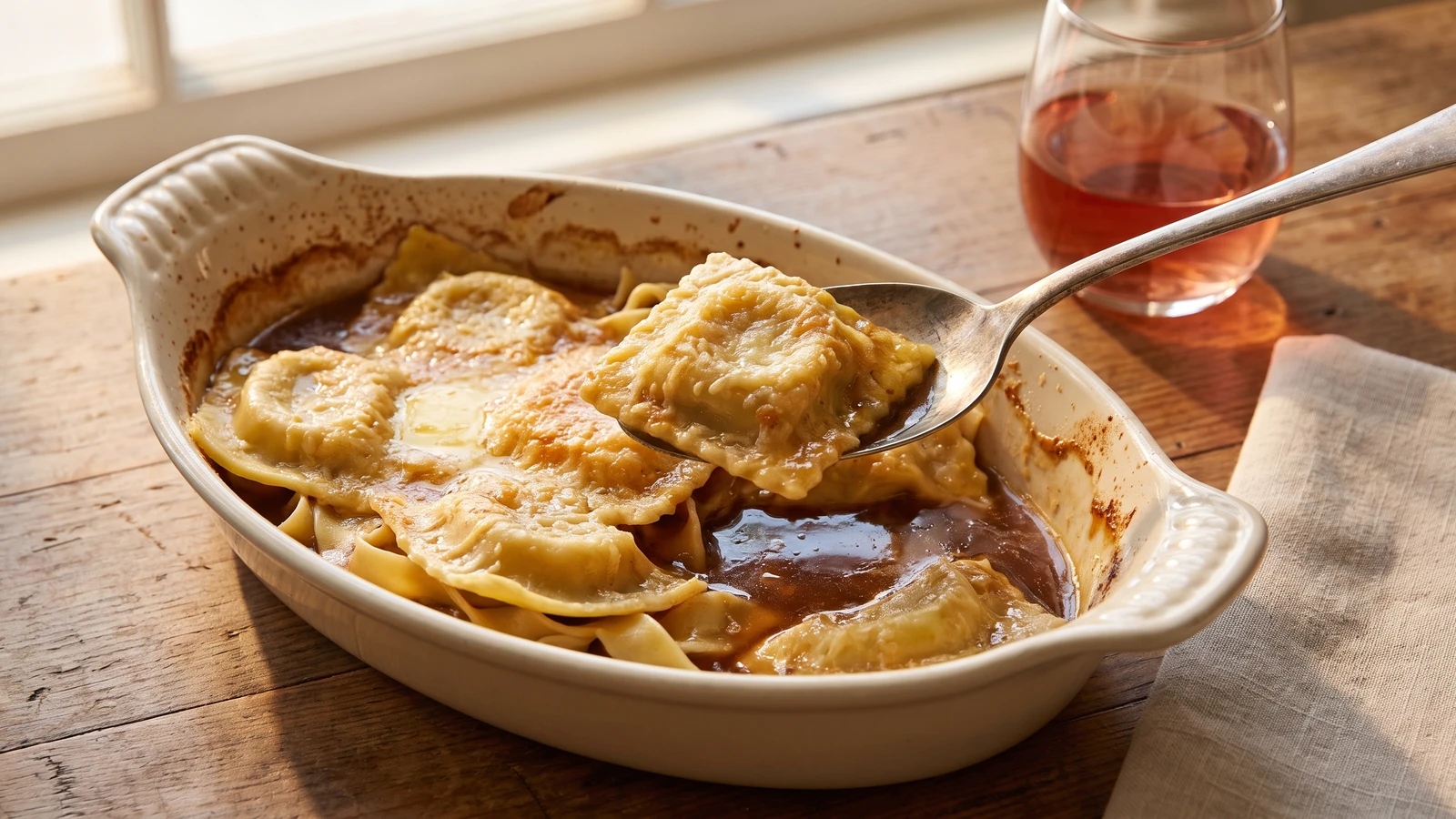
Three shapes, one decisive seal: thin noodle paste wrapped around a classical filling, barely poached, then layered with Parmesan and beef gravy beneath a bronzed gratin.
La préparation des raviolis (the making of filled noodle parcels) teaches one true thing before the pan comes out: air is the enemy. Roll the paste thin, keep each portion of stuffing no larger than a hazelnut, then press from the filling toward the edge so no pocket remains. A dry seam can be dampened and pressed again. A trapped bubble swells in the poaching water and opens what looked perfectly sealed.
The original assumes a saucier on staff, a stock never off the fire, brigade trays of filling, and a salamander ready to form the gratin. At home, a small saucepan reduces gelatin-rich beef stock while the dough rests, a hand-cranked roller or rolling pin makes three manageable sheets, and the broiler supplies the fierce top heat. The professional cutters are scaffolding, useful but replaceable; a biscuit cutter, knife, and fluted pastry wheel do their work. The thin paste, chilled classical stuffing, expelled air, bare poach, and cheese-and-gravy finish are the dish, and they stay. Twenty-four ravioli feed four generously. One cook, one stove, one evening.
Make all three shapes and you learn that the geometry matters less than the seam. Once poached, the ravioli settle into a buttered dish under glossy beef gravy and Parmesan, their edges tender beneath a bronzed, bubbling crown. Before they meet the water, press out every breath of air. That seal decides the dish.
Ravioli belong first to the filled-pasta traditions of northern Italy, and they crossed naturally into southeastern France through the Alpine kitchens of Savoie and Dauphiné and the Mediterranean table of Nice. The French classical kitchen treated the form as a method, filling thin noodle paste with its own poultry, brain, spinach, liver, and daube forcemeats, then finishing the parcels with beef gravy, Parmesan, and a gratin. They should not be confused with ravioles du Dauphiné, the much smaller local squares traditionally filled with cheese and parsley.
Quantity
2⅓ cups (550 ml / 300 g), plus ¼ cup (60 ml / 30 g)
extra flour reserved for rolling
Quantity
3
Quantity
½ teaspoon (2.5 ml / 3 g)
Quantity
2 teaspoons (10 ml / 10 g)
for adjusting the dough
Quantity
¾ cup (180 ml / 180 g) from Ravioli (No. 2296)
divided into 24 hazelnut-sized balls
Quantity
2 cups (475 ml / 475 g), reduced to ¾ cup (180 ml / 180 g)
reduced to good beef gravy
Quantity
1 tablespoon (15 ml / 14 g)
softened for the gratin dish
Quantity
1 cup (240 ml / 100 g)
finely grated
Quantity
4 quarts (3.8 L / 3.8 kg)
for poaching
Quantity
1 tablespoon (15 ml / 18 g)
for the poaching water
Quantity
1 application from Gratins (No. 268)
Quantity
6 tablespoons (90 ml / 85 g)
for the optional beurre noisette finish
| Ingredient | Quantity |
|---|---|
| all-purpose flourextra flour reserved for rolling | 2⅓ cups (550 ml / 300 g), plus ¼ cup (60 ml / 30 g) |
| large eggs | 3 |
| fine salt | ½ teaspoon (2.5 ml / 3 g) |
| water (optional)for adjusting the dough | 2 teaspoons (10 ml / 10 g) |
| selected chilled stuffingdivided into 24 hazelnut-sized balls | ¾ cup (180 ml / 180 g) from Ravioli (No. 2296) |
| unsalted gelatin-rich beef stockreduced to good beef gravy | 2 cups (475 ml / 475 g), reduced to ¾ cup (180 ml / 180 g) |
| unsalted buttersoftened for the gratin dish | 1 tablespoon (15 ml / 14 g) |
| Parmesanfinely grated | 1 cup (240 ml / 100 g) |
| waterfor poaching | 4 quarts (3.8 L / 3.8 kg) |
| fine saltfor the poaching water | 1 tablespoon (15 ml / 18 g) |
| rapid gratin finish | 1 application from Gratins (No. 268) |
| unsalted butter (optional)for the optional beurre noisette finish | 6 tablespoons (90 ml / 85 g) |
Mix the flour and salt, make a well in the centre, and add the eggs. Beat the eggs with a fork while drawing in flour from the walls until a rough dough forms, then knead for 8 to 10 minutes, until smooth, firm, and elastic. If dry crumbs refuse to join after several minutes, add the water one teaspoon at a time. If the dough clings to the board, dust with flour sparingly; too much makes brittle seams. Wrap the dough and rest it for 30 minutes so it rolls without springing back.
While the dough rests, boil the beef stock in a small wide saucepan until ¾ cup remains. It should be nappant (lightly coating the back of a spoon) yet loose enough to sprinkle over the ravioli. If it becomes sticky or salty, loosen it with a spoonful of water and taste again. Keep the gravy warm, not boiling.
Divide the rested dough into three equal portions and keep two covered while you work. Flatten the first, then pass it through a pasta machine from the widest setting toward the second-thinnest, or roll firmly with a long pin, turning often. Stop at about 1 mm thick, thin enough to reveal the shadow of your fingers but strong enough to lift. If the paste contracts, cover it and wait 10 minutes; forcing tight dough only makes it tear.
Cut eight rounds with a 2½-inch grooved cutter. Set one hazelnut-sized portion of chilled stuffing from Ravioli (No. 2296) in each centre, then moisten only the outer edge with a barely wet fingertip. Fold each round into a chausson (slipper shape), press close around the filling, and work outward to expel every pocket of air before sealing the rim. If flour prevents the seam from holding, brush it clean, dampen it again, and press firmly. If the paste tears, cover the hole with a paper-thin scrap and seal its edges. Ça se rattrape.
Roll the second portion into a rectangle about 4 inches wide. Arrange eight portions of stuffing from Ravioli (No. 2296) along one long half, leaving about 2 inches between them. Moisten the outside edges and the spaces between portions, fold the uncovered half over the filling, then press around each mound from the centre outward. Stamp out eight crescents with a grooved crescent cutter, or cut them neatly with a round cutter and trim the points with a knife.
Divide the last dough portion in two and roll both pieces into equal thin sheets. Arrange eight portions of stuffing from Ravioli (No. 2296) on the first sheet in two rows, with roughly 2 inches between their centres. Moisten around the portions, lay the second sheet over them, and press from each mound toward the open edges until no air remains. Use a roulette (fluted pastry wheel) to divide the sheet into eight squares measuring about 2 inches per side. Set every shaped raviolo on a lightly floured tray and keep it covered.
Bring the water and salt to a full boil in a broad pot. Lower eight ravioli at a time into the water, stir once beneath them so they do not stick, then reduce the heat as soon as the water returns. Poach at the barest tremble for 8 to 10 minutes, until the paste is tender at the folded edges. A hard boil hammers the seams apart. If the water becomes violent, pull the pan briefly from the heat; if one parcel leaks, remove it and continue gently. Lift the ravioli with a wide skimmer and drain them without piling or pressing.
Heat the broiler and butter a shallow broiler-safe gratin dish. Scatter one-quarter of the Parmesan across the base, arrange the drained ravioli over it in one generous layer, and spoon the warm beef gravy evenly over them. Cover with the remaining Parmesan and apply the rapid finish from Gratins (No. 268), setting the dish close enough to the broiler for the cheese to melt, bubble at the edges, and bronze in 2 to 4 minutes. Rotate the dish if one side colours first. Serve from the dish while the gravy still gleams. À table!
For the source's simpler alternative, omit the beef gravy and gratin. Arrange the hot, drained ravioli in layers on a warmed platter, sprinkling each layer with Parmesan. Melt the optional butter over medium heat until its foam subsides, the milk solids turn hazelnut brown, and the aroma becomes nutty, then pour this beurre noisette (nut-brown butter) over the ravioli. If the butter darkens too quickly, pour it immediately into a cool pan. Black or acrid butter cannot be repaired; begin again with fresh butter.
1 serving (about 290g)
Culinary guides, cultural storytelling, and the editorial depth that makes cooking meaningful.
Discover Culinary ExplorerChef Juliette
John Dory has the delicacy of sole and the firmness of turbot. A light flouring, a quick butter sauté, and nut-brown beurre noisette show exactly why looks never mattered.

Chef Juliette
Fresh haddock proves its delicacy in the meunière pan: a fine flour crust, moist pearly flakes, and beurre noisette sharpened with lemon and parsley, ready from one skillet in half an hour.

Chef Juliette
Éperlans à l’Anglaise turns small fish into a lesson in disciplined coating: boned smelts under a close, crisp crumb, pan-fried in clarified butter and finished with bright, half-melted maître d’hôtel butter.

Chef Juliette
Tiny smelts, shallot, mushrooms, white wine, gratin sauce, and fine bread raspings meet a fierce oven, where the fish must turn tender in the same breath the buttered crust bronzes.