Chef Juliette
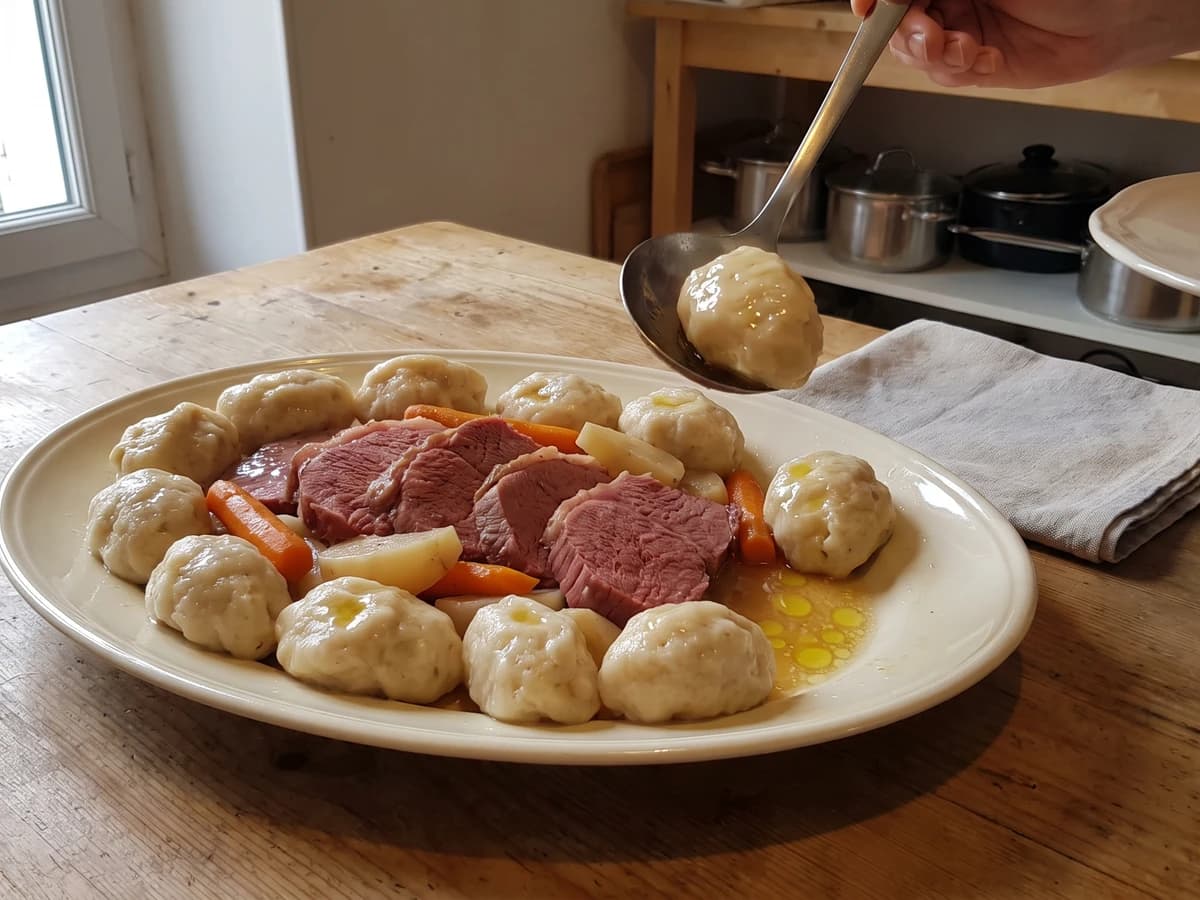
Suet Dumpling
Boulettes au suif, poached beside salt beef, turn equal weights of flour and finely chopped suet into tender, rich dumplings. Keep the beef liquor at a bare tremble and the old garnish works beautifully at home.
A cooking platform built around craft, culture, and the stories behind what we eat.

Created by Chef Juliette
Based on No. 2273, Purée de Topinambours, from Le Guide Culinaire (1907) by Auguste Escoffier
Purée de topinambours teaches the architecture of a proper vegetable purée: butter gives silk, potato gives backbone, and boiling milk brings both together without letting the spoonful slump.
Purée de topinambours (Jerusalem artichoke purée) teaches a quiet but essential lesson: flavor and structure are separate jobs. The topinambour brings sweetness, earth, and the faint taste of an artichoke heart. Potato supplies the starch that lets the purée stand on the plate. It isn't filler. Without it, the purée slumps.
The old entry assumed a saucier, the sauce cook, tending pounds of roots over the fire and a tamis, a fine drum sieve, always within reach. Here 1½ pounds feeds four, a covered sauté pan provides gentle heat, and a sturdy fine-mesh sieve does the tamis work. The finishing butter remains exactly two ounces per pound of topinambours; the separate pan butter is measured because the entry calls for cooking the roots in butter but leaves that quantity to the cook. Brigade volume and the extra pair of hands were scaffolding. Cooking in butter, sieving, working in the full measure of butter, then adding potato and boiling milk are the dish itself.
Done properly, the purée is ivory-beige, glossy with butter, and soft enough to yield under a serving spoon while still holding a generous mound. The final milk decides it. Bring it to a boil and add it one spoonful at a time, because you can always loosen the purée, but you shouldn't ask it to swim.
Purée de topinambours belongs less to a single province than to the cuisine bourgeoise of Paris and the national classical garnish repertoire, where smooth vegetable purées accompany roast poultry, pork, and game. The tuber came from North America into French kitchen gardens, lost ground to the potato, then returned to favor because its sweet, artichoke-like depth has no true substitute. Its French name is a historical accident born from public fascination with the Tupinambá people when the unrelated tuber was becoming known; in this preparation, the potato is not an economy measure but the structure that makes the purée hold.
Quantity
about 5 cups sliced (1.2 L / 1½ lb / 680 g)
peeled and cut ¼ inch thick
Quantity
1 medium, about 1½ cups chunks (355 ml / 8 oz / 225 g)
peeled and cut evenly
Quantity
2 tablespoons (30 ml / 1 oz / 28 g)
Quantity
6 tablespoons (90 ml / 3 oz / 85 g)
diced
Quantity
3 to 5 tablespoons (45 to 75 ml / 46 to 77 g)
Quantity
1¼ teaspoons (6 ml / 7 g)
divided
Quantity
1 tablespoon (15 ml / 15 g)
only if the topinambours begin to catch
| Ingredient | Quantity |
|---|---|
| Jerusalem artichokes (topinambours)peeled and cut ¼ inch thick | about 5 cups sliced (1.2 L / 1½ lb / 680 g) |
| starchy potatopeeled and cut evenly | 1 medium, about 1½ cups chunks (355 ml / 8 oz / 225 g) |
| unsalted butter for cooking | 2 tablespoons (30 ml / 1 oz / 28 g) |
| unsalted butter for finishingdiced | 6 tablespoons (90 ml / 3 oz / 85 g) |
| whole milk | 3 to 5 tablespoons (45 to 75 ml / 46 to 77 g) |
| fine sea saltdivided | 1¼ teaspoons (6 ml / 7 g) |
| water (optional)only if the topinambours begin to catch | 1 tablespoon (15 ml / 15 g) |
Put the potato in a small saucepan, cover it with cold water by about 1 inch, and add ¾ teaspoon of the salt. Bring to a gentle boil, then simmer for 15 to 18 minutes, until a knife enters without resistance. Drain thoroughly and return the potato to the dry pan over low heat for one minute, shaking it, so the surface moisture leaves. Pass it through a ricer or mash it until completely smooth, without adding milk or butter, then cover and keep warm. This potato is the purée's backbone, not filler, so it must be dry and free of lumps.
Peel and slice the topinambours just before cooking so their cut surfaces don't darken. Melt the 2 tablespoons of cooking butter in a heavy sauté pan over medium-low heat, add the sliced roots and ¼ teaspoon salt, and turn them until every piece is glossed. Cover tightly and cook for 18 to 25 minutes, stirring every few minutes, until the slices crush readily beneath a spoon. Keep them pale to lightly golden, not deeply browned. If the butter colors too quickly or the roots begin to catch before they soften, lower the heat and add the tablespoon of water; cover again and let that small amount of water cook away once the roots are tender.
Press the cooked topinambours through a fine-mesh sieve while they are still warm, using a firm silicone spatula or the back of a broad spoon. Scrape the smooth purée from the underside into a clean saucepan and discard only the dry fibers that refuse to pass. The sieve is not brigade ceremony. It removes the fibrous skins and gives the topinambour the fine texture the entry intends; a food processor leaves those fibers in place.
Set the topinambour purée over low heat and stir for 2 to 3 minutes, until it thickens slightly and leaves a clean trail across the pan floor. Add the 6 tablespoons of finishing butter in three additions, working each one in completely before adding the next. This preserves the source's proportion of two ounces of butter for every pound of topinambours. If butter begins to pool around the purée, the pan is too hot; lift it from the heat, beat in a spoonful of the warm mashed potato, and continue over a lower flame.
Fold about three-quarters of the warm mashed potato into the buttered topinambour purée. Add more potato by the spoonful until the mixture forms a soft mound and the track of the spoon remains visible for several seconds. Hold back any potato you don't need until after the milk is added. The exact amount varies with the water in the roots, which is why the source says enough mashed potato rather than pretending every topinambour behaves alike.
Bring the milk to a full boil in a small saucepan. Beat 3 tablespoons into the purée, one spoonful at a time, then add more only if needed. The boiling milk loosens the purée without cooling it or dulling the butter emulsion. Stop when it falls from the spoon in broad, heavy folds but still holds on the plate. If it slumps, return it to low heat and stir for a minute or two; fold in the reserved potato if it remains loose. Ça se rattrape. Taste and add the remaining salt if needed, then serve at once or hold covered over a barely warm bain-marie for no more than 30 minutes. À table!
1 serving (about 240g)
Culinary guides, cultural storytelling, and the editorial depth that makes cooking meaningful.
Discover Culinary ExplorerChef Juliette
Boulettes au suif, poached beside salt beef, turn equal weights of flour and finely chopped suet into tender, rich dumplings. Keep the beef liquor at a bare tremble and the old garnish works beautifully at home.

Chef Juliette
Bread, flour, frangipane, and rice become four cool, supple panades for binding forcemeats, each changing body and flavor while preserving tenderness. The finest Mousselines need none, and knowing that distinction is the lesson.

Chef Juliette
Panade au pain is bread, milk, salt, heat, and attention: stir until the paste releases cleanly, butter it against a skin, and you have the quiet binder behind tender French farces.

Chef Juliette
Panade de farine teaches the drying stroke behind pâte à choux: flour meets boiling buttered water, then stays over the fire until the paste gathers, smooths, and quits the pan cleanly.