Chef Juliette
Suet Dumpling
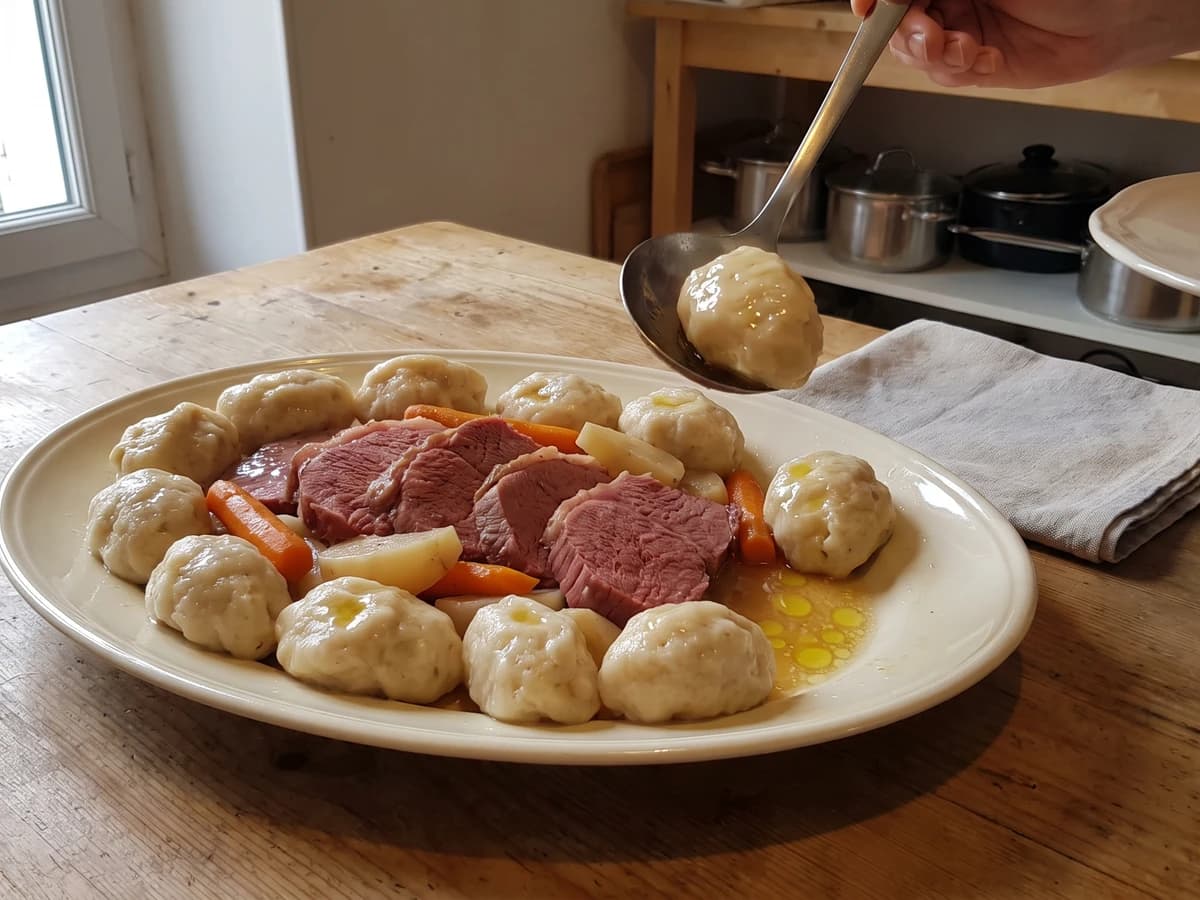
Boulettes au suif, poached beside salt beef, turn equal weights of flour and finely chopped suet into tender, rich dumplings. Keep the beef liquor at a bare tremble and the old garnish works beautifully at home.
A cooking platform built around craft, culture, and the stories behind what we eat.
Created by Chef Juliette
Based on No. 2272, Topinambours Frits, from Le Guide Culinaire (1907) by Auguste Escoffier
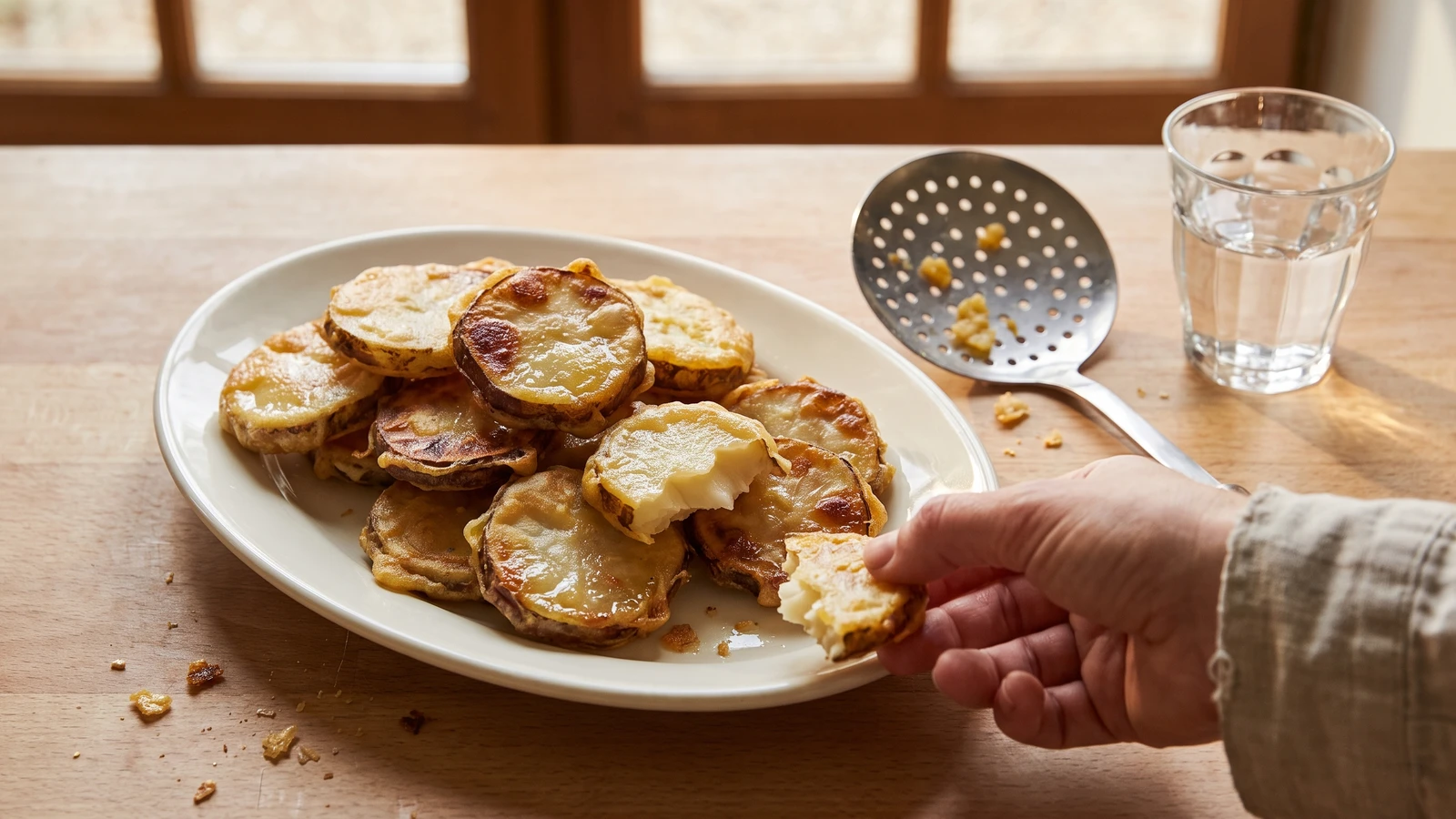
Butter-tender Jerusalem artichokes in a crisp golden batter, fried only when the table is ready. The lesson is timing: cook the heart first, then protect the crust.
Topinambours frits (battered and fried Jerusalem artichokes) teach the discipline of two cookings. The butter makes the knobbly tuber tender and nutty; the frying does not cook the centre, it gives that tender centre a crisp coat. Fry a raw slice and the crust will darken while the heart remains stubborn. That is the one true thing to know before you touch the pan.
The terse classical entry assumed a bowl of pâte à frire, a light frying batter, and a fryer held ready for service, with enough hands to cook the vegetable ahead and fry it only as the plates left the kitchen. Here the quantity is four generous side portions, the fryer is a heavy saucepan and thermometer, and one cook does the jobs in sequence. The standing fryer and service-scale mise en place are scaffolding and can go. Butter-cooking the slices and frying at the last moment are the dish, and they stay.
Done properly, the coating is thin, bubbled, and butter-gold, while the topinambour inside is creamy and faintly sweet. Cool and blot the butter-cooked slices before battering; if they go in warm and greasy, the coating slips, and no amount of frying can persuade it back. That cooling and drying is the step that decides the dish.
Topinambours frits belong to the French bourgeois and classical vegetable table rather than to one province, moving through Parisian markets into household side dishes and grand-kitchen garnishes. The tuber's French name rests on a Parisian confusion: it arrived as members of Brazil's Tupinambá people were being shown in the city, though they had no connection to it. Cooking before frying was the classical answer to its dense, irregular flesh, ensuring a tender centre before the batter ever met the fat.
Quantity
About 4 cups thick slices (1⅓ pounds / 600 g)
peeled and cut ⅜ inch (1 cm) thick
Quantity
3 tablespoons (45 ml / 43 g)
Quantity
¾ cup plus 1 tablespoon (195 ml / 100 g)
divided
Quantity
1¼ teaspoons (6.25 ml / 7.5 g)
divided
Quantity
1
separated
Quantity
½ cup plus up to 2 tablespoons (120 to 150 ml / 120 to 150 g)
Quantity
4 cups (950 ml / 870 g)
for frying
| Ingredient | Quantity |
|---|---|
| Jerusalem artichokespeeled and cut ⅜ inch (1 cm) thick | About 4 cups thick slices (1⅓ pounds / 600 g) |
| unsalted butter | 3 tablespoons (45 ml / 43 g) |
| plain flourdivided | ¾ cup plus 1 tablespoon (195 ml / 100 g) |
| fine sea saltdivided | 1¼ teaspoons (6.25 ml / 7.5 g) |
| large eggseparated | 1 |
| ice-cold sparkling water | ½ cup plus up to 2 tablespoons (120 to 150 ml / 120 to 150 g) |
| refined sunflower or peanut oilfor frying | 4 cups (950 ml / 870 g) |
Scrub the topinambours, peel them with a vegetable peeler and small knife, then cut them crosswise into slices about ⅜ inch (1 cm) thick. Keep the thickness even. Thin pieces collapse during their first cooking, while thick ones remain firm at the centre. Pat them thoroughly dry so the butter can coat them rather than spit.
Melt the butter in a wide sauté pan over medium-low heat until its foam settles but the milk solids remain pale. Add the topinambours in one layer and season with ½ teaspoon of the salt. Cover and cook for 5 minutes, then turn the slices and continue uncovered for 6 to 9 minutes, turning occasionally, until pale gold and just tender when pierced with a small knife. Keep the heat patient. If the butter begins darkening before the centres soften, pull the pan from the burner for thirty seconds, lower the heat, and cover it again.
Transfer the cooked slices to a wire rack and leave them for 10 minutes, then blot both sides gently with kitchen paper. They must be cool enough to handle and free of loose surface butter. Warm, greasy slices shed their coating in the frying oil; cooling and blotting give the batter something to hold.
Pour the frying oil into a heavy 3-quart (3-litre) saucepan, leaving the pan no more than half full. Heat it to 350°F (175°C). Hold it between 350 and 360°F (175 and 182°C) while frying; cooler oil gives a heavy, oily crust, while excessive heat colours the batter before it becomes crisp.
While the oil heats, reserve the extra tablespoon of flour, then whisk the remaining ¾ cup flour with ¼ teaspoon of the salt. Whisk the egg yolk with ½ cup of the sparkling water and stir it into the flour only until smooth. Beat the egg white to soft peaks and fold it through gently. The pâte should coat a spoon in a thin veil. If it runs off like water, whisk in the reserved flour one teaspoon at a time; if it sits thickly, loosen it with the remaining sparkling water. Ça se rattrape.
When the table is ready, dip 5 or 6 topinambour slices into the pâte, let the excess fall back into the bowl, and lower them individually into the oil, moving away from your hand. Fry for 2 to 3 minutes, turning once, until evenly butter-gold and crisp. Let the oil regain 350°F (175°C) between batches. If a batch emerges pale and oily, drain it, bring the oil to 360°F (182°C), and fry it again for 30 to 45 seconds; the hotter finish will restore the crust.
Lift each batch onto a clean wire rack rather than piling it onto paper, which traps moisture beneath the crust. Season immediately with the remaining salt and serve within 5 minutes, while the coating is crisp and the centres remain creamy. Frying early is the only shortcut that ruins this dish. À table!
1 serving (about 220g)
Culinary guides, cultural storytelling, and the editorial depth that makes cooking meaningful.
Discover Culinary ExplorerChef Juliette
Boulettes au suif, poached beside salt beef, turn equal weights of flour and finely chopped suet into tender, rich dumplings. Keep the beef liquor at a bare tremble and the old garnish works beautifully at home.

Chef Juliette
Bread, flour, frangipane, and rice become four cool, supple panades for binding forcemeats, each changing body and flavor while preserving tenderness. The finest Mousselines need none, and knowing that distinction is the lesson.

Chef Juliette
Panade au pain is bread, milk, salt, heat, and attention: stir until the paste releases cleanly, butter it against a skin, and you have the quiet binder behind tender French farces.

Chef Juliette
Panade de farine teaches the drying stroke behind pâte à choux: flour meets boiling buttered water, then stays over the fire until the paste gathers, smooths, and quits the pan cleanly.