
Chef Juliette
Riz au Blanc (for Fowls and Eggs)
Riz au Blanc proves that plain rice is a technique, not an absence: parboil it in abundant salted water, drain it dry, then let butter and low oven heat separate every tender grain.
A cooking platform built around craft, culture, and the stories behind what we eat.
Created by Chef Juliette
Based on No. 2262, Salsifis à la Crème, from Le Guide Culinaire (1907) by Auguste Escoffier
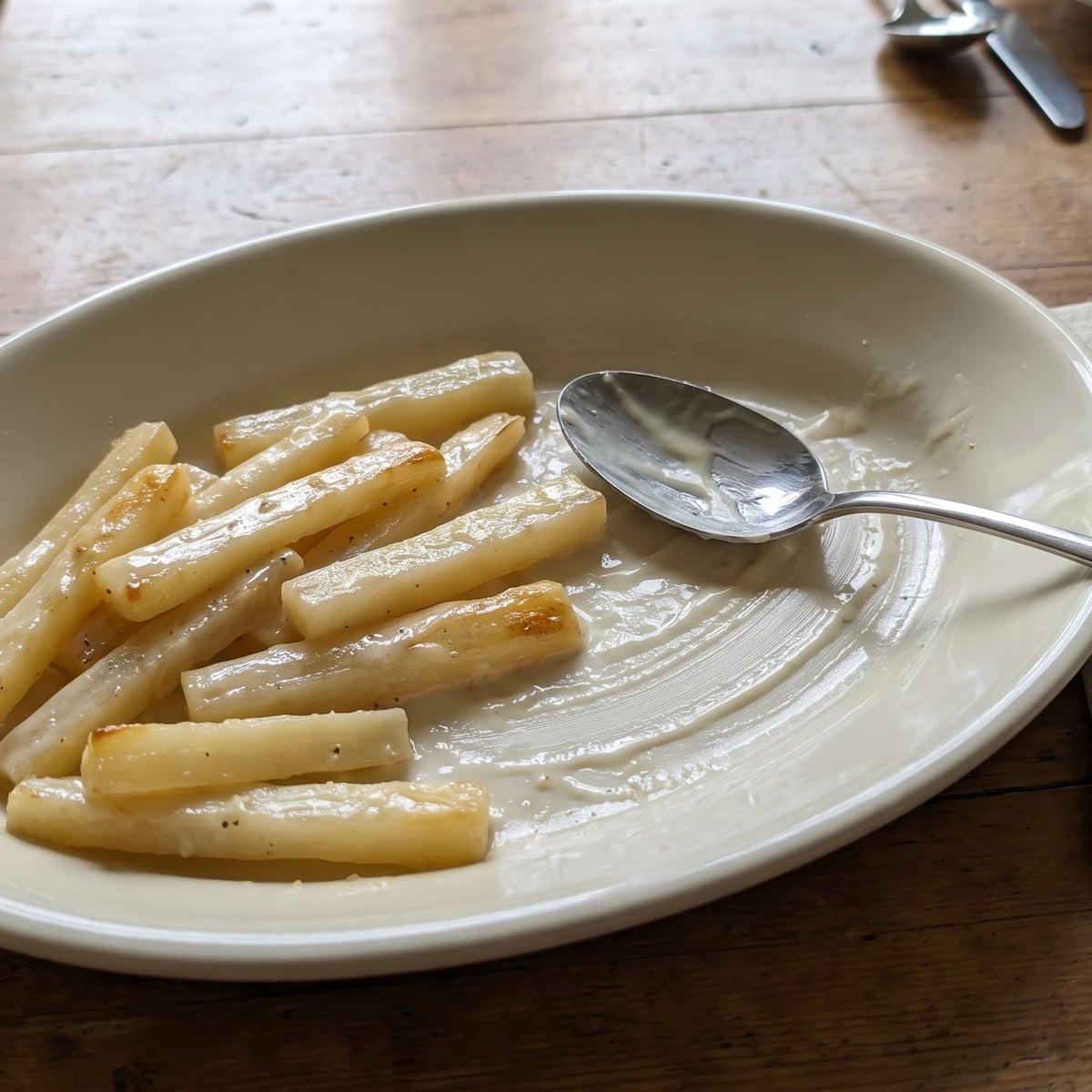
Salsifis à la crème teaches the à la crème finish: tender roots lifted from a protective blanc, glossed in butter, and coated with cream reduced just far enough to cling.
Salsifis à la Crème (salsify in cream) teaches the à la crème finish, one of the quiet grammars of the classical vegetable kitchen. The root first cooks in a blanc, an acidulated flour-water poaching liquid that keeps its flesh pale, then meets butter and cream. One true thing decides the dish: the cream must reduce until it coats the salsify. Stop early and it slides off into the serving dish.
The book's brief direction assumed a vegetable cook with blanc ready, a saucier's instinct for reduction, and enough burners to hold one pot while another finished each order. At home, a nonreactive saucepan and a wide sauté pan do the same work for four people. The brigade's holding pot and separate finishing station are scaffolding and can go; the blanc and the reduction stay because they are the dish. No stock or salamander belongs here. One cook, one stove, one evening.
Dry the cooked roots thoroughly before they meet the butter. Water thins the cream and delays its coating point, while dry salsify takes on a faint butter-gold edge and holds the sauce properly. Then watch the pan rather than the clock: when a spoon drawn through the cream leaves a clean wake and each piece gleams, you are finished.
Salsify belonged to market gardens and bourgeois winter tables across northern and central France, with Parisian kitchens helping fix it in the classical vegetable repertoire. The blanc answered the root's habit of discoloring as soon as it was peeled, while the à la crème finish carried it from plain boiled vegetable to composed garnish. Its cream does not make the dish Norman: à la crème is a national classical method, and pale-skinned true salsify is not the same root as black-skinned scorzonera, though French cooks prepare them similarly.
Quantity
2 pounds (900 g raw / about 5 cups, 650 g prepared)
peeled and cut into 3-inch lengths
Quantity
8 cups (1.9 L / 1.9 kg)
Quantity
1/4 cup (60 ml / 60 g)
from about 2 medium lemons
Quantity
2 tablespoons (30 ml / 16 g)
Quantity
3 1/2 teaspoons (17 ml / 20 g)
divided
Quantity
2 tablespoons (30 ml / 28 g)
Quantity
1 cup (240 ml / 240 g)
2 tablespoons reserved
Quantity
1/8 teaspoon (0.6 ml / 0.3 g)
| Ingredient | Quantity |
|---|---|
| fresh salsifypeeled and cut into 3-inch lengths | 2 pounds (900 g raw / about 5 cups, 650 g prepared) |
| cold water | 8 cups (1.9 L / 1.9 kg) |
| fresh lemon juicefrom about 2 medium lemons | 1/4 cup (60 ml / 60 g) |
| all-purpose flour | 2 tablespoons (30 ml / 16 g) |
| fine sea saltdivided | 3 1/2 teaspoons (17 ml / 20 g) |
| unsalted butter | 2 tablespoons (30 ml / 28 g) |
| heavy cream2 tablespoons reserved | 1 cup (240 ml / 240 g) |
| ground white pepper | 1/8 teaspoon (0.6 ml / 0.3 g) |
Whisk the flour with 1 cup of the cold water in a wide, nonreactive saucepan until perfectly smooth. Add the remaining water, the lemon juice, and 3 teaspoons of the salt. The blanc will look cloudy. It is exactly right. Scrub the salsify, put on gloves if you dislike its sticky sap, then peel one root at a time, trim the ends, and cut it into 3-inch lengths. Halve any very thick pieces lengthwise and drop each piece directly into the blanc before peeling the next; exposed salsify darkens quickly.
Lay a cartouche, a round of parchment paper, directly on the liquid to keep the pieces submerged. Bring the blanc slowly to a bare simmer, whisking gently near the bottom as it heats so the flour does not settle and catch. Cook for 20 to 30 minutes, depending on the roots' thickness, until a small knife enters the centre with only a breath of resistance. Keep the simmer quiet. A hard boil breaks the tender pieces and churns the flour onto them.
Lift the salsify from the blanc with a slotted spoon rather than pouring out the pot, which would wash the flour sediment over the roots. Let it drain in a colander, then spread it on a clean kitchen towel and blot carefully. Leave it uncovered for 5 minutes so the surface dries. This pause matters: wet roots dilute the cream, and diluted cream refuses to cling.
Melt the butter in a wide sauté pan over medium heat. When its foam quiets but before it browns, add the salsify in one layer and turn it gently for 3 to 4 minutes, just until a few edges take on a pale butter-gold colour. Pour in the cream, holding back the reserved 2 tablespoons, and bring it to a lively simmer. Shake the pan and turn the roots carefully as the cream reduces, 5 to 8 minutes. Season with the remaining salt and the white pepper. The sauce is ready when it leaves a clean wake behind the spoon and coats every piece without puddling. If the roots are tender while the cream remains thin, lift them into a warm dish and reduce the cream alone. If it becomes tight or oily, take the pan off the heat and swirl in the reserved cold cream a spoonful at a time. Ça se rattrape.
Return the salsify to the pan if you removed it, roll every piece once through the glaze, and taste for salt. Transfer it to a warmed shallow serving dish, scraping the clinging cream over the roots. Serve immediately beside roast poultry, veal, or ham. The sauce should gleam on the salsify, not collect beneath it. À table!
1 serving (about 220g)
Culinary guides, cultural storytelling, and the editorial depth that makes cooking meaningful.
Discover Culinary Explorer
Chef Juliette
Riz au Blanc proves that plain rice is a technique, not an absence: parboil it in abundant salted water, drain it dry, then let butter and low oven heat separate every tender grain.

Chef Juliette
Parboiled Carolina rice meets butter and rich white consommé, then finishes covered in the oven, each grain savory, separate, and gleaming. The consommé does the seasoning, so taste it first.

Chef Juliette
Riz à la Grecque turns disciplined pilaff into supper with pork sausage, ciseled lettuce, green peas, and red capsicum, all folded in for the final seven minutes.

Chef Juliette
Patna rice, boiled freely, washed until the water stays clear, then dried low and gentle. The washing is the dish: do it properly and every grain arrives light, dry, and separate.