Chef Juliette
Suet Dumpling
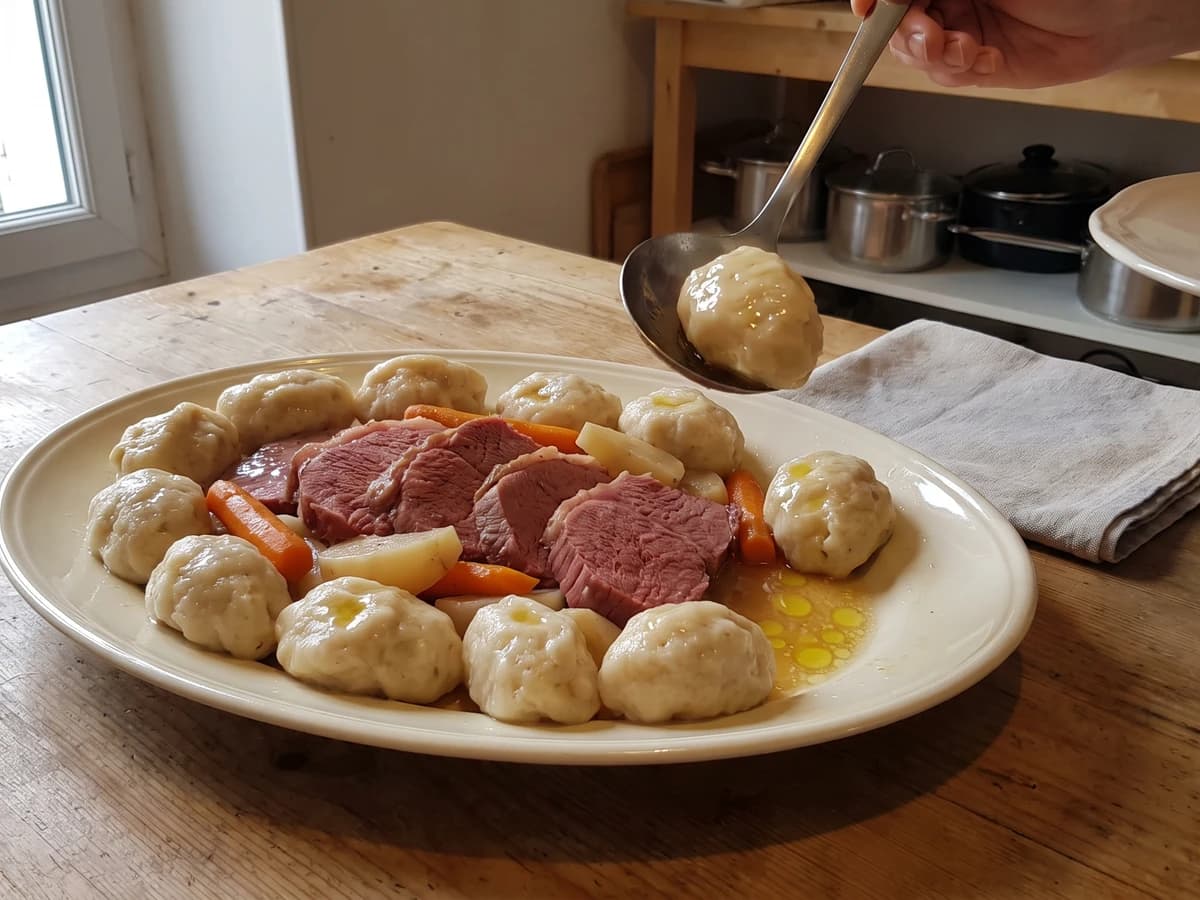
Boulettes au suif, poached beside salt beef, turn equal weights of flour and finely chopped suet into tender, rich dumplings. Keep the beef liquor at a bare tremble and the old garnish works beautifully at home.
A cooking platform built around craft, culture, and the stories behind what we eat.
Created by Chef Juliette
Based on No. 2201, Potatoes (Pommes de Terre), from Le Guide Culinaire (1907) by Auguste Escoffier
Pommes de terre begin with the right tuber: waxy potatoes stay whole under the knife, floury potatoes fall willingly apart, and no amount of technique can make one perform the other's work.
Pommes de terre (potatoes) begin with one truth: the variety decides the dish. A waxy potato keeps its shape and takes a shining coat of butter. A floury potato opens and softens, magnificent for purée but wrong when the pieces must remain whole. No technique trades one for the other.
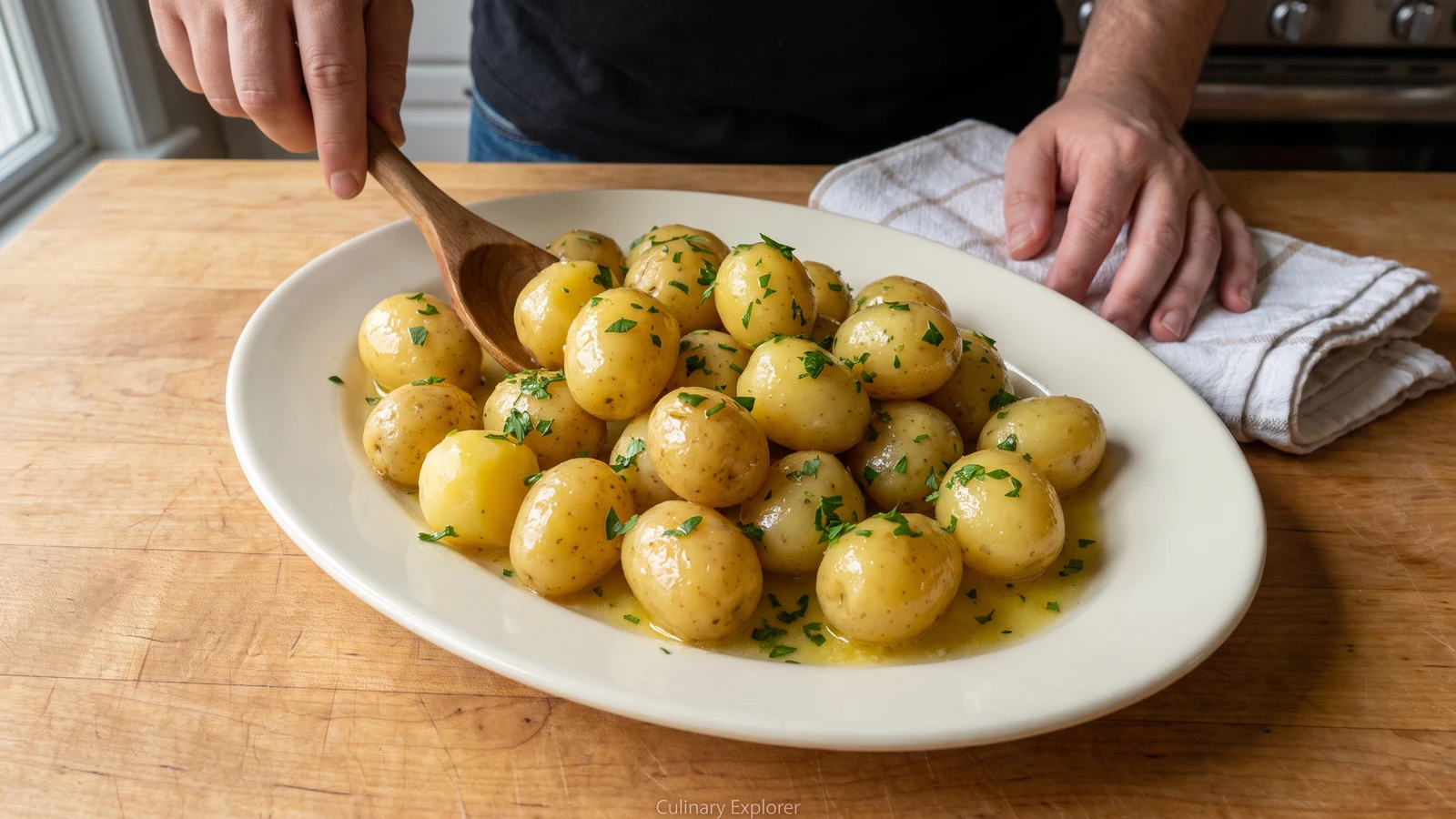
The source entry is a market lesson, not a formula. It measured disappointing ordinary potatoes in England against prized Dutch and Vitelotte imports; for a cookable plate, that lesson becomes the simplest classical service, waxy potatoes simmered gently and glazed with a parsley beurre monté (butter emulsified with a little water). The professional luxury here was not a saucier or a stockpot kept full, but access to several varieties and enough hands to trim them identically. At home, small red potatoes and a peeler do the job. Decorative trimming is scaffolding and can go; even size and waxy flesh are the dish and must stay.
Choose one labeled waxy variety and cut every piece to one size before touching the pan. That is the step that matters most. Simmer gently, dry the potatoes well, then let the beurre monté carry the butter into a thin gloss instead of a greasy puddle. One cook, one stove, one evening.
On the French national table, pommes de terre are classified first by behavior: firm-fleshed varieties go to salads, sautés, and buttered preparations that must hold their shape, while floury varieties go to purées, croquettes, and frying. Grand kitchens multiplied named potato garnishes, but the governing knowledge came from market and household practice, because a knife cut can be corrected while a tuber's starch balance cannot. The old praise for Dutch imports and purple-fleshed Vitelotte records a supply problem in England, not a command to chase rare potatoes; the proper local variety remains the classical choice.
Quantity
2 pounds (900 g), about 6 to 8 small-to-medium potatoes
Quantity
8 cups (1.9 L / 1.9 kg), or enough to cover by 1 inch
Quantity
1 tablespoon (15 ml / 18 g)
Quantity
4 tablespoons (60 ml / 56 g)
cut into 4 pieces
Quantity
2 tablespoons (30 ml / 8 g)
finely chopped
Quantity
¼ teaspoon (1.25 ml / 1.5 g)
Quantity
¼ teaspoon (1.25 ml / 0.6 g)
| Ingredient | Quantity |
|---|---|
| waxy potatoes, such as small red potatoes, fingerlings, Charlotte, or Ratte | 2 pounds (900 g), about 6 to 8 small-to-medium potatoes |
| cold water | 8 cups (1.9 L / 1.9 kg), or enough to cover by 1 inch |
| fine sea salt for the cooking water | 1 tablespoon (15 ml / 18 g) |
| cold unsalted buttercut into 4 pieces | 4 tablespoons (60 ml / 56 g) |
| flat-leaf parsleyfinely chopped | 2 tablespoons (30 ml / 8 g) |
| fine sea salt for finishing | ¼ teaspoon (1.25 ml / 1.5 g) |
| freshly ground black pepper | ¼ teaspoon (1.25 ml / 0.6 g) |
Choose potatoes sold as waxy, firm-fleshed, salad, or boiling potatoes. Small red potatoes are the useful budget choice; fingerlings, Charlotte, and Ratte behave similarly. Use one variety only, because potatoes that look the same can soften at different rates. Scrub them under cool water and discard any green portions or deeply sprouted potatoes.
Peel the potatoes thinly, removing as little flesh as possible. Classical kitchens often made pommes tournées (potatoes trimmed into even barrel shapes), but that decorative shaping is brigade scaffolding here, not flavor. Leave small potatoes whole and halve larger ones so every piece measures roughly 1½ to 2 inches (4 to 5 cm). Uniform size must stay, because it lets every center become tender at the same moment.
Place the potatoes in a 4-quart (3.8 L) saucepan, add the cold water and cooking salt, and set the pan over medium heat. Starting cold allows the centers and surfaces to warm together. Bring the water just to a boil, then immediately lower the heat until it barely trembles. Cook for 18 to 25 minutes, testing after 15 minutes; a paring knife should enter the center without chalky resistance. A hard boil batters the surfaces. If the pieces begin to split, lower the heat and test them at once. If they are already breaking, drain them immediately. Ça se rattrape: finish them lightly crushed in the same butter emulsion. Only the neat shape is lost.
Scoop out ¼ cup (60 ml) of the cooking water and keep it beside the stove. Drain the potatoes carefully into a colander, then leave them uncovered for 2 minutes so their surface moisture can escape. Do not rinse them. Water clinging to the potatoes dilutes the butter, while a dry surface accepts a fine, even glaze.
Dry the saucepan and return it to low heat with 2 tablespoons (30 ml) of the reserved cooking water. When the water begins to tremble, whisk in the cold butter one piece at a time, letting each piece melt into the liquid before adding the next. Keep the pan below a boil. The beurre monté is ready when it looks creamy and glossy rather than oily. If yellow fat separates from the water, remove the pan from the heat and whisk in 1 teaspoon (5 ml) of cool reserved water. Ça se rattrape. Add the potatoes and roll them gently through the emulsion until every surface shines.
Fold in the chopped parsley, finishing salt, and black pepper, turning the potatoes carefully so they remain whole. Taste one while it is hot; potatoes need enough salt to bring their quiet sweetness forward. Spoon them onto a warm platter with every drop of beurre monté from the pan. Serve at once. À table!
1 serving (about 240g)
Culinary guides, cultural storytelling, and the editorial depth that makes cooking meaningful.
Discover Culinary ExplorerChef Juliette
Boulettes au suif, poached beside salt beef, turn equal weights of flour and finely chopped suet into tender, rich dumplings. Keep the beef liquor at a bare tremble and the old garnish works beautifully at home.

Chef Juliette
Bread, flour, frangipane, and rice become four cool, supple panades for binding forcemeats, each changing body and flavor while preserving tenderness. The finest Mousselines need none, and knowing that distinction is the lesson.

Chef Juliette
Panade au pain is bread, milk, salt, heat, and attention: stir until the paste releases cleanly, butter it against a skin, and you have the quiet binder behind tender French farces.

Chef Juliette
Panade de farine teaches the drying stroke behind pâte à choux: flour meets boiling buttered water, then stays over the fire until the paste gathers, smooths, and quits the pan cleanly.