Chef Juliette
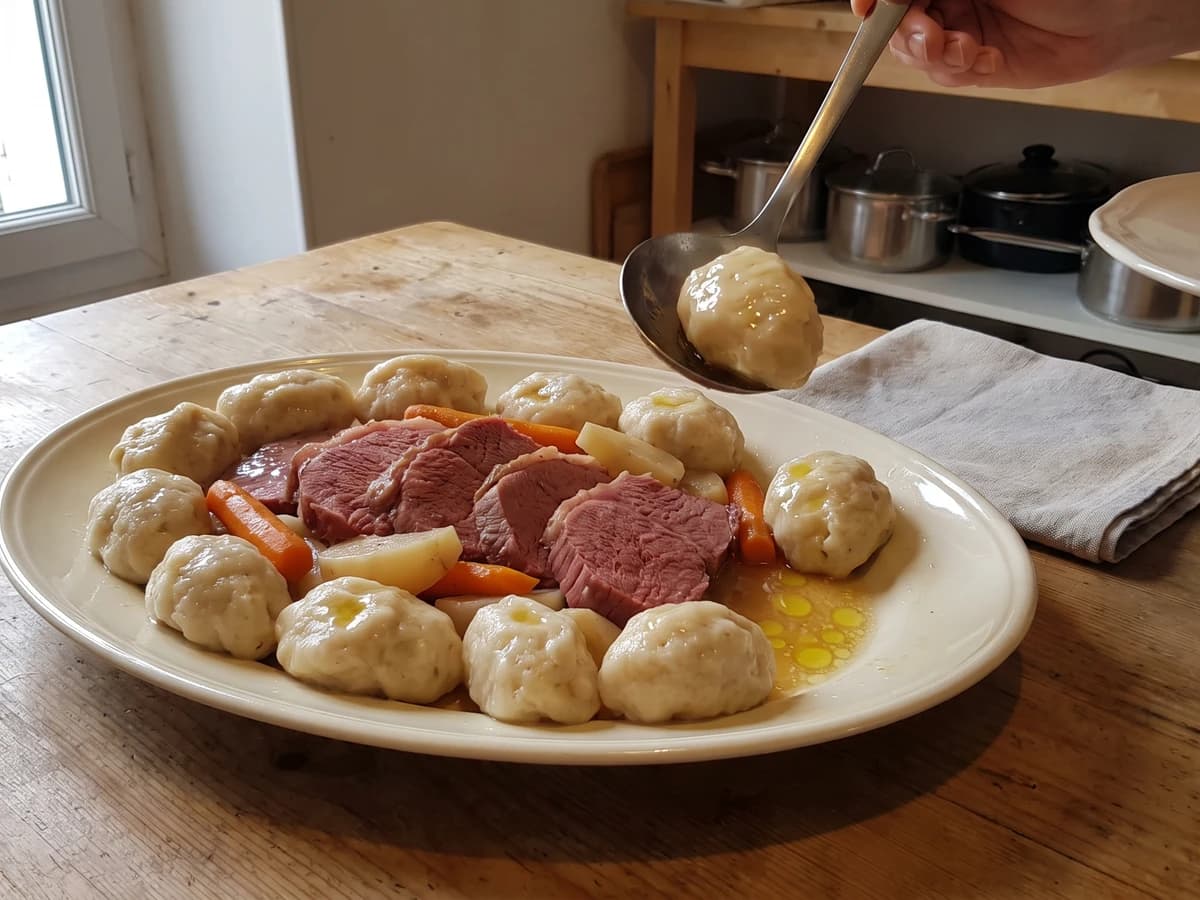
Suet Dumpling
Boulettes au suif, poached beside salt beef, turn equal weights of flour and finely chopped suet into tender, rich dumplings. Keep the beef liquor at a bare tremble and the old garnish works beautifully at home.
A cooking platform built around craft, culture, and the stories behind what we eat.
Created by Chef Juliette
Based on No. 2150, Hop Sprouts (Jets de Houblon), from Le Guide Culinaire (1907) by Auguste Escoffier
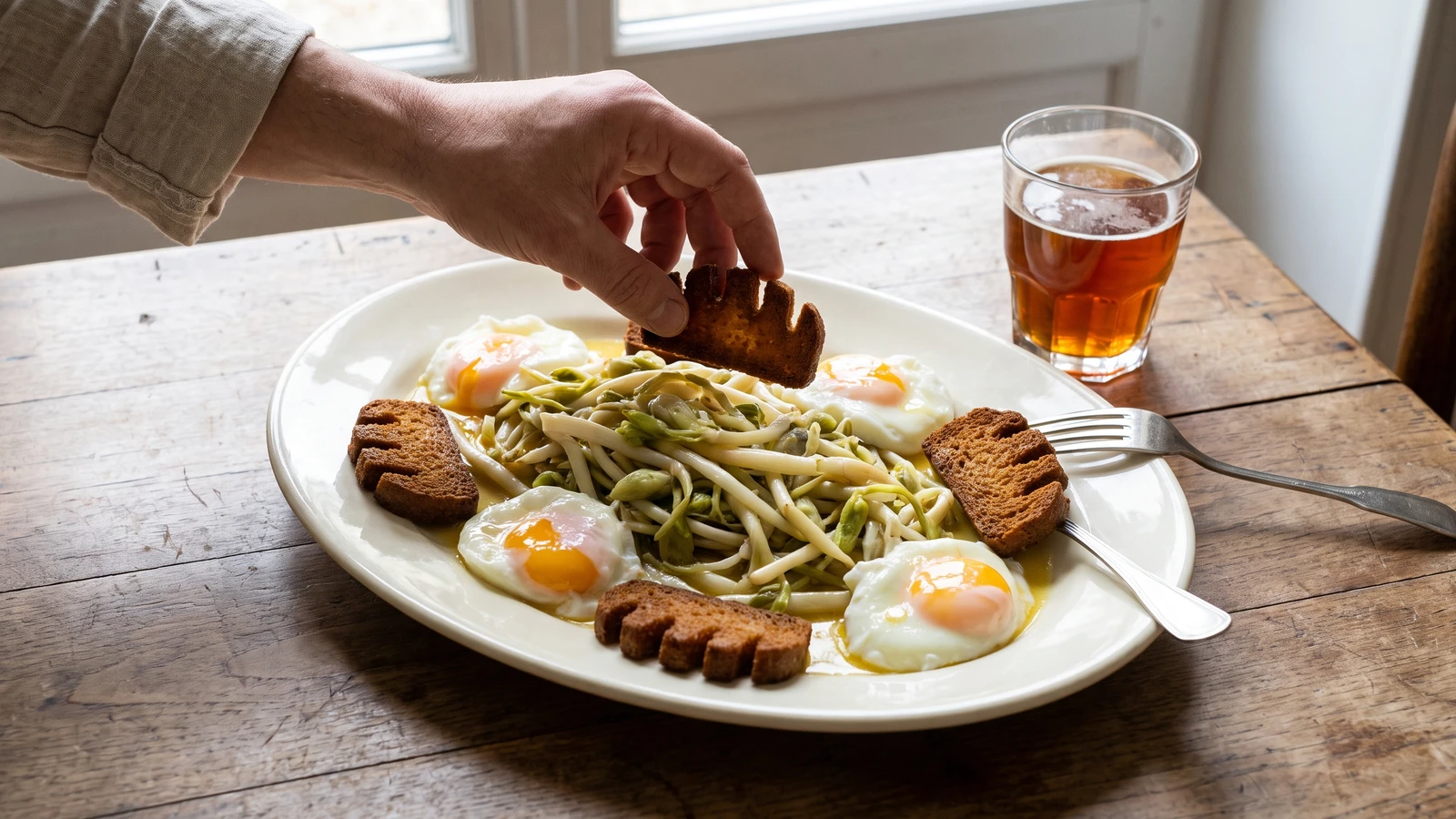
Tender hop shoots, brightened with lemon and glossed in butter, sit inside a crown of soft poached eggs and comb-shaped croûtons: a rare spring vegetable taught with exact timing and no fuss.
Jets de houblon (hop sprouts) teach that tenderness is selected before it is cooked. Each shoot has one natural breaking point; snap there and the finished mound is delicate, miss it and no sauce can civilize the string. That is the one true thing to know before you touch the pan.
The original service assumed a vegetable cook at the boiling pot, poached eggs ready from another station, and croûtons arriving hot from a butter pan. At home, fry the croûtons first, poach and hold the eggs, then cook the shoots last in the same saucepan. Separate hands were brigade scaffolding; the lemon-salted water, real butter, eggs, and comb-shaped croûtons are the dish and must stay. Four eggs, four croûtons, one modest platter. One cook, one stove, one evening.
Properly cooked jets de houblon keep their pale green or ivory colour, bend without collapsing, and carry a clean spring bitterness under the butter and soft egg yolk. Let the clock advise you, then bite a shoot. Before any water boils, snap every stem by hand and trust where it gives.
Jets de houblon belong to the hop country of French Flanders in the Nord, where tender spring growth could be gathered from the same crowns that later sent bines up the poles for brewing. The vegetable is not the bitter cone used in beer but the young shoot, harvested pale and tight before it toughens, which is why its season is short and its trimming so exact. Household cooks treated it like asparagus, and the classical table made that kinship explicit by boiling it with lemon and surrounding the mound with poached eggs and butter-fried croûtons.
Quantity
1¼ pounds (570 g)
Quantity
8 cups (1.9 L / 1.9 kg)
Quantity
1
juiced to about 3 tablespoons (45 ml / 45 g)
Quantity
1 tablespoon (15 ml / 18 g)
Quantity
6 cups (1.4 L / 1.4 kg)
Quantity
4
Quantity
2 slices (about 3 ounces / 85 g)
crusts removed
Quantity
6 tablespoons (90 ml / 85 g)
divided
| Ingredient | Quantity |
|---|---|
| fresh hop shoots | 1¼ pounds (570 g) |
| water for cooking the hop shoots | 8 cups (1.9 L / 1.9 kg) |
| medium lemonjuiced to about 3 tablespoons (45 ml / 45 g) | 1 |
| fine sea salt | 1 tablespoon (15 ml / 18 g) |
| water for poaching the eggs | 6 cups (1.4 L / 1.4 kg) |
| large eggs | 4 |
| firm, day-old white bread for the croûtonscrusts removed | 2 slices (about 3 ounces / 85 g) |
| unsalted butterdivided | 6 tablespoons (90 ml / 85 g) |
Take each hop shoot near its base and bend it gently until it breaks at its natural tender point, just as you would asparagus. Keep the supple tips and discard the fibrous ends. Do not square them all with a knife before testing one; the breaking point moves from shoot to shoot. If a trimmed stem still bends like string rather than snapping, break it again higher up. Ça se rattrape now, but not after cooking.
Put the tender shoots in a large bowl of cold water and move them gently with your fingers. Lift them into a colander rather than pouring out the bowl, because grit settles underneath. Repeat with fresh water at least twice more, until the bottom of the bowl is perfectly free of soil and leaf fragments. Drain well without crushing the tips.
Cut each bread slice in half to make four neat rectangles. Along one long edge of each piece, cut three narrow notches to form the traditional comb shape. Melt 4 tablespoons of the butter in a skillet over medium heat; when the foam settles, fry the croûtons on both sides until deep gold and crisp at the edges, about 3 to 4 minutes. Lift them onto a rack. If the butter blackens before the bread colours, lower the heat, wipe out the bitter specks, and continue with a little of the measured butter. Do not ask burnt butter to behave itself.
Bring the poaching water to the barest tremble in a wide saucepan. Crack each egg into a small cup, then slide in two at a time, keeping the water below a boil. Poach for about 3 minutes, nudging any wandering white toward its yolk with a spoon, until the whites are set and the yolks remain soft. Lift the eggs into a bowl of cool water while you cook the second pair. If a white feathers, do not discard the egg; trim its ragged skirt after poaching and the crown will still be handsome.
Discard the poaching water and rinse the saucepan. Add the 8 cups of fresh water, lemon juice, and salt, preserving the original proportion of half a lemon for each quart of water. Bring it to a full boil, add the hop shoots, and cook uncovered until tender but still distinct, usually 3 to 6 minutes depending on their thickness. Bite one at 3 minutes: it should yield cleanly without collapsing or leaving a string between your teeth. If the lower ends remain fibrous while the tips are tender, lift out the batch and cut another small piece from the bases. Ça se rattrape.
Lift the shoots into a colander with a skimmer, leaving their cooking water in the saucepan, and reserve 2 tablespoons of that water separately. Wipe the croûton skillet clean, then add the remaining 2 tablespoons of butter and the reserved cooking water over medium-low heat. Swirl until they unite into a light, glossy emulsion, add the drained shoots, and turn them gently for about 30 seconds. If the butter separates into an oily puddle, add another teaspoon of hot cooking water and toss again. The emulsion will come back together.
Mound the buttered jets de houblon lengthwise on a warmed oval platter. Slip the poached eggs back into the lemon cooking water off the heat for 20 to 30 seconds, then lift and blot them carefully. Set the four eggs in a crown around the shoots and place one comb-shaped croûton between each pair. Spoon the remaining butter emulsion over the shoots without wetting the croûtons. Serve at once, while the bread is crisp and the yolks are ready to become the sauce. À table!
1 serving (about 245g)
Culinary guides, cultural storytelling, and the editorial depth that makes cooking meaningful.
Discover Culinary ExplorerChef Juliette
Boulettes au suif, poached beside salt beef, turn equal weights of flour and finely chopped suet into tender, rich dumplings. Keep the beef liquor at a bare tremble and the old garnish works beautifully at home.

Chef Juliette
Bread, flour, frangipane, and rice become four cool, supple panades for binding forcemeats, each changing body and flavor while preserving tenderness. The finest Mousselines need none, and knowing that distinction is the lesson.

Chef Juliette
Panade au pain is bread, milk, salt, heat, and attention: stir until the paste releases cleanly, butter it against a skin, and you have the quiet binder behind tender French farces.

Chef Juliette
Panade de farine teaches the drying stroke behind pâte à choux: flour meets boiling buttered water, then stays over the fire until the paste gathers, smooths, and quits the pan cleanly.