
Chef Juliette
John Dory (St. Pierre)
John Dory has the delicacy of sole and the firmness of turbot. A light flouring, a quick butter sauté, and nut-brown beurre noisette show exactly why looks never mattered.
A cooking platform built around craft, culture, and the stories behind what we eat.
Created by Chef Juliette
Based on No. 1920, Black Game, from Le Guide Culinaire (1907) by Auguste Escoffier
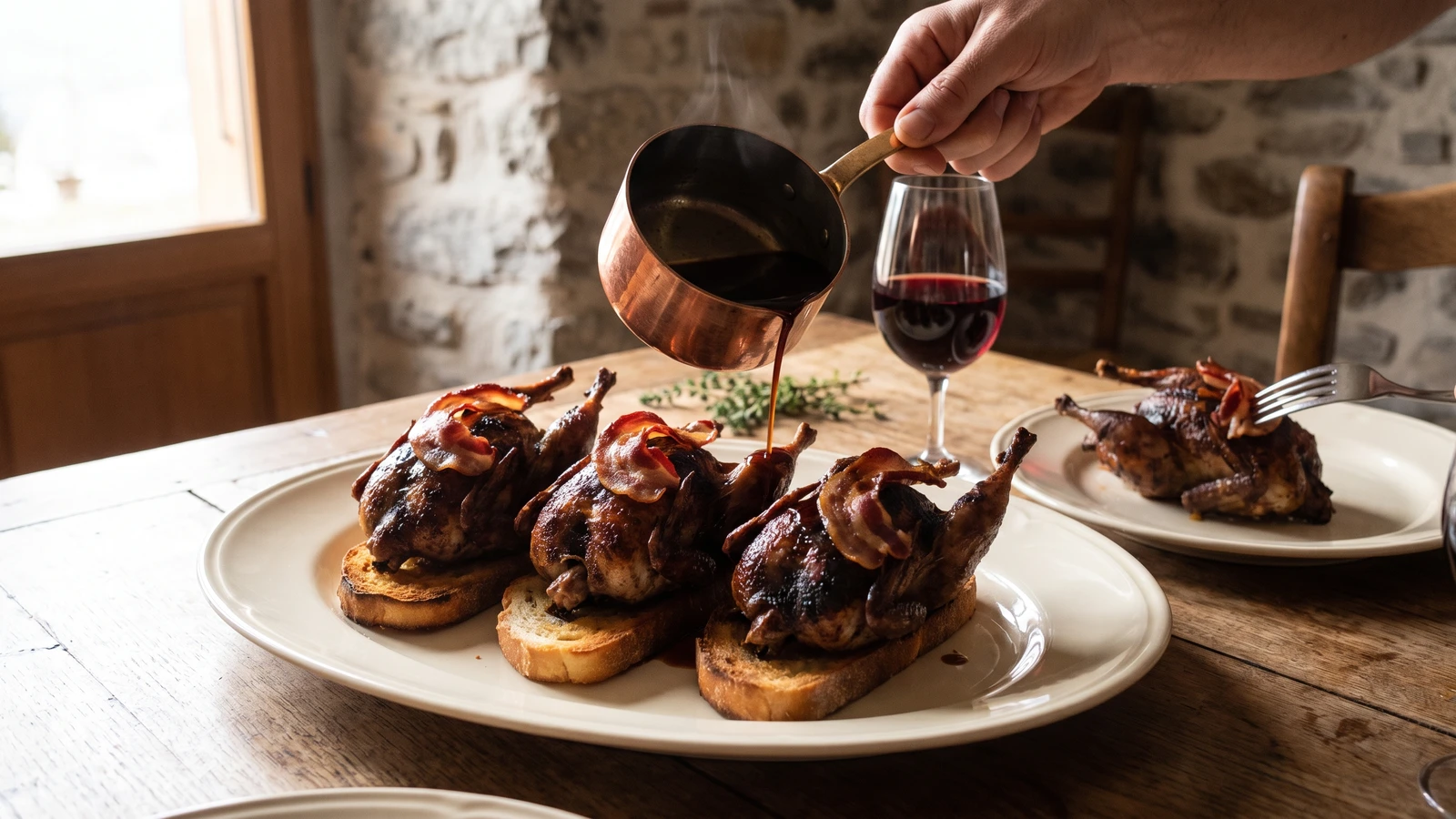
Very fresh black grouse, butter-basted beneath a light bacon barde and roasted over crisp canapés, teaches the discipline of game: protect the lean breast, stop at the right moment, and waste none of the jus.
Gibier noir rôti teaches restraint with a bird that gives you no second chance: freshness decides its flavor, and the roasting must stop before the dark, lean breast goes dry. The source is unusually plain because the point is plain. Black grouse is roasted by preference; its delicate savor needs neither perfume nor a heavy sauce.
The old entry could stop at “serve roasted” because its kitchen assumed a game cook at the spit, a saucier beside a stockpot, and a salamander ready to correct pale skin. At home, a hot oven, a heavy skillet, a thermometer, and a little unsalted stock do the same honest work. The separate sauce station and brigade volume are scaffolding, so they go; two young birds, their roasting fond, and a quick mounted jus remain. One cook, one stove, one evening.
A barde, a thin covering of bacon, protects the breasts before coming off so the skin can bronze. The step that matters most is the final temperature check: pull the birds when the breast reaches 160°F (71°C), then rest them until it reaches 165°F (74°C). If the temperature stalls, return them to the oven beneath the bacon for a few minutes. Ça se rattrape.
Gibier noir is the classical French grouping for dark-fleshed woodland and mountain birds, especially grouse and hazel hen, rather than the name of a black sauce. Black grouse reached French tables from the Alpine uplands, particularly Savoie and Dauphiné, then passed from hunting tables into the grand kitchen, where roasting remained the preferred treatment. Contrary to the caricature of game hung until pungent, these delicate birds were prized when worked perfectly fresh.
Quantity
2, about 1½ lb (680 g) each
Quantity
6 tablespoons (90 ml / 85 g)
4 tablespoons softened and 2 tablespoons chilled and cubed
Quantity
2 teaspoons (10 ml / 12 g)
Quantity
1 teaspoon (5 ml / 2 g)
Quantity
8 very thin slices (about 4 oz / 115 g)
Quantity
1½ cups (360 ml / 360 g)
Quantity
4 slices, 8 oz (225 g) total
each about ¾ inch (2 cm) thick
| Ingredient | Quantity |
|---|---|
| oven-ready, very fresh young black grouse | 2, about 1½ lb (680 g) each |
| unsalted butter4 tablespoons softened and 2 tablespoons chilled and cubed | 6 tablespoons (90 ml / 85 g) |
| fine sea salt | 2 teaspoons (10 ml / 12 g) |
| freshly ground black pepper | 1 teaspoon (5 ml / 2 g) |
| unsmoked streaky bacon | 8 very thin slices (about 4 oz / 115 g) |
| unsalted chicken or light game stock | 1½ cups (360 ml / 360 g) |
| country breadeach about ¾ inch (2 cm) thick | 4 slices, 8 oz (225 g) total |
Inspect the grouse before doing anything else. The flesh should feel firm and smell clean, faintly mineral, never sour, sweetly rotten, or ammoniacal; no roasting technique rescues spoiled game. Remove stray feathers and any visible shot, wipe the cavities with kitchen paper, and pat the birds completely dry without rinsing them. Let them stand out of the cold for 20 minutes while the oven heats, but no longer.
Heat the oven to 425°F (220°C). Season the cavities and skins evenly with the salt and pepper, then rub 2 tablespoons of the softened butter over the birds. Lay four bacon slices across each breast, overlapping them lightly, and secure the legs close to the body with kitchen twine. The barde is protection, not decoration: black grouse has little fat of its own, and exposed breast meat dries before the legs are ready.
Set the birds breast-side up in a heavy ovenproof skillet, leaving space between them, and roast for 15 minutes. Tilt the pan and baste each bird thoroughly with the butter and bacon fat collecting below. The fat should be nut-brown and fragrant, not black; if the fond begins scorching, add 2 tablespoons of the stock around the birds and lower the oven to 400°F (200°C). The liquid stops the burning without washing away the flavor.
Lift off the bacon and place it beside the birds to crisp. Spread the remaining 2 tablespoons softened butter over the bread, arrange the slices beneath the grouse, and return the skillet to the oven. Roast for another 8 to 12 minutes, basting once, until the skin is deep bronze, the thickest part of each thigh reaches at least 165°F (74°C), and the breast reaches 160°F (71°C) without the thermometer touching bone. If the bread browns before the birds are ready, move it to the serving platter; burnt bread is bitterness, not character.
Transfer the birds and canapés to a warm platter, pour any cavity juices back into the skillet, and tent the grouse loosely for 10 minutes. Check that the breast has risen to 165°F (74°C) before carving. If it has not, lay the bacon back over the breasts and return the birds to the oven for 3 minutes at a time. Protect the meat while correcting the temperature, and it will remain succulent.
Pour away excess fat from the skillet, leaving about 1 tablespoon with the brown roasting fond. Set the pan over medium heat, add the remaining stock, and scrape the floor thoroughly with a wooden spoon. Reduce briskly to about ¾ cup (180 ml), until the jus tastes concentrated and lightly coats the spoon. Take the pan off the heat and whisk in the 2 tablespoons chilled butter, cube by cube. If the jus looks greasy or separates, stop adding butter and whisk in a tablespoon of cold stock before continuing. Ça se rattrape.
Use poultry shears to split each grouse lengthwise through the backbone and breastbone, giving each diner half a bird. Set each half on a buttered canapé, place a crisp piece of bacon over it, and spoon the glossy jus around the bread rather than over the bronzed skin. Bring the remaining jus to the table. À table!
1 serving (about 300g)
Culinary guides, cultural storytelling, and the editorial depth that makes cooking meaningful.
Discover Culinary ExplorerChef Juliette
John Dory has the delicacy of sole and the firmness of turbot. A light flouring, a quick butter sauté, and nut-brown beurre noisette show exactly why looks never mattered.

Chef Juliette
Fresh haddock proves its delicacy in the meunière pan: a fine flour crust, moist pearly flakes, and beurre noisette sharpened with lemon and parsley, ready from one skillet in half an hour.

Chef Juliette
Éperlans à l’Anglaise turns small fish into a lesson in disciplined coating: boned smelts under a close, crisp crumb, pan-fried in clarified butter and finished with bright, half-melted maître d’hôtel butter.

Chef Juliette
Tiny smelts, shallot, mushrooms, white wine, gratin sauce, and fine bread raspings meet a fierce oven, where the fish must turn tender in the same breath the buttered crust bronzes.